

Location: Ljubljana / CUK Kino Šiška / Slovenia
Date: Tuesday, 03.12.2013
How good is a musician once you strip away the makeup of effects, swap the screaming distortion for nothing but the resonant body of an acoustic guitar, sit them down in front of a microphone and give them the chance to serve up the distilled form of their music with just a pair of vocal cords and a set of well-drilled fingers? Lately I’ve found few such aces I could listen to for longer than a couple of minutes, because posers and windbags are never in short supply. And while acoustic music as a pure form doesn’t exactly hog the main radio waves on the global scene, Slovenia, after an initial phase of borrowing and recreating the established, proven format of the greats, got a show with its own deep-rooted format, one that has been betting on acoustics and unspoiled sonic honesty for a full twenty years now. Maybe changes on this side of the Alps, and even more so inside the walls of the national media pride, that fortress of linguistic and musical above-standardness, in the building next to the boy with the flute, happen slowly and barely noticeably, but one thing stays completely unchanged: if it ain’t broke, don’t change it an inch! And it’s precisely by that imperative that “your favorite DJ Jure” has this year completed a full twenty years of his radio show, which outgrew the format of Radio Študent, dropped anchor fifteen years ago in the halls of Val 202, served up more than 200 episodes and countless guests, sneaked out of the intimacy of the radio studio onto the big stages a few times, and so made the statement that Izštekani are something more in our little scene. I’m unlucky in that my memory doesn’t fade quickly, and I had my first aversion to a show that borrowed far too literally the format of a very well-known, widely watched program that marked the MTV generation with unforgettable outpourings of emotion and sensuality from musicians like Eric Clapton, then Nirvana, Alice In Chains, Pearl Jam, Neil Young, Sting, and I could go on. By my standards back then, Slovenia was damn well too small for something like Izštekani to keep the train rolling indefinitely, but it seems I miscalculated. We’ve got enough good, hell, excellent musicians that Jure Longyka managed to lure enough guests into the bosom of his acoustic universe for more than 200 episodes. After the first unplugging way back in 1993 with Sokoli and the indestructible Pero came a small sea of names from the home scene, like my beloved Demolition Group, Miladojka Youneed, Niet, the recently beautifully stripped-down and transformed Hexenbrutal, and between one pole and the other stretches a long evolutionary timeline of quality and subversion in a peculiarly provocative, productive way. They weren’t only home-grown representatives of the avant-garde, either: Izštekani have also hosted foreign treats along the way, some guests came back several times (thanks also to proven quality), and quite interesting was the announcement that the round 20th jubilee would be immortalized with a full-length spectacle at Kino Šiška in Ljubljana, where eleven juicy names of the Slovenian pop scene were to take the stage, backed by a twenty-piece orchestra of the RTV Slovenija Symphony, performing twenty songs in the manner of total unpluggedness, disconnection, shed sonic ballast and everything out in the open and on show for the ear! That was an invitation no one could miss, and so many people showed up that the chapel of Slovenian gigging was packed to the last corner, with the crowd waiting below the stage for its dose of perfection.
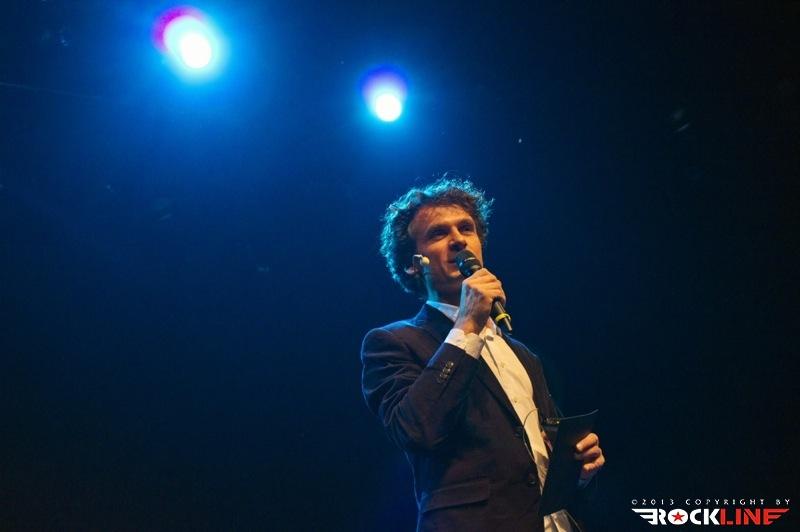
After a slightly worn-out overture of live-played jingles, heard far too many times that night, courtesy of “your favorite DJ Jure,” the father and soul of the show, the slightly grayed but no less alternative-minded Jure Longyka, finally beat the tech gremlin after a few announcements into a dead mic, and the unintended slip instantly became a good joke, a nice gag tying in with the very name of the show. The MC of the evening, in his epic storytelling style, kicked off the tale of the birth, metamorphoses and transformations of the show itself, which has shaped and molded the radio crew as well as the musicians in the studio and the listeners at their receivers. One of the bigger supernova phenomena that started to fade badly after the millennium is undoubtedly Siddharta, who, precisely by unplugging, by distancing themselves from their watered-down, production-bloated sound, in which there’s been precious little essence since the first eruptions of creativity and avant-garde bite (after Petroleja at the latest, if not already with Saga, you can notice a complete drain of the band’s creative charge), have started to return to their well-known form. Covered by the twenty-piece RTV Symphony orchestra under the baton of Patrik Greblo, the Ljubljana quintet heads north in search of true quintessence, on Nord. Klinik sounds fresh and unfeignedly honest, with Primož, Jani and Tomi strapped with acoustic gear, warming up to the temperature of a confident opening with classical piano, Tomaž’s touch on the black-and-white keys and Boštjan’s potent drumming, and there’s nothing to fault. Tomi M. sounds more mature and fuller, and the rest of the troops don’t sound as puffed-up and affected as, say, at their failed spectacle in Stožice. It took a bit of grounding before real synergy started flowing among the five separate parts, before synapses and bridges of creative regrowth started weaving again across the interpersonal chasms, and this can happen in part thanks to the megalomaniac Izštekani project. For the tenth anniversary of their successful show at Bežigrad Stadium, Siddharta released a double CD and DVD, and part of that big sonic patchwork, that sonic collage that improved the band’s image, is also the touch of the exceptional musicians of the RTV Slovenija orchestra. String accents on Klinik, and even more the gripping new note of the latest excellent single Novi svet (Keaziree). Tomi M. came back with his lyrical demons of creativity, and after the new division of the world he wrote verses that, with the shattering ring of Platina, fill the vaults of the Cathedral to the brim, and in a way you can believe more than the half-truths of a few years ago: “The new world is burning / Silence / More and more people carry their dreams into the fire / The new world is burning / and we’re afraid again / The new world is burning / Silence / Maybe that’s the reason I fly off in the smoke? / Maybe that’s the reason / I’m born again? / Maybe that’s the reason / I tear it all down and live!”. A striking opening, followed by a quick changeover, and before the arrival of the show’s monument, Mr. Lovšin in person, came a sincere birthday greeting and a hall-wide song for the two birthday celebrants, Siddharta keyboardist Tomaž and symphony oboist Maja. For Izštekani it was enough that we, below the stage, breathed and felt a continuation unfolding with surgical precision.
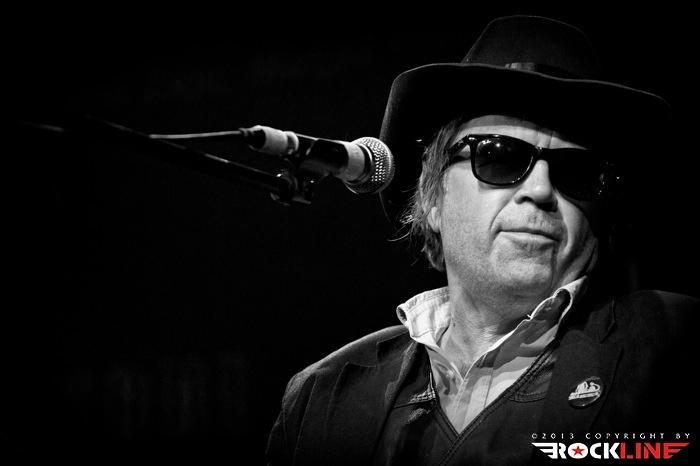
During Siddharta’s last bars, the lads and gents of Španski borci minimalistically took over the left side of the stage, the backing band of the show’s monument and the man who in fact opened it all, who kicked off the hunting season for the perfect version of unplugged music. Pero Lovšin, the elder statesman of Slovenian punk, the main throat of Pankrti, then Sokoli, and then his own master, boss, or whatever we call it, has always been a synonym for partying and fun, but not for precision and sensuality. Lovšin’s rejuvenated backing crew, made up of Simon Cukljati and Rok Pogačnik on guitars, Rihard Zadravec on accordion and Pero’s “comrade-in-arms from the French Revolution of the distant year 1848,” Džimi Džej, this time armed with a tarabuka, started their set with a country version of the Vitezi obložene mize classic Neko glupo nedeljo. “If you gotta fight, hit back / if you gotta keep the peace, empty your glass …” Pero rasps sweatily, seated on a chair, and Španski borci, in the manner of campfire jamming, don’t wake the audience up all that well. The chemistry between the members is missing, which makes Lovšin come across as an aged bluesman, a rocker playing tunes by somebody else. Things really get going with the song Sodn dan, which announces the end of everything, and with its vision of a destroyed Ljubljana, the Sokoli song from the album Satan je blazn zmatran, from the ancient year 1992, unfolds as a nostalgic memory and a call for more radical changes to the state we’ve been rotting in for the past few years. A slightly stronger round of applause and reserved chiming in on the chorus “Just like it’s supposed to be on judgment day” showed that a thousand people had indeed filled Kino Šiška, while Španski borci took their slightly extended set solidly to a big finale. There was no real peak this time, but two strong aces had already hit the table, and I was really curious what would follow.
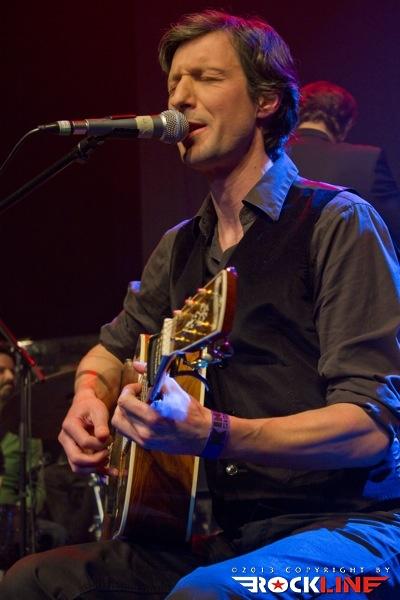
That Slovenes, besides Smolar, Pengov, Mlakar, conditionally Kreslin and Šifrer, really do have solid singer-songwriter power and potency was proven, by stepping out of the spheres of bands like Katalena, S Filtrom and similar eclectic flirtations with the limits of the permissible, by the poetically powerful and fired-up Boštjan Narat. A man who, under the guise of a calm, gallant intellectual, hides a heap of anger drenched in metaphor. Strah je odveč is the title of the record that takes us flying into deeper depths of sensuality and colorful caressing with Narat’s lovely baritone. CDG 14.45 pours into the ears from the stage a dose of a captured moment at Paris’s Charles de Gaulle airport, an airport named after the French president who in the late autumn of his life once wrote, “the more I get to know people, the more I like dogs.” A gentle guitar, the muted pizzicato of the orchestra’s string section in the background, and Narat, in a manner of total relaxation, sings an ode to the body, love, estrangement, parting, emptiness, the egocentrism of relationships, fears that are about to croak, glassy memories and impressions of passion. Narat is fluid and flowing, sensitive, metaphorically rich, contemplative, though it’s true that after the guitar strumming fades, which for a moment recalls Metallica’s One, the audience doesn’t greet the perfection as loudly as it would greet something more familiar from the radio waves. The lukewarm applause leads Narat’s outstanding stage performance to its close with the cynical jazzy beauty of Zdi se, a song from the album Konec sveta pride vedno nenapovedano. The full orchestration works shatteringly as the young singer-songwriter sings about yet another lost love that never happened, the story of yet another unfulfilled acquaintance and romance. A beautiful tale of leaving a date to which only one party showed up sounds like an address to Hope, Happiness, the Future, or, more profanely, to that unknown comely girl and perfect Love. A lovely calming of passions gives the live show a dreamier touch.
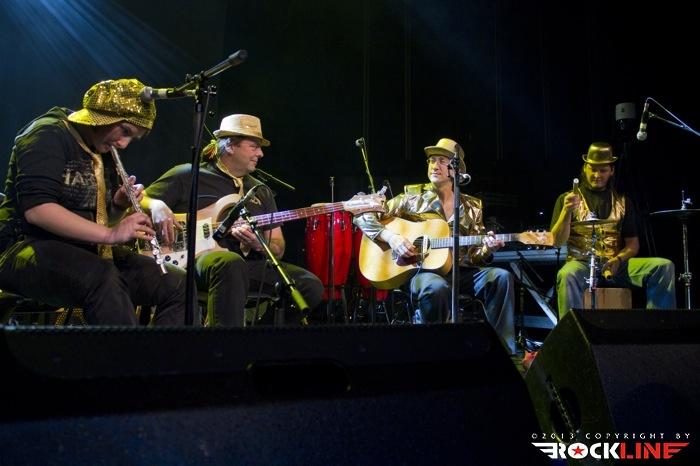
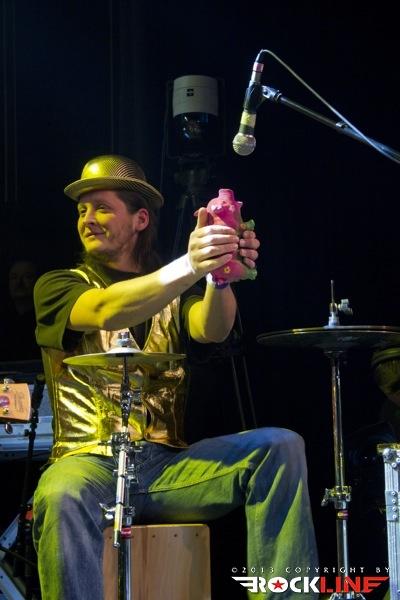
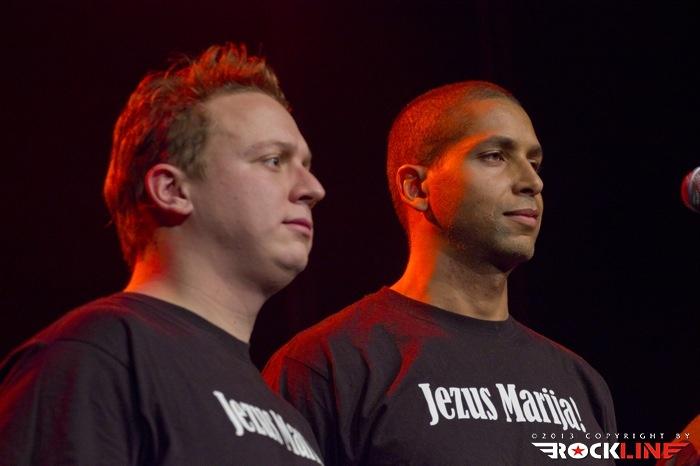
After the dreaminess, it’s time for a bit of humor, buffoonery, a pick-me-up and direct provocation in the avant-garde way. People understand everything, right? Sure they do! That’s why I like Zmelkoow, the Primorska bearers of Monty Python-style humor and intellectuals of brutally honest cynicism, so much. The challenge the coastal jesters set themselves this time was above standard. Visually too, since in times of recession and scarcity they put on their best, literally golden clothes and took the left side of the stage. In the song that was meant to weave, in ten minutes, a story about the revolutionary spirit and efficiency of Slovenian youth and upheavers, there was a lovely dose of bitter humor. “The protests went to the hypermarket, which we’ll say a bit more about later. The zombies went to the hypermarkets too, so things just moved over, but it keeps going,” Goga began the concert narrative in his own style. “We’ll sing a new song called Pussy revolucija. Before that we’ll sing Revolution Nine and after it a song with no title, but it’s a recognizable enough mix of two songs that it doesn’t need one,” the band’s main throat prepared the audience for the shock, and Longyka started a ten-minute countdown, after which the coastal jokers could literally have been unplugged, quipped the host of the evening. That Zmelkoow always have something fresh in the bag and that they have no intention of peddling nostalgia this time, Nuša, Žare, Goga and Aleš proved with a practical demonstration of Dadaist creativity. The arrhythmic intro was a real sonic provocation, during which Goga hums into the mic every now and then: “Number five … Number five … Number twelve …” and after a third of the time had passed, a clearer critique of the system continued with bitter cynicism aimed at all the revolutionaries who, instead of fighting for their cause in front of parliament and the other institutions, succumb to the zombie call to visit hypermarkets, because there are sales on. Are we sold souls, or better yet, the revolution has failed, Zmelkoow add in their own way, and after that realization comes a literal ascension to heaven with a wonderful fusion of Led Zeppelin and their Stairway To Heaven with a Kekec song. Good cheer is the best, right? Without orchestral backing, the stage provocateurs close the evening with a serene song and a question we have to answer ourselves, one we so often prefer to ignore: “What’s the little titmouse singing to me?” Even the birds are singing that we’re in … So, smile on your lips and everything will be OK, right?
Vse je OK is also the title of the new album by the young, wordy rap ace Rok Trkaj, who this time unplugged his pre-recorded samples and matrices and, instead of a DJ, invited onstage, besides the orchestra’s string accompaniment, his own live band, in which Jani Hace took the bass spot (yep, Siddharta’s current bassist …), Janez Gabrič sat behind the drums, Teo Kolori strapped on a guitar, and Denis Horvat sat at the concert piano. I don’t see saxophonist Lovro Ravbar onstage, nor any backing vocalists, but Trkaj, powerfully and without restraint, with the song Prvič from the album Rapostoli, which celebrates five years this year, sails into a flowing stream of free rhyme, a spill of all the things we young people do for the first time, and the free freestyle is metrically precise this time, with the funky groove of the backing band blending nicely into the background of the rich layers of orchestration. It all works naturally, unforced and richly, and on an avalanche of well-woven Slovenian words we can more actively give in to some more energetic swaying. On the song Živim zato the young Ljubljana native loosens up completely, opens all the registers, and, on the principle of unpredictability and spontaneity as far as a live show allows, gives himself over to the beatboxing accompaniment of Jan Šilc, a member of A-Kamela and Oktet 9. Trkaj does his job with distinction, and so does the backing band, so the wordy avalanche of thoughts and flashes was a real contrast to the otherwise more organic music, and in the competitive duel Trkaj gains a few inches of lead over his “rivals” in the battle for the title “Winner of the Izštekani evening,” the laurels of which are, of course, a verbal message that sober concertgoers may carry out into the world.
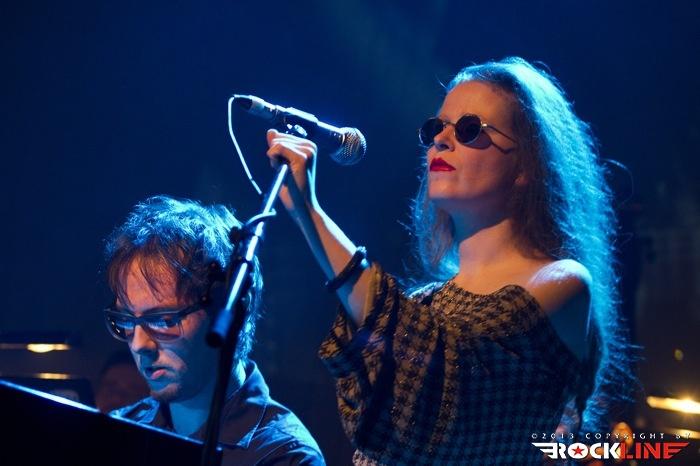
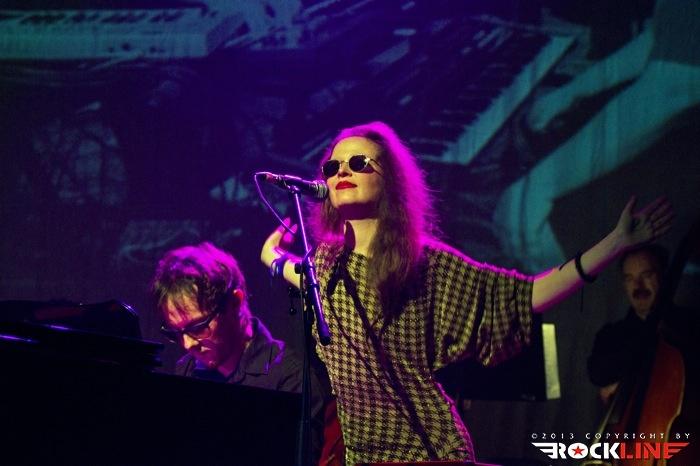
What followed was far more contrasting and extreme, at least on the artistic side. Aphra Tesla is an outstanding Slovenian musician who describes herself as a true operating system, a valve for the seepage of her lyrics and poetry, and after the sounds of the excellent record Home In The Zone first anointed my ears, I could hardly wait for this act of the concert. This time I truly justify using the words controversial, above-standard and extravagant in the same sentence, because the minimalist approach of just two performers stripped the soul of Aphra’s music to the bone: the perfect blend of the singer’s exceptionally colorful vocal, who in one person combines the gracefulness of Josipa Lisac, the jazzy ring of the divas of the golden twenties of the last century, and beneath a thick layer of soul the shadows of Rimbaud sneak into the world, shaking hands with the lyrical meter of Jim Morrison (at least I feel something fateful, sharp and painful, fatal, through and through). An additional factor of pleasure is woven by the flowing jazz compendium of meter and exceptional musical knowledge served up by the up-and-coming talent of Slovenian jazz, the potent Marko Črnčec, and after Pojke Indiani and a sensitively sung Raven I have to admit that the pearls of excellence were served this time to people who didn’t deserve them. I wouldn’t waste words on concert culture, since there were primitive characters and vulgarians who, during a performance that demands a bit more attention and concentration, squandered it with tasteless remarks, disrupted the stage rhythm with loud conversations and ruined the perfect pleasure of those of us who came to a concert to listen to music, not to idiotic stories about things that have nothing to do with Izštekani. The pearls were served to swine this time, if I may be a little extreme. The vocal minimalist touch of intense heart and transcendent lyrics, which knows how to shake you to the very center of the heart, was served to a rabble that always looks for a game on the first ball. Aging rockers, posers, students with extended graduate status, rich kids and empty-headed poor souls fall for anything more tuneful and instantly catchy, and a pathetic horde of thirsty people, sadly, needlessly emptied the hall in order to quench their parched throats. Aphra Tesla was the overlooked treasure of the evening, for which, at least from my side, she deserves sincere praise for professionalism, dignity and high quality of performance, and a written-down standing ovation, which artistry of such high quality also deserves!
Slovenia, on the other hand, has an inflation of tides, since besides the band Tide there is also The Tide. Which came first and which is better is of course a matter of taste, and it’s not worth arguing about. Personally I prefer neither one nor the other, but I have to admit that The Tide were fully up to the stage task in front of a packed hall: to throw off all the ballast and, with one of many touches along the way, approach the landing on their new studio record Landings. It’s about directness and a certain purity, with which Longyka, by his own key, cleanses the poisoned organisms of bands that stray from their (true) path now and then. The Tide found their salvation in ecological cleansing on Izštekani back in 2007, and singer Tomaž Štular and his companions from The Tide reap thunderous applause simply by walking onstage. The album Landings will reportedly see the light of day in March next year, and Kino Šiška gets the premiere performance of the song Little Love Pretender, which, instead of loud ambient washes and the band’s alternative approach, is this time distinguished by the minimalism of piano, bass and vocals, with a rich layer of orchestral backing breathing passion into it. The Tide want to be more than just an alternative band, and the pompous sound picture conjures up the image of big stages, dazzling lights, a sea of camera flashes, though personally I think stardom’s glitz and thirst for fame are overrated, and The Tide should have something more to make the wide world more conquerable. Not even the stage guest appearance of Tabu singer Tina Marinšek, who sings the song Carry On in a duet with Štular, drives me to change my mind. Longyka also devotes a slice of attention to the fact that Tabu, as one of the stronger stars in the sky of the Slovenian pop scene (whatever that means), are about to completely redress their music, their repertoire, and in June next year Slovenia will be treated to Tabu and the RTV Slovenija Symphony at Križanke. Yet another one of the “highlights of the year,” then …
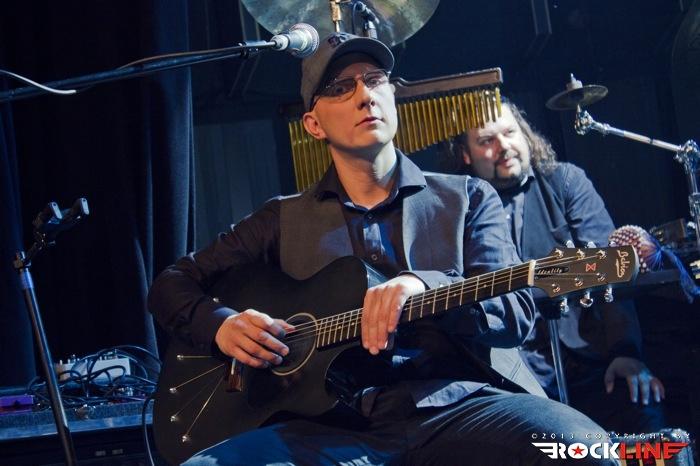
Personally, I was waiting for a stage return to the days of rock’n’roll and the arrival of the phalanx of Res Nullius, who a few days ago announced online their final switch-off of the amps, the respirators on the ailing patient called Res Nullius, and the reasons are noble: in the name of a lack of creativity and the urge to create, the decision is consensual and reportedly final. This time, though, something new and rarely heard and seen was in the offing. “When we were talking about tonight, there was also a big question: will it happen or won’t it. Ten days ago it was a go. Then they said there’d be electric guitar and amp, but the arrangements would be changed. Yesterday at noon they let us know: ‘Res Nullius are bringing an acoustic guitar!'” the host of the evening announces the arrival of the veterans from Velenje. Boštjan Časl on bass, Janez Marin behind the drums, acoustic-strapped Boštjen Senegačnik and, front and center, the never-calm Zoran Benčič shared the stage this time with one of the best, if not the best, Slovenian blues harp players, Damir Jazbec, a.k.a. Jimmy. The latter left his outstanding mark on the work of Mestni postopači, in the bands B.A.N.G., got woven into the veil of the Jezdeci of vast dimensions, and built the mighty reputation of one of the most sensitive and penetrating disciples of Joey Frisco on this side of the Alps. Res Nullius showed the Ljubljana audience a somewhat different face from the usual one: in an outstanding blues-rock show of complete sonic minimalism they shed all the furiousness, eruptive energy, electrified danger and looming charge of self-destruction that made every one of their gigs I’ve attended so far feel like an adrenaline ride down the rapids of a necrotic river of emotions, or a blind descent, or a leap into the darkness of the unknown. This time the pair of songs Krvavi kolaž and Zdravo je biti divji was somehow reined in, tamed, held back and atypical for this organic foursome of garage artists of pure rock’n’roll from Velenje. Seni and Zoki were taciturn and gloomy, Boštjan and Janez nearly absent, and the only one giving more than 200% of stage energy was the outstanding Jimmy. Res Nullius without distorted electric guitars are like a doughnut without jam: something’s simply missing. Mostly the energy and the much-needed kick that aged, almost benign acoustics cannot and does not manage to offer. Something is rotten in the state of Carniola, and the bitter aftertaste this time came with an anemic, not very shattering or memorable performance, which simply won’t set a new milestone of excellence for Nullius this time. Or are we talking about a more bitter act of history and circumstance? Part of it is down to the almost final, irrevocable resignation statement of all the founding members that, after a quarter of a century of existence, it’s time for an end, an embargo on selling off the band’s family silver, and a move into something else, not necessarily better. It may be fatalism or a calculated marketing move, but the fact is that only time will answer the guesses, since when Zoki was hinted that collapse was at the door, the breakup of the Res Nullius structure, he answered ambiguously that December is still the month of Res Nullius, and then we’ll see where the story and the further saga unravel.
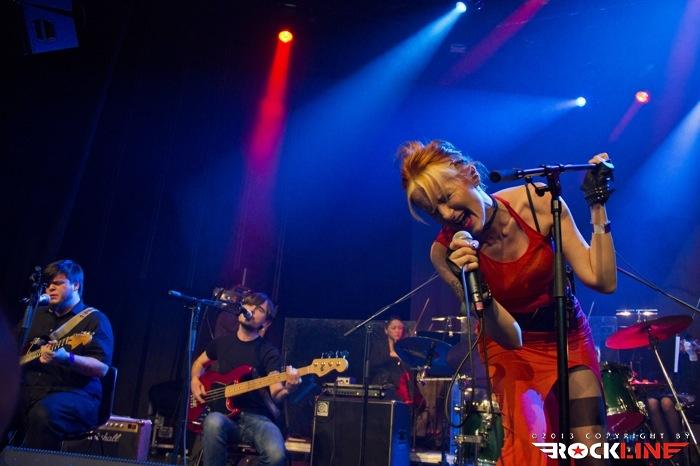
The creative threads, meanwhile, unravel well for the superstar alliance that gathers, under the umbrella name Werefox, people from Psycho-Path, Bekko, Sphericube and Lollobrigida, with perfect power-pop as the common denominator this time, a bulked-up alternative highlight of the Slovenian mainstream that is more than an obscure, easy-going inclination toward total sweetness. Werefox are a killer beast with a soft heart, an outstanding musical colossus built on the poisonous guitar lines of the superb Sašo Benko, a.k.a. Beko, joined without a trace of weakness by youngsters with style: bassist Manuel Hahn, hard-hitting rhythmist David Halb behind the drums, and the femme fatale of the Slovenian alternative world, the exceptional Melee. This time the return to the home of the contemplative and mystically juicy record I Am Memory is somewhat altered. The alternative pop-ish avant-gardists from Prekmurje opted for a new élan in the songs, helped along no end by Mirko Lazer with his arranging baton, who wove a sophisticated note of complete polish and improved shine into the solid structures of the song March Of The Finest, which was still searching for the right calibrated note, and, with the crossing into the spheres of Redneck Genious Story, a tale of a man who decides to eat his car. Werefox become the moderators of the basic scheme in their own story, while the orchestra gives the schematic design of country-rock alternative the much-needed flesh of total pomposity and newly found punch. The dramatic finale led to complete ecstasy, followed by thunderous applause, and so Werefox also get sonic confirmation that this is really something more than sheer coincidence and just two excellent songs. I believe we’ll hear more than a repeat of excellence in the future. The lads and the lady have enough mojo to build on the story and refine it!
The countdown to the end wasn’t over yet, since after the switch to the number of twenty songs for twenty years of existence, a completely different band took the stage in place of Niet, breaking the pledge of pure numerics of 20 Years of Izštekani and serving up a new dose of provocativeness. The quintet Flirrt, who, with the R forced into their name, under which they recorded three records (Frizerski salon, Modroplavo and Univerzum), complete the Horizont story with this year’s Lajf. The group, made up of otherwise solid musicians of the caliber of Peter Vdovč on keyboards, Toni Habula behind the drums, Borut Velušček on bass, David Stritar on guitar and Rok Lunaček on mic and guitar, has never been in the sphere of complete musical excellence, but with their lovely acoustic rebel song Izštekani they deliver a good critique and assessment of the current state of society and the times. To survive these crazy times, we must know how to simply unplug now and then, and the guys hope the state won’t introduce some new tax to patch the dismal budget hole, say, on unpluggedness. They’ve stolen everything from us, dreams, the future and hope for a better tomorrow, and Rok and company put it nicely into a direct, not exactly mealy-mouthed song of musical discontent and sarcasm.
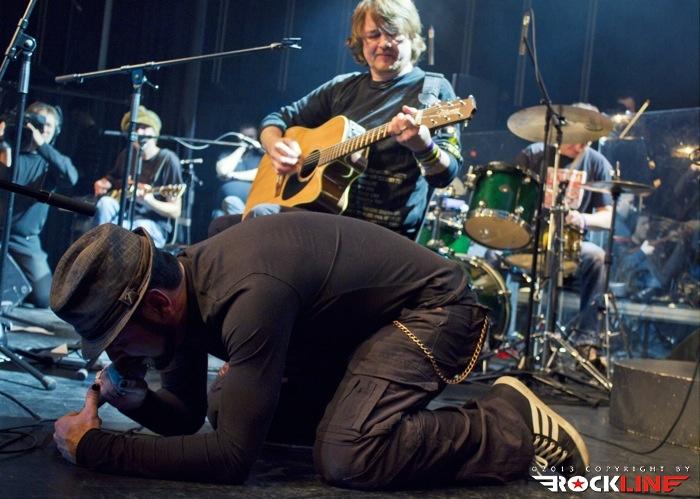
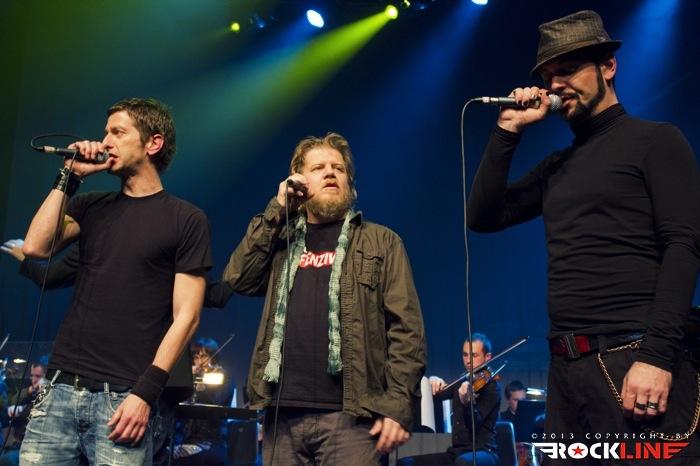
The closing act was also carried out, in fully star-studded fashion, in the spirit of rebellion and punk revolution, when the stage was taken by former nonconformists, now legendarily sung-about stars of the urban revolution of anarchist resistance: the outstanding Niet. That punkness works even with the noise completely switched off is proven wonderfully by guitarist Igor Dernovšek, Janez Brezigar on bass, Robert Likar on second guitar, Tomaž Bergant behind the drums and the potent orator Borut Marolt (let’s finally admit out loud that the guy is more than just a stand-in for the late Habič!), with the help of the symphony and members of the Rokovnjači cast. Balada za obečence is a Baudelairean vignette, a social critique of the system, a big “Niet!” to usurpation and capitalist enslavement, the rape of the nation, while the choir of the Rokovnjači cast (on the stage, among others, stands the evening’s other rapper, who this time sings in tune, Murat’s partner Jose) adds a note of greater intensity, which, alongside the compact sounds of Niet and the orchestra, gets a third dimension of choral harmony. A more cathartic finale than Ruski vohun, to which the thousand-headed audience in the Cathedral lends its lungs and throats, neither Niet nor Izštekani could have wished for. The wonderful energetic finale is topped by thunderous applause, on which the continuation depended, and the last act of an almost three-hour, well, two-and-a-half-hour for sure, birthday celebration of a show with meaning. Then came the dramatic finale with fireworks, as alongside Niet the stage was joined first by the frontman of Dan D, Tomislav Jovanović, a.k.a. Tokac, who reaps a big ovation with his interpretation of the chorus of the song Lep dan za smrt. “The sun was shining / and the sirens were wailing. / The sky was blue, / almost cloudless. / Under the pale yellow sun / we ran down the road, / when the first flash embraced us, / we fell. / And yet it was such a beautiful day, / too beautiful for death,” echoes under the vaults of Kino Šiška, and then Tomi M. comes onstage too, lies down by the monitors and recites: “You lay in blood, / in the middle of hunting air and fire. / You lay under the sun, / blazing, red, unreal / In the middle of the horizon, / wrapped in smoke. / In the middle of the first day / of war, war …” and the hall drowns out the already thunderous expression of ecstasy, which outgrows the static feel of an evening that unfolded so refined, yet still subordinate to the fact that the event was live on air, caught among the waves of Val 202, in the quadrant of total unpluggedness …
The jubilee event thus earned a deserved place in the history of the Izštekani show’s happenings, and everything was subordinated to an almost rococo feeling of abundance, wealth, glitz and exhibitionism of total power, which could roar entirely on acoustic lungs. The whole thing sounded tidy, planned, well thought out and gallant. With small fixes, above all reprogramming the people of shallow taste, the story could have been perfect and at an even higher level, but this time you won’t hear condemnation again, since the ending was good, and then everything was good, right? After all the lights went out in the belly of the Cathedral, the sanctuary of concert pleasure, there followed a gradual switching off, exit, unplugging in the space outside the hall. In the company of the best, the loudest, the mightiest, in the company of the consecrated, enlightened and all-knowing, while for the more modest, the feeling sufficed that this time plenty of good was on offer to dream about the next 20 years, the next organic leaps into a more acoustic spectrum of music, the next crossings of the line of subversion and acceptability in the manner of Jure Longyka. What more could one wish for from an evening of sweet delicacies of Slovenian music. Or could one? Maybe some Miladojka, Demolition or similar calibers, which for now will remain unfulfilled wet dreams until next time. Maybe for a big 30 years, from which we’re separated by only 10 more years? Maybe … We’ll see …
words: Sandi Sadar Šoba
photos: Nina Ferkolj

















Setlist and performers:
1. Klinik (Siddharta)
2. Novi svet (Keaziree) (Siddharta)
3. Neko glupo nedeljo (Peter Lovšin)
4. Sodni dan (Peter Lovšin)
5. CDG 14.45 (Narat)
6. Zdi se (Narat)
7. “10 minutni digitalni ajmoht skladb” (Zmelkoow)
8. Prvič (Trkaj)
9. Žvim zato (Trkaj)
10. Pojke Indiana (Aphra Tesla)
11. Raven (Aphra Tesla)
12. Little Love Pretender (The Tide)
13. Carry On (The Tide and Tina Marinšek)
14. Krvavi kolaž (Res Nullius)
15. Zdravo je biti divji (Res Nullius)
16. March of the Finest (Werefox)
17. The Redneck Genius Story (Werefox)
18. Izšekani (Flirrt)
19. Balada za obešence (Niet)
20. Ruski vohun (Niet)
————————
21. Lep dan za smrt (Niet, Tokac and Tomi M.)
