

In early 1980, AC/DC found themselves in a seriously unenviable position. The Grim Reaper tapped their enigmatic vocalist Bon Scott on the shoulder and invited him along. For good. On 19 February 1980, he was found dead in the early morning hours on the back seat of a car in the middle of London. After a night of heavy drinking. He had choked on his own vomit. In his sleep. He was only 33.
On that February day 40 years ago, the band lost their singer and lyricist, who had been with them since 1974. Scott had become the central figure of the group, which built and cemented its stance with the uncompromising courage of total devotion to rock’n’roll. Bon Scott had become the voice of a generation of teenagers, so hardly anyone believed AC/DC would win the war after losing him. When Brian Johnson played his first show with AC/DC in Belgium at the end of June 1980, he had to step into the shoes of the man who was the heart and the screaming grinder of the band, and whom everyone adored. The younger of the Young brothers – Angus, that is – was, in keeping with his usual routine, already fully ready in the last minutes before the Belgian show, slowly making his way toward the stage. In that moment he caught the look on Brian Johnson’s face out of the corner of his eye, and it was light-years away from anything even remotely resembling relaxation. The singer was walking straight into the arms of his baptism by fire. To the guitarist, who took this kind of situation as pure routine, it was clear at one glance at Johnson that Brian had crapped his pants. On stage that night, Johnson, thanks to nerves, sang the same lines twice, in two different songs. Of course, the older of the Young brothers – Malcolm – didn’t miss that either, and during the show he walked up to the singer and asked him point-blank, in a raised voice: “What the hell was that?!?!” Still, Johnson pulled off the show at a high level, and he loosened up when he spotted one of the banners in the crowd that read: “Good luck Brian!”
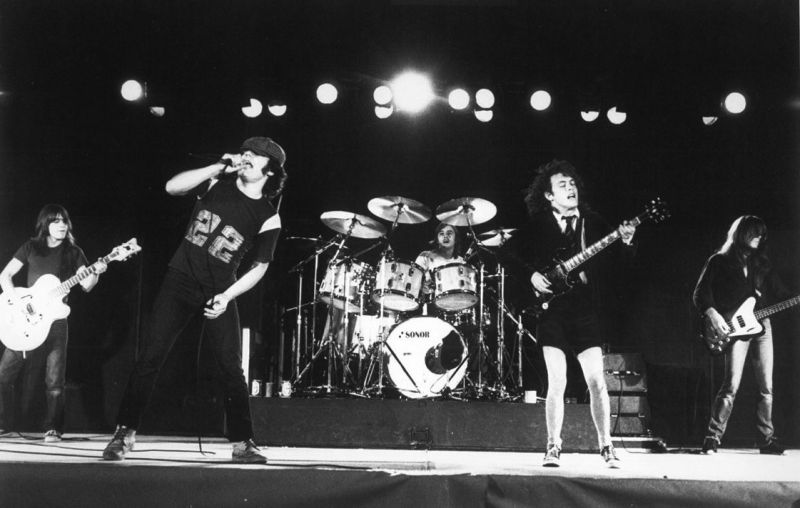
“Highway To Hell,” released in 1979, sold great around the world, but in the US, where it did go gold, it didn’t reach a million copies. It was an album that hinted its follow-up could be the real giant, the one that would bring the whole world to its knees before the band. Even Bon Scott himself, just a few days before his death, told his mother Isa in a phone call, in high spirits, that he could feel the band’s next album was going to be the real deal.
Anyway, just two days after Bon Scott’s funeral, on 1 March 1980, Malcolm called his brother Angus and asked: “Wanna come down to our place so we can have a jam?” The brothers were playing together again very soon, and that gesture showed the band wasn’t going to stop. On 8 April 1980, AC/DC officially announced they had a new singer. Brian Johnson was a miner’s son from Newcastle in Britain. An Englishman. Just like bassist Cliff Williams, who had joined AC/DC three years earlier. Before his career with AC/DC, Johnson spent almost a full decade in the ranks of Geordie, a band on the verge of commercial success that Bon Scott himself once caught live. Scott praised Johnson’s performance in front of the other AC/DC guys, and Angus later said: “Bon didn’t like many people, and if he praised someone, we all knew they had to be really good!” Brian was making a living at a company that fitted roofs on cars when he got the band’s call and the invitation to audition. The audition happened at one of the band’s stops in London, when AC/DC found a free gap in their schedule. Johnson passed with flying colors, performing Nutbush City Limits, originally by Ike & Tina Turner, and Whole Lotta Rosie, Scott’s beloved AC/DC classic from the album “Let There Be Rock” (1977).
In mid-April 1980, AC/DC landed in Nassau in the Bahamas, at the famous Compass Point studio. Apart from one incident, when an inspector at the airport confiscated a batch of Malcolm’s guitars, and the guitarist’s blood boiled so badly that they could barely stop all of them from ending up in jail, AC/DC spent the next month and a half in a thoroughly professional fashion, forging new business triumphs. Keeping them company in the studio were producer and “Highway To Hell” acquaintance Robert John “Mutt” Lange and sound engineer Tony Platt. Lange, who was still at the start of a road that would later mark him as one of the most successful “manipulators of studio sound consoles” of all time, already knew the band and knew exactly how to paint a true sonic hurricane out of the elementary, simple, yet razor-toothed punch of the Young brothers’ guitar phrasing. Lange later said in an interview: “AC/DC were masters of slow rock. Their power really came through especially when they played at a mid-tempo.”
AC/DC were, at their core, a blues band. On one side they flirted with the fashionable fever of heavy metal, while also happily lingering in the characteristics of R&B. The violent flashing, built on solid guitar phrasing and vocal lines at the level of an air-raid siren, held up a single-syllable but tank-rumbling rhythmic slapping. With only small corrections, but a huge, detailed focus on the band’s raw energy, Lange managed to “squeeze” the animal untamedness of their stage shows into a stereo sound and keep all of its wild nature. Still, he lifted and cranked up the band’s sound, loaded it with a generous heap of decibels and sharpened it up. It was 1980, and Lange knew the sonic trends in heavy rock, hard rock and especially the new genre of heavy metal very well. Noise was what everyone was after. Johnson describes Lange’s fussing over details especially vividly, since “Mutt” paid the most attention to his vocals: “Brian again. You’ll sing it one more time. You held the line too long. He cared about where the inhales and exhales were, too. He didn’t want people to listen to the album and go, ‘Something like that can’t be done with just normal singing!’ By the end of all that, I was properly sick of it.”
The Bahamas are certainly a weird destination for a rocker, and Johnson once said of it: “All you want to do is lie around on beaches, and you can’t get a proper pint of beer anywhere. But somehow we pulled it off.”
The logistics and comforts of Compass Point studio were impeccable and world-class for the time, and it was built by Chris Blackwell, owner of Island Records. Lange’s assistant Tony Platt said that choosing this studio was a very smart decision, because all the members were constantly in sight and there were none of the distractions that would have come up had the band recorded in London or Sydney.
The songs radiated a different character than before. Not because of the new singer. They were anything but subtle, just like before, but the change could be felt. It was there. The essence of the bristling, heavy phrasing stayed intact, but the album carried a sonic shift. It remained rock’n’roll, but with metallized tips. Whatever Lange had been “toying with” on “Highway to Hell” now fully blossomed in the sound. The sound got big, and Johnson’s exceptional vocals drove it all to the absolute maximum. The album has a bunch of tracks cut in the mold of classic AC/DC “wrist shots,” like Shake A Leg, Given The Dog A Bone, Have A Drink On Me or What Do You Do For Money Honey. It certainly also carries a bit more sophistication, delivered by the closing boogie blues sermon Rock And Roll Ain’t Noise Pollution, as well as Let Me Put My Love Into You or Shoot To Thrill. The opening Hell’s Bells uses church bells, something already tried in rock history ten years earlier. On the Black Sabbath debut. But where those sounded funereal, the bells on Hell’s Bells have a completely different effect. Epic, ominous, even mystical. The title track could have landed in that spot too, so it’s no surprise it opens the B-side of the album. And last but not least, there’s of course You Shock Me (All Night Long). A track that was instantly destined to become a hit. A party animal with a magnetic charge, bursting with such instant hunger that you could cut it with a knife.
AC/DC knew they had superior material in their pocket for a monstrously big new album. Atlantic Records knew it too, but the problem was that the label didn’t want to use the cover the band proposed. AC/DC wanted a completely black cover. Like a tombstone with a simple symbolic inscription, “back in black,” and the band’s logo. An album dedicated to Bon Scott, that is. It opens with bells, something the band had never tried before, and at the same time, with that symbolism, it expresses their mourning. On the album, it feels as if Scott’s spirit were still present in the studio. The label saw the band’s choice as a bad business move. The band didn’t soften up, but the two sides reached a compromise: the band’s logo on the album could get a gray outline.
Through all of this, the biggest question mark was certainly Brian Johnson, who, despite the thoroughly unenviable burden of being the replacement vocalist, stepped into the role with great respect. For everything AC/DC had become and been with Bon Scott.
In one interview, Brian Johnson also vividly described the birth of the very essence of the album “Back in Black,” saying: “Sometimes it’s strange how ecstasy and tragedy are born together in rock music. Every night you create all these incredible, passionate atmospheres when you’re on stage, and then suddenly, out of nowhere, death strikes, in a way you really can’t imagine! The crown of it all is Bon’s death, who died choking on vomit, with his neck twisted in his sleep. The poor young man was admired by thousands and thousands all over the world.”
Unlike Bon Scott, who brought to the stage the look of the last street outcast, shamelessly showing off his sweaty, hairy chest and tattoos, along with unbridled stage debauchery and macho cockiness full of naughty manners that bordered on stage excess, Brian was his polar opposite. Wearing a flat cap as a badge of working-class belonging, Brian, rough-looking as he was, constantly shook hands with fans in the front rows, instantly tearing down the bridge that usually separates stars from the crowd. That’s why the band’s followers adopted him quickly and took his voice as their own.
Johnson took on his role humbly and with great modesty, expressing a lot of gratitude. He was certainly haunted by a fair measure of insecurity and eaten up by a pile of doubts, which, given whom he had to replace in the band, was completely logical. His own thoughts show it too: “I hope the AC/DC fans have accepted me. They wanted the band to go on. So far I’m not reading any banners or taking any phone calls demanding that I leave the band!”
Def Leppard vocalist Joe Elliott also vividly describes his first encounter with the new AC/DC singer live. It was 1 August 1980, and Def Leppard opened just one night of the AC/DC tour. It was in New York City. Elliott remembered Brian from the Geordie days and knew Johnson was already a veteran on the rock scene, but this show was Brian’s first ever on US soil, so the singer was feeling quite uneasy. Elliott recalls: “He dragged me aside and asked, what the hell am I supposed to do? To him I was a kid still learning the ropes, but I told him anyway: Just be yourself. That’s all you need!”
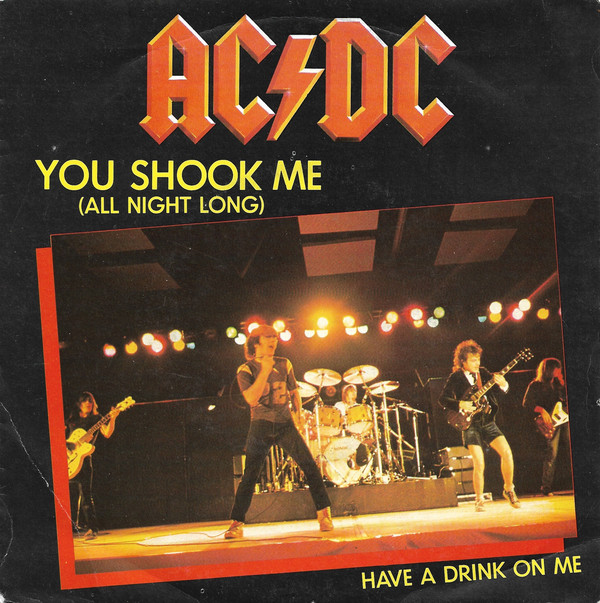
A good year after Bon Scott’s death, the band played seven consecutive shows in their home country of Australia. At the band’s third show in Sydney, Brian received a confirmation he would never forget for the rest of his days. After the show, he met Bon’s mother Isa, who told him: “Our Bon would be proud of you, son!”
By the time the band returned home, a good year after its release, when it had reached #4 on the Billboard chart of best-selling albums, “Back in Black” had sold three million copies in the US alone. By 1984 its sales had grown to 5 million copies, and by 2003 it had sold 19 million. To this day, the album has sold over 50 million copies in the US alone. In the US, “Back in Black” has gone platinum as many as twenty-five times and is considered one of the best-selling rock albums of all time. The single You Shock Me All Night Long was the first AC/DC single to break into the American Billboard chart of best-selling hits, where it reached #35.
So after AC/DC lost almost everything, they won the war. In grand style. Glory.
Author: Aleš Podbrežnik
