Venue: Katedrala / Kino Šiška / Ljubljana
Concert date: 21.11.2012
Attendance: 650
Ticket price: presale 32 EUR, day of show 35 EUR
In August 2009, with the opening of the Center Urbane Kulture Kino Šiška, Slovenia’s concert scene got a serious boost. Big, high-quality names from every genre and corner of the music world started flocking to the Slovenian capital again. The urban had its citizenship back, and a common denominator in the form of the renovated Kino Šiška. And when you mention the urban, you can’t possibly skip jazz. Is there anything more urban than jazz? Jazz is a synonym for the urban, and vice versa. So it was only a matter of time before the new venue hosted one of jazz’s big world names. And after half a year of waiting, on March 5, 2010, it happened. The great Jan Garbarek showed up with his trio, joined by the famous Indian drummer Trilok Gurtu. Only two and a half years later, the masterful pairing paid us another visit. It was Garbarek’s third time playing in Slovenia, the first being in 2003 at Križanke, as part of Jazz Festival Ljubljana.
Jazz has a pretty sizable audience in Slovenia, but for a variety of reasons it just can’t get the place in society that it deserves. The problem is multilayered (the processes listed below are all closely connected and share a common denominator in the notion of ”crisis” – but more on that another time). It lies partly in the ”academicism” itself and the ever-growing hermetic closedness (and strange fragmentation) of the jazz clique, and partly in the daily mass banalization of (everything), whose herald in the music world is a market-possessed industry for churning out trendy (and generic) sounds that we can less and less call music, let alone art. This output is then spread with zero critical thought by a whole host of commercial radio and TV stations (-> quick buck), which only deepens today’s shallowness and musical illiteracy. People find it harder and harder to digest more complex and intellectually demanding musical forms, styles and patterns, let alone get anything out of them (or take anything away). Of course, the question of quality versus mass appeal (and their (in)compatibility) goes well beyond music, and in today’s densely populated world it’s becoming more and more fundamental, but it’s right here that the picture crystallizes nicely and the gap between the two sides keeps getting wider than it ever was. Crisis, tension, tragedy, all unpleasant labels. Quality, reflection, articulacy = artistic creation is moving more and more into the cultural underground. That’s why concert services like CUK Kino Šiška matter so much. They’re a bridge between the alternative and the ”mainstream”. The places where jazz is played regularly are getting fewer and fewer in Slovenia. Remember the recent closing of Jazz Club Gaja at Beethovnova 7 in Ljubljana (it still has the summer garden at the residence of the Slovenian Writers’ Association)? There aren’t many real jazz clubs left in Slovenia. Maribor’s Satchmo probably comes closest to the label. Sure, Slovenia still has a fair number of bars, dens, mini clubs and pubs that are on friendly terms with jazz, but it’s still too few. (Bigger) concert events only happen as part of assorted festivals (Jazz Festival Ljubljana, Jazz Cerkno, Festival Lent…) or a subscription program (Cankarjev dom – most often Klub CD). Now and then a little (experimental) jazz also strays into the wild alternative music hubs (Metelkova, Pekarna…), and Marc Ribot, for example, has become a regular guest at Ljubljana’s Metelkova. On the first program of RTVSLO, there’s less and less trace of Rončel and his legendary show Izza odra. Jazz isn’t doing well with the wider public right now. And that’s exactly why we can be grateful for the role Kino Šiška plays. It’s an interface between all these different worlds. Its importance as a major city cultural institution can’t be overlooked by the wider media either. The Pingpong jazz nights project (where various young (and not so young) Slovenian jazz musicians get to present themselves) is only one of the positives, but an even bigger milestone for promoting jazz is the kind of concert we witnessed on November 21, and which I’ll devote the rest of this text to. Time for Jan Garbarek.
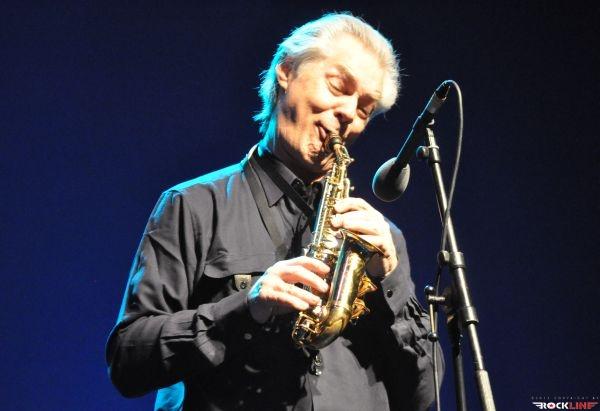
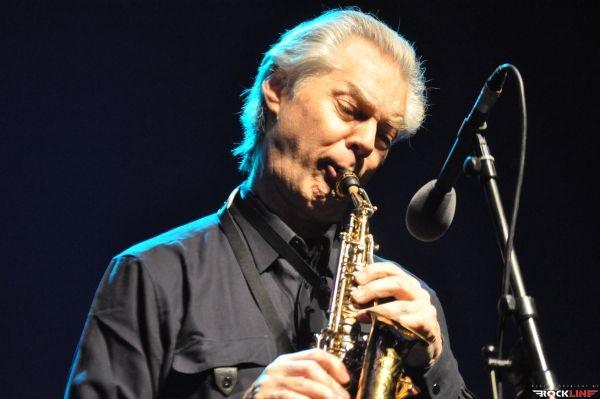
Garbarek is a true icon of European jazz, a synonym for modern jazz worldwide, and for many years now a trademark of the renowned European jazz label ECM. Besides all the awards and praise (for example, many high placements on assorted ”all-time lists”) piled up over fifty years of playing and performing, he’ll go down in jazz history above all as one of the greatest saxophonists of all time. Nobody plays the saxophone the way Garbarek does. A one-off, a master, a genius, the one and only, and we could keep showering him with superlatives, but none of them really gets close to his true expressive power. Words are powerless here. Words chase in vain after that immense something (= the music). And it was music that young Garbarek (Norwegian by birth, living in Oslo today) got into very early. He was barely fifteen when he won the title of best amateur jazz musician. That laurel flung the doors of the music world wide open for him. Collaborations just started offering themselves. In his first years he was marked above all by playing in the bands of Georg Russell and Keith Jarrett (with whom he recorded the classics My Song and Belonging), and later he worked with a whole slew of renowned names from the (jazz) music world. A particularly formative collaboration was the one with the vocal quartet Hilliard Ensemble, who work with the heritage of Renaissance music. So far in his career he has recorded 31 solo albums and played on 50 others. Combining that kind of productivity with such high quality is nothing short of a miracle. Garbarek is a master of improvisation, a master of the live show (see the next paragraph). He draws his musical inspiration not only from the treasury of world jazz, but also from various Scandinavian folk melodies. He’s also considered a pioneer of ambient jazz compositions, and his musical language often carries a distinct influence of Asian and Arabic music, which some were quick to link with ”new age” currents. His music reflects the Nordic landscape and the mentality of the people there. He’s capable of producing incredibly forceful outbursts of passion, anger and other radical emotional states, only to calm them completely in the next moment and melt them into a state of pure meditation. The music is easy to listen to and romantic, but at times also very dramatic and full of dynamics. It’s built from complex emotional, physiological and intellectual structures that nonetheless come across to the listener as supremely simple. Only the greatest artistic creations combine lightness of breath with the depth of human experience – and that’s exactly what best defines the music of Jan Garbarek: unique yet universal, grounded yet boundless.
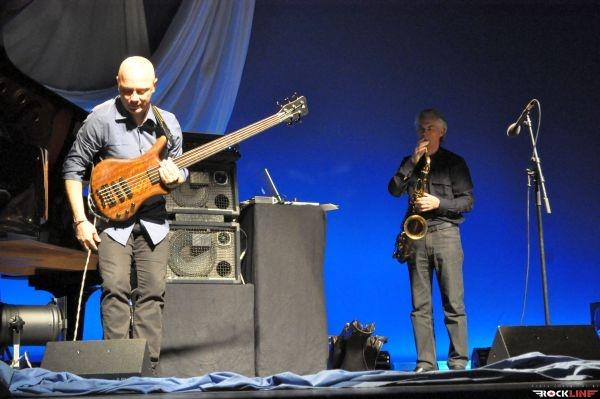
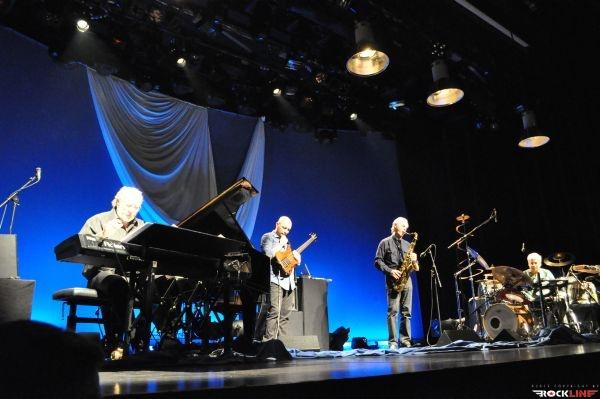
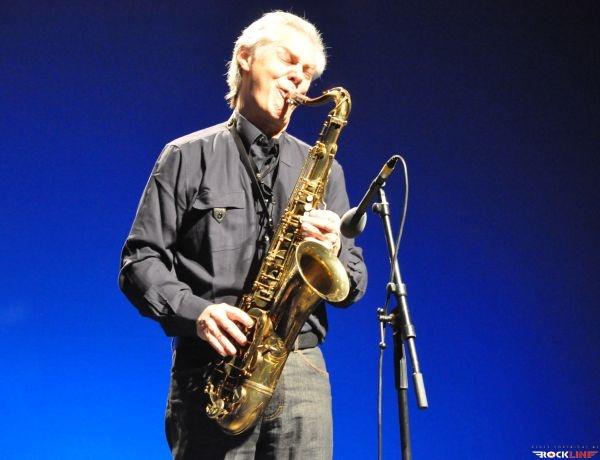
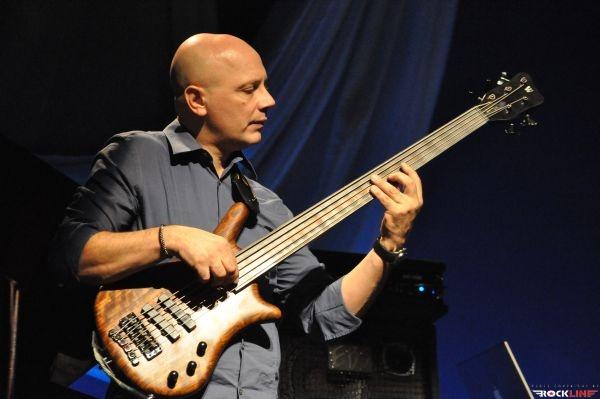
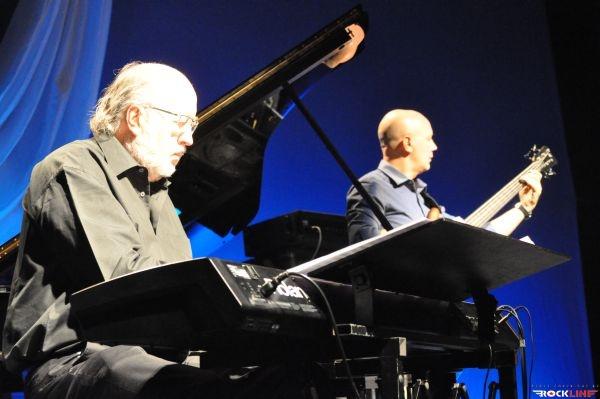
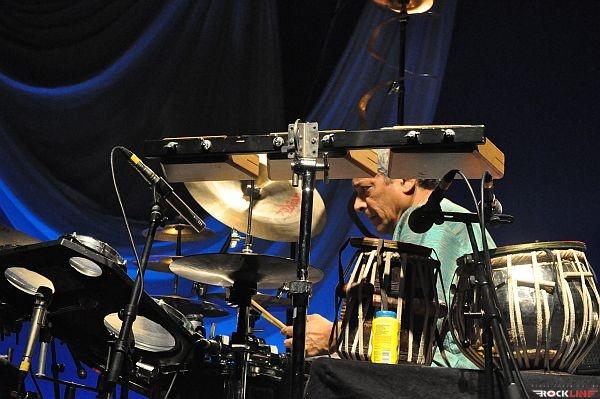
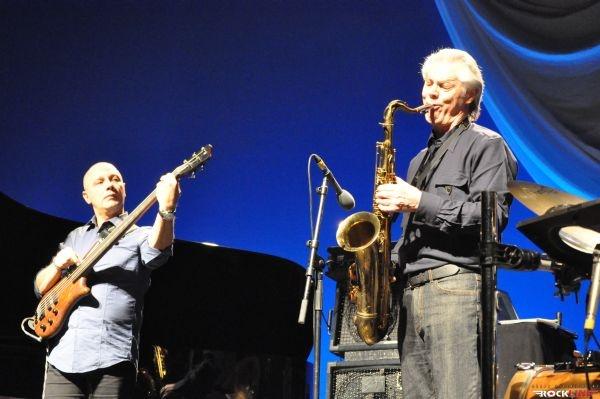
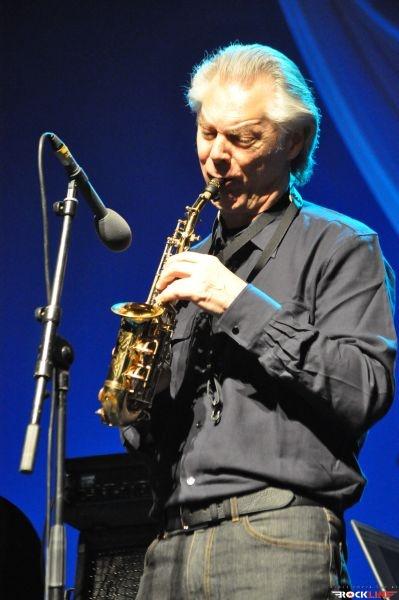
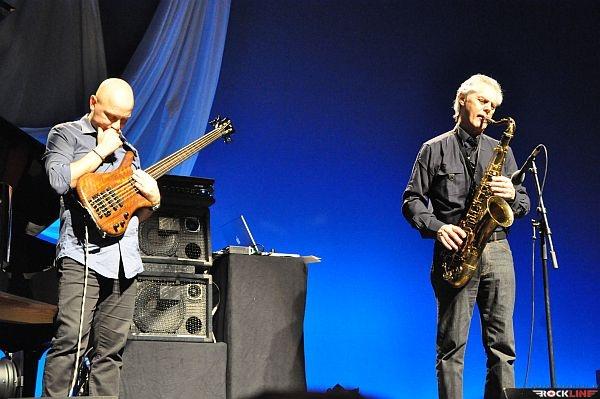
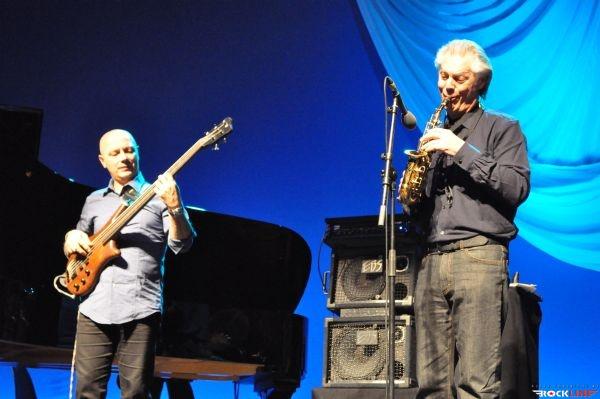
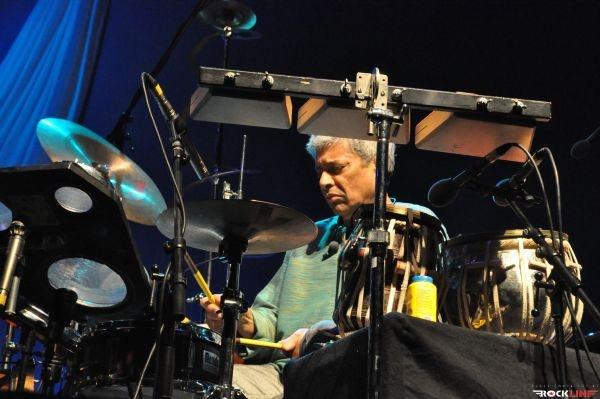
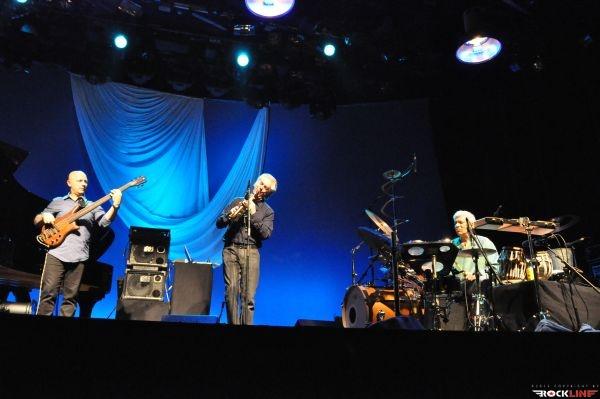
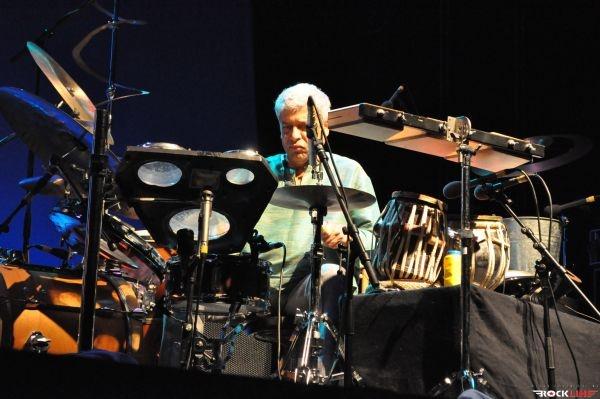
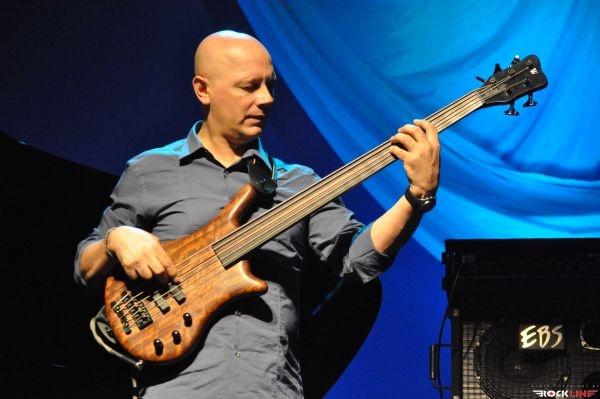
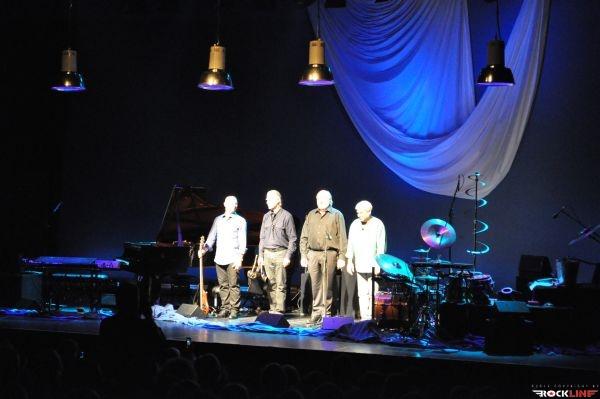
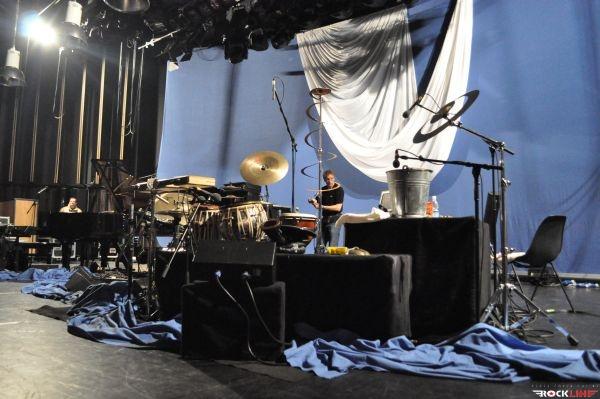
At the almost sold-out show (a few empty seats remained along the sides), he was joined on stage by the by now fairly steady members of his lineup, keyboardist Rainer Brüninghaus and bassist Yuri Daniel, while the special guest member of the expedition, on percussion once again, was the brilliant Trilok Gurtu (already mentioned in the first paragraph). The concert kicked off with an announcer who introduced the protagonists of the evening with great fervor and respect. During the first piece I couldn’t get enough of the stage setup, which was downright magical. The set design echoed the coziness of a living room while merging Nordic minimalism with Oriental aesthetics. One of a kind. The cherry on top was a draped curtain hanging in the background, lit in blue. The second piece opened with romantic musical motifs in which we very quickly recognized the famous Twelve Moons. The piece was marked by Garbarek’s bravura, filigree improvisational flourishes on the saxophone, perfect tension building, and wild, dynamic transitions between the different parts of this twelve-minute epic confession. Before the end, the piece was spiced up by a brilliantly escalating bass guitar solo, in which Yuri Daniel really shone. In the next piece, Trilok Gurtu showed off with a similar but shorter solo. That first solo was only a foretaste of the later explosion of imagination and magic. The audience was rather reserved, but still gave the band members decent applause after the solo spots. The band members were in constant dialogue, roles kept swapping on stage, and Garbarek gave his bandmates plenty of freedom and time to show what they could do. Brüninghaus’s piano solo was a feast for the ears. His playful fingers danced vehemently across the keyboard, from theme to theme, from pattern to pattern, and at the end he even brought a touch of rock’n’roll into his own number. During the fifth piece, Garbarek switched from his trademark soprano saxophone to its bigger brother, the tenor. His solo spots proved to be real soul food. The music calmed us, relaxed us, and brought us to a state of complete relaxation. Therapy without a single word. Idyllic. Jan Garbarek – Out of the Depths. The sixth piece was followed by a second drum solo, during which Trilok Gurtu showed why he’s considered one of the greatest drum masters, in both Western and Eastern techniques. He built on his drum rhythms with a special vocal improvisation, which created a distinctly organic music that brought to mind the famous Oriental musical ornamentation. That was followed by a real little musical experiment. He dipped little bells into a situla full of water and then struck it, so that this interaction (bells-water-situla) set off the most unusual, specific organic sounds. Avant-garde, live. No ”sampling” of rain or any other natural or unnatural processes. It all happened right there, live. More than a musical number, we were witnessing a ritual ceremony. And when Garbarek joined him on the whistle, the atmosphere hit its peak. The audience started accompanying their playful experimenting with thunderous applause and instantly made up for the lukewarm impression from earlier in the show. The concert was slowly winding down, the experimenting flowed into a lively melody that brought the end of the official part of the show. A romantic encore followed, an excellent send-off for the trip home. The performance lasted about two hours, and the repertoire comprised seven pieces and quite a few longer solo excursions.
Garbarek’s playing put us in a state of unbelievable bliss, you could even say rapture. An incredible concert experience that showed just how much emotional and intellectual charge good jazz carries inside it. All of which makes it even sadder that the wider public so often fails to give it the attention it deserves. But that’s not the case for Kino Šiška. It keeps showering us with one concert highlight of the year after another. This fall they’re coming one after the other: a solo concert by legendary jazz drummer Jack De Johnette, the first standalone concert in Ljubljana by the duo Silence in six years, a duel of post-rock legends Dirty Three and Godspeed You! Black Emperor, three days ago the dark Mark Lanegan sang at Katedrala, the Sonica festival is going on right now, and in early December there’s still the concert of the wild Devin Townsend to look forward to. I hope they keep up a similar pace next year. Then we don’t have to worry about jazz either.
Photo Gallery