Interview date: March 12, 2008
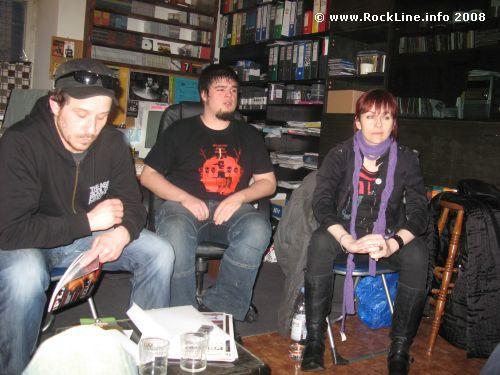
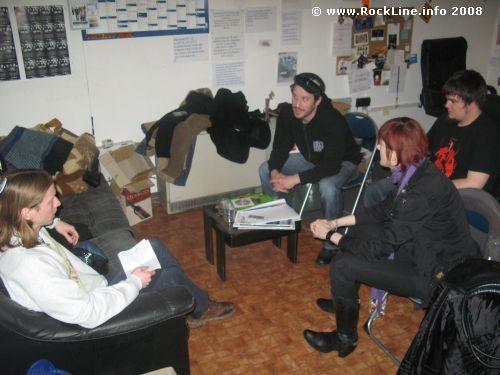
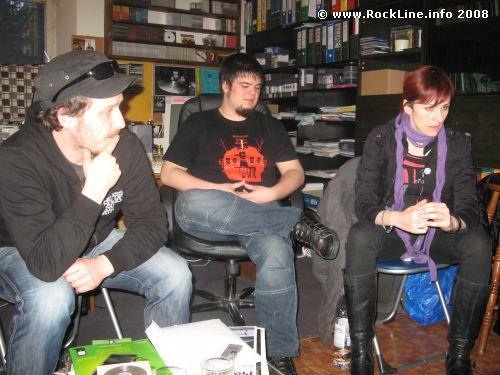
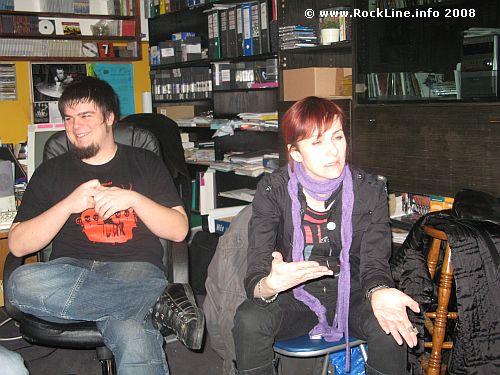
Psycho-path are a legendary Slovenian alternative band that’s almost impossible to pin down to a single genre. They never sweat labels and aren’t stuck in one narrow musical style. With them, anything goes. The only constant is quality, which they prove from album to album. This year they put out yet another superb record that’s both a typical Psycho-path release and totally new and fresh at the same time. We sat down with vocalist Melee and guitarists Jernej and Saša to talk about the new album and everything else.
Rockline: How happy are you with the new album?
Jernej: I’m happy, I haven’t found any flaws yet.
Saša: It’s always like this: there’s never going to be a perfect product. There’s always something you’d change. At some point you just have to draw a line and say, that’s it.
Melee: I’m happy too. I think it’s actually our best album.
Rockline: You often hear artists say they get sick of the album they’re recording. What about you?
Jernej: I know the feeling, but not with this album. If artists say that, it means they’re not happy with the product.
Melee: It definitely didn’t happen to us with this record.
Rockline: And with the earlier ones?
Melee: Not really. Of course you get fed up in the studio when you play the same track fifteen times. But when you step on stage, it’s a different story.
Rockline: How did the idea for the title and the cover come about?
Melee: We handed over control of the cover. We let the designers take everything into their own hands, the video too. They definitely picked up on the title as well, but not as directly as people might think.
Jernej: Probably the way those two hear and see it.
Rockline: So what does the title actually mean?
Jernej: Depends on the person.
Melee: It doesn’t mean anything lowbrow. We don’t see that “ass” as something inferior. But it’s definitely about the gap between the filthiest and the purest. There’s an anecdote behind it, but I’m not giving it away. If anyone wants to figure it out, they can dig around a bit. It’s not from the music world, though.
Saša: Well, I’ll tell you. (laughs)
Jernej: I don’t know what you two are talking about.
Rockline: How do your songs come together?
Saša: Usually it starts with an idea. Some things come by themselves, others you have to wrestle with a bit longer.
Jernej: Every song has its own story.
Melee: Some bands have more set patterns.
Jernej: We don’t. It’s not like Saša or I are classic songwriters who bring finished songs to rehearsal and then we build the arrangement together. Somebody always brings something or starts jamming. Personally, I’ve already got certain things in my head, then I show up and can play them. But if I did this on my own without the band, the whole thing would sound quite different.
Melee: What’s different on this record is that our drummer is also an excellent keyboardist, so we wrote some of the songs that way.
Jernej: So two ideas came from him, on the piano.
Rockline: Cookie Jar?
Melee: No, with Cookie Jar it was a vocal melody and he built the accompaniment around it.
Jernej: Incommunicado is one of those songs.
Saša: Yeah, the bass line is basically the piano.
Melee: Yeah, that was a new approach. But even that’s not really so new, since the basic idea can come from anyone on any instrument.
Rockline: How long does an album take you?
Jernej: It depends. This one took two years. The core of the record came together in eight or nine months.
Melee: We walk into the studio very well prepared. We don’t write songs in the studio. But we left enough room for the producer to contribute too.
Jernej: If someone comes up with a good idea, why not? We’re open to anything. We do a ton of pre-production, though. We don’t like editing. You don’t play it and then glue it together, right?
Rockline: Does anyone still work that way? Like Deep Purple walking into the studio, playing live and putting out the record?
Melee: Some people still do.
Jernej: That’s how we made this record. We only edited one track. We’re a live band.
Melee: This one was really recorded live.
Jernej: Actually, the last three records were recorded live.
Melee: The third one for sure.
Rockline: How did you get in touch with producer Bobby MacIntyre?
Melee: We go to a lot of gigs ourselves. We love music. When you go to a show, you meet people and you click with some of them. Bobby had listened to our music and liked it. Then we caught one of their shows (Twilight Singers), and it turned out that besides drumming, Bobby also produces and has experience with it. He showed interest in working with us. He felt he could get another dimension out of us, and I think he did.
Rockline: Have you ever played in America?
Jernej: No, we’re not forcing it. It’ll happen when it happens.
Melee: You have to judge when it makes sense. We could easily book 14 shows. It just costs a lot to play that far away. Then there’s the question of whether you haul your gear over or rent it. Basically, it’s the costs. It’s a question of where you put your money. We’ve put a lot into this new record; the next step is a tour of Europe, and then we’ll go further afield.
Rockline: You’ve played quite a lot in Europe. Once even in front of 40,000 people?
Jernej: Not by ourselves, that was at the Bizarre festival. We played it twice. The first year we were on the Vision stage. We were picked as newcomers of the year.
Melee: We were the only non-German band and we won.
Jernej: We were the only band doing anything our own way.
Melee: The prize was getting to play the big stage the next year, and it was great. We actually opened the stage…
Rockline: How did you even get on the festival?
Jernej: Our promoter at the time put us on one of their compilations, and the readers of the magazine that compilation came out with ranked us really high. I think we were third or fourth. The magazine Visions has its own stage and invited all the up-and-coming German bands, and we were among them.
Melee: Our promoter was German too.
Jernej: Later we cashed in on it badly, but we also had lineup changes going on at the time.
Melee: We had an offer to be a support act for a month or a month and a half.
Rockline: For whom?
Melee: Two bands that are known in Germany but unknown outside it. Anyway, in Germany they played to 1,000 or 1,500 people, so it would have been good for us either way. But that’s one of those things that didn’t happen, and the story went somewhere else. Still, we got to another interesting point – a contract offer from Universal, which also didn’t end ideally, but the fact that they wanted to sign us before it all went to hell proves we could have been on a major label. That was back when the majors were still interested in non-commercial bands. Then we signed with a small label with really good distribution. That was the first time we got distributed across the pond, and we saw we were well received.
Rockline: Well, since we’re on the subject of America: I hear a lot of Sonic Youth in your music. I don’t know what you think about comparisons like that.
Jernej: Well, okay, it used to bug me a lot when people compared us to them. Not anymore. If you hear a similarity, fine.
Rockline: Do you listen to them?
Jernej: Not really, just superficially. I only started listening to them when people started comparing us.
Melee: Denis, Saša and I come more from that background. Just being a guitar band puts us close to them. It depends on the record, too. Sometimes we’re near their sound, sometimes near someone else’s. I like them.
Jernej: In Slovenia we dare to say that local artists sound like somebody. With foreign artists we don’t. You’d never tell the Poison guitarist we were talking about earlier that he sounds like this guy or that guy. It’s artificial respect. Other artists have borrowed from us too, like Queens of The Stone Age, where part of their song Little Sister is basically the ending of our track No-Fi. And then someone tells us we sound like QOTSA, who put out their song many years after us.
Melee: Josh Homme had our record and knew that song.
Jernej: These days I even consciously avoid listening to some QOTSA records.
Melee: What a pointless restriction.
Jernej: I wanted to prove something to myself. Josh Homme and I draw from the same well.
Rockline: Do you know each other?
Melee: Yeah, we met at the Bizarre festival. We also played together at Križanke. He showed interest in producing one of our records, but they were just busy at the time. He’s a very approachable guy.
Jernej: Well, if you asked him today who we are, he’d say he has no clue.
Melee: We’ll see next time we meet.
Jernej: We don’t want to humble ourselves by asking anyone for anything. Zahovič never took a jersey off other footballers either.
Melee: Some musicians are cool when they’re famous, but some change.
Jernej: I think we local bands criticize too much. It would be better if we saw our scene as equal to the world’s.
Melee: But that’s not in the Slovenian nature.
Rockline: That’s the media’s fault.
Jernej: Of course, the media is much to blame.
Melee: We were just talking about exactly this today with mainstream media, who asked us whether we think a band has a place on the Slovenian scene. You (the media) are the ones who give the space! If we could take the space ourselves, like you do online, it would be easier. That they even ask this strikes me as questionable and hypocritical.
Rockline: On the latest album you also worked with Jurij Toni.
Jernej: Yeah, he was the recording engineer. He was kind of a counterweight. Sometimes he could be a pain. Good thing he was there.
Melee: He’s very organized.
Jernej: We have two worlds: surviving and living. And when we switch over to the living world, we can be exhausting for everyone else. Probably not for like-minded people, but for the rest…
Melee: That’s what makes us who we are.
Rockline: Is drinking whiskey during recording a tradition with you?
Melee: It’s a new tradition, for this record.
Saša: It kind of suited us.
Rockline: Did it show on the record?
Jernej: Definitely, I think so. I remember telling Bobby I was fine with him recording an extra guitar part, and he said he hadn’t touched anything. Apparently I recorded it myself and don’t remember.
Melee: We also had weird recording hours. It suited me, since I’m a night owl. We worked from five to five in the morning. Everything gets turned upside down, the pressure is at max, and certain substances come in handy.
Rockline: Do you have any musical ideas, maybe from other genres, that you’d like to use on future albums?
Jernej: Whatever happens, happens. We usually just go with the flow. All our records have a common thread, but in some ways they’re also very different from each other. Every record has different elements, and that will probably be the case going forward. There might even be a record without guitar one day. Why not?
Melee: We’re not the type to set a concept in advance. We enjoy the journey. The journey is a thousand times more interesting than the destination.
Rockline: Bands used to develop naturally, but now labels have the concept ready and just go collecting bands. How do you see that?
Melee: I think bands don’t dare to go against the trends. So you end up with a pile of bands doing the same thing. Nobody dares to head even slightly elsewhere. On the other hand, those same artists would love to be noticed.
Rockline: Thanks for your time.
Psycho-path: Thanks.
Interview by: Rok Podgrajšek and Aleš Podbrežnik
Photos: Aleš Podbrežnik
Photo Gallery