Jethro Tull
Trieste / Politeama Rossetti / Italy
Tuesday, 13 Feb 2024, 9:00 PM – 11:10 PM
Jethro Tull, the iconic British prog-rock pioneers who last June — for the first time in 23 years — honoured us with their third visit to Ljubljana (and Slovenia), headed out on yet another European tour at the start of this year. In the space of a single year the band put out two new studio albums, and with them the great and revered Mr. Anderson and company faced a demanding artistic test: how to stay afloat after parting ways with the last bandmate from the golden era of the seventies — someone without whom Jethro Tull’s voice and stature, alongside the irreplaceable flautist and vocalist Anderson, was very hard to imagine. Martin Barre. Yes, even people who spent a full 43 years as the closest of brothers through thick and thin eventually go their separate ways. And yet. In 2017 Anderson rebuilt the lineup without Barre and, under the Jethro Tull name, managed to release two new and genuinely impressive studio albums.
Last year’s Ljubljana show confirmed that the old fox and his crew are far from finished, even though his voice hasn’t obeyed him the way it once did for quite a few years now. We arrived in Trieste well and truly mentally prepared — in a spirit of deep respect for the legendary musician and the legacy he created with Jethro Tull, without expecting master Anderson to deliver the kind of vocal performance he was putting out twenty years ago.
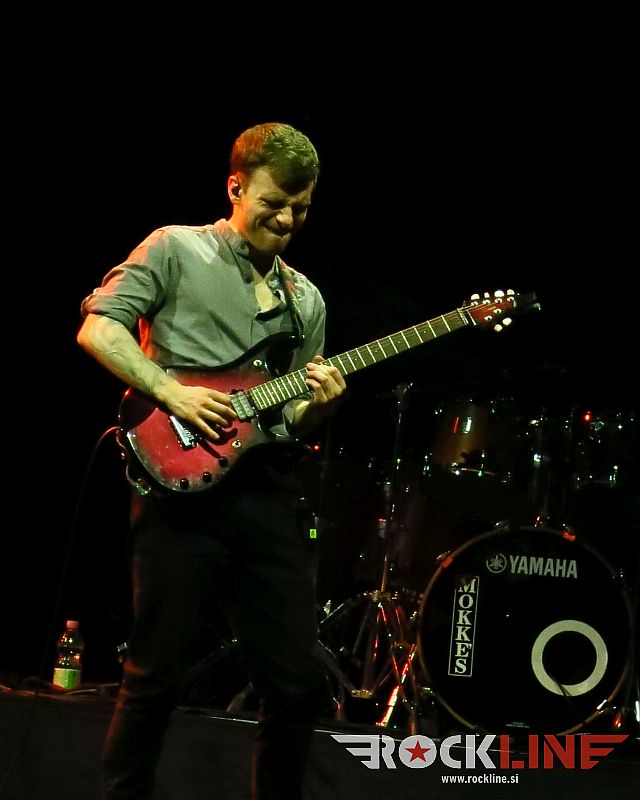
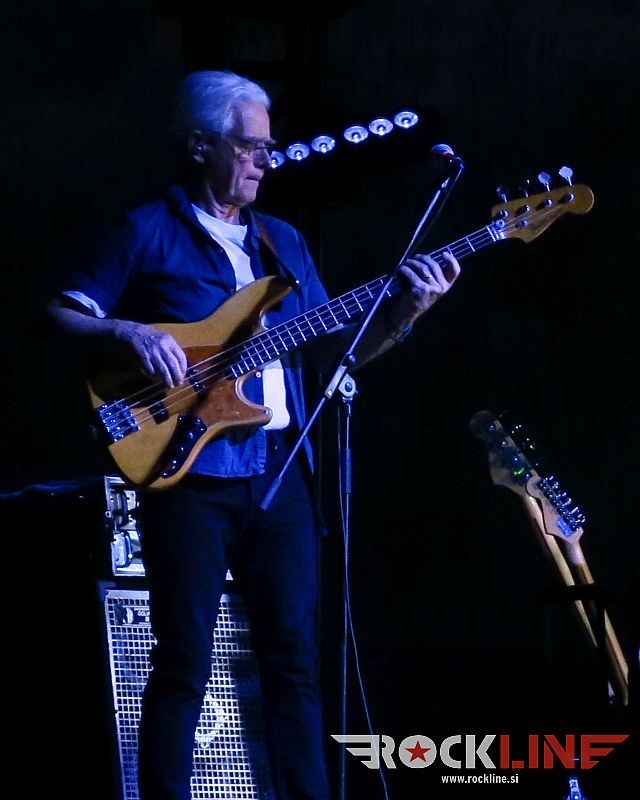
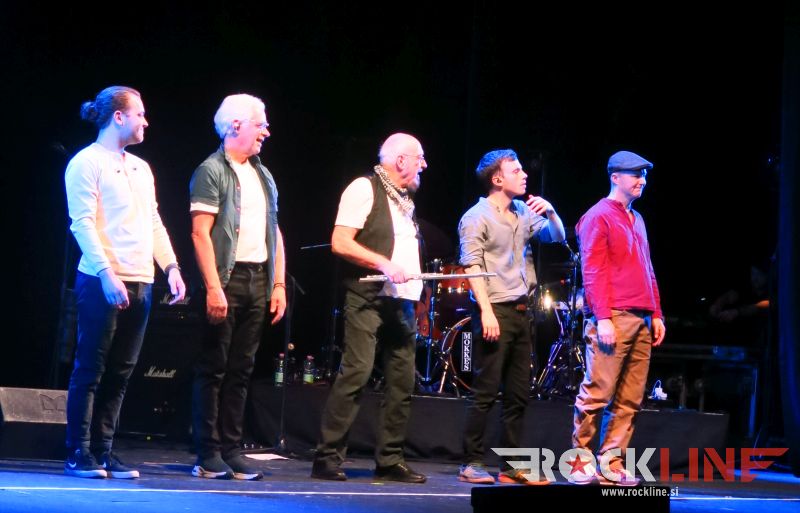
Right on the dot at nine o’clock, as advertised, the beautiful Triestine venue Teatro Politeama Rossetti goes dark, and already standing on stage are Joe Parrish (guitar), Ian’s son Scott Hammond (drums), David Goodier (bass guitar), and — a genuine Trieste shock — another guitarist! That’s John Clarke, who stepped in for regular Jethro Tull keyboardist John O’Hare. Yes! A guitarist instead of a keyboardist. So the concert would run with two guitars. Plugged in electric? Absolutely. Without a shadow of a doubt.
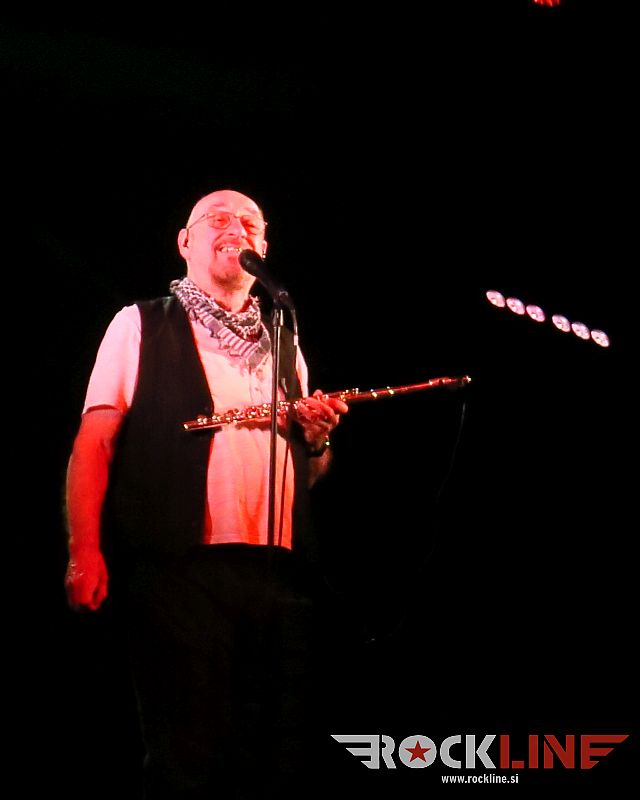
A few seconds later, from stage left, that familiar silhouette comes darting in — the one and only. The brilliant Ian Anderson. With a spirited charge he takes his place at the mic, and the band opens the concert with the Aqualung-era classic Cross-Eyed Mary, a song equally well known to anyone who owns the seven-inch Iron Maiden single “Trooper” (1983).
And yet you can find yourself mildly confused this time around. Rationally speaking. Do you hum along to the classics in the company of one of your all-time favourite bands, stretch both eardrums to their limit and analyse what two electric guitars bring to the stage (and what the absence of keys takes away), or do you focus on Ian’s vocal ‘slaloming’? All three at once, or none of the above. Genuinely. Parrish was pushed up in the mix, while Clarke — who also delivered with several solo passages during the show — would occasionally chase the sound of a Hammond organ through his effects. But on balance, Anderson and the crew on stage have never sounded so ‘steely and coiled’ as they did that evening in Trieste. The view of the stage was genuinely bizarre. No keyboards. Pardon? That’s just how it was.
But this didn’t drastically reduce the performance range of the Jethro Tull classics. That was the crucial thing. Anderson really struggled to catch the first song with his voice. But as the show went on he warmed up his vocal cords and somehow navigated the set with a respectable delivery. Cross-Eyed Mary was cut in half, and Heavy Horses got the same treatment. Goodier and Parrish backed Anderson vocally, and occasionally shared verses with him. Anderson also gave his vocal cords a rest during the instrumentals, and the tracks from the last two albums suited him particularly well — they are, after all, a direct mirror of Ian’s current vocal capabilities.
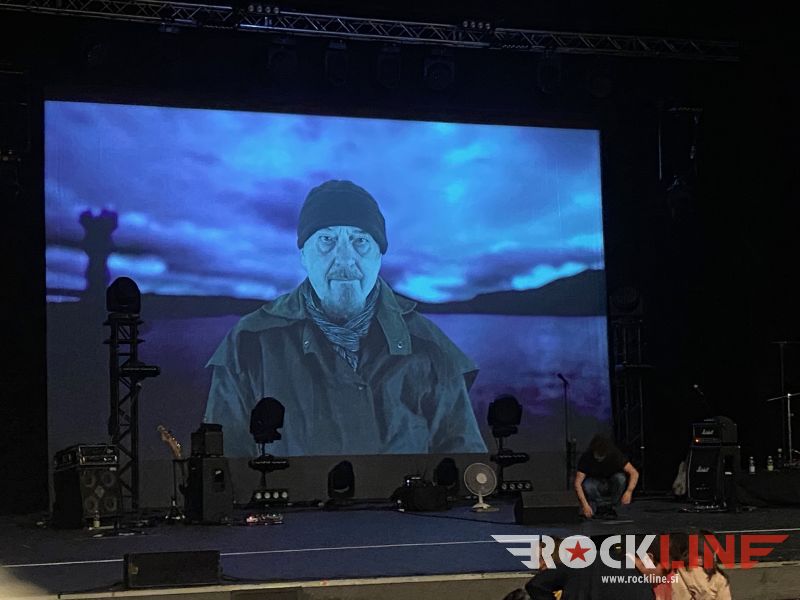
We Used To Know, the Jethro Tull classic from the album “Stand Up” (1969), Ian introduced with a thoroughly mischievous description, noting that the very same chord sequence in the song had, a few years later, earned the American rock outfit Eagles a handsome bundle of rustling greenbacks for their hit Hotel California. Anderson had already been taking jabs at the Eagles through the background projections, which flashed the hotel from the Eagles album cover several times, and Jethro Tull deliberately wrapped the song by having Parrish and Clarke play the most recognisable passage from that Eagles hit in dual-guitar harmony.
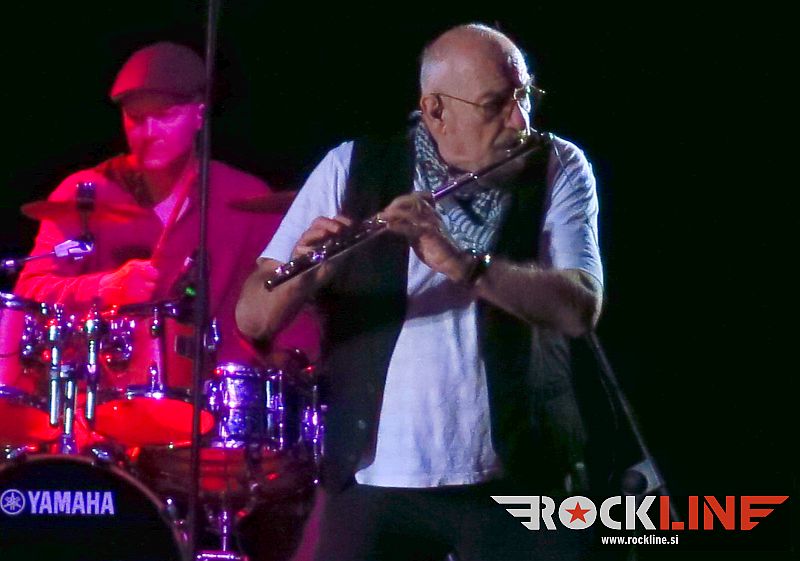
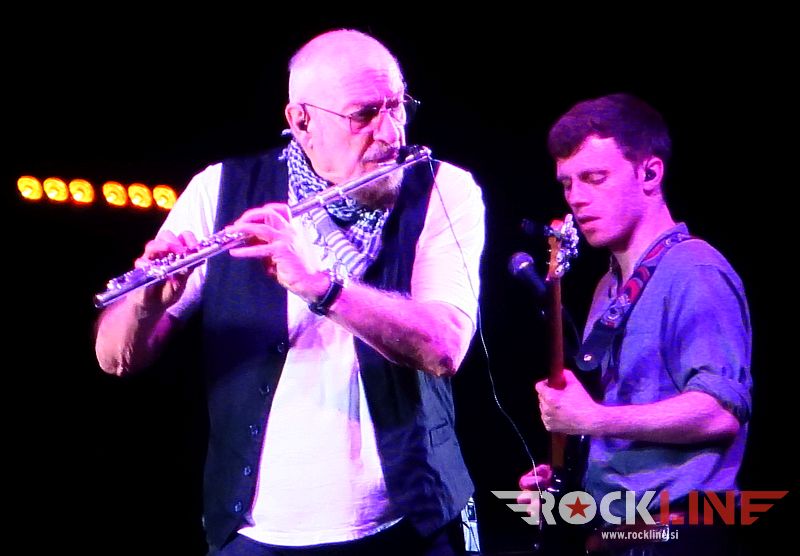
The band plays brilliantly. Even on the Seven Decades Tour. The tightness between them is dazzling, and Anderson remains a sensational flautist. As said: one and only. Energetic, cheeky, mischievous. The trademark one-legged stance while playing the flute is there, along with a string of witty monologues that are compulsory fixtures at any Jethro Tull concert. You forget about his vocal wear in an instant. O’Hara wasn’t missed that evening either.
The passages were a treat. Duels. Weathercock and that phrase they build so masterfully into the final crescendo — if only it could last a little longer. Goosebumps. That’s when you know you’re exactly where you’re supposed to be. The audience rewarded Ian and the crew with enthusiastic applause more than once. There’s “The Christmas Album” (2003) and the surprise of Holly Herald. Medieval troubadours would have died of envy; Henry VIII would have welcomed Anderson at court on the spot.
The first set didn’t skip two outstanding new tracks — the brooding Wolf Unchained from the album “Röckflöte” (RockLine review, 2023) and Mine Is The Mountain from “The Zealot Gene” (2022, RockLine review) — before closing with Bach’s Bourrée, which in Jethro Tull’s hands hasn’t stopped setting things alight in the 55 years since it was adapted.
After a fifteen-minute break, Jethro Tull open the second half with the excellent and melancholic Farm On A Freeway, taken from the album “Crest Of A Knave” (1987). Hey, are they really planning to take all our wheat fields? The message of that song is just as relevant in 2024! As a side note, “Crest Of A Knave” is the album that snatched the Grammy right from under Metallica’s nose in 1989. But what truly stood out in this section, as absolute surprises, were the inclusion of two “Stormwatch” (1978) classics: the excellent instrumental Warm Sporran and Dark Ages (where Parrish gave Anderson substantial help sharing the vocal lines) — a track whose message is just as pointed in 2024. The band also pulled off a notable surprise by including the title track from “Roots To Branches” (1995). As a side note, that’s the year current Jethro Tull guitarist Joe Parrish was born. The astonishing tightness on that dark track is unmatched.
The minutes flew by like seconds and the big finale arrived. With moving visuals in the background. Aqualung! And in a noticeably different arrangement from the classic-era rendition — peppered from all sides with a vivid integration of solo passages. Even in the very opening section. Anderson adapted the vocal melody to suit himself. ‘Softened’ it.
The obligatory encore. Here the mischievous, unstoppable joker Anderson finally allowed general photography. The audience left their seats and crowded to the left and right sides, pressing toward the front of the stage. A steam locomotive appeared on the screen. It was obvious which song was missing (Locomotive Breath). That’s the one. Real ‘heavy metal’ — by Jethro Tull standards, of course. But know this: this time around there were two electric guitars on stage, and it properly thundered more than once — and the actual image, the essence, the body and voice of this legendary band was not diminished in the slightest.
Anderson doesn’t run out of breath. He ‘flutes’ phenomenally. He’s also still remarkably agile — bear in mind he’ll be turning 77 this August. The iconic one-legged pose while playing the flute! The strength is there. He lacks nothing in terms of engagement or focus. The spark has always been his. The playfulness. Ian Anderson. Jethro Tull. The story goes on.
Two hours and ten minutes, break included. The body of work is extraordinary. Career milestones like the album “Thick As A Brick” were absent — not to mention the mildly stepparent-like treatment of “Warchild” and “Too Old To Rock’N’Rolll, To Young To Die” — while the eternal neglect of “Benefit”, “Passion Play” and “Minstrell In the Gallery” is, frankly, unacceptable. On the other hand, Ian more than made up for it with the beautiful surprises from the “Stormwatch” album and the return of the excellent Roots To Branches to the setlist — a track the band hadn’t played live since 2003. The available concert time is simply not enough for a musical legacy as vast as the Jethro Tull catalogue! And if you ask me whether I’d go see Jethro Tull live again — even after this latest concert experience in Trieste — the answer is absolutely yes! And believe me: I’m convinced the old fox is already cooking up ideas for a new Jethro Tull studio album.
author: Aleš Podbrežnik
photos: Aleš Podbrežnik
Setlist:
first set
1. Cross-Eyed Mary
2. We Used to Know
3. Heavy Horses
4. Weathercock
5. Holly Herald
6. Wolf Unchained
7. Mine Is the Mountain
8. Bourrée in E minor (orig. Johann Sebastian Bach)
second set
9. Farm on the Freeway
10. The Navigators
11. Warm Sporran
12. Mrs Tibbets
13. Dark Ages
14. Roots To Branches
15. Aquadiddley
16. Aqualung
—encore—
17. Locomotive Breath
18. Cheerio