Label: Sony Music / InsideOut Music
Release date: 4/21/2023
Production: Ian Anderson
Album length: 44.24 min
Genre: Progressive Rock
Rating: 8.5/10
The legend of the English farmer ‘adorned’ with a giant wig, who in 1968, more than two hundred years after his death, ‘lent’ his name to one of the most famous rock bands, rolls on. Ian Anderson, the indestructible patriarch of rock flautists, has for decades been practically the living embodiment of Jethro Tull among the prog icons still with us, thanks to his stage presence, socially critical humor, inventiveness, sharp wit and sheer originality. And he’s back in his ‘creative element’ once again.
Ian and Jethro Tull caught absolutely every fan off guard when, just a year after the surprisingly solid “The Zealot Gene” (2022, RockLine review), they dropped its successor “RökFlöte” at ‘light speed’, a concept project about Norse gods and legends. Vikings and everything to do with their beliefs have been enjoying a proper renaissance in all kinds of popular media in recent years, so some will probably call Ian’s decision to have Jethro Tull ‘throw their own pot on the fire’ of that trend a calculated move.
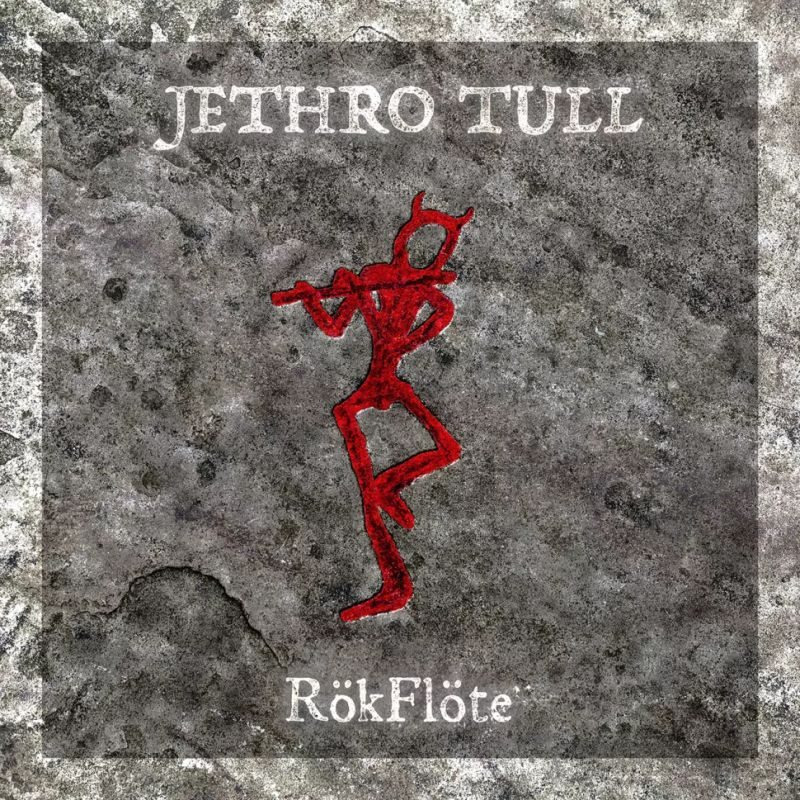
Maybe it is, since Ian is known as a shrewd businessman. Maybe it isn’t, since the man has been banging on about his Viking roots for ages, and this certainly isn’t the first time in Jethro Tull history that they’ve ventured into the world of Norse gods. Just think of “Cold Wind to Valhalla” from “Minstrel in the Gallery” (1975), or the megalomaniacal stage set with a Viking longship during the tour for “The Broadsword and the Beast” (1982). All the songs on “RökFlöte” more or less openly form a concept about the Asgardian pantheon, while the cover, with its silhouette of a horned Ian, recalls a Viking rune. RökFlöte is also the first Jethro Tull album with new guitarist Joe Parrish-James, who had already worked with them on the “The Zealot Gene” track “In Brief Visitation.”
Right off the bat, we can talk about the pluses and minuses of “RökFlöte.” On the plus side, the album as a whole is more interesting and varied than its predecessor in musical, arrangement and lyrical terms. Ian was inspired writing the new songs and lyrics like he hasn’t been in a long time. Every member of the band also shines instrumentally, and the symphonic arrangements led by Ian’s ever-sharp flute deserve a special mention, being mostly more interesting than those on “The Zealot Gene.” There are also a few openly hard rock moments reminiscent of this legendary band’s early years, a touch more than on the predecessor.
On the minus side, (sadly) we have to list Ian’s singing again, which gets weaker every year, even though in the studio his distinctive timbre somehow manages to hide the vocal fatigue. It’s precisely because of this that the man had even considered making “RökFlöte” the first fully instrumental Jethro Tull album, before changing his mind. At times his singing is on the verge of recitation, but he somehow gets away with it, and most fans will probably forgive his years-long vocal weakness again. Ever since the mid-eighties, when his vocal cords almost gave out, he hasn’t been ‘the real deal’ vocally, and longtime fans know this well. The other downside of the album is that no song on “RökFlöte” particularly stands out. They’re all at least solid, but even with a ‘magnifying glass’ you can’t find a composition you could proclaim a true Jethro Tull classic. They could probably have done without the occasional female recitals in Old Norse too, but luckily those are short and don’t ruin the individual pieces.
Opener “Voluspo” is the word for the creation of the Viking mythological world, and thanks to that recitation, for the first minute, until the symphonic arrangements led by the flute, a nicely upbeat rhythmic seasoning and sharpened guitar passages kick in, it doesn’t sound like a Jethro Tull creation at all. The entrance of Ian’s vocals, hovering between recital and singing, finally puts things in ‘the right place.’ “Ginnungagap,” a word most non-Scandinavian Tull fans will never learn to pronounce correctly, denotes the primordial void before the world came into being in Viking belief. It’s a solid but not particularly thrilling piece. “Allfather,” the Viking term for Odin, leader of the Asgardian gods, turns out somewhat more interesting and fun, as the playful flute bits are tastefully interwoven with hefty guitar passages throughout, while Ian’s voice sounds even more sarcastic than usual. On the dramatic “The Feathered Consort,” which has a string of fun arrangements on the border of symphonic rock, folk rock and hard rock, Ian and company remember the goddess Freya, the Viking version of the ancient Greek Aphrodite or the ancient Roman Venus. Freya was notorious for her cloak of invisibility made of bird feathers.
“Hammer on Hammer” is of course dedicated to Thor, god of thunder, the most popular of the Norse gods, who was famous for his giant hammer Mjolnir, his warlike nature and his gigantic appetite when it came to excess in drinking, eating and carnal debauchery, while in the ‘original’ he was quite different from the comic-book and movie Marvel version. What especially stands out on this track is Parrish’s guitar solo, which uncannily recalls something his unforgettable predecessor Martin Barre could once have played. The dramatic, more ‘serious’ “Wolf Unchained” isn’t about an ordinary wolf but the giant wolf Fenrir, who played one of the key roles in Ragnarok, the Norse vision of the end (and rebirth) of the world(s) and the gods. On this well-constructed and well-played, mostly instrumental piece, you can clearly hear that Ian’s vocals are often pushed ‘into the background’ and are there merely ‘for decoration,’ just enough to ‘tell the story’ of each song.
“The Perfect One” is what the Vikings called the nearly invulnerable god Baldur, whose death sets off the start of Ragnarok. It’s another solid but not especially interesting piece. If we absolutely had to pick one of the album’s highlights, the closest to that status might be the wonderfully varied and witty “Trickster (and Mistletoe),” which is packed with folk rock elements and comes off as really fun. It’s no surprise that it’s dedicated to the eternal joker and troublemaker Loki, the cleverest and most interesting of the Norse gods, whom the Vikings, unlike some of his portrayals in modern popular media, never saw as a villain.
“Cornucopia,” a song almost on the border of a folk ballad, is tied more to ancient Greek than Scandinavian mythology, since it’s the term the Greeks once used for the mythological horn of plenty. Perhaps Ian was mixing up the fact that both Zeus and Ymir, the first giant of Viking mythology, were nursed in early childhood by a substitute mother, a miraculous cow. “The Navigators,” released in shortened form as a single and dedicated to the wild Viking raiders and their fast ships with which they plundered the seas and expanses of the early Middle Ages, is fittingly set to a dramatic, fast tempo, while the central melody is built by Ian’s flute.
“Guardian’s Watch” is dedicated to the ‘all-seeing’ god Heimdall, who watched over the various worlds of Viking mythology as an observer and guardian from Asgard’s rainbow bridge Bifrost. It’s a witty piece, with playful flute passages and almost baroque arrangements that will satisfy most longtime fans, while Ian’s flagging vocals barely ‘keep up’ with the sharp tempo. “Ithavoll,” the term in the Viking Eddas for the gathering place of the gods, is a very solid effort at a quickened tempo that closes the album in decent fashion, and it isn’t spoiled even by the female recital in the middle and at the end.
“RökFlöte” is a surprisingly successful step up from its predecessor and an album that will boost many people’s faith in the modern version of Jethro Tull. Apart from Ian’s vocals, which have been diminished for several decades now, the band comes across this time in their ‘Viking’ concept guise as refreshing and energetic enough that most longtime fans will be happy with the end result. “RökFlöte” of course isn’t among the best creations in the history of these tough-as-nails proggers, who had their finest creative times back in the seventies, but it lands somewhere in the ‘golden middle’ of their discography so far. Not bad for a band that is celebrating its 55th anniversary in 2023 (though not uninterrupted), and that took almost twenty years to return to making new studio albums.
Author: Peter “Dr. ProgRock” Podbrežnik
Track list:
1. Voluspo
2. Ginnungagap
3. Allfather
4. The Feathered Consort
5. Hammer On Hammer
6. Wolf Unchained
7. The Perfect One
8. Trickster (And The Mistletoe)
9. Cornucopia
10. The Navigators
11. Guardian’s Watch
12. Ithavoll
Lineup:
Ian Anderson – concert and alto flutes, ‘flute d’Amour, Irish whistle, vocals
Joe Parrish – James – electric and acoustic guitars, mandolin
John O’Hara – keyboards, piano, Hammond organ
David Goodier – bass guitar
Stott Hammond – drums
Guest musician:
Unnur Birna – spoken vocals on tracks 1 and 11