Author: Peter Podbrežnik
Interview date: 13.04.2008
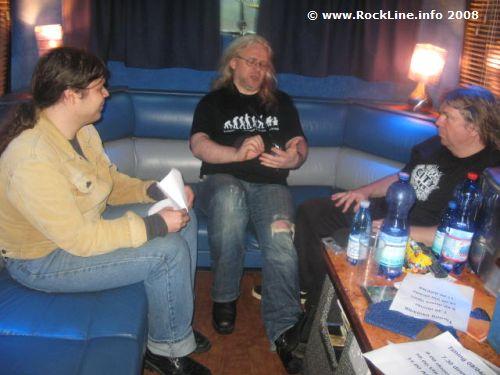
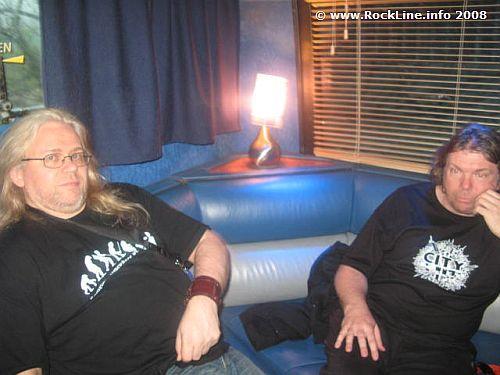
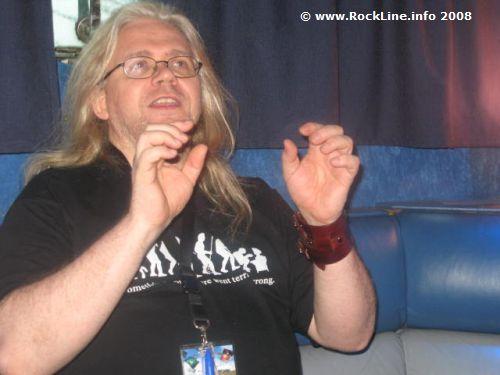
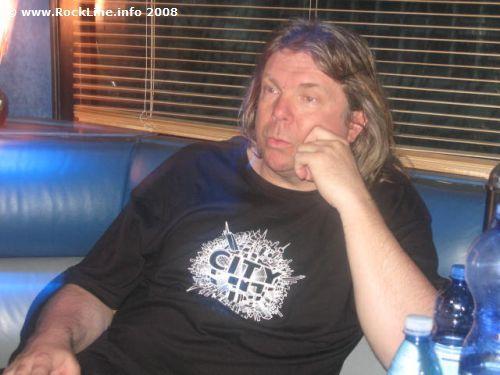
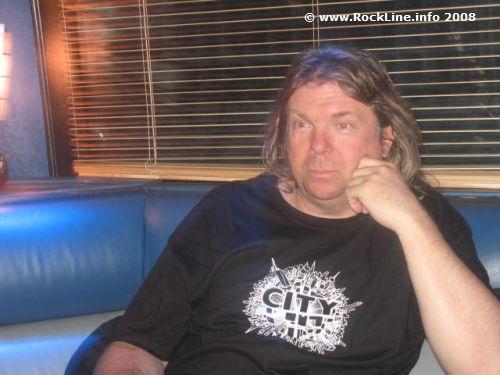
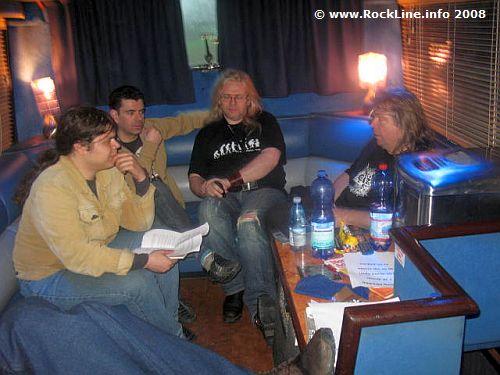
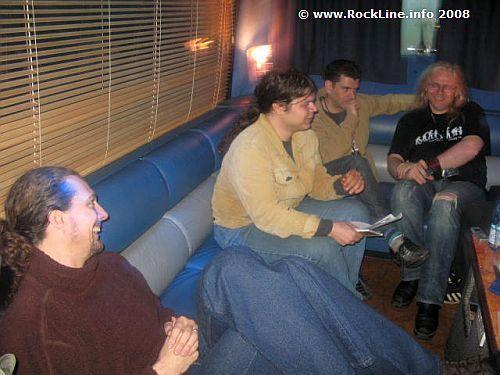
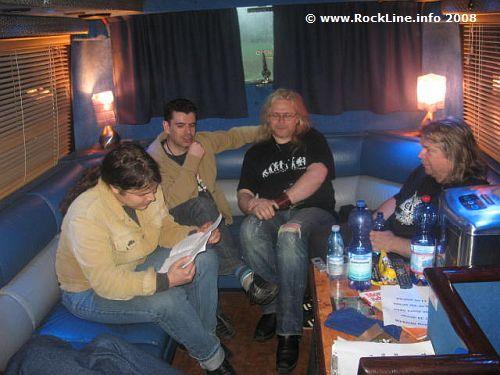
Among the many fans of eclectic rock music, Arena are respected as one of today’s leading progressive rock bands, with a thoroughly distinctive sound. Although, quite understandably, they avoid pigeonholing their music by genre, and especially fend off the term neo-progressive rock, their two bosses, keyboardist Clive Nolan and drummer Mick Pointer, left an important mark in the 80s, as members of Marillion and Pendragon, on the revival of interest in prog rock. The members of the band aren’t just outstanding musicians and, almost without exception, workaholics with a pile of side projects, but also really interesting personalities. During the interview, the two band bosses, who were also the focus of this interview, made a special impression on us. Later the other three members of the lineup joined us: vocalist Rob Sowden, guitarist John Mitchell and bassist Ian Salmon. Sadly, there was little time left for them after they missed the start of the interview. Special thanks for the interview go above all to the exceptionally kind Mick. He invited us onto the band’s tour bus, where we shot the breeze with him and Clive, mostly about the band, their side projects and other musical topics. With witty remarks and asides at the expense of individual members, often packed with a hefty dose of famous English black humor, they kept setting off bursts of laughter on our side too. That way they successfully knocked down the old, well-worn theory that progressive rock is the exclusive domain of deadly serious musicians.
Rockline: To start off, how happy are you with how the tour is going, and did the decision to hit the road before you’ve released a new album turn out to be the right one?
Clive: Yeah, it was absolutely the right decision, because there are more people at our shows on this tour than there were the last time we put out an album. It also helps keep up public interest in the band and convinces people that we haven’t stopped being active. At the same time, it’s important for our creative drive before we start recording a new album. We wanted to take a break to create that one, and that’s what we did. Now we’re properly prepared for new challenges.
Rockline: Your latest album, “Pepper’s Ghost”, had quite a few hard-hitting, almost metal passages that pushed the album toward the border with prog metal. What can we expect from your next album?
Clive: Well, tonight you’ll already be able to hear one chord from what will be on it. Since our start with the album “Songs From The Lions Cage”, we’ve gradually developed with every album and gone through an evolutionary process. We’ve always tried to make our sound a little bit different and to fully develop the things we do best. I can already imagine that the next album will stick to that concept. Maybe it’ll be more metal in some places, less in others. At the moment it’s impossible to predict. The album will represent who we are. Making our albums is an organic process. We don’t sit down and classify things mathematically, like, here we’ll need 70% heavy metal and there 30% Mellotron. So we don’t work that way; we write what feels right to us.
Rockline: On some songs, like “Jericho”, “Solomon”, “Sirens”, “Midas Vision”, “Medusa” and “Tantalus”, we can find lots of parallels with mythological themes. Has using different mythological figures as metaphorical subjects of your songs and lyrics become one of your trademarks over the years?
Clive: It’s always a good way to draw a link between a certain analogy or idea, from the Bible for instance. There are also plenty of biblical themes in our lyrics. I think that’s really good, because a connection like that to some other meaning lets people identify with famous icons and ideas. It really comes into its own when you’re working on a song and so far you’ve only got three or four verses and a chorus. To be able to tell people something concrete through a song, you have to put in the lyrics what usually draws them in.
Rockline: All your albums are quite different from one another, although there’s always some thread connecting them, above all a unique sound that makes Arena a very special band in modern progressive rock, with its own vision. How important were the changes of vocalists, bassists and guitarists for the evolution of your sound?
Mick: We usually pick guitarists and vocalists by how they’ll fit our musical style. We’ve always tried to find the best musicians we could. We never picked by thinking, okay, now we want another John Carson or another Paul Wrightson, or any singer with similar vocal mannerisms. The same goes for guitarists. At auditions we always tried to find the ones who’d fit our style best. That usually only shows once you start making a new album, though. There’s no special science to it.
Clive: I think the people who left the band were always the right ones for it, or even the best ones for it, right up until the point where they stopped working with us. That’s happened quite a few times in our past. But now we’ve had the same lineup for quite a while.
Mick: About eight years.
Clive: Yeah, eight years. People always say Arena keeps changing its lineup, which isn’t true. Part of the reason for that is that we made a major, unexpected lineup change when we were already pretty well known. We already had two albums out and lots of people had heard of Arena. Then a few more lineup changes followed.
Mick: Of course it would be better if we could keep the same lineup, but sometimes it just doesn’t work out. Just like not all marriages and not all jobs last forever. That’s just how it is. That’s life.
Rockline: Are you satisfied with the road the band has traveled from its beginnings as a project between Clive and Mick to today?
Mick: No, we’re not. We could be playing Wembley or bigger arenas and performing all over the world. As far as that goes, we’re more or less at the same level as when we started. There haven’t been any slumps, but no noticeable highs either. At least we’re consistent, which is obviously a good thing, since lots of bands don’t last as long as we have. Of course we wouldn’t mind having albums at the top of the charts. Who, honestly, wouldn’t want that? But we’ve always made what we wanted to make, and done it our own way.
Clive: Still, we’ve scored a few wins. We make what we want, and nobody tells us what we have to write. But on the other hand, there’s nobody out there who’d put, say, a million pounds into us, get us on TV and all that sort of thing. We decide for ourselves what’s best for us. I enjoy the independent existence Arena has, but I still think we could be a lot more successful. I’ve never given up on that idea, and I don’t know why I would. Now we’re going to put out a new album and see what happens.
Rockline: Your first album, “Songs From The Lions Cage”, had numerous parallels with early Marillion, but later you shook off those similarities. Was that an inevitable process in shaping your recognizable sound?
Mick: Yeah, true, if you’re referring to working with Steve Rothery, who played on that album. Look, Steve Rothery was never an Arena guitarist, and it was never meant for him to become one. At the time we needed to find the right way to get ourselves noticed, and I think we picked the right path. Personally, I think it was both a blessing and a curse. But it did draw more attention to the fact that we existed. You could say the same about Clive’s connection with Pendragon. “Songs From The Lions Cage” was a lot more successful when it came out than we could ever have imagined. We didn’t have any big expectations back then. That album basically helped launch our career and bring it to the point where we are now.
In the meantime, guitarist John Mitchell and bassist Ian Salmon joined the interview, and vocalist Rob Sowden had been sitting with us almost from the start. Since Rob, John and Ian missed the start of the interview, and it focused mainly on the two founding members and heads of the band, Clive and Mick, and there wasn’t enough time either, only a few of John’s and Rob’s interjections, often pretty witty, are included here.
Rockline: Many Arena followers cite “The Visitor” as the peak of your output so far. Among many prog rock fans, that album is widely recognized as one of the best progressive rock releases of the 90s. While recording it, did you have any inkling that you’d end up creating a masterpiece?
Mick: It really depresses me that people most appreciate what we made ten years ago, but on the other hand, it’s a great album.
Clive: Yeah, it really is a great album, and it’s a pleasure to hear that so many people consider it a classic. When we make a new album, we never know what’s going to come out. With every album we try to make it our best one in the end. We never start making new music by deciding that now’s the time to record a classic album. We just do what we do best. “The Visitor” has had that reputation for a long time, but lately, especially with the new generation of Arena fans, I notice that special affection often shifts in favor of “Contagion” as the classic album. For us, classic status belongs to the album we haven’t made yet. But I’m very happy that people like “The Visitor” so much, and I’ve noticed quite a few flattering awards it has received so far. For example, best album of the decade. Anyway, I don’t care which of our albums is the most popular, as long as people love one of them.
Mick: Let me remind everyone here that “Contagion” and “Pepper’s Ghost” both made the German and Dutch charts. So, places where “The Visitor” never managed to break through.
Rockline: Lots of progressive rock bands reject the term neo prog rock, which the media usually use for the new wave of progressive rock in the early 80s. Does it bother you when the term is used for your music, and what do you think of the whole so-called neo prog rock scene?
Mick: What does the term neo-progressive rock even mean?
Rockline: It’s a popular media label for the new wave of, mainly British, progressive rock that happened in the 80s.
Mick: Exactly, it’s a media label. We don’t define our music by genre, and we make it without worrying about these terms.
Clive: Neo prog? I’d call it “nerdy” prog (laughs).
Rob: I’d most like to call what we do melodic prog rock.
Clive: To me our music is simply rock. People usually call it progressive rock because of my and Mick’s backgrounds. Neo prog rock is, in my opinion, an invention of the American music press, which started out as an insult rather than a proper musical category. We don’t want to catalog our music by genre. If people prefer it that way, they can call us neo prog rock too. As far as genres go, we have very little interest in other neo prog rock bands. We’ve got enough to worry about with ourselves, although I think their music offers quite a varied range of quality. Right, Mick?
Mick: Yeah. I own all the neo prog releases and all their genres (laughs).
Rockline: And which is your favorite (laughs)?
Mick: I’m sure it’s some very interesting Mexican neo prog band (laughs). The fact is, there are bands all over the world slapping genre labels on themselves to get noticed, but the fact is they usually sell 30 albums at most. We’ve sold lots of albums, they haven’t.
Rob: Has anyone seen my phone? I’m sure it’s around here somewhere. I hope nobody sat on it.
Rockline: No. Haven’t seen it. But we’ll check again just in case.
Mick: I think people shouldn’t classify music by genre, shouldn’t worry about that in advance, and should listen to what they like, not go by some media labels. We do what we love doing, you listen to what you love listening to. It’s a marriage made in heaven.
Rockline: Mick, you’re reportedly preparing for a tour marking the 25th anniversary of Marillion’s legendary debut “Script For A Jester’s Tear”. How does it feel to be playing some songs again that you haven’t played live in ages?
Mick: The tour starts next week. I’ve been playing the songs in rehearsals for a year and a half, but not in front of an audience yet. It’ll definitely be a different experience, working with other people. They’re all great musicians, of course. It’s a pleasure to work with them. I hope the tour goes well. Its main purpose is above all to capture the spirit of what was going on 25 years ago. I really have no intention of recording a standalone album afterward, or of getting into the charts and onto the front pages of various prestigious papers.
John: You’d definitely look good on their covers.
Mick: Of course I’d look good.
John: Especially in special swimming trunks (laughs).
Mick: The tour is mainly for those who didn’t get the chance to experience it back then? You probably didn’t. How old are you?
Rockline: 26.
Clive: Mick is a real piece of history. That alone makes him worth coming to see (laughs).
Rockline: Would you accept an offer if there were a chance of reuniting the original Marillion with Fish, maybe just for a few shows?
Mick: No. Next question.
Rockline: So you’re no longer in touch with your former colleagues from the early 80s?
Mick: No.
Clive: Any question with the name Marillion in it gets a “no” from him (laughs).
Rockline: And how do you see all these bands and side projects your bandmates are involved in, like Clive’s commitments with Pendragon and his recent project Caamora, and John’s commitments with It Bites and his numerous other side projects?
Mick: Their commitments have a major impact on my life. That way I also get them off my back for a while (laughs).
Clive: That’s how he shows his respect for music he’s not involved in (laughs).
Rockline: Which drummers influenced your drumming style?
Mick: I mostly like bands like Rush, Genesis, Yes and Pink Floyd. I don’t focus on individual drummers. Take Neil Peart, I like him in Rush, but I’m not going to go digging through everything else he’s done and glorify him. If I like a song, it means there are good drums in it too.
Rockline: Do you think it’s better for progressive rock in general to remain a media-ignored genre?
Mick: No. But we’ve got quite a few qualities that keep us unpopular.
Clive: He’s got an especially large number of qualities for staying highly unpopular (laughs).
Mick: I could give a similar answer to the one about whether I’m satisfied with the band’s success so far. I’m not satisfied at all. Clive would actually like to play in all sorts of dingy clubs and toilets, but luckily we’re several steps above that (laughs). Of course we’d like to play bigger venues, but like Clive said, he’s an independent spirit and likes his status as an independent musician (laughs).
Rockline: Which band would you pick if you got the chance to play with some progressive rock act from the 60s or 70s?
Mick: Probably Rush, Pink Floyd, Genesis, Yes, and also Led Zeppelin, who are my favorite band of all time.
Rockline: Clive, many of the lyrics and concepts Arena uses in its music revolve around the darker themes of human life and society. Are you aware that this makes you quite different from many modern prog rock bands whose music and lyrics are full of joy and cheerful odes, bands like The Flower Kings?
Clive: Yeah, I’d completely agree with that. Our music has a lot of drama and dark atmosphere. I’m convinced that if we tried to be full of light and joy, our music wouldn’t have the effect we want.
John: Dark stuff is often more fascinating. Which side of Star Wars does Clive like better? The dark side.
Rockline: How happy are you with your recent work, the rock opera Caamora, which you created in collaboration with the Polish singer Agnieszka Świta?
Clive: It was something I had to do, even though it was extremely demanding. I worked on it for three years, and in the end I was quite relieved, because toward the end it all got pretty stressful. But I’m very proud of what I made.
Rockline: Where did you meet Agnieszka?
Clive: Total coincidence. She turned up at my door on the recommendation of an acquaintance of mine. Agnieszka was a fan of his.
Rockline: Can we hope for more rock operas like this in the future?
Clive: No. I don’t see any new rock operas in the future, because I’d probably die of exhaustion if I started on the next one. But I already have an idea for a different kind of project, called Woodwork Project. There is one more rock opera I’d like to write, but I definitely won’t get to it for a few years yet.
Rockline: And a few words about Pendragon. How happy are you with the band’s current direction and your collaboration with Nick Barrett, the guitarist/vocalist and head of the band?
Clive: Working with Nick is easygoing, because I’m a keyboardist and not a songwriter. My job is just to perform the music, and it’s actually a relief after the hard work of creating music. For me, working with Pendragon is even a kind of fun. I like the direction too, and I’ve agreed with it for more than 20 years. I still enjoy playing in Pendragon. I’ve known Nick all my life, so there’s a special relationship there. The new album, from what I’ve heard of it, sounds great, so I’m expecting a good response from listeners in October.
Rockline: In the past you’ve worked with many renowned musicians, like Rick Wakeman, Anthony Lucassen, Peter Banks, Bob Catley and so on. What was it like working with them, and which collaboration stays with you most?
Clive: It was a pleasure working with all of them. With Arjen, for example, I never met him in person when I was making my part of the music, but he sent me his recording by mail and told me what he wanted me to record on top of it. I did that in my studio, so there was no personal contact, though we talked on the phone. That was a fun experience. As for the others, like Rick Wakeman, he wrote his contribution for the album “Jabberwocky” in his own studio. Peter Banks, on the other hand, came to my studio. Every collaboration with these musicians was fun and interesting.
Rockline: Which keyboardists influenced your playing the most?
Clive: As far as keyboardists go, it’s definitely Rick Wakeman, because at 16 I learned a lot of his keyboard parts. But from his solo career, not the ones from Yes. Otherwise, from a musical standpoint, I really admire film composers like Ennio Morricone, John Williams and Danny Elfman, because I adore film music. I find very little time to listen to other music, because I’d rather spend most of my time making it.
Rockline: Clive, your role in reviving interest in progressive rock in the 80s is beyond dispute. How do you take the cult musician status that many fans of your music have pinned on you?
Clive: Cult musician? No, I wouldn’t say that’s true. On that front I’m in the same situation as Mick. I’d like to play bigger venues and sell more albums. But we are what we are. If somebody told me I was a cult musician, I’d still take it as a compliment. I’ve always considered myself a musical obscurity, though. The title of cult musician would certainly sound nice, but not carved on a gravestone (laughs).
Rockline: To wrap up, the same question Mick got earlier. Which progressive rock band from the 60s or 70s would you work with, if it were possible?
Clive: There are quite a few. I’d happily do a gig with Queen. It would also be a special joy to record something with Peter Gabriel. I’d love to work with him, even if it was just mopping the studio floor (laughs).
Rockline: And what do you think of the Genesis reunion and all these reunions of big rock bands?
Clive: Reunions are great, because if they didn’t happen, something magnificent would disappear and lots of people wouldn’t get to see all these legendary bands. As for Genesis, though, I’d have much preferred to see them get back together with Peter Gabriel and Steve Hackett rather than performing again as a trio.
Rockline: Thank you, Clive. We sincerely thank all the members of Arena for the time they gave to the interview, and we wish you a great show tonight.
Clive: Thank you. It was a special pleasure for all of us, and we’ll be glad to check out both the interview and the report once they’re published on your pages.
Interview: Peter Podbrežnik
Photos: Aleš Podbrežnik
Photo Gallery