

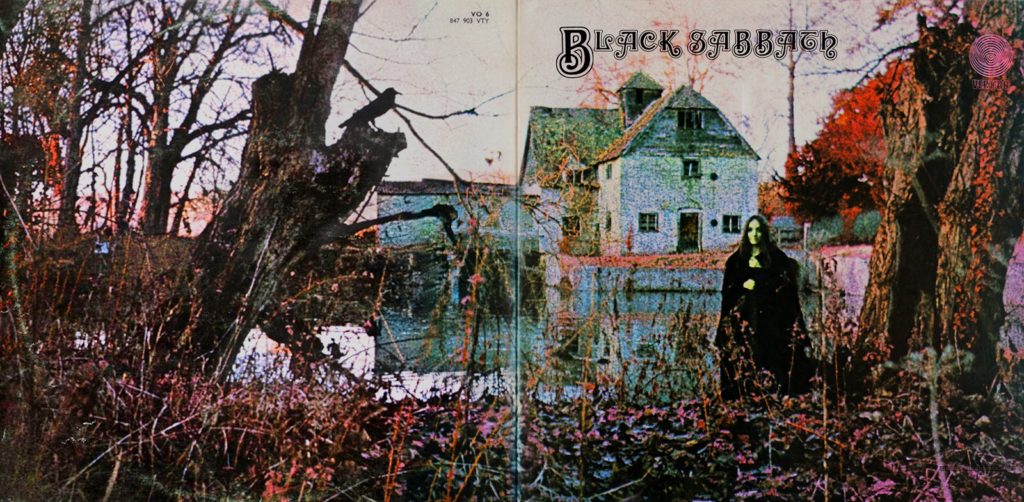
This year marks exactly 50 years since the debut album from Black Sabbath, the legendary English pioneers of heavy metal. The self-titled record came out on a date that couldn’t have been more fitting: Friday, February 13, 1970. It was a perfect pick for a band forever tied to dark, creepy songs, lyrics and imagery. When it was released, the Black Sabbath debut ran into mostly disapproval and incomprehension from the critics of the day, and it took years for it to earn the respect and standing it deserves as one of the most important achievements in heavy metal. Today plenty of critics even call it the first (real) heavy metal album in history, even though the members of Black Sabbath, who had been experimenting with a heavy form of blues rock up to then, had no clue at the time of release that they’d just invented a new genre.
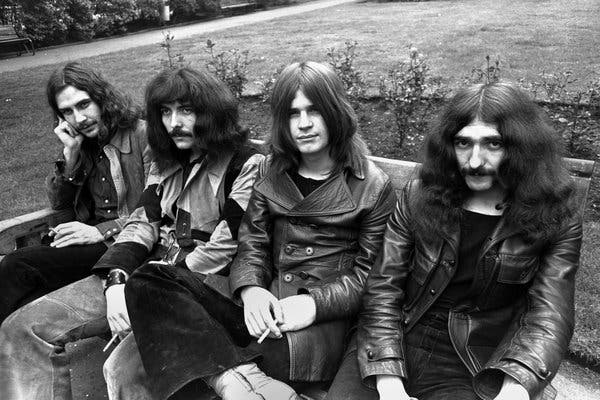
By their own account, they simply wanted to play music that would scare people the way horror movies did on the big and small screen. A legend was born, even though they were far from the first rock band to get sick of the hippie scene of the late sixties and, instead of “planting flowers,” throw open a window onto the occult, dark forces and the (post-)apocalypse. They were beaten to it a bit by the (post-)apocalyptically minded English prog rockers King Crimson and Van der Graaf Generator, while American psychedelic acts Iron Butterfly and Blue Cheer were already toying with guitar riffs that strongly foreshadowed what we’d later call metal riffs. Black Widow, a band the media often mixed up with Black Sabbath before the latter became a household name, did release their debut two months after the Birmingham four-piece, but they’d already been stirring things up with live shows full of occultism and paganism. Still, the title of “founding” heavy metal band went to Black Sabbath, and rightfully so.
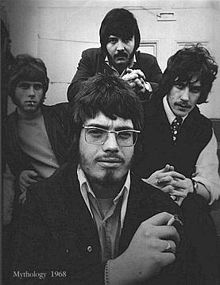
The story of Black Sabbath’s beginnings and the birth of their studio debut goes back to 1968, when old pals Tony Iommi, a guitar innovator, and drummer Bill Ward, after their previous band Mythology fell apart, teamed up with singer John Michael “Ozzy” Osbourne and bassist Terence “Geezer” Butler, both formerly of Rare Breed, and formed the blues rock outfit Polka Tulk Blues Band.
When they shortened the name to Polka Tulk, they had slide guitarist Jimmy Phillips and saxophonist Alan Clarke along for the ride. Those two were gone as soon as the remaining four decided they didn’t want to become a prog band or a folk rock act, but wanted to build on a tougher form of blues rock. Around then Polka Tulk renamed themselves Earth, even though Ozzy admittedly hated the name.
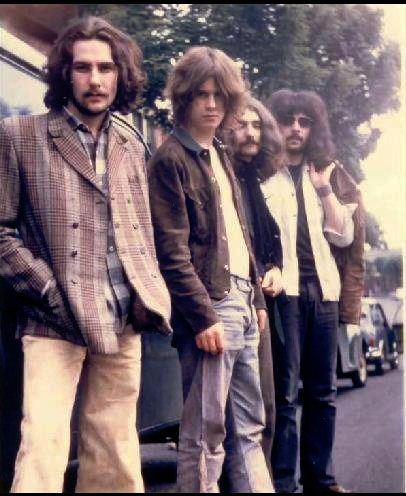
At the end of 1968, Iommi briefly left Earth and joined prog legends Jethro Tull, who happened to be looking for a new guitarist. Even though the stint was short, Iommi showed up in the TV production The Rolling Stones Rock and Roll Circus. Iommi left Jethro Tull because the band’s stylistic direction wasn’t a good fit, and because Iommi didn’t want to play in an outfit with a “cult of personality,” in this case embodied by Ian Anderson, but in a more democratically run band. Still, Iommi has said that the brief time with Jethro Tull taught an important lesson in musical professionalism, which came in very handy later on.
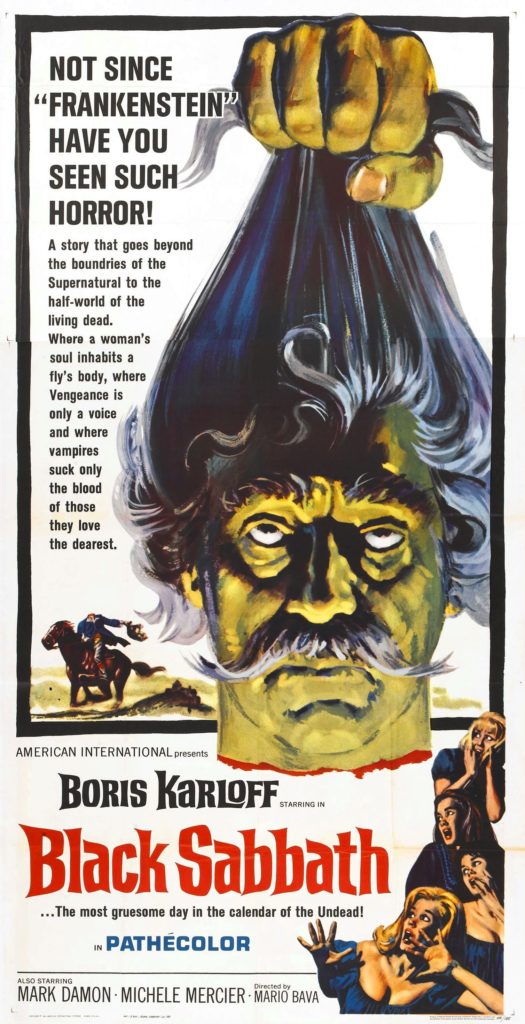
Soon after Iommi’s return, in early 1969 the members of Earth found out there was already a band with that name, so they started looking for a new one. One day Geezer Butler was wandering past a movie theater showing the horror film “Black Sabbath” starring Boris Karloff. As the story goes, Geezer was stunned by how many people were lined up outside just to see a horror movie, to feel fear and terror. By then the band had already shaped their dark sound, with Iommi’s guitar riffs dictating a totally distinctive, gloomy, rolling tempo, complemented by Ozzy’s unique, creepy-tinged vocal style. The rest of the band also thought Black Sabbath was a great fit for their sound. That’s also when they decided to try to scare listeners with their music.
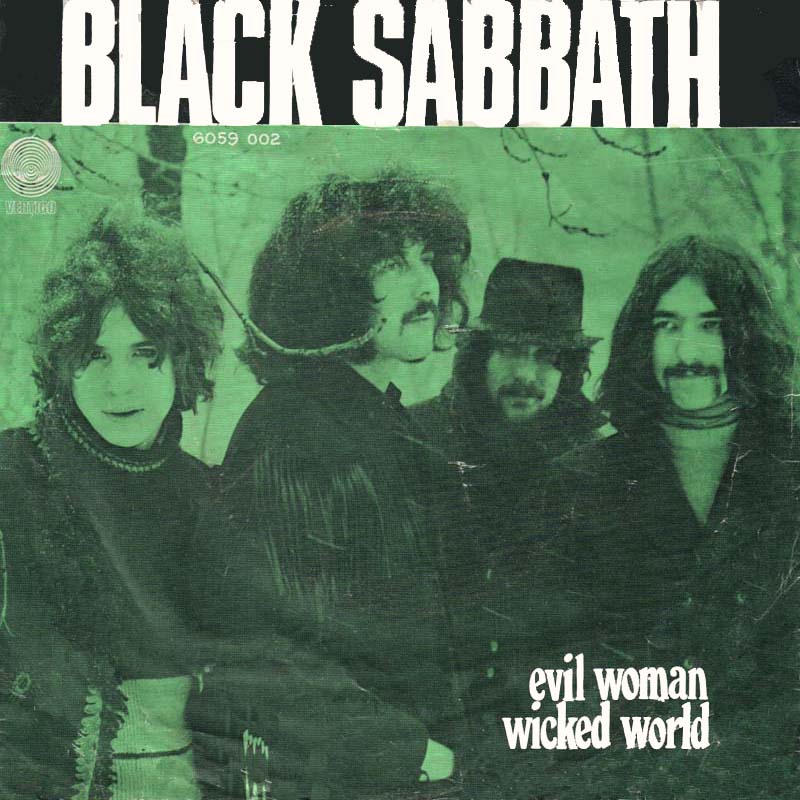
Their first single, “Evil Woman,” a cover of Crow, came out in January 1970 on the small label Fontana Records, a subsidiary of Phillips Records, and didn’t achieve any success worth mentioning. A month later the self-titled debut came out on Vertigo Records, Phillips’ newly founded, prog-oriented label.
The title track and opener, “Black Sabbath,” remains one of their most recognizable pieces to this day, and it’s also the song that Rob Halford, singer of heavy metal icons Judas Priest, once called “the most evil song ever heard.” Its opening riff is said to have been inspired by “Mars – The Bringer of War,” the classic by composer Gustav Holst, which the legendary prog band King Crimson were also “reworking” in downright terrifying incarnations between 1969 and 1970.
The story of how the song came about has long been legendary in metal circles and left a permanent mark on Black Sabbath’s musical and lyrical makeup. The lyrics of “Black Sabbath” are about Geezer’s creepy “visitor.” The bassist, who was also responsible for writing the Black Sabbath lyrics while Iommi took care of building the key musical motifs, was obsessed with occult literature at the time. One night the bassist spotted an ominous black figure at the foot of the bed. The experience was so frightening that the very next day the occult dabbling stopped and all that literature got tossed. Still, alongside depictions of madness, the horrors of war, apocalyptic visions and the dark side of human nature, the occult left a lasting mark on the Black Sabbath lyrics.
The next track on the album, “The Wizard,” a much more playful and upbeat number with the spotlight on Ozzy’s harmonica, was dedicated to the wizard Gandalf, well known to every fan of the literary legacy of English author J.R.R. Tolkien. The kindly wizard from the fantasy classics (and later movies) The Hobbit and The Lord of the Rings, along with other characters from Tolkien’s works, left a big mark on the lyrics of many other rock bands in the late sixties and early seventies, such as Pink Floyd, Led Zeppelin, Uriah Heep, Camel and Barclay James Harvest, to name just a few.
“N.I.B.,” which was heavily influenced by Cream and is, along with the title classic, undoubtedly the most recognizable song on the album, contrary to popular belief is not an acronym for “Nativity in Black.” According to Ozzy, it’s a tongue-in-cheek nickname for drummer Bill Ward’s goatee. The lyrics are about Lucifer, but from the devil’s perspective. According to Geezer, it’s the story of the devil falling in love with a human woman, which turns him from an incarnation of evil into an incarnation of good.
The lyrics for “Behind the Wall of Sleep” were inspired by a short, creepy story by another literary giant, the American master of horror and darkness H.P. Lovecraft, called “Beyond the Wall of Sleep.”
“Evil Woman,” the aforementioned cover of Crow, was only recorded after Black Sabbath’s manager at the time, Jim Simpson, demanded they record something commercial and suitable for their first single. The B-side of that single was “Wicked World,” which for a long time was considered a rarity in its studio form. Decades later it finally came out on the CD reissues of the Black Sabbath debut.
The album had one more cover, “Warning,” whose original version belongs to the blues rock outfit The Aynsley Dunbar Retailation, led by cult drummer Aynsley Dunbar (ex-John Mayall, Frank Zappa, Jeff Beck, Journey, Jefferson Starship, Ian Hunter, David Bowie, Whitesnake, Michael Schenker, UFO and many others).
The Black Sabbath debut hit cult status long ago, even though in importance and influence on the development of the heavy metal scene it was overtaken by its more notorious successor “Paranoid,” released on September 18, 1970. The title classic and “N.I.B.” stayed in the regular live rotation right up to the legendary band’s official breakup in 2017, even when the musicians keeping Tony company on stage were completely different from Ozzy, Geezer and Bill.
You can find more info about this groundbreaking album in heavy metal history HERE.
Author: Peter Podbrežnik
