Authors: Aleš Podbrežnik, Jernej Vene
Photos: Aleš Podbrežnik, Jernej Vene
Location: Salzburg / Rockhouse / Austria
Interview date: 26.09.2013
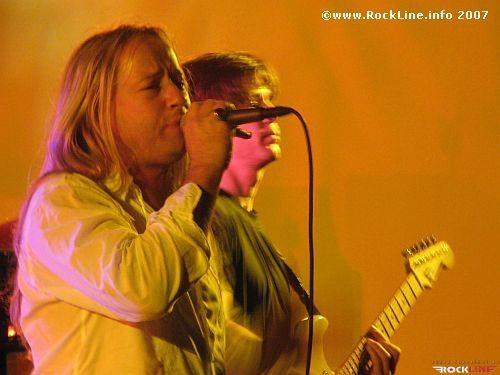
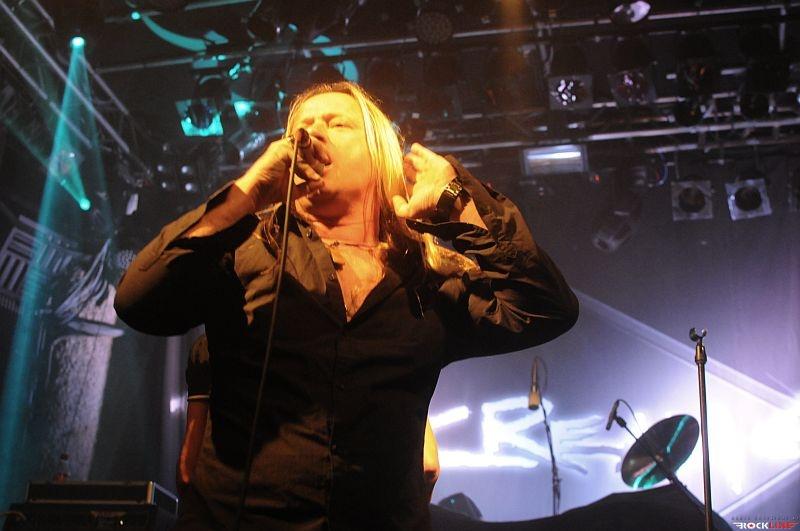
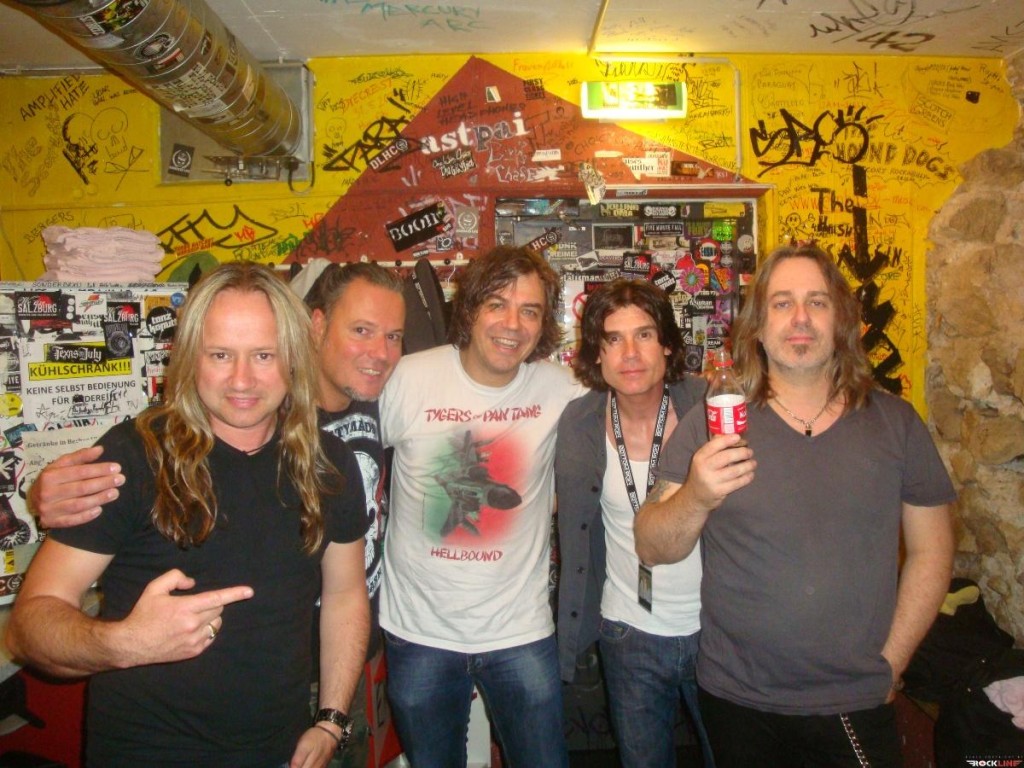
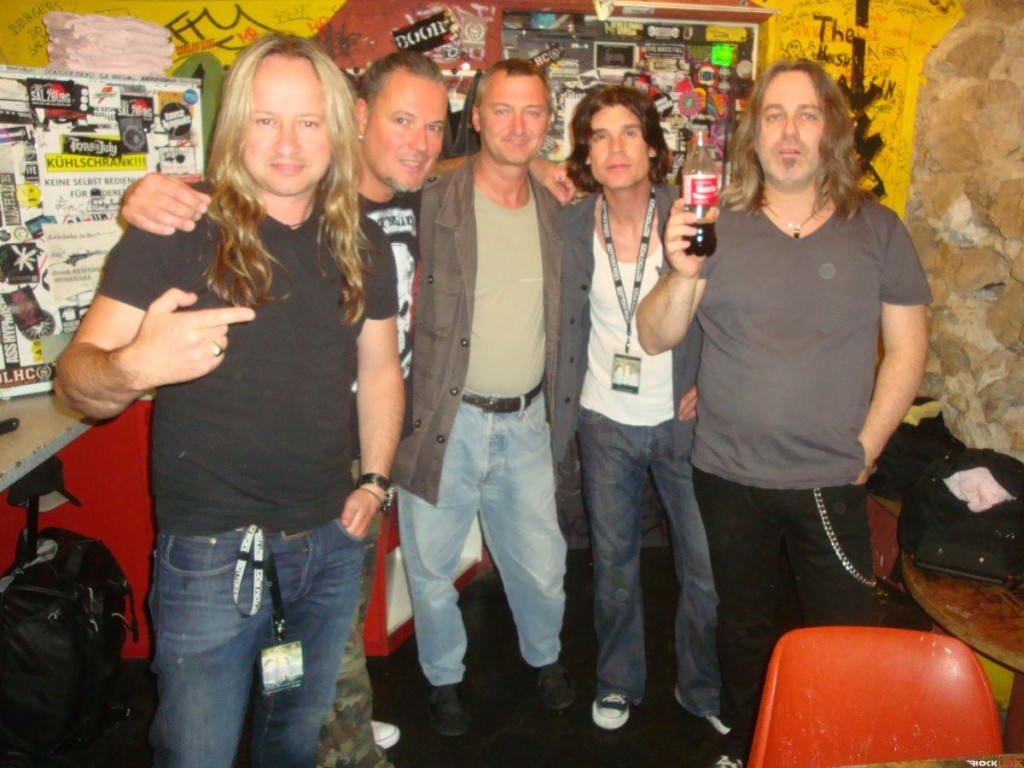
David Readman is a top-notch English vocalist with a German passport. Since 1994 he’s been singing for the fantastic and highly respected German melodic hard rockers Pink Cream 69, who come from Karlsruhe. He joined the band after original Pink Cream 69 singer Andi Deris landed the job with the notorious power metallers Helloween. Backstage at the Rockhouse club in Salzburg, the whole band ended up sitting in on our chat with RockLine, though David did most of the talking.
RockLine: How are you finding the current tour, and how did you end up going out on a joint run with Pretty Maids?
David: The tour’s going fantastically for us. Everything’s running smoothly and we’re really happy. We always wanted to play with Pretty Maids. We figured it could be a killer combination and a really strong live package, especially for the fans of both bands. The idea’s been around for ages, but it never happened. Until this year. Thank God we finally got there! To be honest, the crowd on this tour is really tuned in to the songs we play and they get right into the shows. Even though most people come primarily to see Pretty Maids, they obviously know Pink Cream 69’s music really well too. You can see it in our merch sales, too! People on this tour are buying loads of our shirts. Our team spirit is great as well, and we’re a great bunch to hang out with. Like I said, so far everything’s going just the way we imagined. Even better than we expected.
RockLine: You’re known as a very busy musician. You’re also in Voodoo Circle, you put out your own solo studio album a few years back, you guested on the solo studio album of Swedish guitarist Magnus Karlsson, and so on. How do you pull all of that off at the same time?
David: If I’m totally honest… It sounds like a lot, but it doesn’t actually look like that much. It seems like a whole bunch of stuff is going on at once, but it isn’t. Truth be told, I recorded the latest Voodoo Circle and Pink Cream 69 albums pretty much at the same time. I tracked my vocals in my own studio last summer. That’s 28 songs in total. In my own studio. Which means I can record whenever I feel like it. I don’t have to travel to some studio and wait for someone to say, »Hey David! The studio’s free now, you can go record!« This way I’ve got absolute control over things, and that’s also how I work best. I can record any time. When I’m in the mood, of course. Whether it’s at night, in the morning,… There are no limits. So finding time for Magnus Karlsson wasn’t a problem at all, since I got through the Voodo Circle and Pink Cream 69 songs really quickly.
RockLine: After all the years of experience you’ve got behind you, this next question might be pointless, but I’ll ask anyway. Do you still listen to suggestions from the other members of Pink Cream 69, or whatever other band you’re working with, about how to sing a particular part?
David: A little, yeah. Definitely. But only a little. When I’m recording, it’s very rare for anyone to visit me in the studio. These days everything happens over the internet. By email. Of course, the one who usually makes the suggestions is our bass player Dennis Ward, who writes the lyrics and then comes up with different ideas for how to approach a song. The melodies for it and so on. We definitely talk a lot about the direction the studio album we’re making should take musically. There’s also a lot of talk about what’s inspiring us at the moment, plenty of debates about singers, especially the ones who made their mark with past work and ended up at the top of rock music, or should I say rock ‘n’ roll.
RockLine: How do you look after your voice?
David: I don’t drink, I don’t do drugs and I don’t smoke. Very simple. And I sleep a lot. On tour, I mean. And there’s one more thing. You’ve got to be tough to last. You can’t be a waverer and you can’t doubt yourself.
RockLine: Biff Byford once answered a similar question by saying that, say, he doesn’t give many interviews on tour… maybe he was hinting that I should get the hell out of his »Nightliner«…
David: Ha ha ha… Fair enough! From now on I’ll try to answer all your remaining questions very quietly.
RockLine: This February you released a new studio album called »Ceremonial«. Why did it take a full six years since the predecessor »In10sity« (2007)?
David: We didn’t actually need the whole six years to record it. First you spend about half a year just talking with people about making a new album with them. A lot of the songs we worked on for the new album were originally written more than ten years ago. We all write. Dennis writes, Alfred (Alfred Kofler, Pink Cream 69 guitarist, author’s note) writes, I write. We all compose and then throw all the material together. Then we discuss which songs to pick for the album. Like I said, some songs are brand new, while others can be more than 10 years old. With the older songs we usually rework the arrangements, meaning we rearrange or update them a bit so the song really catches fire.
RockLine: How do your songs come together? Does the text come first, or the first melody?
David: I never have lyrics ready in advance. It’s always the melody first. The origin of the music is based on melody above all. You can shape a melody with your voice alone. You can end up with a truly beautiful melodic line. And the lyrics have to feel that melody. They have to follow it. Follow the way that melody develops. You have to lay the words into the verses very carefully. Some words can be a headache and are awkward when you’re trying to optimize the melodic lines. Usually, though, it’s Dennis who finds the right words in the poetry first, in our camp. My only job is then to record the thing with my vocals. If the others had to wait for me to write the poetry and the verses myself, they’d be waiting even longer for the album, ha, ha, ha,…
RockLine: You recently changed drummers. Founding member Kosta Zafiriou left your ranks. How did that happen and how did you get through that test?
David: The decision was Kosta’s, of course. Simple as that. He was doing a lot of things at once, so he couldn’t fully focus on Pink Cream 69 anymore. He’s also got a lot of obligations to his family right now. We gave him complete freedom in making the decision. Alongside Pink Cream 69 he started drumming for Unisonic, he also helped out on drums for the Swiss band Krokus, and he worked as Helloween’s manager too. He just couldn’t handle everything at once well enough anymore. So we actually approached Kosta’s drum tech, Chris Schmidt. The right man in the right place. He could step into our lineup in no time. It was obviously just a matter of time. So Chris is a great solution for us. He knew every little detail of Kosta’s drumming, so musically the change is barely noticeable, as far as any change in the character of Pink Cream 69’s sound goes. Last week we played in Ludwigsburg, Germany. And Kosta was in the crowd. He came to watch us. Pink Cream 69 still means a lot to him, definitely. And it always will.
RockLine: How many songs do you prepare before you start recording an album?
David: We’ve got between 30 and 40 songs ready. They’re not polished all the way. They’re sketches. The melodic line up to the first chorus. That’s it. We can glue certain sketches into the core of a chosen composition and so on. There are plenty of variations. There are no set limits here. The main goal is to pick the right solutions to arrive at a lead melody that’s guaranteed to catch fire.
RockLine: How do you write songs? Do you accompany the vocals with piano or guitar?
David: I use guitar for that. The exception is ballads. For those I use piano.
RockLine: Aha, time to wrap up. They’re kicking us out. David, thanks for your time, we wish you lots of success on the tour and plenty of fun on stage tonight here in Salzburg.
David: Hey! I hope that was okay, and I hope you two enjoy the show tonight too. Thanks for the support.
interview by: Jernej Vene & Aleš Podbrežnik
translated and edited by: Aleš Podbrežnik
Photo Gallery