Interview date: 11.03.2008
(for English version, please scroll down)
RockLine: Phil, hey! How are things in Elixir?
Phil: We’re all doing great, thanks!
RockLine: You just got back from Play It Loud! II. festival 2008 in Italy (RockLine report HERE). What were your impressions?
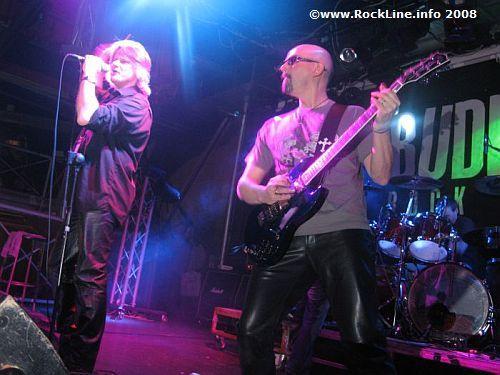
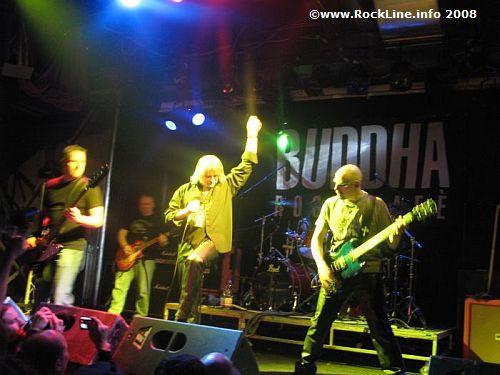
Phil: It was a blast. The festival was really well organized, they looked after us great, and I just hope we didn’t run up too big a bill for the organizer with all the beer we drank. The place was packed, the crowd gave us a fantastic welcome, chanting our band’s name while we were getting set up on stage and then through the whole show. We had a great time and we’d love to play there again. I just uploaded photos from the festival to our official website: www.coldtown.com/elixir
RockLine: Your show was seriously explosive. It’s really great to have you back together. Do you think that your return, along with the comebacks of bands like Cloven Hoof, Diamond Head or Tygers Of Pan Tang (the latter on tour in April 2008), has kicked off some kind of New Wave Of British Heavy Metal revival?
Phil: Looks that way. As for me, I organize a festival in England called the “British Steel Festival”, which promotes NWOBHM bands from the eighties. We always invite four bands to play alongside Elixir. At the last “British Steel” we had Cloven Hoof, Tygers of Pan Tang, Jaguar and Chariot on the bill with us. These days it’s incredibly hard to land a good gig, because a lot of venues are permanently booked up, especially in England, where tribute acts are being pushed like crazy right now, and promoters aren’t interested at all in booking bands who play their own original material. Still, in the rest of Europe and around the world there are enough different festivals every year where we’re happy to play. I think that’s our way of showing the new generation of rock fans what Elixir were really all about back in the eighties.
RockLine: In 2002 you released the album that put Elixir back on the scene. It’s called “The Idol”. What led to you heading into the studio together again after more than ten years of the band being dormant?
Phil: It all happened at Norman’s birthday party, when he turned 40. All the members of Elixir were there. Young bands were playing at the party. Before it even started, we’d agreed to get up on stage one more time and play just one song, “Trachery”. I hadn’t played that song in so long that I had to listen to old recordings that morning and practice it. While I was digging through the old tapes and listening to our songs like “The Idol” or “Devil Rider”, I thought it was a huge shame that we’d never properly recorded these songs or got them out on an album. Later at the party I told the other guys in Elixir that we had a pile of old material we’d never used on any albums. I’ve got some gear at home for digital recording, and back then Mike Emson, the guy who was writing songs with me at the time, was helping me out too. At the party I talked the guys into getting together to record those songs. We were only planning to record them for ourselves. Anyway, a few weeks after Norman’s party, the Greek record label Cult Metal Classics got in touch, because they wanted to put out our debut “The Son Of Odin” on CD. I thought there was no interest left in re-releasing a 15-year-old album, but Manos, the guy who was working at the label at the time, assured me that the album had become a cult thing in Greece and that demand was actually huge. We agreed to the label’s plan and sold 1000 copies of the reissue in a single month after it came out in Greece. Cult Metal Classics then asked us if we had any other material, and so all those old songs we’d wanted to record just for ourselves ended up on the new album “The Idol”, which Cult Metal Classics put out on vinyl, and we self-released on CD. After that they invited us to headline the Heavy Metal Assault Festival in Athens. It all happened so fast that we barely noticed we were actually playing stages together again and recording together again.
RockLine: So does it still feel the same in the studio or on stage as it used to, say in the eighties?
Phil: I think we’re as enthusiastic on stage as ever, but the difference is that now we’re more confident and relaxed. In the eighties we felt the weight of wanting to become a professional band, we were under pressure to prove ourselves. Today we go on stage purely to have fun, and I’m sure it’s written all over our faces. The same goes for the studio. We trust ourselves a lot more. I remember that when we started recording “The Son Of Odin”, the studio was a totally new environment for us. There are certain rules of behavior in a studio, and if you’re given a slot and don’t know what to do with all the gear around you, it can really leave you embarrassed. Today the recording process is much more familiar and clear to us, so we’re a lot more reliable, effective and confident at work in the studio.
RockLine: Clearly “The Idol” gave you a good kick and some inspiration to keep going. So in 2006 you put out the new studio album “Mindcreeper”. Can you describe how the circumstances behind the two albums differed? How did the composing and writing go, where did you draw your ideas from, and so on…?
Phil: The biggest difference between “The Idol” and “Mindcreeper” was that for “The Idol” we had to relearn the songs, whereas “Mindcreeper” is made up of truly brand-new songs that we worked on and developed. So much time had passed since we’d written the songs for “The Idol” that we’d completely forgotten all of it. Luckily we had the old recordings to learn from again. It felt like we were recording a covers album. We had to figure out what we were actually playing. Sometimes our hands would instinctively play a part we were still trying to learn, and that felt really strange.
For “Mindcreeper” we spent a lot of time working on the new songs, so we were very well prepared when we went into the studio. That goes for all the songs except “Guding Star”. With that one I didn’t want Kev and Nigel to hear it before we went into the studio to record it. It’s so simple that I was worried they’d study it too well and get so comfortable with it that it would be played too perfectly, technically, and lose that touch of spontaneity. So I recorded a demo at home right after I wrote the song. I played the demo for the band to check whether they liked it. The reaction was positive, but I only sprang it on them once we were in the studio. I brought the demo in my pocket and put the guys in front of a fait accompli. That’s how we kept that touch of spontaneity on this song in the studio too. I think I made the right call, because the parts Kev and Nigel came up with in the studio fit perfectly into the final shape of the song.
The recording process for both albums was very similar in that we tracked all the bass and drums over a weekend, then went back to the studio several times to record all the guitars, vocals and extras. When we recorded “The Son Of Odin” we spent nine full days on it, and the album was put together in pieces. We talked about whether to go that route again for our new album. Recording in one long session or piece by piece over a few months both have their pros and cons.
RockLine: Judging by what I heard on “The Idol”, you’ve definitely not said your last word. Sadly I haven’t heard “Mindcreeper” yet, but I’m guessing you guys in Elixir are still full of energy and the drive to give the world as much good music as possible. What were your creative goals when you decided to put “Mindcreeper” together?
Phil: Thanks. I’m glad to hear you like “The Idol”. “Mindcreeper” is on its way to your address by airmail right now.
Well, when we were back in the studio recording “Mindcreeper”, our first goal was to enjoy the reality of this second chance we’d been given to be together again. And the creative goals we set ourselves were:
1. To finally put together our real second studio album. Personally, I think the release of our second studio album “Lethal Potion” was horrible and nothing like what we’d imagined we wanted to put out as our second studio album. I tracked down the original tapes and tackled it again, getting the album digitally remastered with the proper mix. That’s how this album came out again under the title “Sovereign Remedy”. It has all 14 songs in the running order Elixir always wanted.
2. To record an album with all the remaining songs that came out of the eighties. That’s how “The Idol” came about.
3. To record a completely new studio album. That’s how “Mindcreeper” came about.
Once we got back together, we hit all of those goals!
RockLine: What held you back so that it took a full 4 years to put out “Mindcreeper”?
Phil: Time and money. We all have families, so we don’t have nearly as much time for rehearsing and recording as we used to. A recording studio is expensive too, and once you’ve got a family, there’s little money left over to save up and put into the band. So to get our next Elixir project off the ground, we have to earn that money through selling our albums and playing shows. Earning the money to kick off a new project takes a longer stretch of time. I’d like our fans to know that the money the band makes from selling T-shirts and CDs goes straight into our next Elixir project, and we don’t pay ourselves out of it. So everyone who buys our CD or our T-shirt, or simply buys a ticket to see us play live, is directly helping us raise money for our next recording.
RockLine: Phil, can you confirm that in the four years between “The Idol” and “Mindcreeper” the band finally found its inner consolidation and consistency, and that we can count on even more music from Elixir in the future?
Phil: I think that now we’re back together, we’re happier than ever and also working better than ever. We’re older and more experienced. We don’t know how long we’ll be able to keep going, but we plan to enjoy every single moment. When you hear our album, I hope you’ll agree that our new album is at least as good as everything we put out before it.
RockLine: Can we expect your new album within a year, or two at most?
Phil: We’re working on new material. But when we got back from Play It Loud! II. festival 2008 and tried to get in touch with our label Majestic Rock to send us more stock (CDs), since they sold nicely at the festival in Italy, we found out the label had gone under. That’s really bad news for us, since the label never paid us a penny from the sales of our albums, and it also means we’re currently without a label. On top of that, it means we won’t have the money to record an album in the near future, unless some label that happens to be reading this interview is interested in getting us into the studio. We already dealt with that in the eighties, when we couldn’t get a label deal, and we always survived. We’ll see what happens now. Obviously it’s tough today, in the age of mass “downloading”, even for bigger labels to survive, so we’ll probably have to grab onto some alternative ways of approaching a new album release. If we get the money to record, we could release the album as “download” only. That way, or by selling through our official website, we’d at least get back the money we put into recording the album. Maybe we’ll also look into releasing videos. I can’t say much right now because I don’t know how things will turn out for us, but it’s worth exploring all the options.
RockLine: What exactly happened on Friday the 13th of February, way back in 1987?
Phil: It was one of those days when everything goes wrong. We had a gig in Poole, on the south coast of England. We piled into our van and headed for Poole, but without our bass player Kev, who couldn’t get the day off work. So the plan was for Kev to travel separately by train and join us for the gig later that day. On the way we stopped for lunch at a motorway service station, and we ended up leaving our drummer Nigel and our roadie Simon behind in the restaurant. We only figured that out after a good few miles of driving toward Poole. We turned around and went back to the restaurant, where we found Nigel and Simon hitchhiking to Poole. This was before the world knew mobile phones.
When we got to Poole, we set up and did a soundcheck, but without Kev, who still hadn’t arrived by train. He did show up, but very late, because his train had been seriously delayed. We were really worried he wouldn’t make it.
At the start of the show we had an intro recorded on keyboards, before we actually began playing. Paul accidentally hit the wrong key to start the intro, and instead of the proper intro music, a bossa nova drum pattern started blasting through the main PA, really loud. We got to see sour looks of disapproval and general confusion when we looked out at the crowd, ha, ha!
On the set list Nigel had his drum solo during “Trachery”, and while he was playing it, Kev took the opportunity, without a second thought, to head to the toilets and relieve himself. Before that he’d shouted to Nigel to just keep the solo going while he was gone. But when Kev wanted to get back on stage, the door leading onto the stage locked itself from the outside. Kev pounded on the door so somebody on the other side would let him in, but nobody heard him. After a few minutes of drum solo, Nigel played the closing fill that brings the rest of the band into the song. Luckily Kev had a radio transmitter and could hear the music through the door, so he played the rest of “Trachery” locked out, on the other side of the door that leads to the stage. When the song ended, we heard him banging on the door, unlocked it, and Kev came back on stage. He was totally mortified, of course!
On top of that, there was other pressure hanging over our show that night. Kev had met a new girl who obviously didn’t like him running around with the band. At that point doors were just starting to open for us, we had a big gig lined up in Belfast (Northern Ireland), and a lot of time and money had gone into promoting it. And right before that, Kev’s new woman gave him an ultimatum: if he went to Belfast with us, she’d end the relationship. That was a lot of pressure on Kev, and even though we played Belfast without Kev, with a guy who jumped into the band just to get that show done, it didn’t solve the problem, which obviously lay with Kev’s girlfriend. That was the day the band split. After the Poole show we talked about it, and Kev decided to leave the band. Nigel, who is Kev’s brother, also decided to leave soon after. Even though we found replacements in various bassists and drummers, the chemistry was never the same and we lost some of our magic. With respect to everyone who followed Kev and Nigel, I have to stress that only with those two were we the real band, the one that co-created and defined the Elixir sound. Luckily, by the time we met up again at Norman’s 40th birthday party, that woman of Kev’s had been out of the picture for ages, so now all of us in the band have great wives and partners who support us in what we do.
RockLine: “The Son Of Odin” was a fantastic start. But then you somehow never managed to cash in on it. What led to that, what were the circumstances that kept Elixir from becoming a bigger, more recognizable name on the rock and metal scene?
Phil: The biggest obstacle that held back our development in that direction was that we never managed to sign with a label. We had to draw out our savings from the bank just to release “The Son Of Odin” ourselves and press 2,000 copies. Our debut got excellent ratings and reviews, and sales were great. The album sold superbly in legendary shops like Rock record shop and Shades in London. We also got a great response after we played on BBC Radio 1’s Friday Rock Show that same year, and even Ronnie James Dio himself wrote a glowing review of our single “Trachery” in Kerrang! magazine. So things looked very promising for Elixir at the time. I believe that if we’d managed to sign with a label that could distribute us around the world, we’d have had much bigger success. All the signs of general approval that told us we were doing the right thing were there, we just needed the means to reach more people with our name and music.
RockLine: What was going on with the band through the nineties? Were you members involved in any other projects?
Phil: Paul and Norms played together in a lineup called Beggars, Thieves and Madmen. Kev and Nigel carried on by founding the band Saratoga, and I moved back to my hometown with my wife and son, where I played pubs in a blues rock band called Rough Diamond that did nothing but covers. Among other things we played covers of Free and Bad Company. At the same time I was writing my own original material with Mike Emson, who was the keyboard player and guitarist in Rough Diamond. We invited Paul to record vocals for a few songs. I kept doing that until Cult Metal Classics got in touch wanting to release “The Son Of Odin” on CD.
RockLine: What are the main physical differences between an Elixir show in the eighties and today?
Phil: Well, I really miss the pyrotechnics, but all the health and safety laws stop us from using them. Other than that, I don’t think we’ve changed much. If you visit our website and click the “media” section, you can compare current video clips with the 1986 footage of us playing “Pandora’s Box” and “Son Of Odin”. A young fan of the band said, after watching those clips, that even though we look older, we still use exactly the same moves on stage that we used to. I don’t think we’ve changed much live, then versus now, except that we’ve got less hair and more kilos.
RockLine: Are you planning a European tour anytime soon?
Phil: We’d love to play more around Europe, but we don’t have a tour manager to help us with that, and we don’t know all the good venues where we could play. We have to rely on contacts and on people we meet who recommend us to concert promoters in their countries. We like playing festivals, like Play It Loud! (2008), and we’re always keen to play in countries where we’ve never played before. And if any promoter in Slovenia, or anywhere else, is reading this and wants to bring Elixir to their country, please contact me through our official website.
RockLine: Short-term plans for the future of Elixir?
Phil: Right now we want to play as many gigs as we can, and record as much music as we can before circumstances force us to stop. We know we’ve been given a second chance, so we plan to make the most of it and enjoy our work the whole way through.
RockLine: Phil, thanks for taking the time for this interview and the questions. Do you maybe have a message for our readers?
Phil: To everyone who knows Elixir: we’d love to play for you in Slovenia one day. And to those who don’t know Elixir, I invite you to check out our website: www.coldtown.com/elixir or drop by our myspace page: www.myspace.com/officialelixir . And thanks to you for this interview!
Elixir – legendary New Wave Of British Heavy Metal act, mostly remembered by their cult classic debut album “The Son Of Odin” (1985), are back on the scene. After releasing, as they call it, their true second studio album “Mindcreeper” (2006) – RockLine review HERE, these guys are proving that they still have the hunger and lust to deliver some great classic metal stuff and play live gigs around the globe. Guitarist Phil Denton is leading us through the exciting story of Elixir so far. It doesn’t get any closer than that.
RockLine: Hello Phil! How are you guys doing?
Phil: We are all very well, thank you!
RockLine: You’ve just returned from Play It Loud festival II. in Italy (RockLine report HERE)? What are your impressions?
Phil: We had a great time. The Festival was very well organised, and we were looked after extremely well – in fact I hope the beer bill didn’t turn out too expensive for the organisers!! The Festival was well attended and the crowd gave us a fantastic reception, chanting our name while we were setting up and continuing throughout our set. We had such a great time that we would love to go back again someday. I have just uploaded pictures from the festival at our website: www.coldtown.com/elixir
RockLine: Your show in Italy was a blast! Great to have you back together. With bands like Elixir, Cloven Hoof, Diamond Head or Tygers Of Pan Tang (later kicking their tour off in April 2008), back on the scene, do you think we are dealing with a ressurection of NWOBHM nowdays?
Phil: It is looking that way. For my part, I organise a festival in England called the ‘British Steel Festival’ which promotes 80’s NWOBHM bands. We invite four bands to play on the bill with us, and at the last one we had Cloven Hoof and Tygers of Pan Tang, as well as Jaguar and Chariot. It is harder to play good gigs these days, as a lot of live venues, especially in Britain, are geared up to having tribute acts on all the time, and they are not very interested in having bands playing original material. However, there are a lot of great festivals going on around Europe and the rest of the World, and bands like us love playing these. I think that we are all doing our little bit to try to show the new generation of rock fans what we were up to back in the 80’s.
RockLine: In 2002 you released your comeback album “Idol”. What circumstances led you to make the decision to finally enter the studio again, after more than 10 years of the band’s hiatus? Do you think that the Norman’s 40 birthday party back in 2001 opened a new chapter for Elixir, or let me put it that way: Elixir was born again?
Phil: Yes, it was Norman’s birthday party that started our revival. We were all there and, as there were live bands playing, it was agreed before the party that we would get up on stage to play ‘Treachery’ one more time. I hadn’t played the song for so long that I listened to an old live tape that afternoon to practice. I came across a lot of songs on the tape such as ‘The Idol’ and ‘Devil Rider’, and thought that it was a shame that we hadn’t recorded those songs properly for an album. I mentioned to the boys at the party that we had an albums worth of old material that we had never recorded, and as I had a digital recording facility with my song-writing partner of the time, Mike Emson, I suggested that we could get together just to record those songs for ourselves. Then, a couple of weeks after Norman’s party, the Greek label Cult Metal Classics, contacted me wanting to release ‘The Son of Odin’ album on CD. I thought that there would be no interest in a 15 year old album, but Manos at the label assured me that it had become a cult album and there would be a lot of interest. So we agreed to the release, and it sold out 1000 copies in a month! Cult Metal Classics then asked if we had any other material, and so all the old songs that we were recording for ourselves, suddenly got released as ‘The Idol’ album on vinyl by Cult Metal Classics, and by ourselves on CD. We were then invited to headline the Heavy Metal Assault Festival in Athens, and so, before we knew what was happening, we were back playing live and recording again!!
RockLine: Are the feelings still the same when you are in studio or on stage, as they were in NWOBHM golden era (eighties)?
Phil: I think that we are just as enthusiastic on stage, but more confident and relaxed now. In the 80’s we really wanted to turn professional and felt that we had to prove ourselves. These days, we just go out to enjoy ourselves and I think that shows in our faces when we play. As for the studio, again I think we are more confident now. When we first started, and when we recorded ‘The Son of Odin’, we were new to the studio environment, and studios can be intimidating places when you do not know your way around the equipment. These days, we understand more about the recording process, and so we are more confident in what we do.
RockLine: “The Idol” obviousely gave you a nice kick and was an inspiration, so that in 2007 you released your latest studio achievement called “Mindcreeper”. Can you describe the differences between both albums regarding the ideas (musically speaking) and the writing, recording process?
Phil: The biggest difference between ‘The Idol’ and ‘Mindcreeper’ was that we had to re-learn the songs for ‘The Idol’ while ‘Mindcreeper’ was all new songs that we had been working on and developing. It had been so long since we had played the songs on ‘The Idol’ that we couldn’t remember them, but luckily we had the tapes to learn from. It was like recording a covers album, almost. We had to work out what we were playing. Sometimes though, our hands would just instinctively play a part that we had been trying to learn, which was weird.
For ‘Mindcreeper’ we had spent a fair bit of time working on the new songs, so we were well rehearsed when we went into the studio. Except for ‘Guiding Star’, which I didn’t want Kev and Nigel to rehearse before we went to record it. It is such a simple song, and I was worried that if they rehearsed it too much, they might get too familiar with it and over-play their parts. I recorded a demo of it at home when I had written it, and had played it to the band to make sure that they liked it, but just kept it back to play spontaniously in the studio. I think I made the right decision, because the bass and drum parts that Kev and Nigel came up with in the studio fit perfectly with the song.
The recording process of both albums was similar, in that we laid down the bass and drums in a weekend, and then went back in numerous sessions to record the guitars, vocals and extras. When we recorded ‘The Son of Odin’ we went into the studio for 9 days solid and worked continuously on the album. We discussed that we might like to do that again for the next album. Recording in one big session, and recording bit by bit over several months, both have advantages and disadvantages.
RockLine: Unfortunatelly I haven’t heard “Mindcreeper” yet, but what I experienced when listening to “The Idol”, a brilliant album by the way, I think you still have a lot to offer to the musical world. The beast is still hungry. What can you tell us about your new creative goals?
Phil: Thanks, I’m glad you liked ‘The Idol’ and a copy of ‘Mindcreeper’ is on it’s way to you.
When we did get back together, our first goal was to just enjoy having this second chance. Our creative goals were:
1. To put right our second album – I thought that the ‘Lethal Potion’ release was terrible, and nothing like our second album was supposed to have been. I got hold of the original tapes and took the proper mix to be digitally re-mastered. All 14 songs are back in the proper running order, with the proper mix and under the proper title ‘Sovereign Remedy’.
2. To record all of the remaining songs from the 80’s – this eventually became ‘The Idol’ album.
3. To record a brand new album – which eventually became ‘Mindcreeper’.
So we have achieved our creative goals that we set when we got back working together again.
RockLine: What kept took you so long (5 years) to release a new studio album “Mindcreeper”?
Phil: Time and money. We have families and do not have as much time to write and rehearse together as we used to have. It also costs us a lot of money to go into the recording studio. As we have families and homes, we do not have a lot of personal money to put into the band. Therefore we have to earn our band money through album sales and live shows to put towards our next project. It took time to earn the money to invest in a new recording. I would like our fans to know that the money the band makes goes back into band projects, we do not pay ourselves money. Therefore, when someone buys a CD or one of our T-shirts, or pays to see us play live, they are directly helping us towards raising money for our next recording.
RockLine: Can you confirm that the band found inner consolidation or consistency again in the 4 years between “The Idol” and “Mindcreeper”?
Phil: I think we are back together, happier than ever, and working as well as ever.
We are older and wiser, and do not know how long we can continue, but we intend to enjoy ourselves every step of the way! When you have heard ‘Mindcreeper’, I hope you agree that our new album is as good as anything that we have done before.
RockLine: Can we therefore expect a new album to be released already in a year or two?
Phil: We are working on new material. However, after we returned from Play It Loud we tried to contact our label, Majestic Rock, for more stock, as we sold out of some of our albums in Italy. We discovered that Majestic have collapsed, which is bad news for us as we haven’t been paid any royalties for our albums and it also means that we do not have a label now. This means that we will not have the money to record a new album in the near future, unless there is a label reading this that is willing to put us into the studio! We faced adversity in the 80’s when we couldn’t get a label to sign us, and we always come through, so we shall see what happens this time. It seems that it is hard for even the major labels to survive in this day of downloading, so maybe we need to look at alternatives to making a new album. If we get the money to record new material, we could release it as download only, so that we will at least get our money back if we sell it ourselves through our website.
Or we could look at releasing videos. I do not know how things will turn out for us, but it is worth exploring all options.
RockLine: What exactly happended on Friday 13th of Febraury back in 1987?
Phil: It was one of those days when everything went wrong! We were playing a gig in Poole, which is in the South of England. We loaded up the van and set off, but without Kev, our bass player, who couldn’t get the day off work, so he agreed to travel down by train and meet us there later. On the way, we stopped off for lunch at a motorway service station, and somehow managed to leave Nigel, our drummer, and Simon, our roadie behind! It wasn’t until we were a good few miles down the road that we realised that they were not with us! We turned back and returned to the service station, where we found them trying to hitch hike down to Poole! It was the days before mobile phones, so they didn’t know what had happened when they had returned to the van to find it gone!
When we got there, we had set up and had a soundcheck but without Kev, who had still not arrived by train. He eventually arrived really late as his train had been severely delayed. We were all very tense and worried by then, thinking that he wouldn’t make it.
Then there was the intro music – we had a keyboard that we used for the intro before we started playing. Paul hit the key and accidently started the built in drum machine playing a loud bossa nova drum beat through the P.A.!! You could see the faces of the crowd looking very puzzled – ha ha!
During the set, Nigel was playing a drum solo in ‘Treachery’ and Kev was desperate to go to the toilet. He shouted to Nigel to keep going while he went to relieve himself, but as he left the stage, the internal door between the side of the stage and the toilet locked shut behind him! Kev was banging on the door to be let back in but no-one could hear him! Eventually, after several minutes of playing his drum solo, Nigel went in to the drum roll to take us back into the song. Luckily, Kev was using a radio transmitter and could hear through the door, so he played the rest of the song outside! When the song finished, we could hear him banging and shouting at the door, so we then unlocked it and he came back on stage looking sheepish!
There had also been a bit of simmering tension leading up to the gig, because Kev was with a new woman who didn’t seem to like him going away with the band. We had just set up a big gig in Belfast, Northern Ireland, and a lot of promotion had gone into it, when Kev’s new woman gave him an ultimatum, that if he went with us to Belfast, she would finish with him. That put a lot of pressure on him, and although we had agreed to go to Belfast with a stand-in bass player, it didn’t solve the root of the problem, which was her. This had caused friction leading up to that day, and after the gig, we had a bit of an arguement over it, and Kev decided that he would leave the band. Nigel, our drummer, being his brother, eventually decided to go with him, and so that day was the day that the band fractured. Although we found replacement bass players and drummers, the chemistry just wasn’t the same and we lost some of our magic. I mean no disrespect to those who came in, but we were the ones that created the Elixir sound, and we just work best with each other. Fortunately, Kev’s woman was off the scene by the time we met again at Norman’s birthday party, and we all have great wives and partners now, who support us in what we do.
RockLine: “The Son Of Odin” was a fantastic start for the band back in the eighties. It seemed a new heavy metal star was born with Elixir. But then the band failed to achieve better recognition and to establish a bigger name. How would you comment this? Were there any peculiar circumstances that prevented a bigger breakthrough for Elixir on the world’s heavy metal scene?
Phil: I think that the biggest thing holding us back was that we couldn’t get signed to a label. We had to get a loan from the bank to release ‘The Son of Odin’ on our own label and pressed two thousand copies. The debut album received great reviews, and the sales were great in the places where it was sold, such as the legendary Rock record shop, Shades, in London. We had also had a good response following our BBC Radio 1 Friday Rock Show session that same year, and even Ronnie James Dio himself had given our ‘Treachery’ single a good review in Kerrang! Magazine, so things were looking good for us. I think that if we had been signed with a label, that could get us distributed Worldwide, we would have had much better success. All the signs were there that what we were doing was being appreciated, we just needed the means to reach a lot more people.
RockLine: What was happening with the band during the nineties? Were you involved in other musical projects, too?
Phil: Paul and Norms worked together in an outfit called Beggars, Thieves and Madmen. Kev and Nigel went on to form a band called Saratoga, and I moved back to my home town with my wife and young son, and played pubs in a blues-rock covers band called Rough Diamond, playing songs by bands such as Free and Bad Company. I was also writing original songs in that same style with Mike Emson, who was the keyboard/guitar player in that band. We envited Paul to record some vocal tracks on some of those songs,and that was what I was doing up to the time when Cult Metal Classics contacted me to release ‘The Son of Odin’ CD.
RockLine: What are the main differences between your stage performances nowadays and those in the eighites.
Phil: Well, I really miss not having the pyrotechnics, but all the health and safety laws these days prevent us from using them!! Apart from that I think we haven’t changed that much. If you visit the media page of our website: www.coldtown.com/elixir you will find recent videos and also the clips of ‘Pandora’s Box’ and ‘Son of Odin’ from 1986. One young fan said that, although we look a bit older, we still make the same moves onstage now as we did back then! I don’t think we are much different live now to then, except that we have less hair and more weight!!
RockLine: Are you planning a European tour in the near future?
Phil: We would love to tour more around Europe, but we do not have a tour manager to help us with that, and we do not know all the good venues to play. We have to rely on contacts and people we meet recommending us to promoters in their country. We love playing festivals, such as Play It Loud, and we are always interested in getting to play in new countries that we haven’t played before. So if any promoters in Slovenia or elsewhere are reading this and wish to bring Elixir to their country, please contact me through our band website.
RockLine: What are the band’s other future goals?
Phil: Now that we have achieved our objectives that we set when we got back together, we are now looking to play as many shows as we can, and record as much material as we can, before circumstances force us to stop. We know that we have been given a second chance, and plan to make the most of it, and enjoy ourselves along the way, before we have to stop.
RockLine: Thank you for taking the time to answer a few questions. Do you have any message for our readers?
Phil: For those of you who know us, we would love to come to Slovenia one day to play for you. For those who do not, please visit our website: www.coldtown.com/elixir or drop by on our myspace page: www.myspace.com/officialelixir
Thanks for the interview.
Photo Gallery