Author: Aleš Podbrežnik, Jernej Vene
Photos: Aleš Podbrežnik
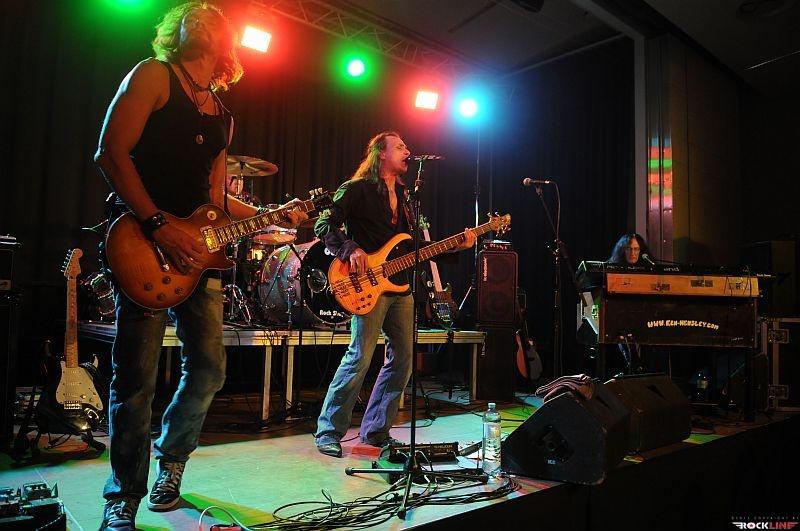
Location: Steinfeld / Stadtsaal / Austria
Interview date: October 25, 2013
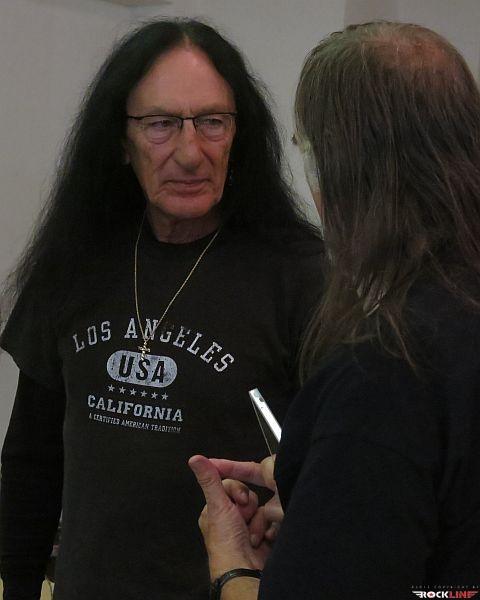
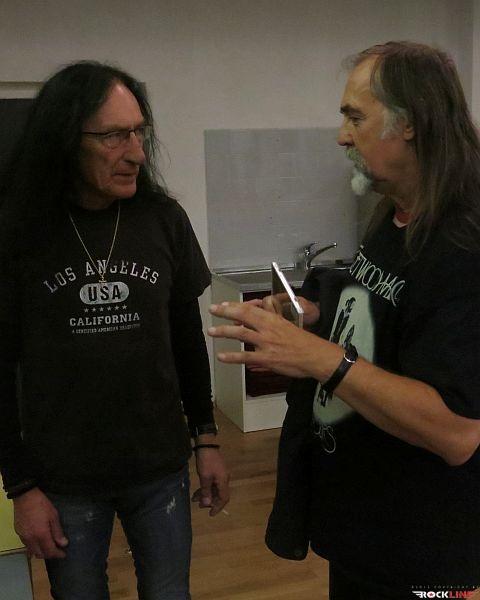
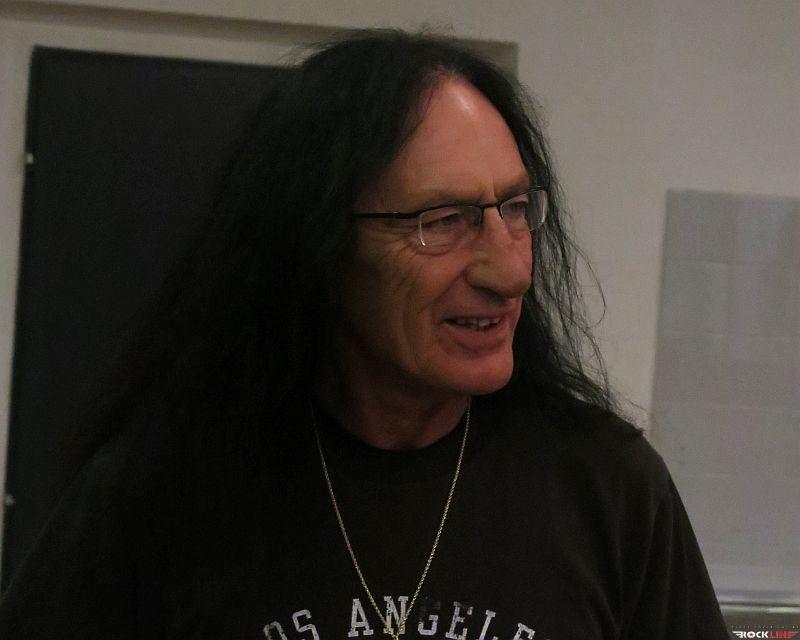
Ken Hensley is considered one of the most accomplished musicians in rock. A composer, arranger, lyricist (poet) and multi-instrumentalist all in one, he shook up the rock world as early as the start of the seventies. Without him in the lineup, Uriah Heep would never have become what they became. One of the most influential hard rock bands of all time, they rode the wave of their biggest boom with knockout albums like »Look At Yourself«, »Demons And Wizards«, »Magicians’s Birthday« and »Live 1973«, shaping the face of rock music. It’s not hard to see the full, one-of-a-kind brilliance of the genius that is Ken Hensley. All it takes is a »quick spin« of the Uriah Heep album »Salisbury« (1971) on your CD player or turntable, with its brilliant title suite running well over twenty minutes.
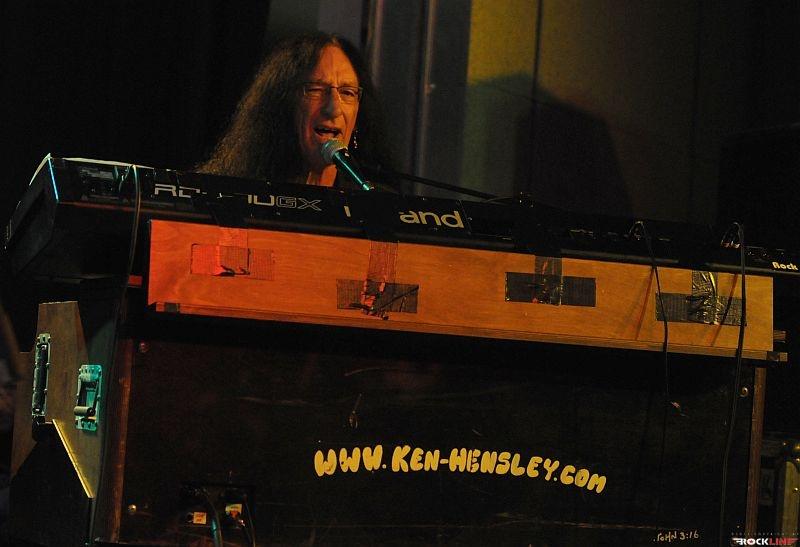
Ken Hensley set out on his own after Uriah Heep fell apart in 1980. By then he’d realized the band was only a shadow of the quintet that, with the one-and-only David Byron on vocals, could once conjure even more unique magic on concert stages. Hensley stayed musically active after leaving Uriah Heep. A prolific musician, he never stopped putting out new original work. In the new millennium, and especially over the last few years, his releases have been raining down like they’re coming off an assembly line. A fresh musical partnership, the quartet Live Fire, has brought him a whole new kind of fun and creative satisfaction. The lineup features Ken Hensley on Hammond, keyboards, guitar and vocals, alongside the Italian »enfant terrible« Roberto Tiranti (vocals, bass) and two excellent Norwegian musicians, Ken Ingwersen on guitar and Tom Arne Fossheim on drums. In just two years the band has put out three albums: the debut »Faster« two years ago, the live album »Live« last year, and this year, two weeks before the band’s gig in Steinfeld, a second studio album, »Trouble«. Musically, the quartet strongly recalls Ken Hensley’s work with Uriah Heep in the seventies and his early solo studio records. The legendary musician is clearly enjoying a new spring.
What were your dreams when you were young, before you entered the world of music and decided to become a musician?
Ken: When I was a teenager, I wanted to be a footballer. I’d already signed a contract with Luton Town, who were in the English First Division back when I was 16. But it didn’t stay that way, and I ended up in rock ‘n’ roll.
Do you still follow what your former Uriah Heep bandmates are up to, or the current lineup in general?
Ken: I’m constantly busy – writing music, recording, playing live. Right now my new band Live Fire is giving me a lot of joy and excitement, so I simply don’t have the time to focus on the new stuff Uriah Heep are making these days.
What do you think of your new band, Live Fire?
Ken: It’s the best band I’ve ever had. It has two excellent Norwegian musicians, guitarist Ken Ingwersen and drummer Tom Arne Fossheim. The vocals come from the Italian Roberto Tiranti, who also plays great bass. In two years we’ve put out three albums: the first, »Faster«, two years ago, then a live album this year, and after that the brand-new studio album »Trouble«, which came out just a few days ago.
How is the audience taking your shows with Live Fire?
Ken: The reactions are great, and people all over Europe love to hear us. What really surprises me is the amazing response in the eastern countries, like Russia and Ukraine, where we played recently. People there are really connected to the music we create and play. They feel connected to us. That’s why they get so energetically involved at the shows, they react emotionally, and I’m thrilled that we have such a good relationship with the audiences in those countries. After we wrap up this Live Fire tour, I’m planning to head to Russia and Ukraine for a week and play a few solo shows there. The interaction with the crowds there is simply incredible.
But you live in Spain, so those are some pretty extreme travel distances, aren’t they? Do you still stop by England every now and then?
Ken: Oh, of course. Not often, but I definitely stay in constant touch with England.
Exactly 45 years ago today, JimI Hendrix played in England, didn’t he?
Ken: Really? I didn’t know that. Well then, we’ve got a good reason to celebrate today, don’t we?
Did you ever meet Hendrix back in those days?
Ken: We played with him. There was this one night when we were playing at the Speakeasy club in London. I was with The Gods at the time, and Jimi Hendrix happened to turn up at the club and joined us on stage.
And inspiration never leaves you?
Ken: No. It’s always there. It comes from everywhere. Anywhere. It’s always present and it’s part of my everyday life. It’s with me while I work, while I sleep. The main thing is to keep an »open« head and an »open« spirit at all times. I’m inspired by things I see and hear, by what people tell me, by what I read in books, and so on. Not a day goes by when I don’t write or create something.
What comes first when you create – the lyrics or the music?
Ken: Always the words. The words carry the melody. Luckily, English is tailor-made for melody. English words carry a lot of melody. And since it’s always cold and foggy back in England, there’s a lot of melancholy in those words too. For me, at least, it’s a spiritual connection. God gives me the idea. He tells me how to write something.
Do you ever regret leaving Uriah Heep?
Ken: Absolutely not. Never. By the time I left Uriah Heep, it was nothing but a »cover band«. I’d simply reached the point where the tension in the band was so big and stressful for me that being in Uriah Heep just boxed me in. Suffocated me. I can’t create unless I have the chance to stand on my own two feet. I know I could have earned a lot more money if I’d kept using the Uriah Heep name to this day, but I’ve always strived to be honest in what I do. With myself and with others. Now that I’m a solo musician standing on my own two feet, independent, I can breathe with full lungs and create my best work. It’s true, and I’ll admit it: my musical history is wonderful when I look back at the years of making music and being with Uriah Heep.
When you play Uriah Heep classics, do you probably aim to stay as close to the originals as possible even today?
Ken: That’s only partly true. David Byron’s voice is one of a kind, unique and irreplaceable. You simply can’t copy him. Of course, with some songs that the audience just demands at gigs, like Lady In Black, it makes sense to tweak them a little, because after years of playing a song over and over, the whole thing starts to get a bit boring. So it pays to rework the arrangement. But of course you mustn’t overdo it. You’ll be able to see for yourselves at tonight’s show, here in Steinfeld.
interview conducted by: Dragan Bulič and Jernej Vene
text translated and edited by: Aleš Podbrežnik
Photo Gallery