Author: Aleš Podbrežnik
Photos: Aleš Podbrežnik
Venue: Piazza Duomo / Spilimbergo (Udine) / Italy
Concert date: 31.07.2011
Attendance: 1300
Ticket price: 22,00€ / 25,00€
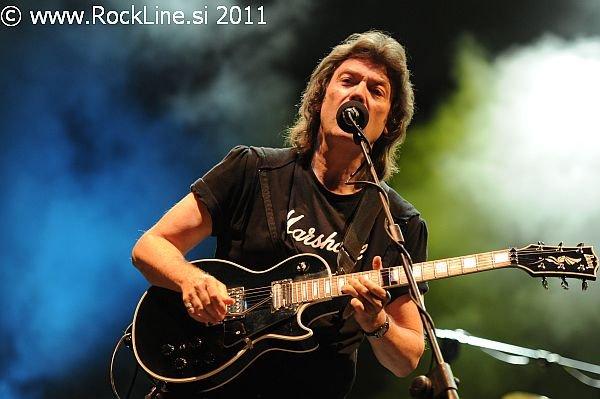
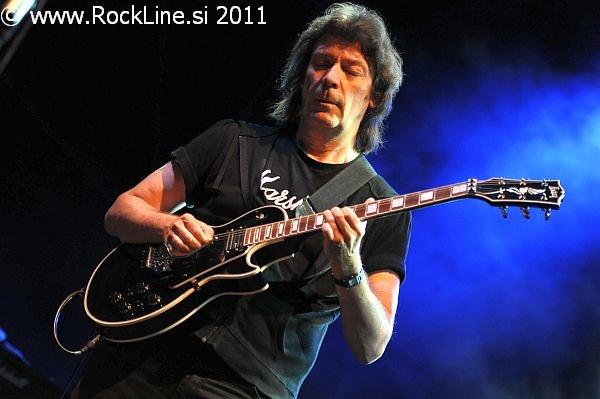
This year’s Folkest, which our western neighbors put on every year along the Udine – Spilimbergo route, and which even brings a few world-music acts over to our own Koper in Slovenia, picked the legendary former Genesis guitarist Steve Hackett as the highlight of the festival program. Steve Hackett is a guitar mastermind whose musical approach, especially the way he played guitar when he arrived on the scene in the seventies, had a revolutionary influence on the young generation of guitarists. Among all the novelties this genius introduced to the music world back in those distant days were the “inventions” of the techniques known as “sweep picking” and “tapping”. All the Van Halens, Satrianis and Malmsteens out there, in other words, learned from Hackett.
Freshly remarried, Steve Havkett is going through a real creative renaissance and, evidently, a complete personal overhaul, which is resulting in some exceptional creative inspiration. Proof of that is his excellent latest studio release “Out Of The Tunnel’s Mouth”, which Steve crowned with a series of live shows (including the Trieste one on 01.08.2010) and with a double live album titled “Live Rails” (Inside Out Records, 2011). On top of all that, Hackett’s new studio album, announced for this September, is already peeking around the corner.
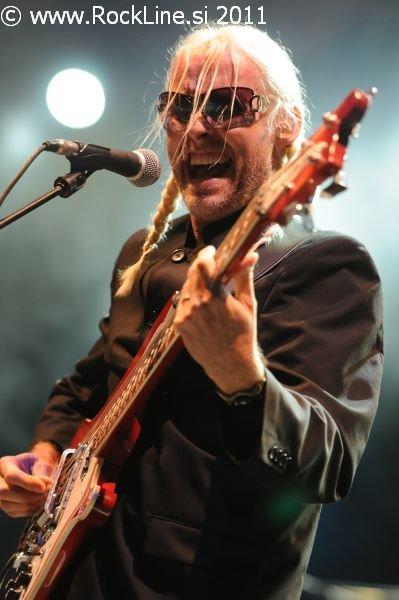
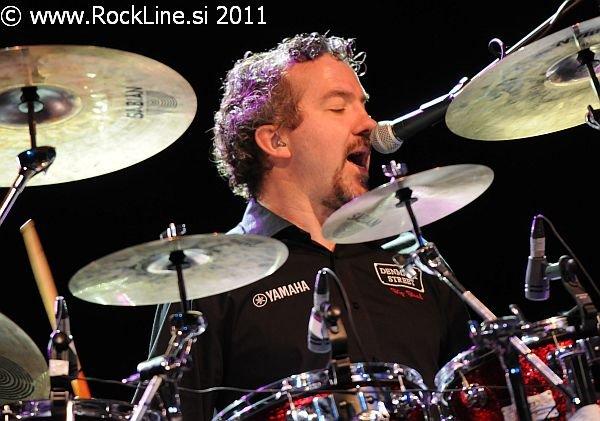
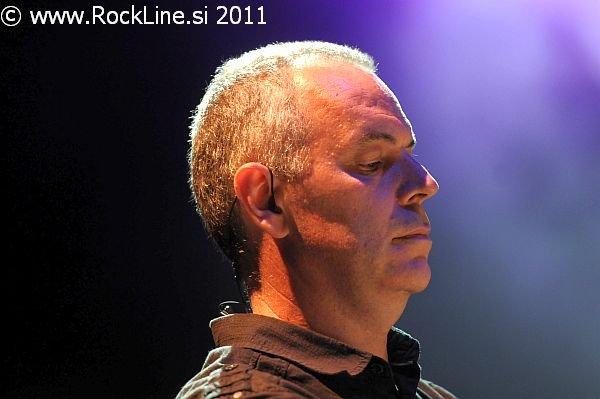
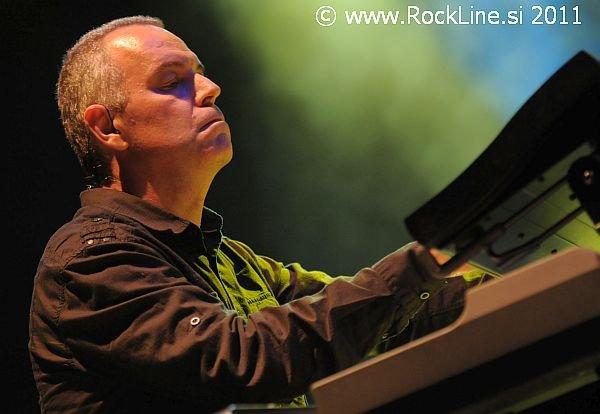
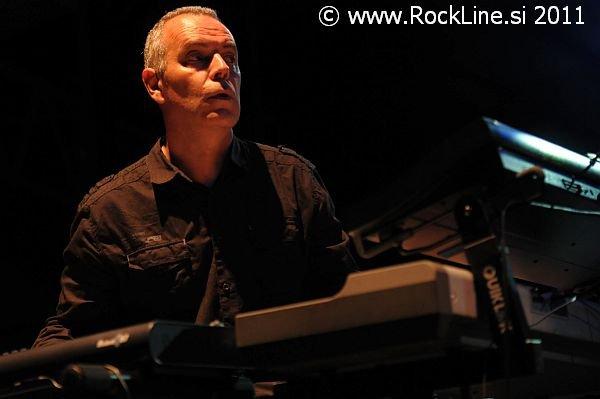
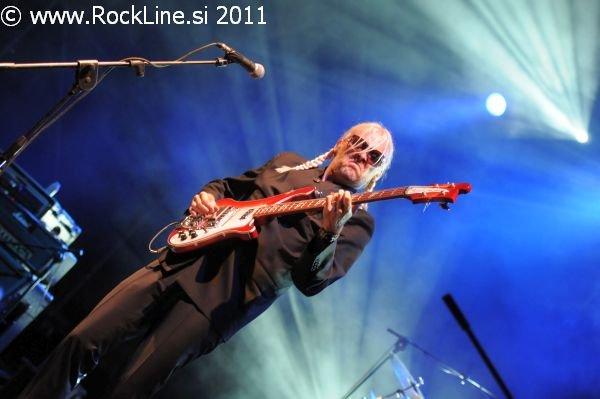
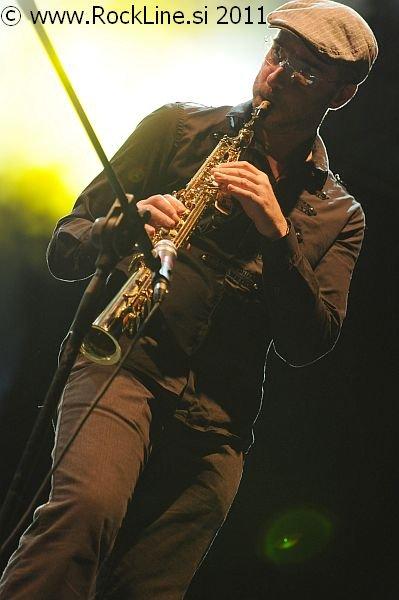
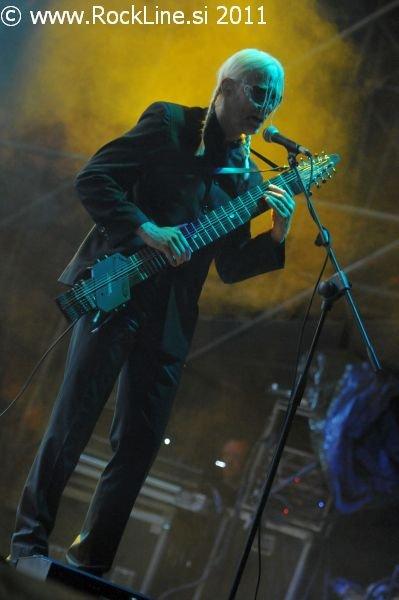
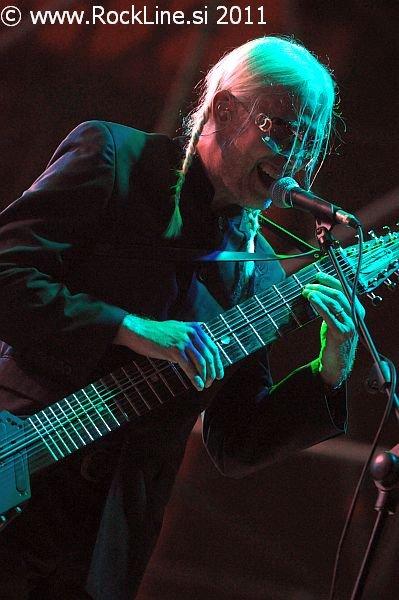
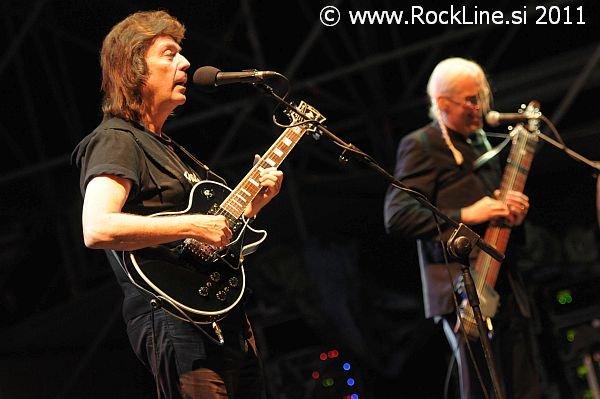
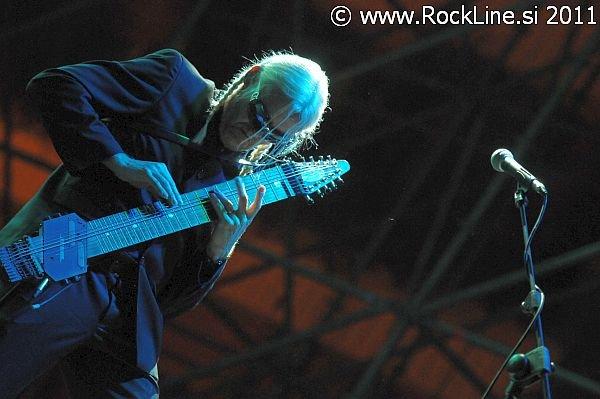
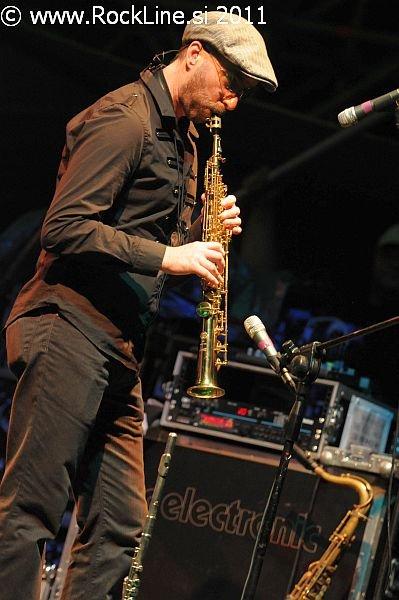
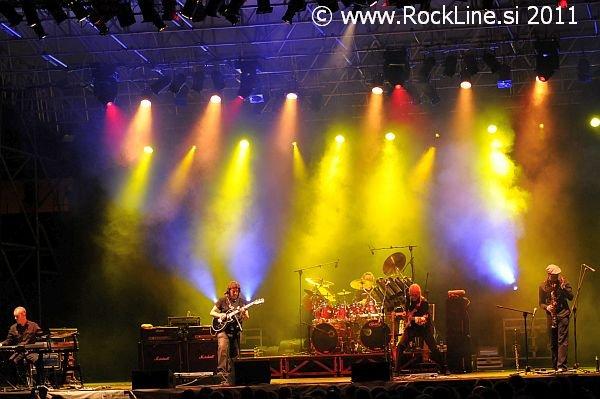
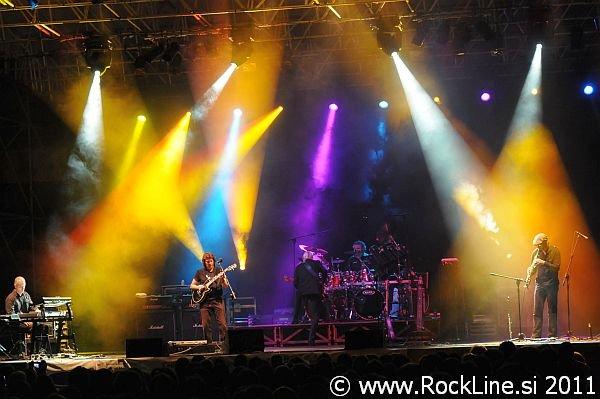
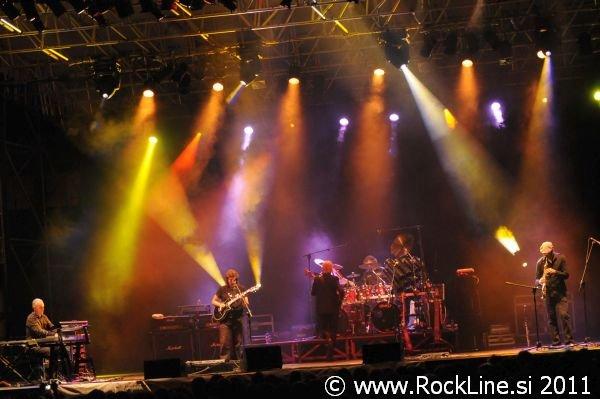
Exactly one year after his show in Trieste, the stage goes dark at ten to ten as the opening sounds of the taped Last Train To Istanbul kick in. After a good minute of intro the musicians march onto the stage. But wait, what’s this? Amanda Lehmann, Steve’s rhythm guitarist and backing vocalist, is missing from the lineup. So standing next to Steve on stage is the usual foursome of Gary O’Toole (drums, vocals, backing vocals), Robert King (keyboards, backing vocals), Rob Townsend (woodwinds, backing vocals) and the extravagant bassist and backing vocalist Nick Beggs, who likewise isn’t shy about making generous use of the Chapman Stick.
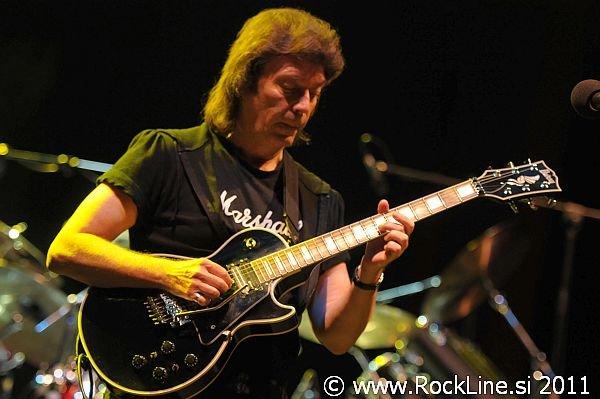
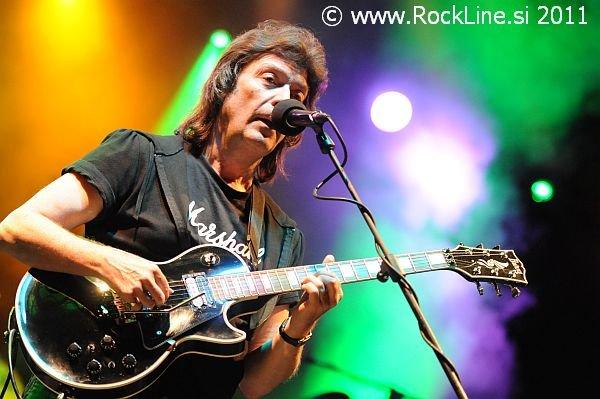
The venue, with 1000 seats set up, was packed to the last corner. Around the seated crowd another 300 or so listeners were standing. We’re in Italy. Home of the big Genesis fans. That’s why Steve Hackett, ever since he chose a solo career, has enjoyed so much support here. The upbeat “Spectral Mornings” classic Every Day opens the show. From the very first second it serves up excellent sound, with all the instruments perfectly calibrated into a sonic balance. It was clear from the first moments that this would be yet another magical night of hanging out with magical music. Of course, Every Day immediately confirmed that the backing harmonies probably wouldn’t be quite as juicy throughout the show as they would have been with Amanda on stage, but the seasoned masters didn’t lose their compass over it and patched things up flawlessly using nothing but pure male vocal harmonies. Extraordinary contrasts string together all sorts of moods and keep the listener in a deeply entranced state once they step into such a unique musical world. A warm, naturally rattly, dynamic stroll through the bass lines of Beggs’s Rickenbecker, a pleasant blanket of that classic keyboard sound inherited from Genesis. No worries there. And Hackett, who plays without a pick, showed right in the opening number who’s the boss. An exceptionally thin, precise sound backed by heavy sustain, played through the musician’s unique expressive character, a genuine blend of neo-classicism, Celtic pastoral and jazz too, brought the classic to a top-notch finish in a wailing, melancholic loveliness.
Hackett didn’t forget the current studio album “Out Of The Tunnel’s Mouth”. Every Day spilled dramatically into Emerald And Ash, an exceptional classic prog-rock number built for new times, which wrapped the stage in emerald-green spotlight hues. They pushed their way through misty, silky veils. Of Steve’s own songs, the one that felt especially magical and highly vibrant in the air was Fire On The Moon, which the band played toward the middle of the show. It stood out for its dual face. Fragile swaying of dainty piano tones surrounding Hackett’s vocal, run through a music box effect in the verses, then a full-on chorus eruption of harmonized vocal collages floating on a strong melotron backing. Then there’s the third excellent track from the new album, a proper lullaby, as the title Sleepers itself hints, placed in the second half right after the Genesis classic Fly On The Windshield, where Townsend stretched out on block flute, classical flute and, finally, a great tenor sax solo. From Steve’s solo career, the set list surprised with the inclusion of the marching, folk-leaning Golden Age Of Steam from the album “Darktown”, which doesn’t hide its motivic resemblance to the opening of the Genesis song Battle Of Epping Forest. And of course there are the standards, which are also the most famous works of Hackett’s solo career and pretty much a mandatory part of his live repertoire. First up is the magical Ace Of Wands, which crept especially deep under the skin during the show, since it has a stunningly compatible rhetoric of neo-classicism and Celtic pastoral that even Mike Oldfield himself would envy in his search for the perfect motif. Then there’s the fantastic Spectral Mornings and its relative from the same album (“Spectral Mornings”), the experimental Clocks. The band saved the latter entirely for the closing stretch of the show. In the second half, The Steppes from “Defector” provided a chilling intermezzo, with a stretched-out intro of full-on jazz experimentation courtesy of the main “culprits”: Towsend on soprano sax, King on piano and O’Toole on percussion. A sudden switch follows, where the rhythm line takes over, its rhythm recalling the slow, long strides of a giant. Soon enough, though, the arabesques of a one-of-a-kind interplay of the instrumental trio Hackett, King and Townsend build on top of it. That moment on stage really conjured the feeling of listening to Ravel’s Bolero bent into melody through the tonality of arabesques. A distinctive mood, hypnotic through and through. The man also spiced up the set list with the brand-new Prairie Angles, which will be on the upcoming studio album “Beyond The Shrouded Horizon”. In its “roughness” it replaces Still Waters in the new live repertoire, the song Steve played, for example, at last year’s show in Trieste. Here the man slipped on a thimble and with a few jerky licks coaxed a roaring, over-distorted sound out of the guitar in his solo, stringing together the one moment that could take the breath away even from some metalhead open to musical enlightenment.
And then, of course, the most important thing in all this. Genesis! The music of Genesis from the period of Steve’s involvement with these giants and one of the founders of the prog-rock craft. Given the more or less well-deserved “slumber” of the main faces of this pioneering band, Steve Hackett on one side and Ray Wislon on the other are really the only performers playing Genesis music on stage today. Hackett’s touch is obviously far more authentic and closer to the original, which goes without saying. In a nutshell: Steve has to play Geneiss, otherwise he’d draw less than half the crowd to his shows. A really tough job was handed to Gary O’Toole. The man had to take care of all the vocals of Peter Gabriel and Phil Collins. Less successful vocally were the Gabriel-era Genesis classics Watcher Of The Skies, Carpet Crawlers and Fly On The Windshield. Of course, hunting for a copy of the original is a pipe dream this time around, but O’Toole is totally compatible in timbre. The most successful of his vocal turns was Blood On The Rooftoops, which Hackett first led in through an acoustic number and, indirectly, through yet another Genesis tune, Horizons. Firth Of Fifth is a Genesis classic that kicked off the encore. It was played in full. Magic given its glossy atmospheric peak by none other than Steve’s monumental guitar motif. It’s based on just a few notes, but with an incredibly long-lasting, wailing sustain that stirs up truly transcendental feelings. The musicians delivered a sonic approximation of the originals. If you tuned out O’Toole’s vocals, at moments it felt like the real Genesis were with us, the rustic ones from the seventies, of course. Even the spotlight show was borrowed in the retro manner of the giants. And Los Endos? Exactly. You’d be hard pressed to find a better pick for closing the regular part of the show. And O’Toole spiced it up nicely with his vocals. The soprano sax is used to prop up Steve Hackett’s lead guitar lines, doubling and emphasizing them.
After the Firth Of Fifth fantasticness in the encore came a completely relaxed number, which carried what was perhaps the biggest helping of free experimentation of the whole show. It was accompanied by deliberate breaking of melodic templates, through unexpected switches of rhythm and deliberately chaotic, jazz-based delivery of short solo eruptions from tenor sax and guitar. You could feel the show was heading toward its end. In the very final stretch Gary O’Toole also steps in with a drum solo. A “dangerous” and almost provocative decision by boss Hackett, but in the end a successful one. O’Toole put together an excellent solo that didn’t come off as one of those classic “stretch it out” minute-stealers for your ears and so was worth listening to every second. One last exit from the song and the band bids farewell to the stage.
I’m repeating myself if I say the show flew by. Two hours and five minutes. It’s hard to describe all the feelings the unique world of Steve Hackett’s music stirs up in you. Add to that the unique Genesis world, count in a one-of-a-kind interpretation that doesn’t know even a fleeting slip, an exceptional sound, full, active, dynamic, where you can feel there are people on stage playing a musical revolution like the one that unfolded long ago, in the early seventies. And this music is eternal. Just as the universe is eternal. And if heaven happens to exist anywhere, then surely this is the kind of music spinning in the CD players up there, music of a unique character and primal genius. A Steve Hackett concert is a live experience that takes you into its own musical world, one you no longer want to come back from. Too bad it lasts “only” two hours.
photos: Aleš Podbrežnik
p.s.: the set list was put together from memory, so the order isn’t entirely accurate.
Setlist
1. Last Train To Istanbul (intro) 2. Every Day 3. Emerald And Ash 4. Golden Age Of Steam 5. Watcher Of The Skies 6. Carpet Crawlers 7. Fire On The Moon 8. Ace Of Wands 9. Fly On The Windshield 10. Sleepers 11. Horizons 12. Blood On The Rooftops 13. Spectral Mornings 14. The Steppes 15. The Darkness In Men’s Heart (Chapman stick solo) 16. Praire Angels 17. Los Endos —encore— 18. Firth Of Fifth 19. Clocks
Photo Gallery