Author: Urban Bolta
Location: Ljubljana / Slovenia
Interview date: 12.10.2013
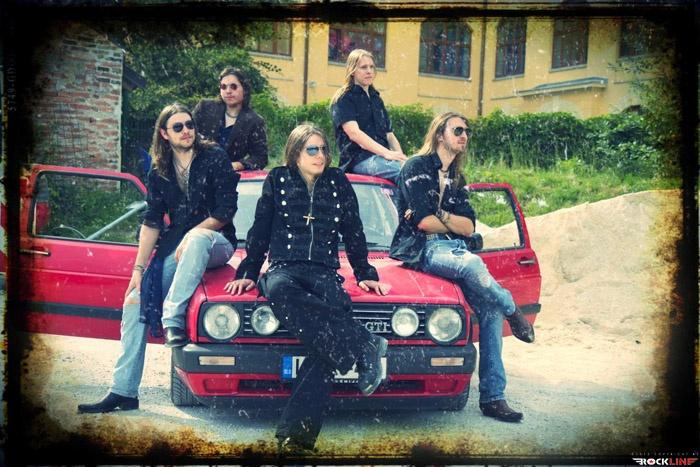
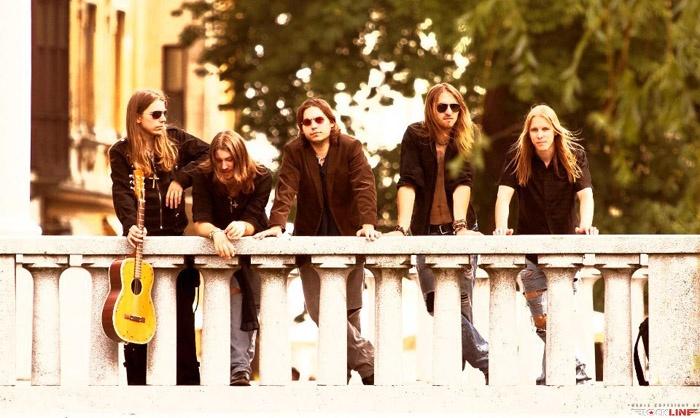
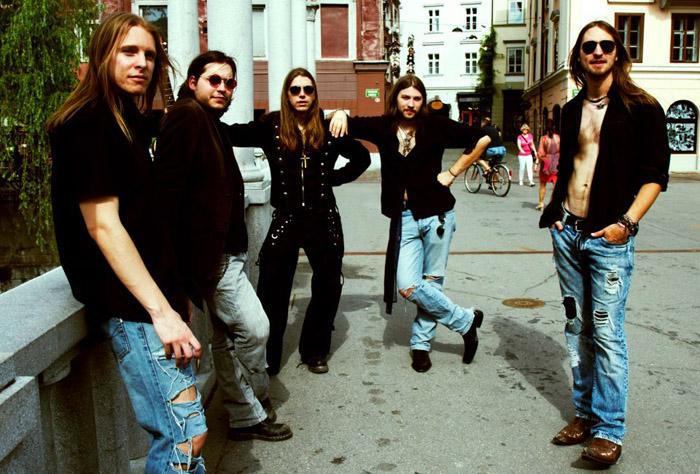
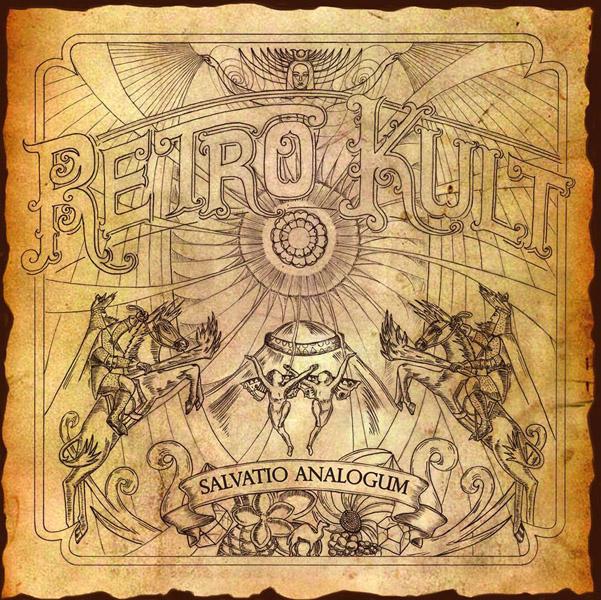
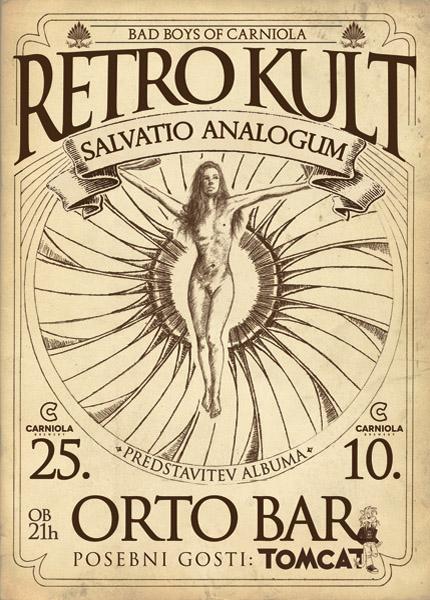
Saturday noon, a perfectly ordinary day in Ljubljana. On the invitation of hard rock outfit Retro Kult, I made my way to their rehearsal space, where the five-piece had gathered to polish up a few last ideas for the release show coming up this Friday at Orto bar in Ljubljana, all while waiting for their studio debut to drop. This is a band that still believes in the rock’n’roll legacy of decades ago, when the record stores were ruled by the likes of Free, Rolling Stones, Grand Funk Railroad and Lynyrd Skynyrd. In the run-up to the release of their studio debut »Salvatio Analogum« and their show at Orto bar, Retro Kult opened up to Rockline about their past, and of course about their current and future plans.
Hey Retro Kult! Most of you used to play together in Nove konzerve. That band fell apart, and Retro Kult kind of rose from its ashes. How did you decide to keep making music together – did it all just happen naturally?
Božo: We got together at our rehearsal space and asked ourselves, seriously, whether we wanted to carry on.
Johnny: The day after we officially broke up, we met up and agreed we’d keep jamming. Everybody was in.
Božo: Of course, we set up this new chapter in a completely different way from before. We took on a new name, changed the way we work, built on tightness and feel…
Back then, most of the music was written by Uroš Vučko, who you’ve since parted ways with. How does new material come together now, who writes the songs?
Božo: Before, Vučko would show up to rehearsal with lyrics in hand and say, right, let’s finish this song. Now it’s different – we get together at rehearsals and, as a team, we can spend two months racking our brains over how to shape a certain song.
Deži: Back in the day, the songs were more or less the work of Vučko and Zupi.
Zupi: Yeah, it used to go like this: I’d play something and ask Vučko if it was okay. I knew what he liked, so I only played in the style he loved. Now it’s different, songs come together in a relaxed way, we’re loose when we’re creating and we give things time, so a song really can take two months to come together.
If I get this right, your songs come about completely spontaneously, with no clear goal – you don’t turn up at rehearsal thinking, okay, now we have to write something?
Zupi: Sometimes someone shows up to rehearsal with an idea, which we then shape together into its final form, but otherwise, like you said, the process of creating original material is really relaxed and spontaneous.
Anže, when and how did you join the band?
Deži: Today marks exactly two years and five days since we met! (laughs)
Anže: I think our first rehearsal together was in December two years ago. I was at Orto bar with Šujot, if I remember right it was a C4 gig, and Deži and Božo were there too, frantically looking for a new singer.
Božo: For a whole year back then we went to every gig we could, scouting potential singers in the crowd just by how they looked. Orto bar was one of the stops at the time.
Anže: It all happened purely by chance. They knew Šujot and asked him if he knew any singers, and I was just standing right there.
Božo: Actually, we sorted out everything we needed with Šujot right there, over Anže’s head. (laughs)
Anže: We agreed that I’d come check out a rehearsal. I showed up, felt all the easygoing vibes between the guys, and felt good from the very start. Around that time another new band was taking shape, and I was involved in it, but nothing ever came of it in the end. That’s also why it took a while before I came to another rehearsal.
Božo: We kept looking for a singer, or tried to, anyway… But we knew we needed nobody but Anže, personality-wise and musically, so any further attempts were pretty much pointless. We were just waiting and scheming about how to get Anži. (laughs)
So when you came into the band, you felt right away that you wanted to be part of this story?
Anže: Yes. It all started moving fast, though. We played a couple of covers, then went straight on to original material, which was a sign to me too that the band trusted me.
Božo: We already had three demo recordings done back then, and once Anže came in we didn’t spend months on just getting in sync and getting to know each other, we sped straight ahead. Right away, with the help of Anže’s ideas too, the vocal line for the song Pekel v raj came together, and it’s stayed unchanged ever since…
Let’s move on to the story of how your album came about. On October 25 you’re having a release show at Orto bar for your debut »Salvatio Analogum«. You recorded the album somewhere in Italy – how did that happen?
Božo: Totally by accident. I think Zupi was searching YouTube for a suitable studio and found one. The studio was in some manor house, surrounded by greenery everywhere, and the climate there suited us perfectly. Each of us individually, and the band as a whole, need to feel good in the place where we create… Some arrangements, lyrics and details actually got finished during the recording itself…
Deži: The studio had the option of analog recording, which was a key factor for us when choosing.
Božo: Then I emailed the studio owner, Andrea »Mike« Prosdocimi, and introduced us. He responded very hospitably, and so in the spring we headed to the studio for the first time, which is near Venice, in a town called Carmignano di Brenta. We liked it at first sight.
Deži: We went for lunch at a restaurant nearby. It was hilarious, because the bill always came to ten euros in the end, no matter what you ordered or how much you drank. (laughs)
Božo: After the studio tour, we pretty much booked it on the spot, and we then spent the second half of July and the first weekend of August there, which we wrapped up with our first show outside our borders, in Roana, Italy.
Deži: We’d had quite a bit of wine and other drinks by then, and when we confirmed the booking with Mike that same day, starting July 19, he told us, hey guys, think about it a bit more before you commit. He probably figured we were too carried away by the good vibes and various local drinks… (laughs)
Božo: The recording itself was a one-of-a-kind experience, though. Personally, at least, I’d never come across so much professional gear in my music career before. When we got there, he spent half an hour just showing us all the equipment.
Deži: We liked the studio as a whole. It wasn’t some hole in the middle of the city, it had a garden and all the decorations, it had its own soul. If you needed a break during recording, you just stretched out under a tree and forgot about everything for a moment. We picked and ate almost all their figs. (laughs)
Johnny: The upside of the location we picked, as I see it, is that for those ten days we were 200 kilometers from Ljubljana, so we could dedicate ourselves one hundred percent to recording.
Božo: It was great because we didn’t have that feeling of, okay, we’ve only got a few hours booked, I have to get everything done right now. For those two weeks we had the studio all to ourselves, so we had a much freer hand.
And Mike took the recordings to their final form?
Božo: Yeah, he handled the mixing and production too. All of us look back on the recording as a really positive experience, even though he got on our nerves quite a bit during it. And of course we got on his… But he managed to hide it. (laughs) I’d never worked with a professional-grade producer before, so at first it was hard to get used to his »know-it-all« attitude. You have to flip a switch in your head: the producer isn’t speaking up to be a smartass, he’s advising as an outside listener and helping shape the finer points so the song ends up sounding even better. In that sense, working with Mike was a real test for individual egos and for the band’s ego. But I think every band has to go through that phase.
So October 25 will be a big day for you. You’ll release your debut and present it at Orto bar. Do you already have plans for what comes next? I guess you’ll try to promote it as much as possible with live shows?
Deži: That’s the plan, yeah. We’ve got a Slovenian club tour in mind, but of course it doesn’t depend only on us how far we’ll get with it.
Zupi: We’ll probably end up with just three shows, but at least they’ll be exclusive. (laughs)
These days the underground is more active than ever, there are loads of bands out there gigging, writing original music and recording. How would you rate the current situation in the Slovenian rock underground, what’s your take on the scene? How does it feel for a new band to become part of it?
Anže: It’s tough, you have to invest a lot yourself if you want anyone to even notice you, and in the end you can count yourself lucky if you just break even.
Božo: It’s awful that promoters have settled into this mindset that bands don’t even need to be paid for travel costs anymore. We kind of understand that fees got pushed down to a minimum in the past, so now they don’t exist at all. But it’s humiliating when you have to literally beg the organizer to give you at least 50€, just so you can pay for the van rental. As far as organizers and promoters go, the scene is bad, but of course there are still plenty of good bands.
Johnny: One of the problems is exactly that there are so many bands. When you’re haggling over a gig offer for those measly few euros for travel costs, the organizer will usually say he can get bands who’d come and play for absolutely nothing.
Božo: Which is of course the bands’ fault too. You can’t trash your own scene on one hand and on the other literally humiliate yourself just to land a single gig.
On the other hand, I’m noticing more and more alliances between bands, people getting to know each other, so you can help each other out.
Johnny: Yeah, so far we’ve played two shows abroad, one in Italy and one in Austria, and we’ve connected with local bands. We’re working out a kind of exchange, where we set up some gigs and promotion for them in Slovenia, and they do the same for us on their turf.
Anže: That’s how bands should help each other as much as possible.
Božo: Bands pretty much only have each other… Which is also good in its own way.
Back to your release show at Orto bar – are you planning anything special, what can people expect from Friday night?
Zupi: There’ll be a surprise, that’s for sure, but to be honest we haven’t nailed down all the details yet, so we can’t reveal them either.
Božo: We’re working on making it not just one more show at Orto bar, but one people will remember. What exactly that’ll be, we don’t know yet, or put differently, for now it’s all just at the idea stage.
Anže: More or less we’ll be playing the Slovenian record… I think we forgot to mention that we recorded two versions of the album, a Slovenian one and an English one. The music is the same, but we’ve got two sets of lyrics, and they’re not literal translations of each other.
Johnny: Another special thing about the album is that it will actually be in one piece – officially there’ll be just one track on the album, combining all ten of the otherwise separate songs.
Deži: We almost forgot. We’ve got special guests at Orto bar – Tomcat will be playing with us. Another one of the friendly bands, to go back to the earlier question…
How did you come up with the idea of two language versions of the album?
Johnny: From the start we had some English and some Slovenian lyrics, so it seemed like the only logical solution.
Anže: And you also connect with listeners a lot more if you sing in their native language. So for Slovenian listeners the album will be in Slovenian, and if we want to be understood abroad too, we can offer them the English version.
Božo: We managed to record both versions in just ten days, and live, too – we played the songs together as a band, we didn’t record each instrument separately. We learned a lot from Mike as well. We kind of picked up his way of thinking, that the point of recording isn’t to squeeze everything into some rules, with everyone recording separately and fixing things a million times and so on, but to make the whole thing sound alive.
How would you describe Retro Kult yourselves, what would you say about yourselves, what kind of music do you play?
Johnny: You can hear in the music how we grew as a band. We started with basic songs, we already had some material from before, and then we started complicating things more and more. We started putting more and more ideas into the songs, so the latest songs have ended up really interesting.
If I’m not mistaken, you have relatively long songs?
Johnny: That’s right, two songs are ten minutes long each.
Božo: We never went into writing a song wanting it to be long, it just happened that way. We kept adding verses because that’s what we felt, and in the end, once we’d recorded a song, we were surprised it ran ten minutes. We never run out of ideas, and the lengths are probably also a reflection of every band member wanting to leave their mark, their ideas, on the song.
Anže: We’ve never limited ourselves genre-wise either, we write a song and really only hear at the end what we’ve put together.
One last classic question: your final thoughts for our readers and your listeners, that parting message?
Deži: Listen to good music. Listen to what you feel, don’t listen to music just because of trends or because everyone else is listening to it. And one more thing – support live music and bands!
Zupi: What if we just didn’t send them any message? (laughs)
Thanks, and good luck!
Interview by: Urban Bolta
Photos: Band’s official profile
Photo gallery