

On December 28, 2020, it was five years since the world lost its first rock icon. That was Ian Fraser Kilmister, known to everyone as Lemmy. Even though he never tried to be, or even wanted to be. He was a musician who actually lived rock’n’roll. He basically defined the core postulates of that kind of lifestyle. With his unbelievable charisma, his razor-sharp intellect, and a reputation as the biggest scoundrel in the galaxy, Lemmy kept popularizing his rock’n’roll (on purpose or not) inside the machinery called Motörhead. The rattling Rickenbacker bass played with guitar phrasing, the mic aimed at a slant, pointing down, and that unique, recognizable-from-a-mile-away vocal of a raging grinding wheel are all embodied across Motörhead’s 22 unforgettable albums, and picking favorites among them is always tough.
This time we won’t be ranking Motörhead albums from good to better to best. Let’s save that for another day. What follows are ten albums from the Motörhead discography that, by all rights, should grace the record collection of every household that pays even a speck of attention to real rock’n’roll.
Assuming, in all good faith, that you all already have at least the compilation “No Remorse” and the live document “No Sleep ’till Hammersmith” at home, here’s our cherry-picked selection of the band’s album detonators, which we’ve put in alphabetical order this time. And finally, reading between the lines, this piece also tells you which Motörhead albums we think are the best.
“1916” (1991):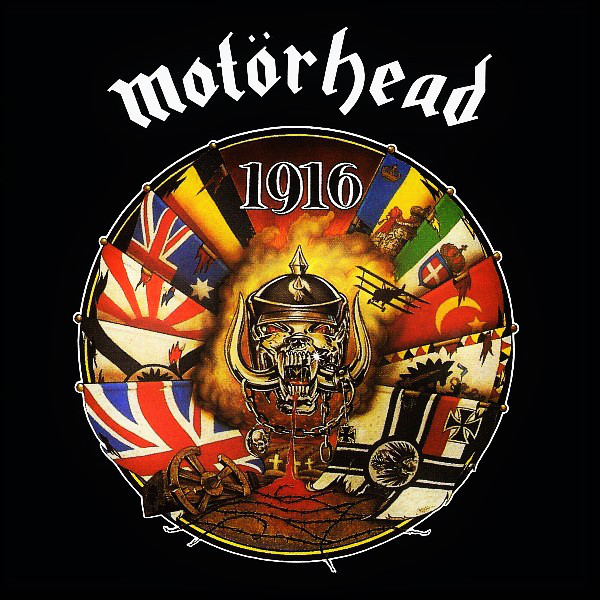
By the time “1916” came out in 1991, it was clear that Motörhead always make their best albums after career shocks. Four years had passed since “Rock’n’Roll” before the band went back into the studio. Under a new deal, this time with a hungrier label, Motörhead pumped out two albums. First came one of their better ones, followed by probably their worst. The first of the two, and the last one with Philthy, is also the album where the band, who by then had pretty much said it all, repackaged and recycled their famous formula in a brilliant way and served up a godless execution of classics, including Going To Brasil, I’m So Bad (Baby I Don’t Care) and The One To Sing the Blues. The label Epic/WTG Records showed its true greedy face soon after taking the band under its wing. It high-handedly “planted” its own producer on them, and when Lemmy found out that Ed Stasium had sneaked percussion and tambourines into the mix, he chased him out of the studio. Despite the ballad Love Me Forever and Angel City with a saxophone (!), “1916” successfully repels most of the attempts at softening the sound and keeps the band’s proverbial rock’n’roll bloodlust and orthodoxy fully alive.
“Ace of Spades” (1980):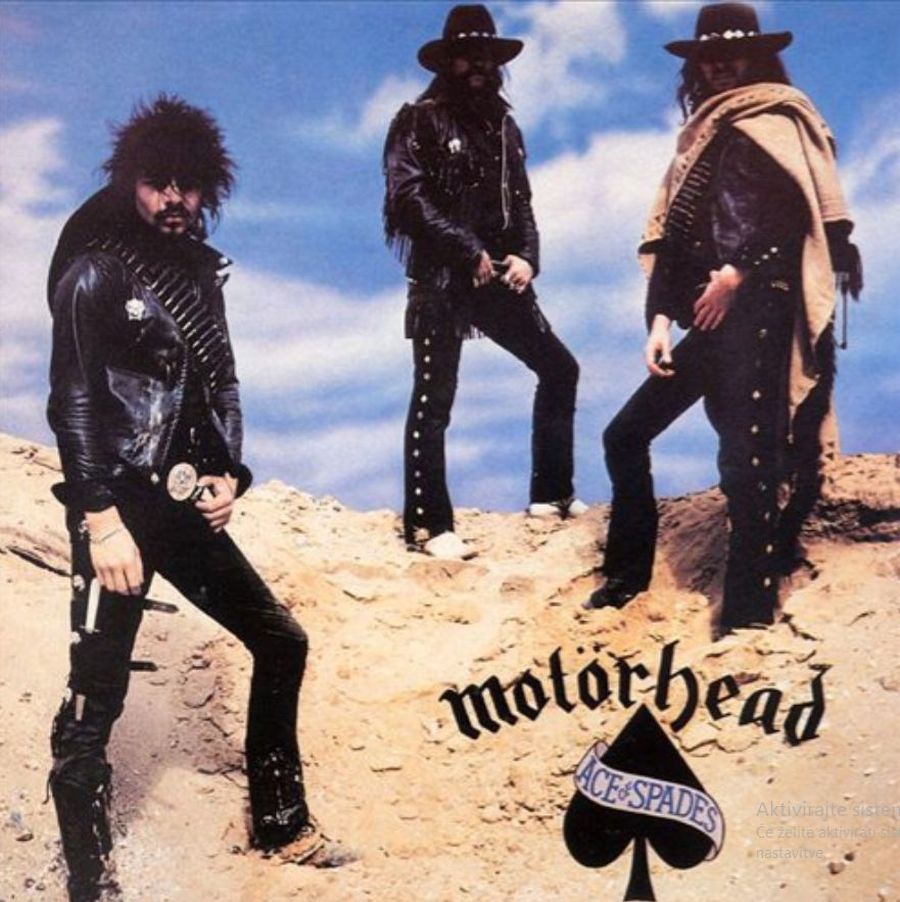
In the final selection, it’s hard to choose between two Motörhead albums and say which one is the best without doing the other an injustice. It’s always a problem when “Overkill” and “Ace of Spades” land on the same “weighing skewer”. Still, the winner’s title in this ring goes to “Ace of Spades”, thanks to the infamous title track that has literally been spinning the Earth on its axis for 40 years. It’s backed by a majestic granite buttress of incredibly charismatic tracks, like the fun “spaghetti western” moment Shoot You in the Back, plus a series of testosterone salvos led by Love Me Like A Reptile, The Chase is Better Than The Catch and Jailbait. And of course there’s the band’s timeless dedication to their roadies and stage techs, one of the most striking songs of Motörhead’s entire career, (We Are) The Roadcrew. An album that is the definition of rock’n’roll in itself, and an album you have to own even if you have no clue what rock’n’roll means.
“Another Perfect Day” (1983):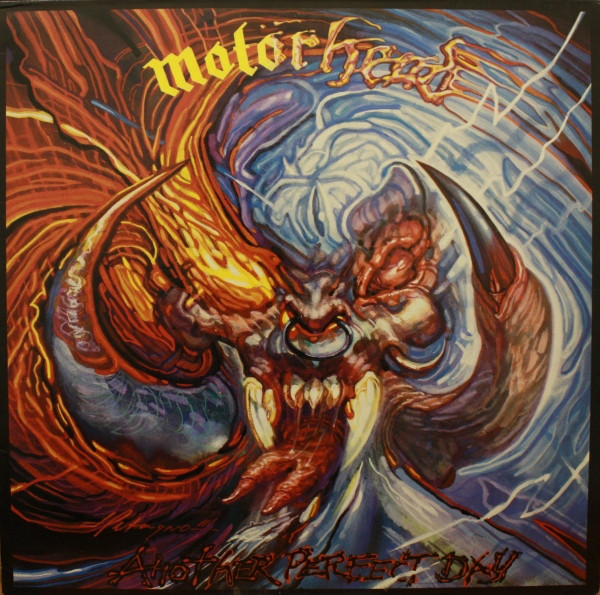
The first album after the end of the band’s classic days and after Eddie Fast Clarke’s departure was the herald of a turbulent period. You probably didn’t raise a single eyebrow, since turbulence is another name for this band’s lifestyle. Even so, Lemmy decided to make a seriously risky move, declaring former Thin Lizzy guitarist Brian Robertson the new member. Robbo was full of quirks. On stage he showed up in a dandy getup that mixed Mark Knopfler (tennis headband) with a ballet dancer (ballet slippers, spandex), and with zero respect, in all his manners, habits and customs, he teased and provoked poor Lemmy. His playing, though, was once again out of this world. You can feel it every second of this downright brilliant and unique piece of the band’s whole career. If we switch off all thoughts and outside stimuli for a moment, “Another Perfect Day” is, technically speaking, and minus Philthy’s drumming “progressiveness”, especially when it comes to the guitar playing, even the most polished album of Motörhead’s career. The opening part already announces it, along with a heap of guitar figures, ornaments and finesses across the album’s whole running time, which Robbo, within the otherwise monolithically drawn and “suffocating” template of three-note phrasing, managed to weave in with his wit and sharpness. A brilliant album in every respect. Unfairly overlooked. Lemmy realized it too in the last fifteen years of Motörhead’s career, as classics from this album increasingly found their way back into the live set.
“Bastards” (1993):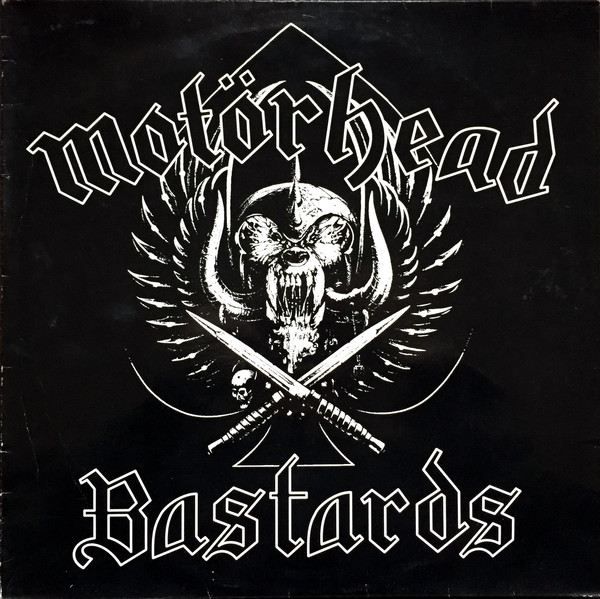
“Bastards” counts as an album of relief, if not outright salvation. For the band and its followers alike. After an unenviable flirtation with softening their sound, or let’s just say flat-out pop, Motörhead exploded limitlessly again and delivered probably one of the most deafening, fastest and most abrasive records of their whole career, with only “Sacrifice” snatching that crown away. From the opening On Your Feet or On Your Knees, through Burner and Death or Glory, all the way to the apocalyptic Devils, “Bastards” keeps the listener in a constant checkmate position of devastating “blitzkrieg”. We can’t skip one of the most fiery and rapacious rock’n’roll manifestos of the band’s career, embodied in the incredibly infectious classic Born To Raise Hell. Epic Records surely had hiccups over it for a long time after letting the band slip out from under its wing. This album also holds one of the most touching and beautiful ballads Ian Lemmy Kilmister ever wrote – Don’t Let Daddy Kiss Me. No beating around the bush: this is one of the best albums in the whole Motörhead story.
“Bomber” (1979)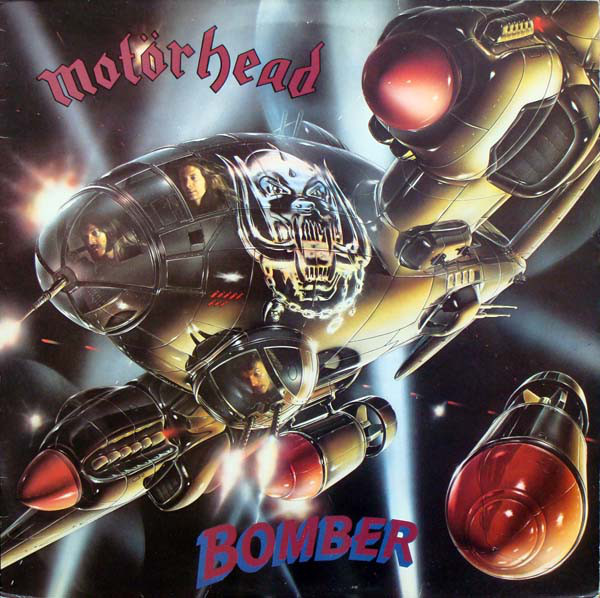
A millimeter, maybe two, calmer than “Overkill”. More calm? Heh, heh. The second album recorded and released in 1979 is a triumphant continuation of the musical direction the band discovered, embodied and established with “Overkill”. The album that gave birth to the famous bomber that started accompanying the band’s gigs, and the album after which the band was ready to conquer the world. After the opening Dead Men Tell No Tales – which Lemmy lovingly renamed Dead Men Smell Toe Nails – the album starts climbing, deafening and speeding up, especially in its second half, which kicks off with Stone Dead Forever and closes with the ultimate Bomber, though “Bomber” would have been even noisier had the single Over the Top kept it company. “Bomber” is the ultimate work that makes up a flawless album trio of the classic days of the Motörhead school of rock’n’roll.
“Orgasmatron” (1986):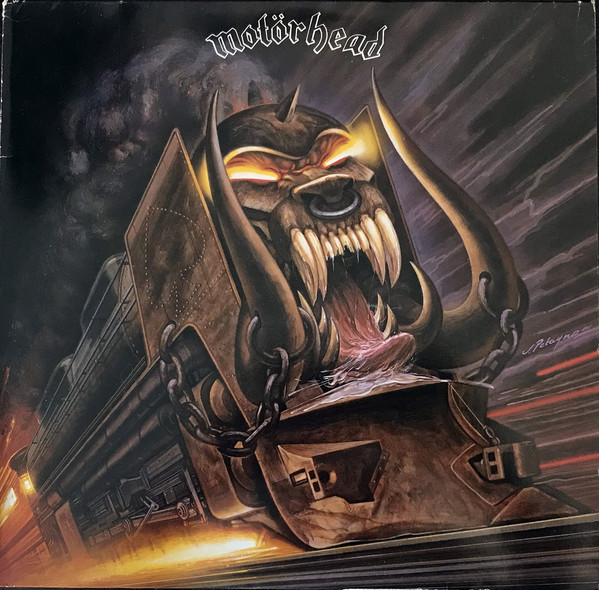
After three years of searching for balance, court hearings, in short, uncertainty, Motörhead went into the studio and, in a refreshed lineup, cranked out an excellent album bursting with a high dose of fresh and incredibly inventive phrases. The answer is, of course, Phil Campbell. The Welsh guitarist got his baptism by fire on this album. Next to the unshakable figure of the iron chancellor, Campbell is the key creator of the novelties that “Orgasmatron” captured, and which Campbell went on to record with the band until the end of its career. “Orgasmatron” is the right title for the album. The ecstasy after ecstasy that Lemmy and company lived through in the not-so-distant past left an indelible mark on the songs: Doctor Rock, the opening Deaf Forever, Nothing Up My Sleeve, Built For Speed, and especially the fantastic closing title track. All together they prop up one of the most exciting albums in the band’s whole catalog.
“Overkill” (1979):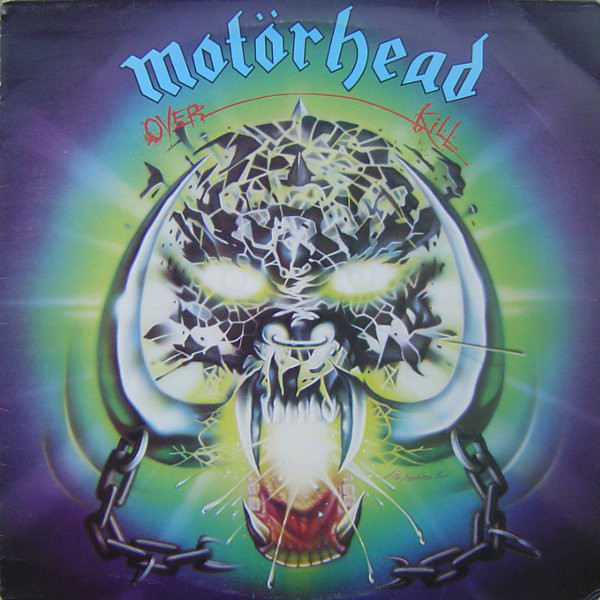
“Overkill” is the album where the band left the demons of the past, the postpartum cramps of its founding, behind. With “Overkill” the motor gear hit on all cylinders, and so the first of the classic Motörhead trio of albums was born (alongside, of course, “Bomber” and “Ace Of Spades”), which changed the world of rock’n’roll forever. It’s a redefinition of rock’n’roll for new times, with the face of Little Richard flying on a serious dose of amphetamines. On this album the band embodied its iron classics, which the working class of the world adopted in an instant. With the terrifying rock’n’roll metamorphosis personified by the shameless, gargantuan bristling of roaring and rolling tracks: Stay Clean, No Class, Metropolis, Capricorn, Damage Case, I’ll Be Your Sister, … you really conclude that “Overkill” is a work close to perfection.
“Overnight Sensation” (1996):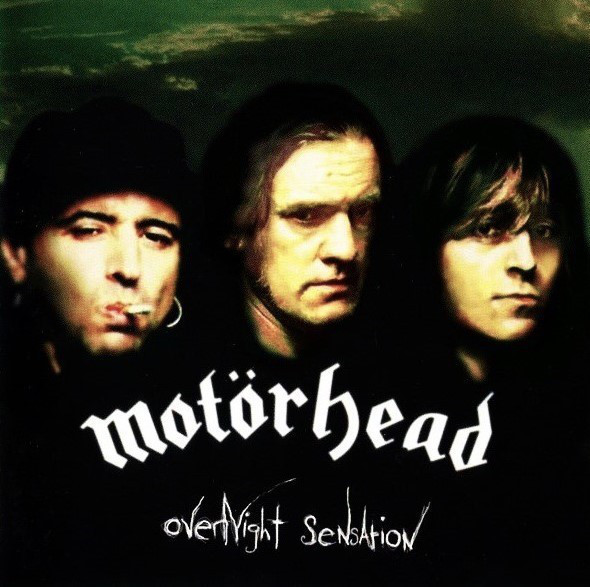
Although Lemmy’s figure is the constant and the definition of the essential elements the construction called Motörhead is built on, that same construction took a series of one kind of tremor after another over its long career, and they tried, at least in part, to sand down its roughness. With “Overnight Sensation”, which came out just one year after “Sacrifice”, an album that was seemingly unbeatable in its sheer corruption by unleashed decibels, Motörhead went back to the basic trio format and left the worn-out corporal behind. The album cover hints at new times too. No “Snaggletooth” mascot, and a “sloppy but lovable” photo of three “police suspects” faces, in which (after a century or two) shaving foam has found Lemmy too. “Overnight Sensation” serves up a fantastic batch of toxic rattling, with the piercing, caustic social-critical I Don’t Believe A Word standing out, plus the title track, as well as yet another manifesto of one-night sessions with girls in Broken. “Overnight Sensation” counts, alongside “We Are Motörhead”, as Motörhead’s best work in the trio format: Lemmy, Wizzö and Mikkey Dee.
“Sacrifice” (1995):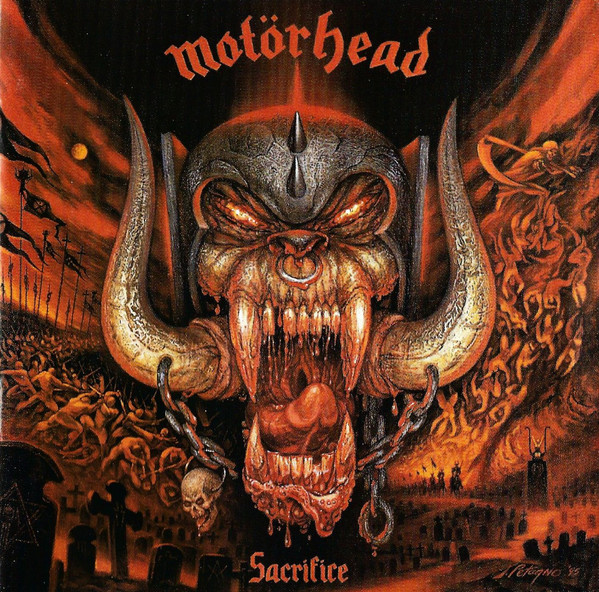
“Sacrifice” follows the flashing, victorious format of its sneering predecessor “Bastards”. Despite the growing troubles with Würzel that the quartet was wrestling with behind the scenes of this album’s story, maybe it was precisely this situation that added a few extra octane points to the fuel, the fuel that strikes sparks into one of the most devastating products of Motörhead’s career. The title track, which Lemmy always warned his audience not to dance to or they’d break their legs, is the triumphant close of the band’s era as a quartet. Even though its predecessor “Bastards” brought a sudden swerve into condensing the roaring lust, bringing the newfound expression close even to elements of speed and thrash metal, “Sacrifice” as a whole is even more devastating than its predecessor.
“We Are Motörhead” (2000):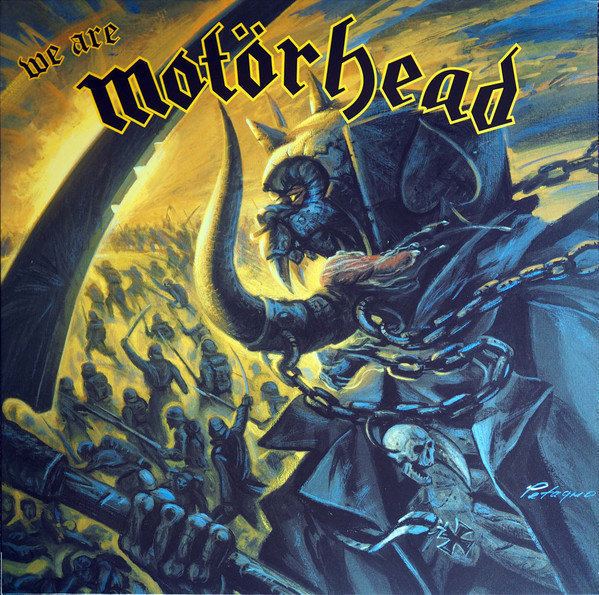
After the somewhat unconvincing “Snakebite Love”, for which Lemmy said the band didn’t have a single song up their sleeve just a month and a half before recording started, “We Are Motörhead” triumphantly fixed the pale impression of its predecessor. With a title track that closes a carousel of flawlessly rough-hewn roaring, on which Motörhead once again developed that real bite, speed and destructiveness that both the metal and punk worlds have always envied, “We Are Motörhead” is a flawlessly fresh album projectile with which Motörhead walked through the door of the new millennium in their typical way. The door got knocked off its hinges, sent flying high and bounced far away, and the fresh incarnation in splinters found its function as a toothpick.
Author: Aleš Podbrežnik
