

1970 was a straight-up breakthrough year for Black Sabbath, in every sense of the word. In February they released their studio debut »Black Sabbath« (RockLine review), and by the end of the year they had two studio albums in the bag. On 18 September 1970 their second, »Paranoid«, hit the shelves. Ozzy Osbourne, Tony Iommi, Gezeer Butler and Bill Ward had no idea they were turning the rock’n’roll mythology of the day upside down, rattling chains and playing the demons on concert stages and, with sermons dedicated to a new rock’n’roll religion, slowly conquering the cities of Great Britain and the rest of the European continent too.
»Paranoid« was recorded in six days in June, between 16 and 21 June 1970, in London. It was done in two studios: Regent Sound and Island. Legendary producer Rodger Bain worked with the band on the album.
»Paranoid«, which only got that name at the last minute (the plan was originally to call the album »War Pigs«), contains some of the most beloved songs of Black Sabbath’s entire career. These are songs that, over a long career, became and remained the rustproof part of the band’s most worshipped arsenal of heavy metal iron: Electric Funeral, War Pigs, Iron Man, Fairies Wear Boots, Planet Caravan and, of course, the title track.
You can read RockLine’s review of the album “Paranoid”, written by Peter “Dr. ProgRock” Podbrežnik, HERE!
The band never dreamed that their first European tour had stirred up so much interest among audiences, and when they walked into the studio in June of that year, by Geezer’s account they were still fighting the whole world just to survive and keep going. Even though the critics mostly tore the debut to shreds, the band’s loyal fanbase on US soil kept growing too. So Black Sabbath hadn’t wasted their time after all.
Geezer Butler remembers that family members simply didn’t believe anything would ever come of the Birmingham four-piece. Plenty of close friends also made fun of the quartet every time the lads hinted that they hoped to make it. Considering that the album »Black Sabbath« was recorded in a single day, six days for »Paranoid« was pure luxury for Black Sabbath.
The band had written a few songs already during their first tour, played them live and road-tested them on stage, so they came into the studio well prepared and tight. They also spent quite a while in Zurich, playing one of the local dive clubs for a handful of punters, plus one oddball, as Iommi described him, who came right up to the stage every night, waving his arms in the air while coins flew out of his pockets. Iommi said the venue was godforsaken and dead as a doornail, but that the time they spent there did them good, because that’s exactly where they wrote some of the material, including the song »War Pigs«. Butler says: »We came into the studio and played the songs as if it were a gig. We had no clue how things worked in studios. Everything on the album sounds very simple, but it’s hard to record a band live in the studio and still catch that real vibe. Lots of producers couldn’t pull it off, but Rodger Bain was skilled at it. He gave us a few suggestions on what to do, and we made it work.«
Among the suggestions that stood out was the famous one that the band write one more song, since they didn’t have enough material for an album. After Black Sabbath had recorded all seven songs for the album, they wrote the title track at the very same place. And recorded it right away.
Iommi says: The producer said we didn’t have enough material for an album. That we needed another three minutes. That’s how the tune Paranoid came about. It happened in passing. While the others were in the canteen grabbing a bite, I got the idea for that riff.
When Rodger Bain heard the song, he was on it immediately: »That works fine. What is that? I got an unsure answer along the lines of: »We’re just messing around a bit.« and I said: »Right, but it’s really good. Let’s record it!«
Bill Ward says it was about half past two in the afternoon when Tony came in with the idea for the main riff. By four o’clock the band had already recorded the song. Just as we know it from the album.
Here’s what Ozzy Osbourne had to say about Paranoid: »When I was heading home to my wife at the time, I told her: »I think we just recorded a single,« and she answered: »But you guys don’t do singles.« I said: »I know, but this song has been driving me out of my mind ever since I sat down on the train to take me home.«
Geezer Bultler remembers how Ozzy and he dug in their heels against playing the song when they first heard Iommi’s phrasing: »It was right at the very end of recording the album. We didn’t have enough material. Tony came up with a riff, but Ozzy and I thought it sounded way too much like the Led Zeppelin tune Communication Breakdown. We always liked Led Zeppelin. When we sat around in a circle smoking weed, we loved listening to their first album. And when Iommi came up with that riff, Ozzy and I spotted the Led Zeppelin resemblance right away and were against recording the song. We actually had a pretty solid argument against it. Guess who was wrong? The fact that this song later became such a huge hit for us, and probably even the best-known Black Sabbath song of all time, says it all!«
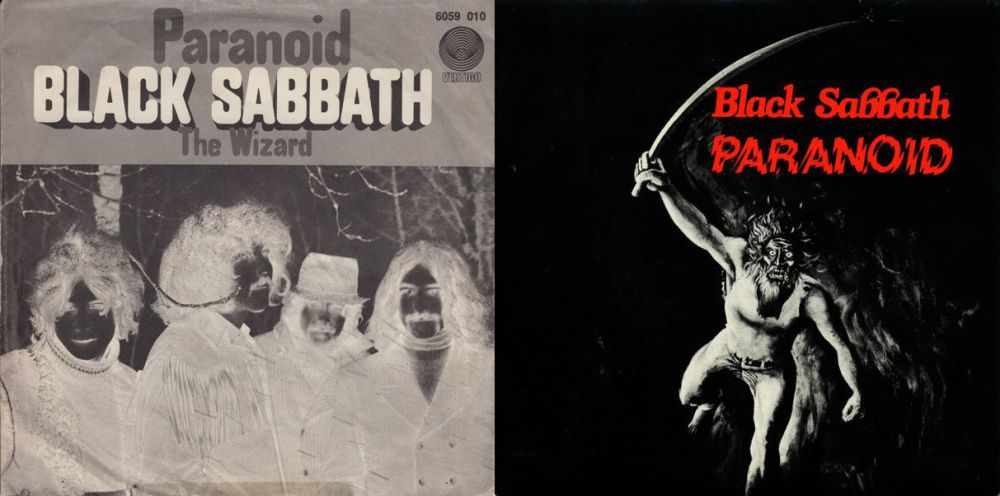
The label Vertigo, which of course saw money in Paranoid, was in a hurry. So the song came out as a single on 17 July 1970 and climbed into the top five best-selling hits, which was very surprising given the nature of its lyrics, which deal with madness and suicide. It meant Black Sabbath became pop stars overnight, which didn’t fill them with joy at all, but rather with total unease. The single Paranoid peaked at number four on the best-sellers chart, keeping company with Cliff Richard and Englebert Humperdink. Iommi remembers: »We felt like traitors, like we were trying to please the kids watching »Top of the Pops«. We showed up on that show too, but it was completely out of place for us. At gigs we started getting a screaming crowd, and if they’d heard our other songs, they’d have crapped their pants.«
The band’s manager at the time, and later their former manager, Jim Simpson adds: “Black Sabbath were getting more and more interesting. So one day Wilfred Pine and Patrick Meehan approached them. They worked for the notorious Don Arden, who had sent them to make contact with the band. Black Sabbath told me they had a meeting at the Wimpy bar in London. Since they were so open and told me about it, I figured I could trust them. But Pine and Meehan split from Arden, and their first goal was to take over managing Black Sabbath. I only found out after I received a letter saying that Black Sabbath had left my management. I filed a lawsuit, and it took 14 years before I got back everything I lost back then.«
Pine and Meehan also swiped a ton of money from the band, but that’s a story for another time.
Butler goes on: »To us, »Paranoid« was just another song, nothing more. Then one day the label called us up and said: »Paranoid« is the best song on your album. So let’s just call the album »Paranoid«.«
The band, of course, didn’t like the suggestion. Black Sabbath and Vertigo had already been haggling over what to call the album. It was originally supposed to be titled »Walpurgis Night«, but the label turned down the band’s wish, saying the whole thing looked too much like a “Christmas for Satanists”. They settled on »War Pigs«. At the last minute, even that changed.
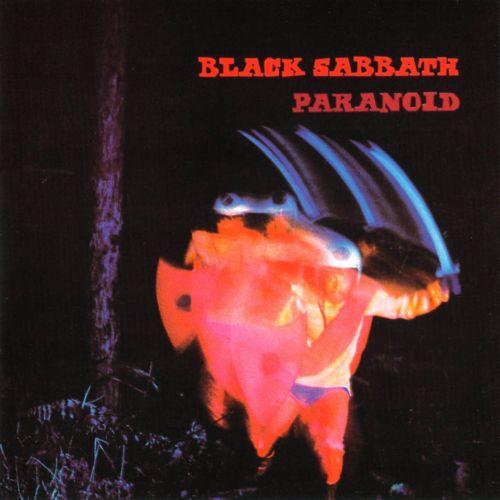
»The album cover is truly horribly dismal, and it comes from the message of the song »War Pigs«. We all figured the album would be called that. Then they changed the album’s name to »Paranoid«, so the cover has absolutely nothing to do with the word Paranoid,« Butler adds.
“On the cover there’s a guy with a shield and a sword, and the album is called »Paranoid«. Imagine the questions we got because of that? What does the cover have to do with the album title? Nothing. That’s how it was.«, Iommi adds.
The band was raised on hard Birmingham bread, and the “flower power” movement, which was still shaking the planet that year, was the last thing they’d sympathize with. They loathed hippiedom and everything connected to it. The memory of the ruined buildings of postwar Birmingham and all the misery was still very much alive.
On Paranoid, Black Sabbath moved even further away from the blues and dug deeper into their doomy pose, their villainous swagger and the dread of a doomsday creature. The phrasing was getting heavier and even blacker. The band also kept their lyric writing grounded. Black Sabbath kept it real. The album »Paranoid« carries social criticism. The song Fairies Wear Boots refers to the band’s encounter with a gang of skinheads in Dr. Martens boots, with Black Sabbath barely escaping their clutches. Butler says: »I wrote about everything that was going on in our everyday lives and everything around us.« The song Electric Funeral has lyrics about the Cold War, and Butler adds that back then they genuinely thought the bombs would fall. The only question was whether the first atomic bomb would be dropped by the Russians or the Americans. The lyrics of War Pigs, especially the line »Satan laughing spreads his wings«, brought the band a whiff of controversy, though Geezer says that the choice of the word »Satan« isn’t about the devil but a metaphor for war. Likewise, the lyrics about generals gathering, modeled on witches gathering, don’t appeal to governments or politicians, they’re simply an analogy for evil. Then everybody else turned it all on its head and declared the band satanic, which Black Sabbath of course never were.
The album »Paranoid« came out on 18 September 1970. In the US it reached number 23 on the best-selling albums chart, while in Great Britain it did better, hitting number 8. Still, it took a good while, until 7 May 1971, to go gold in the US. The album needed another 15 years to go platinum. By 1995 it had gone four times platinum.
The album »Paranoid« cemented the band’s status and spread their name on both sides of the Atlantic. On 30 October 1970 Black Sabbath set off on their first American tour. They played the first show in New Jersey (Glassboro College). Geezer Butler remembers: »Led Zeppelin had broken through in the US ahead of us and had already opened the door a little for us too. But we were surprised, because it was obvious they had simply never seen anything like Black Sabbath over there. They just lost their minds.«
Tony Iommi adds: »We took our main PA with us, but we didn’t use flight cases for the speakers, and when they arrived in the US with the rest of the air freight, half the speakers were wrecked. It was a disaster. Then our sound tech plugged our PA into the power supply, and because the US has a different power supply, it blew everything up.«
Rick Green, the promoter of that tour, adds: »They knocked out the power, and not just in the gym but in the whole house where they were staying. The neighborhood lost power too, even the street lights. Ozzy Osbourne was only 20 years old then. He stood in a corner of the gym and started bawling: »I hate America and I want to go home.«
It wasn’t all black, even though black goes brilliantly with the band’s name and pose. Toony Iommi goes on: »Then we played the Fillmore East in New York and it was fantastic. We opened the night for The Faces and killed it. The women there seemed a lot more open than back home. We knew nothing about ‘groupies’. That’s where our eyes were opened to it.«
Even before Black Sabbath landed on US soil, »Paranoid« had already sold several thousand copies there. Make that tens of thousands, and the audience already knew them well. »Paranoid« gave Black Sabbath the status of a globally established band and very likely remains the most beloved Black Sabbath album to this day.
In the early seventies, Black Sabbath with the album »Paranoid« really did sound like nothing else on the planet. When you look back at the charisma of the massive riff madness of the ultimate classics: Iron Man, Electric Funeral and Hand Of Doom, it hits you instantly just how devastating this sound was for 1970. All the later bands and members of the doom metal genre learned from Black Sabbath, and every riff is inspired by the Black Sabbath of the seventies. Above all, it was the sonic massiveness the band developed, using utterly simple musical moves. Direct, real, down to earth, without a shred of kitsch and with the howling drone of demonic noise. Even Mikael Akereldt (Opeth) once admitted: »When I first heard the creepy voice at the start of Iron Man, I almost crapped my pants!« Truly. One of the foundational albums that gave birth to heavy metal.
Author: Aleš Podbrežnik
You can read the special feature marking the 50th anniversary of Black Sabbath’s debut HERE!
