

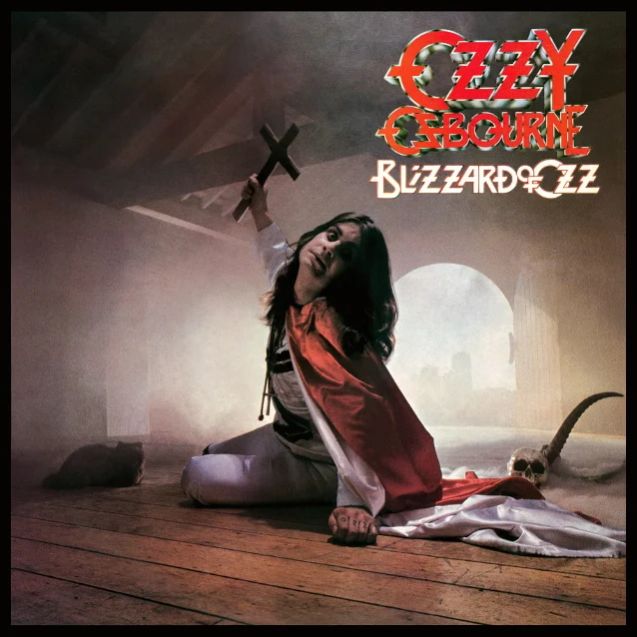
This September marked 40 years since the release of Ozzy’s debut, “Blizzard of Ozz.” It’s the album that saved the singer’s music career.
To get a rough picture of how we ended up with the album that marked Ozzy’s final step into a solo career, we need to rewind a bit. To the late seventies. In December 1978, Black Sabbath stayed in the US and started writing material for a new album. By then Ozzy had sunk to the extreme into every kind of addiction going, and working with him was simply impossible. Sure, everyone in the band was actually “hooked” on something, and there were no angels in that foursome, but Ozzy’s problem was above all constant, extreme drunkenness. The pressure from the label kept getting worse, and the band suffered because Ozzy was mostly dead set against doing vocals on the material Tony Iommi was putting together for the new album. So Iommi, with a heavy heart, finally decided to fire Ozzy. The job of breaking the news of his expulsion from Black Sabbath, which became official on April 27, 1979, went to drummer Bill Ward, who had always gotten along best with Ozzy in the band.
The singer’s world collapsed. He was convinced it was all over. Don Arden, the infamous “Al Capone of pop,” put Ozzy up at the Le Parc hotel in Los Angeles, where Ozzy, in a rush of disappointment, depression and shame, hid from the whole world. Locked up in his hotel hole, humiliated, wrecked, desperate and forgotten by everyone, Ozzy gave himself over to cocaine, booze and whatever other intoxicants helped him drift far beyond reality. Only the pizza delivery guys, the dealers and, of course, a well-informed gang of groupies, the girls lining up for a “one-night stand,” knew where he was. Ozzy, whose family was waiting for him back home in England, with his wife at the time, Thelma, and two kids, never even considered going home in that state. Convinced Black Sabbath were finished, he wanted to let loose one last time in a fit of self-destruction. So, abandoned and forgotten, he slowly went to pieces in a hotel room in West Hollywood.
But unlike Ozzy with his despondency, somebody else had different plans for him. Don Arden. He had seen enormous commercial potential in Black Sabbath with Ozzy in the lineup. Even after Ozzy was fired, Arden kept rooting for the singer and tried to talk him into going back to Black Sabbath. He kept at it even after Tony Iommi and Ronnie James Dio had made their first contact in June 1979.
So one summer day in July 1979, Arden sent his daughter Sharon Arden, who worked at her father’s Los Angeles company, to the door of the hotel room where the desperate Ozzy was wasting away, to talk to him and offer him a chance to work together. That same Sharon had introduced Tony Iommi to Ronnie James Dio a good month earlier. The 27-year-old was no pushover and, following the example of her notorious father, knew how to think very shrewdly and, above all, in business terms. When she saw the “falling apart” Ozzy in the middle of a trashed room, she was utterly horrified: “He looked frightening. He hadn’t been seen for weeks. His clothes were all stained and he smelled horrible. My heart broke watching someone in such a desperate state.”
But that very meeting saved Ozzy’s career. Or, more precisely, saved him from himself. Sharon told Ozzy: “Listen! If you get yourself together, we can sign a contract and take you under our management wing.” Ozzy, with the last trace of any self-confidence broken in him, barely whispered: “Me?” Making a comeback, or let’s say rebuilding Ozzy’s career outside Black Sabbath, seemed like an unlikely success. But precisely because it became a success story under those circumstances, Ozzy’s return is all the more spectacular! Sharon was a huge support to him through it. She took him under her management in 1980 and, as is well known, the two got married in 1982.
Another key piece of the whole story was guitarist Randy Rhoads. Sadly, his relationship with Ozzy was short. Ozzy says: “Randy was an incredible musician. He was an unbelievably likeable, fun guy. We got along great. The day Randy died became the biggest tragedy of my life.” Sharon introduced Ozzy to Randy just a few weeks after dragging him out of the Le Parc hotel.
Auditions for a new guitarist followed, all under Sharon’s watchful eye. Gary Moore showed up among the candidates, but he and Ozzy didn’t really click, and Ozzy said of him that he was one minute too hot, the next too cold. Both at once. Even when he first met Randy, Ozzy didn’t show any particular signs of excitement. When Randy arrived at the audition, just like many before him, Ozzy was lying on the couch. In his usual style. Stoned. That’s how he watched what the guitarist would cook up and show him. Ozzy remembers his reaction on first meeting Rhoads like this: “What is this? A five-foot-tall skinny kid, barely 110 pounds, who looks like a little girl?” But when Rhoads plugged in, Ozzy was stunned and couldn’t believe what he was hearing: “I thought one of two things. Either I’m witnessing some incredible sound gear I’ve never experienced before, or this kid is simply from another world.”
Randy and Ozzy were opposites in character. Randy was a classically trained musician who, at 22, the age he was when he joined Ozzy’s crew, still lived in his mom’s house. Ozzy remembers: “We just collided. We were like an odd couple. Randy rarely drank alcohol. Okay, he drank this weird thing they called a Golden Cadillac (a cocktail that’s a mix of Galliano liqueur, coconut liqueur and cream, editor’s note), but after a couple of rounds his head would start spinning. But once music entered the picture, we matched perfectly. When I was with Black Sabbath, they’d come to me with ideas and tell me to come up with the vocals over a riff myself. If I couldn’t keep up with the riff, I just sang along with it. Randy was the first guitarist who really helped me, and instead of simply saying, ‘Put the vocals over the riff,’ he showed incredible patience.”
Randy Rhoads was officially still a member of Quiet Riot at the time, so rehearsals with Ozzy were organized in complete secrecy in the middle of Los Angeles. Drummer Frankie Banali (who joined Quiet Riot not much later) and bassist Dana Strum (later of Slaughter, the Vince Neil band and others) helped out at the rehearsals. After the audition, Ozzy went back to his family in the UK. His relationship with Sharon was still strictly professional at this stage. It was September 1979 when Ozzy went to London’s Music Machine club one evening. There he met Australian musician Bob Daisley. A very calm, easygoing guy who already had experience working with Rainbow under his belt. It turned out Bob Daisley would play a very important role in reviving Ozzy’s career.
Still, Bob Daisley was very cautious at first: “Black Sabbath fired Ozzy because he’d ‘gone off the rails,’ and in my eyes he didn’t have much credibility.” After a joint rehearsal at Ozzy’s home in Stafford, Bob decided to work with Ozzy on his first album. In November of the same year, at Arden’s office, home to his label Jet Records, Ozzy introduced Daisley to Randy Rhoads, who had just flown in from Los Angeles. Daisley describes meeting Rhoads for the first time like this: “Randy wore tight clothes, had a perfectly styled hairdo, and long, nicely groomed nails too… and I wondered: ‘Is this guy maybe gay?’ But I soon figured out he wasn’t.” After their first rehearsal together, Daisley realized he’d landed in the company of a genius talent.
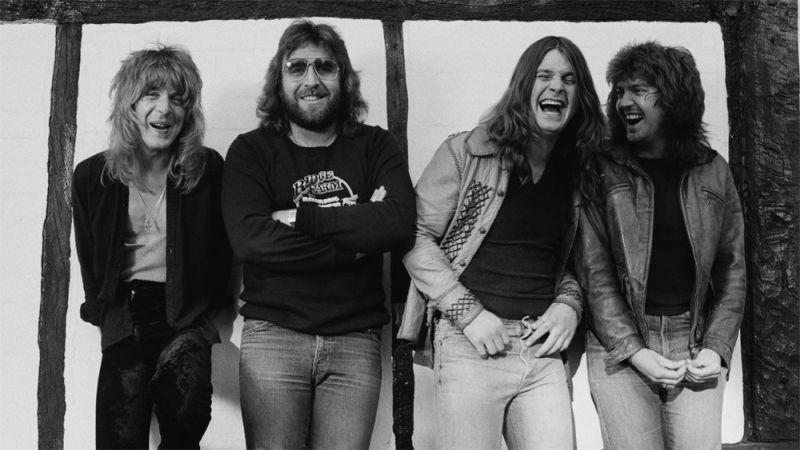
Ozzy, Rhoads and Daisley started writing material for the album. They also started setting up rehearsal sessions, which took place in two studios. The first was Rockfield in Wales, the second Transam Trucking in Suffolk. According to Bob Daisley, he and Randy Rhoads wrote the bulk of the material for Ozzy’s debut. Daisley says: “Randy contributed the main riffs. Then we sat down together and put those riffs into song structures. Ozzy wasn’t left out of that either. The vocal melodies he came up with when tackling ideas were always good and always very important.” Daisley adds that he wrote most of the lyrics, much like Geezer Butler did back in his days with Black Sabbath. “Ozzy wasn’t a lyricist,” says Daisley, continuing: “A few song titles are definitely his.” The album title is also Ozzy’s idea, and it alludes to the effect of a dose of cocaine.
The writing went fast, though Ozzy was most often so wasted that he was hardly any help. “Sometimes he’d start boozing late in the morning, then sleep through the whole afternoon,” says Daisley.
Finding the right drummer was downright frustrating, until David Arden, Don Arden’s son, who had been attending rehearsals of the new project while Sharon was in Los Angeles, brought along the burly, bearded Lee Kerslake to one of them. He had just left the sinking ship of Uriah Heep. As is well known, Lee Kerslake left Uriah Heep over a dispute with their manager Gary Bron. Before Kerslake, Barry Screnage helped out the crew, and it was clear his involvement was temporary, but when former Lone Star drummer Dixie Lee joined in his place, Ozzy hoped he’d stay on in the project, which didn’t happen. With Dixie Lee the band recorded demo versions of “I Don’t Know,” “Crazy Train,” “Goodbye to Romance” and “You Looking at Me Looking at You,” but the drummer turned down further work. Kerslake remembers his audition at Shepperton studio in Middlesex like this: “I started counting 1, 2, 3,… hit the drums, and Randy Rhoads leapt six feet in the air yelling: That’s it!” Daisley adds: “It was magic. You can’t describe it. Lee played with fiery aggression. He was the guy we were looking for.” Lee aced the audition. When Ozzy came over and shook his hand, he said: “Here’s my hand, here’s my heart. This band will never break up.”
The foursome began recording the album on March 22, 1980, at Ridge Farm studio, in the rural surroundings of nearby Surrey. The studio was part of a residence built in the 17th century, and Ozzy remembers the whole thing looking like a “dysfunctional rock’n’roll campsite.” Chris Tsangarides was picked as producer, but after a week the band ended the collaboration with him and produced the album themselves, with sound engineer Max Norman. The recording took place in an old barn that had been converted into the main studio. Kerslake remembers: “The room had a great sound, and you could feel the music coming to life there instantly.”
The band recorded the album in four weeks. Ozzy, of course, spent most of the time in a nearby bar called The Plough, which ran under the studio’s wing. He always had free access from the studio, naturally. Ozzy remembers: “In the morning we’d record a track, and as soon as we finished it, I’d dash off for a drink. Luckily the bar was closing, otherwise we’d never have recorded the album.” Ozzy nicknamed Daisley ‘Sid Serious’ because Daisley was so intensely focused on his work with the band. But Ozzy wasn’t the only one doing drugs. “We all dabbled a little here and there. Only Randy never touched them. And Ozzy? Of course he overdid it,” says Daisley.
Daisley, who witnessed Ozzy’s suicidal tendencies, found inspiration in them and used it when writing lyrics. That’s how the lyrics for the song Suicide Solution came about. Ozzy contributed the first line, ‘Wine is fine, but Whiskey is quicker,’ which he ‘borrowed’ from Ogden Nash and his line ‘Candy is dandy but liquor is quicker.’ Ozzy claims the song refers to AC/DC singer Bon Scott, who died of acute alcohol poisoning (on February 19, 1980) right around the time the album was being recorded. Bob Daisley, who knew Scott personally, says the song did indeed come together around the time Bon Scott died, but that the lyrics are entirely about Ozzy, who at the time was simply running away from the real world with drugs. Either way, Ozzy admits that back then he was racing down the same road as Bon Scott.
Despite the personal whirlwind the singer was going through at the time, one thing is clear. His vocal performance on “Blizzard of Ozz” was outstanding and one of a kind. That’s why it remains timeless. A performance of total command, credibility and authority. That’s exactly the key ingredient in the whole story that did the most to redefine Ozzy’s career and send the singer back toward new success. If a year and a half earlier he sounded absent and detached on Black Sabbath’s last album, on “Blizzard of Ozz” he sounds reborn and brims with freshness and drive. “Blizzard Of Ozz” was a heavy metal album, and completely different in every way from anything he had recorded with Black Sabbath before. What’s more, it was an album totally unlike anything else hitting the market in the worlds of hard rock and early metal at the time.
With Randy Rhoads, one of the most exciting and thrilling guitar discoveries since Michael Schenker, or let’s say rather Eddie Van Halen, Ozzy found the sound of his decade, best captured by the song Crazy Train. Back then it counted as a very current, modern composition, a rock anthem soaked in octane voltage and ruled by Randy’s signature riff, combined with the one and only Ozzy and his hooligan-clown gallows humor.
“Blizzard of Ozz” was packed with great songs. Besides the aforementioned Crazy Train, there’s the potent I Don’t Know, which opens the album at the core of an adrenaline rush, the heart-wrenching ballad Goodbye to Romance, about Ozzy’s farewell to Black Sabbath, and the famous study of the notorious occultist Aleister Crowley in the song Mr. Crowley. On that one, the spooky keyboard intro came from Don Airey, of Rainbow and later Deep Purple, who also played keyboards on the song Revelation (Mother Earth). The album came out on September 20, 1980, almost exactly ten years after Black Sabbath released their second studio album “Paranoid” (our special piece for the 50th anniversary of that album is HERE). The album, released on Arden’s label Jet Records, came out in the US a few months later. It cracked the top ten on the bestselling albums chart, followed by a sold-out tour, which proved that Ozzy’s fear of being written off was completely unfounded.
And yet. On the eve of the tour, Sharon Arden, in her role as the band’s manager, grew unhappy with what she saw at one of the rehearsals. Sharon says: “I wasn’t responsible for Kerslake and Daisley coming into the band. I didn’t like what I saw. Not in the sense that they weren’t good musicians, but visually they just didn’t fit in.” As Sharon saw it, both of them, Kerslake, who was 33 at the time, and Daisley, who was two years younger than Ozzy, meaning 30, were too old and too old-school at the same time. Daisley remembers that during the tour Ozzy and Sharon kept pressing him to get rid of Kerslake, adding that they already had a replacement lined up for him. That was supposed to be Mississippi-born drummer Tommy Aldridge, who had played for Black Oak Arkansas. “I never agreed to that. Tommy is a great drummer, but Lee is perfect for this band,” Daisley said. After the band’s last show on October 30, 1980, in Brighton, England, Tommy Aldridge turned up at a dinner at Sharon’s invitation. Lee Kerslake later said he could have figured out what was brewing right then and there on his own.
In the background of all this, a love affair was unfolding between Ozzy and Sharon, which later led to the collapse of the singer’s marriage. The romance flared up in August 1980, and while Ozzy’s wife at the time, Thelma, had not the faintest idea what was going on, the affair was something totally normal within Ozzy’s circle of ‘insiders.’ Daisley says: “Ozzy went through a personal tornado at that time. He got tangled up with Sharon, and at the same time kept going home to his wife in Stafford.”
Before the new year of 1981, the band wrote material for the new album at Jumbo studio in north London. Ozzy wasn’t around the whole time, as he visited Thelma and the kids several times during this period. The band had long since gotten used to creating without Ozzy, and it didn’t cause them any real headaches.
1981 turned out to be even more eventful for Ozzy and company. There were plenty of backstage games and planted lies, since Sharon wanted to get rid of Kerslake and Daisley, then the release of the album “Diary of a Madman,” a new tour, and the tragic death of Randy Rhoads just four months after the release of the second studio album. We’ll get into all of that next year, when “Diary of a Madman” hits its own big anniversary.
Other tidbits. The band sent the song Goodbye To Romance to the label to be released as a single. But the label rejected it and told the band to write a new one. Rhoads, Kerslake and Daisley, in the company of a dead-drunk Ozzy sprawled at the foot of the drum riser and sleeping through the session (Kerslake faked the vocals), quickly wrote the song You Said It All, which was never recorded. It does show up on Ozzy’s live EP “Mr. Crowley Live,” which came out later that same year. The last song written for the album was No Bone Movies, which Lee Kerslake also signed on to as co-writer. By the time he joined the band, all the other songs for the album had already been written.
The album landed at number seven on the UK albums chart. In the US, where it came out on March 27, 1981, it crawled up to number 21 on the Billboard chart. The first single, Crazy Train, came out in September 1980 and did somewhat worse at home, peaking at number 49 on the singles chart, but it fared better in the US, where it settled in at number nine. In November of the same year, it was followed by the single Mr Crowley. To this day “Blizzard of Ozz” has gone five-times platinum in the US, where it sold more than six million copies. In Canada it reached platinum status with over 100,000 copies sold, and at home in the UK it went silver with 60,000 copies sold.
In 2002 a reissue of the album hit the market with re-recorded bass lines and drums, plus new backing vocal harmonies. That was handled by two members of Ozzy’s lineup at the time, drummer Mike Bordin (Faith No More) and bassist Robert Trujillo (later of Metallica). Mark Lennon and John Shanks contributed the backing vocals. According to available sources, Sharon and Ozzy still haven’t agreed to this day on whose idea this move was. Sharon says it was Ozzy’s, he claims the opposite. Kerslake and Daisley had sued Ozzy back in 1986 over unpaid royalties. Hence the decision to wipe them completely off the album on the reissue. In 2003 the court dismissed their suit, since Ozzy changed his mind and wanted the album reissued in its original format. The 2002 reissue got an openly hostile reception from fans.
In 1985, Ozzy and CBS Records faced a lawsuit filed by the parents of John McCollum. The boy took his own life while listening to the album “Blizzard Of Ozz,” allegedly driven to it by a line in the verse of Suicide Solution that goes: “Why try? Get the gun and shoot!” Both Ozzy and Bob Daisley explained that it actually means: “Get the flaps out,” which in Slovenian would translate as “Open up the flaps.” “Flaps” is a vulgar term in English for a woman’s vagina. The court dismissed the case for lack of incriminating evidence.
Author: Aleš Podbrežnik

Hvala za tale prispevek. Je pa na plošči še ena majhna skrivnost, ki, kolikor mi je znano, nikoli ni bila povsem pojasnjena. Gre za intro v Mr.Crowley, ki ga tudi omenjaš. Avtorstvo tega intra namreč ni znano – intro je namreč preveč, da bi lahko šlo za naključje, podoben instrumentalu Angel Theme s prvenca enega najbolj po krivici spregledanih bandov – Angel. Glede na to, da je le-ta izšel leta 1975, je očitno, da je motiv nekako priromal do Ozzyja. Bob Daisley je menda omenil, da so motiv dobili od nekega klaviaturista, ki je prišel na avdicijo. A imena ni omenil. Prav tako mi ni znano, da bi se kdaj na to temo oglasil kateri izmed članov Angel, denimo Greg Giuffria.
Pravzaprav sem presenečen, da je o tem tako malo govora in tako malo informacij najti na spletu. Najbrž to govori o spregledanoti Angel.
Super super. Hvala za ta komentar Matija. Različni viri navajajo različno,. Eni, kot da je reč odigral Airey, spet drugi, pa se sklicujejo previdno “po navedbah drugih virov” naj bi klaviature odigral Airey… tako da tale komentar gotovo oriše širšo sliko vsega. Sta si pa motiva res zelo podobna. Angel so bili super bend, zadnja njihovega plata – mislim da je izšla v lanski jeseni, je vrhunska 😀