Author: Peter Podbrežnik
Photos: Aleš Podbrežnik
Location: Padua / Gran Teatro Geox / Italy
Concert date: May 17, 2014
Attendance: 3,000
Our western neighbors can boast that every year they host numerous giants of progressive rock. Those giants still remember well the incredible support of Italian fans from the days when the members of these bands were still young and creating the key works of their long and colorful careers, which is the main reason most of them still love playing in various cities across the Apennine Peninsula. Among those legendary experimental groups who reached their studio peaks in the 1970s are the prog-rock champions Yes, one of the most important and most respected bands of the progressive rock movement.
After the (yet another) departure of original singer Jon Anderson in 2008, Yes went through a series of turbulent, mostly not-so-pleasant changes, and in 2011 they recorded the studio album »Fly From Here«, which rightfully counts as one of their most controversial efforts, much like »Tormato« (1978) and »Union« (1991). The »Fly From Here« tour, with Canadian singer Benoit David (ex-Mystery) in Anderson’s place, wasn’t overly successful, which goes especially for their show in Trieste on November 25, 2011, one of the biggest concert disappointments of the past decade. Yes came across as nothing but a pale, stumbling shadow of themselves, and for a moment it already seemed we’d witnessed the beginning of the end of a magnificent career, because they really couldn’t go on like that.
Luckily, the band members soon realized this themselves, and after David’s departure they got in touch with American singer Jon Davison (Glass Hammer), who, by all appearances, turned out to be their savior, though the final verdict will have to wait for the release of the new studio album »Heaven & Earth« (2014). Davison is admittedly no Anderson, but he’s the best possible vocal stand-in, as the Yes show in Padua confirmed, offering a completely different picture of this legendary band than the one from three years ago in Trieste, when it seemed Yes should have renamed themselves No.
To prove they can still play even the most demanding material, and above all to make up to their loyal fans at least a little for the whole »Fly From Here« debacle, Yes announced an extremely ambitious tour on which they play three key albums of their magnificent career in full: »The Yes Album« (1971), »Close To The Edge« (1972) and »Going For The One« (1977). That meant they’d also be playing a number of Yes standards they hadn’t touched in quite a few years.
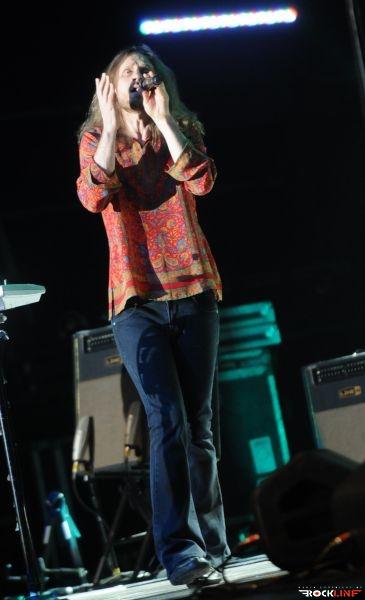
The transformation Yes have undergone on this tour compared to 2011 is downright astonishing, if not complete, as we could see for ourselves at their show in the Gran Teatro Geox, which was sold out and packed to the last corner. Even though Yes weren’t in their classic lineup, with Davison standing in for the ‘pint-sized’ Anderson (in his hippie shirt and bell-bottoms he looked like he’d come straight out of 1972, adding to the fascinating, nostalgic atmosphere), and Geoff Downes (Asia), who has ‘put on’ a hefty amount of weight over the past year, once again filling in for the beloved Rick Wakeman, they managed to build up their unmistakable sound and ‘speak’ in their ‘green tongue’.
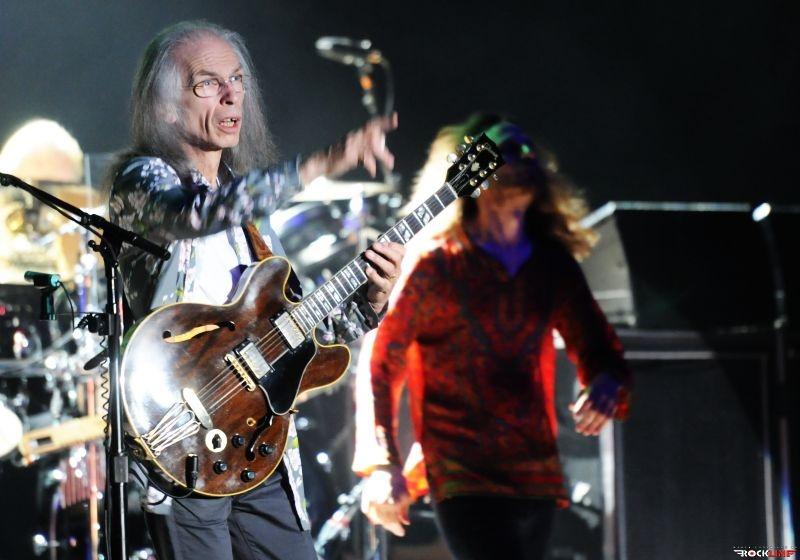
Yes didn’t play their three studio masterpieces in chronological order, as most would have expected, but opened the show with the »Close To The Edge« material, namely the title track, a more than 20-minute super-epic that rightfully counts as one of the best achievements of their career. It was probably down to a perfectly rational decision to get the hardest pieces, especially the ones they hadn’t played in years, out of the way in the first half of the evening, while Davison and four elderly gentlemen are still ‘fresh enough’ for such demanding feats. So they performed the most demanding work of art, one of the key pieces of progressive rock, right at the start of their set. The first part of the »Close To The Edge« suite, »The Solid Time Of Change«, featured a flawless improvisational intro section, where ‘Mr. Owl’, legendary guitar virtuoso Steve Howe, shone especially on electric sitar, while Chris Squire, the only remaining original member and unofficial chieftain of the band, delighted right away with his turbulent lines on the Rickenbacker bass.
Of course, what most people in the hall wanted to know was how Davison would handle his job. He fully justified the trust placed in him, especially during the epic, vocally demanding section »I Get Up I Get Down«, where he hit a couple of downright astonishing high notes in the chorus. His vocal kinship with Anderson is truly fascinating, and in technical terms he even surpasses the legendary singer at the moment, though it should be noted that he’s also quite a bit younger. Just as important, with his youthful energy and lively, meticulously worked-out stage presence, Davison infused the band with that authentic ‘Yes’ energy and knew how to build a solid bridge to the audience between songs, something his rather uncharismatic predecessor David chronically lacked.
Many Yes fans forget that Alan White, despite the weight of the years, is still an excellent drummer, who during the »Close To The Edge« suite had no trouble playing even the most demanding drum and percussion sections, originally worked out by his (sadly long-retired) predecessor Bill Bruford. It was interesting to watch Downes, for whom the »Close To The Edge« suite was surely the most demanding feat of the whole evening. Though he’s nowhere near the virtuoso Rick Wakeman is, he coped very well in an extremely demanding, versatile role and convincingly played the difficult organ solo during the closing section »Seasons Of Man«. It very rarely happens that the peak of the night is played right at the start of the show, but this time that’s exactly what happened, and during the successful performance of the epic title-track evergreen, many fans truly experienced pure nirvana and rewarded the band with a long ovation.
The intense atmosphere that took us back to the »Close To The Edge« era, when the band was at its artistic peak (well, the debate over whether the peak of the Yes discography is »Close To The Edge« or »Tales From Topographic Oceans« or maybe even »Relayer« will probably drag on among fans forever), continued with the ethereal »And You And I«, where Mr. Howe, for the first time that evening, settled in at his beloved pedal steel, probably his favorite instrument besides the electric guitar. The stage design with its graphic projections was also tailored to each song, contributing to an almost authentic mood of the era when the band was still young.
During the much livelier, bouncier »Siberian Khatru«, which provided yet another pleasant contrast in mood, the band loosened up completely, and for a while everyone turned into young lads again, even though, as far as appearances go, the years haven’t spared anybody, Squire and Howe especially. Yes will surely never again draw damp-eyed teenage girls to their shows (then again, even in the mid-seventies they mostly showed up for their boyfriends), but they proved once more that they’re still the ‘real deal’ when it comes to conjuring up a grandiose atmosphere that always fills the listener with positive energy, and a virtuosity that after so many decades is no less fascinating than it used to be.
With the first of the three important chapters of the Yes story behind us, it was time to present the period when the band made its last classic album of the late seventies and successfully won over a new generation of fans, embodied in the performance of the album »Going For The One« (1977). Howe himself announced the opening title track and, contrary to his usual nature, even managed a hint of humor as he introduced the opening rock’n’roll riff. »Going For The One« isn’t among the more complex works of their career, but that let them put more emphasis on their rocking side, and Howe with his melodic, bluesy passages and Squire with his punchy bass lines really came alive here. The graphic projections matched the lyrics of the individual songs nicely, which was especially noticeable during the vocally extremely demanding classic »Turn Of The Century«, where Davison, with his meticulously crafted vocal performance, convinced even the last ‘doubting Thomases’ that he’s ‘made of the right stuff’ and can replace Anderson for the long haul, unlike David and Trevor Horn. He’s got excellent backing in the harmonies, traditionally handled by the (still, mostly) well-synchronized Squire and the droning Howe.
During »Parallels«, another song from the ‘antediluvian era’ that Yes hadn’t played since time immemorial, Downes especially stood out with his sacred-sounding organ, while the rest of his Yes comrades helped build the grandiose, cathedral-like ambience that marks this classic. It was followed by a brilliant rendition of one of the most beloved Yes evergreens and their still highest-charting British hit, »Wonderous Stories« (interestingly, they played it in Trieste too, on November 25, 2011), where Davison picked up an acoustic guitar while singing. Like Anderson, Davison is a solid acoustic guitarist and also has a few assorted percussion instruments at hand during the shows. The ground was set for the epic »Awaken«, the second most ambitious piece of the evening, which didn’t cause the band any big headaches, so all the demanding instrumental sections as well as the vocal melodrama, amid an extremely intense mood, came off just the way they should. Playing two studio classics in full was understandably quite exhausting, especially for songs Yes hadn’t played in a long time, so the band fully earned a 20-minute rest.
They came back with renewed energy and in great spirits, which wasn’t particularly surprising, since next up was their, chronologically speaking, third studio achievement, »The Yes Album« (1971), with which they ‘broke the ice’, drew the attention of the rest of the world and joined the ranks of the giants of progressive rock. The members of Yes have most of the »The Yes Album« material down cold, since songs from this cult album often turn up in their live repertoire. Downes especially enjoyed himself during the »The Yes Album« songs, as covering the organ arrangements originally played in the studio by Tony Kaye was a much easier job than the Wakeman-era songs, when he had to somehow fill in for the keyboard ‘octopus’.
All the Yes members got a huge kick out of the direct, bombastic classic »Yours Is No Disgrace«, whose pacifist message is timeless, though Davison, who once again did his job with distinction, gave the impression with his look that we were all back in the Vietnam War era. Steve Howe finally got to show off his fighting passages on electric guitar and for a while became the main attraction of the evening. But that wouldn’t have been enough for him if he hadn’t gotten at least one solo spot, which he finally got with »The Clap«, where he was the center of attention, and he’s earned it, because you really don’t get to see such solo artistry and finesse at every gig.
The peak of the »The Yes Album« standards, with all three sections, was predictably the classic »Starship Trooper«, which simply can’t be missing from any Yes concert and where the improvisational chops of the individual instrumentalists, especially during the closing, ‘glacial’ section »Würm«, shone in all their glory once again. »I’ve Seen All Good People«, another evergreen, known even to those who aren’t exactly die-hard Yes fans and with a bigger emphasis on vocal harmonies, especially in the chorus, once again confirmed the singing brilliance of Davison and his backing-vocal ‘henchmen’ Howe and Squire, even though the two weren’t always perfectly in time. An adventure of a special kind was the performance of the shorter standard »A Venture«, one of those forgotten Yes ‘bonbons’ that after all these decades only prog-rock gourmets appreciate, the ones who don’t care only about a band’s greatest-hits collection.
The evening of many highlights was slowly nearing its end, and when the big finale arrived in the form of »Perpetual Change«, which also hadn’t been heard ‘live’ in quite a while, the audience in the hall was already somewhere in ‘Yes seventh heaven’. But a Yes concert wouldn’t be complete without playing their best-known song in the encore, namely »Roundabout«, which comes from the album »Fragile« (1972), and most of the crowd would have loved to hear that one in full live too, but greed really isn’t a nice virtue. The members of Yes could surely have handled that morsel if they’d been, like Davison, about two decades younger, though they hid their fatigue at the end of the show pretty well, and old musketeer Squire kept on waddling around the stage to the very end. What was interesting about »Roundabout« was that they played it at the same tempo as the original studio version, contrary to the usual concert practice of playing it faster. With »Roundabout« the concert hit its big climax, and that was also the moment of the evening when the whole hall was on its feet. The mostly Italian audience (and a few Slovenes) rewarded Yes at the end of the show with a thunderous ovation that didn’t die down any time soon, even after the band members had marched off the stage.
In a two-and-a-half-hour set, Yes fascinated with near-flawless performances of three key albums from their vast career and superb sound, which means we got a proper fill of music ‘fit for the gods’, the kind only the giants of progressive rock can deliver, and Yes remain exactly that even after more than 45 years of existence. This was a Yes concert in the true sense of the word: at the highest possible level and without any smoke and mirrors. To win back credibility among most of their fans, they badly needed something big, something special, and with this tour, on which Jon Davison successfully introduced himself, they pulled it off, which means they’ve made up for the whole »Fly From Here« debacle. Let’s hope the »Heaven & Earth« tour goes by in a similarly majestic style, with us missing Jon Anderson and Rick Wakeman only in modest amounts.
Setlist
The Firebird Suite (by Igor Stravinsky, taped intro)
1. Close to the Edge
2. And You and I
3. Siberian Khatru
4. Going for the One
5. Turn of the Century
6. Parallels
7. Wonderous Stories
8. Awaken
9. Yours Is No Disgrace
10. Clap
11. Starship Trooper
12. I’ve Seen All Good People
13. A Venture
14. Perpetual Change
—encore—
15. Roundabout
Photo Gallery