Author: Peter Podbrežnik
Interview date: 04.12.2007
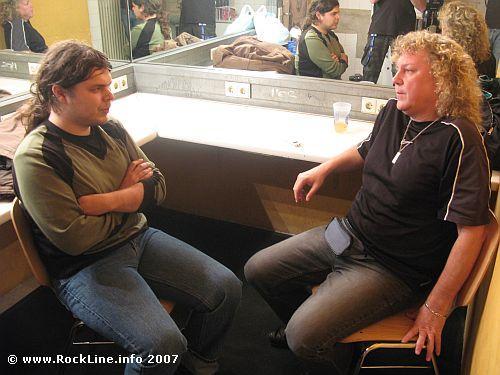
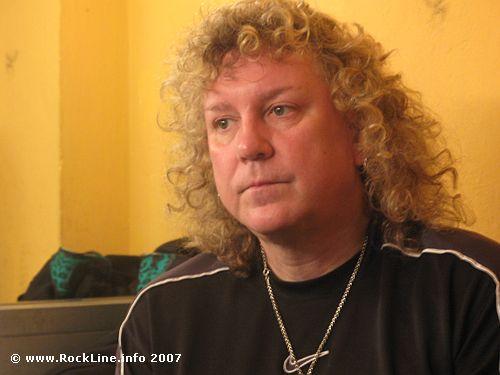
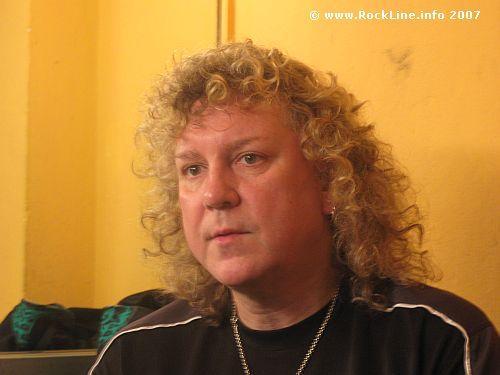
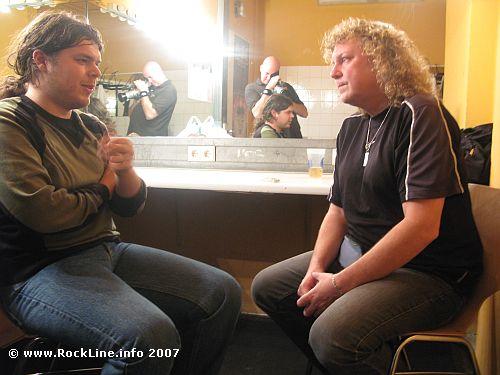
Scottish keyboardist Jim Gilmour has been a member of Canadian art rock greats Saga since the early ’80s, or more precisely their third album “Silent Knight” (1980), not counting a short break in the second half of the ’80s. Besides the Crichton brothers, he’s one of the three most important members of Saga, and every now and then Jim also tries his hand as a solo musician and takes part in various side projects. Talking to the Rockline crew, he shared some of his views, mainly on the band’s future after singer Michael Sadler’s departure, the tour, the current album and the occasional trip into the Canadian wilderness.
Rockline: How happy are you with how this tour is going, the one where you’re also celebrating the band’s 30th anniversary?
Jim Gilmour: The tour has been really successful so far. Almost every night has been sold out. Over the last four or five years of touring, our shows have been drawing bigger and bigger crowds again. I think the main reason is that in these last few years we’re making music again that matches what our fans want and expect.
Rockline: You’ve got a new album out, “10,000 Days”. What were the main differences in making the music compared to your previous album, “Trust”? Jim Gilmour: The main difference was that this time we practically had no time to record a new album, because our label got in touch pretty late about it. So we were in a real rush making it. Since all of us write music actively, we had a wide pool of ideas to pick from. In the studio in Los Angeles we wrote most of the arrangements in two weeks, and we also sent a few things back and forth over the internet. It took us only 14 days to record all the keyboard parts. With “Trust” we had more time to write the music.
Rockline: So the making of “10,000 Days” was marked by a big rush?
Jim Gilmour: Yeah, this project was done in a huge hurry. But we worked on it with real drive, and in the end a lot of people took to the album better than to its predecessor. Our label even suggested we make another album like that, in a rush and under pressure, since the end result was so successful. But I let them know I don’t agree with that.
Rockline: How do you see the situation with your singer Michael Sadler, who’s leaving the band after 30 years?
Jjim Gilmour: Of course we were sad to see him go, but for us it’s by no means the end of the world. We plan to keep going with our musical mission. Right now we’re not racking our brains over what comes next. Once we finish this tour we’ll take some time off over Christmas, and then early next year, probably in January, we’ll start looking for a replacement and lay out our plans for the future.
Rockline: Going through your discography, which albums and songs are among your favorites, or mean the most to you?
Jim Gilmour: Usually your favorite is whatever you worked on last. If I had to pick a favorite from our new album, it’d be the instrumental “Corkentellis”. As for albums, I’d single out “Worlds Apart” as the most important. We spent six months making it and you can tell. It has some of our best stuff. I also really love “Generation 13”. But of course there are a few albums I don’t care much about.
Rockline: Probably you mean “Pleasure & The Pain” and “Steel Umbrellas”, which had big stylistic swings and a departure from your recognizable sound. Even your biggest fans don’t exactly worship those two.
Jim Gilmour: Yeah, “Pleasure & The Pain” is a good example, I don’t care about it one bit anymore. “Steel Umbrellas” has a few bright moments, but you can tell it wasn’t conceived as an album, rather as the score for a TV series. That’s the main reason those songs were so different stylistically. Then we had to put it all out as an album, so in the end we didn’t have much choice.
Rockline: How do you remember the period in the second half of the ’80s when you weren’t in the band for a while? I know that back then you and former Saga drummer Steve Negus put out a joint project, the Gilmour-Negus Project.
Jim Gilmour: Yeah, Steve and I put out that album on Virgin back then. We even toured for that one and only album of ours. The album didn’t exactly shake the world (laughs). But it was definitely an interesting, different experience. Like back then, whenever I make a solo album, I record whatever I want. When I work on solo projects there’s nobody around me jumping about with all kinds of wishes of their own. Like, where a certain guitar solo should go. In solo creations the keyboards obviously take priority.
Rockline: How’s your solo career looking at the moment? Any new plans on that front?
Jim Gilmour: Actually, it’s not so much a career as a side project. So far I’ve put out two solo albums. Most recently I’m working on a side project for another band. I’ll mostly be playing electric piano on it. Tony Levin is also on board as bassist, so it should be a fairly punchy thing. And in the meantime I’ll surely record a solo piece or two as well.
Rockline: Could you tell us who influenced your approach to playing keyboards the most?
Jim Gilmour: My biggest influence was Eddie Jobson from UK. He’s the main reason I started playing keyboards. I also have a lot of respect for Keith Emerson. But it was Eddie Jobson, who’s about my age, who made me get my first Yamaha CNC synth back then. I only started on keyboards at 20, whereas I’d started on piano at 17, so I had to put in a lot of practice if I wanted to get anywhere near that level.
Rockline: Are you preparing anything special for tonight, given that it’s the last date of this tour and your last European show with Michael? Any surprises in the setlist?
Jim Gilmour: We’ll mostly play what we’ve played on the whole tour, but I think we’ll throw in a few surprises. We’re trying not to let the whole thing turn out sad, because it’s nothing dramatic. Life goes on. Michael has found a different way of life now, and we’re still good friends. There are no bad feelings between us.
Rockline: Does this mean a new beginning for Saga, or a continuation of what already existed?
Jim Gilmour: I think this time we’ll try to create something a little different. We can’t just copy ourselves. How we go from here, we’ll really see in a few months.
Rockline: So you’ll take a break after this tour ends?
Jim Gilmour: Yeah, at least I have to, because my hand is really swollen (laughs). I’ll probably record some music for the theater next year too. We’ll take some time off, but not for too long.
Rockline: What do you like to do most when you’re not making music, or when you get home from tour? Any special hobbies?
Jim Gilmour: My favorite thing in the world is a trip into the Canadian wilderness. I spend two or three weeks out in the bush, in a canoe, fishing or camping in a tent.
Rockline: What are the main differences when you compare European, Canadian and American audiences?
Jim Gilmour: No doubt there are differences. Our audience in Europe shows noticeably more emotion. But there are clear differences between individual European countries too. In most German cities we ran into real euphoria from the crowd. On Saturday we’re heading to Puerto Rico for our last show this year. With their Latin temperament, we can especially expect a big outburst of stirred-up emotions.
Rockline: Tonight’s show is sold out. People in Germany obviously love Saga.
Jim Gilmour: Yeah, we’ve spent a lot of time here and we even lived here for a few seasons. Still, I can’t find the right answer for why they like our music more here than, say, in the USA.
Rockline: How would you define your music? Most people count you among progressive rock bands. Often among art rock too.
Jim Gilmour: Yeah, those are some of the labels people give us when they try to define our music. I think our music is something quite special. It’s noticeably different from most progressive rock bands too. It can contain plenty of progressive rock elements, but on the other hand we can also write love ballads, which girls usually like more. If we wanted to, we could even record Irish music, considering I’m a Scot and Jim and Ian are Irish. We’ve also played in pubs, and I occasionally play jazz too. So we can offer lots of different elements that people haven’t heard in our music before.
Rockline: Will you record another concept album in the future, like “Generation 13”?
Jim Gilmour: Maybe. I generally like the concept approach. We’ll see where future musical ideas take us. We usually don’t decide in advance that something will be conceptual, it’s a completely natural process and it just happens while making the music.
Rockline: But your sci-fi story about Einstein’s stolen brain, which popped up at intervals in special chapters on some of your albums, is definitely over now?
Jim Gilmour: Yeah, we can’t keep that going forever. It would get too cheesy (laughs).
Rockline: How does recording your music usually go?
Jim Gilmour: Usually it’s a collective approach. On the last few albums, Jim, Ian and I contributed the most ideas. As an example of how we compose, take the song “On The Air” from the album “Network”, which came out of my collection of various ideas. From those ideas Jim picked the best one in the end, and together we then expanded it and worked it out properly. Some things happen pretty spontaneously, but sometimes you have to grind quite a bit before an interesting section comes out. And since we’re on the instrumental “Corknetellis” from our new album, I personally contributed a lot of the central motifs when it was made. During the summer in Berlin we worked out the individual sections on a computer. We never stick to a set formula, we always approach the writing differently.
Rockline: What still keeps you going after all these years?
Jim Gilmour: Our audience, above all. When the tour’s over we’re usually pretty worn out, but that feeling when you’re on stage with that much support from the crowd behind you is incredible.
Rockline: Any last message for our readers?
Jim Gilmour: I’d like to say hello to all our Slovenian listeners. One day we’d love to come and play for you too.
Rockline: That would be wonderful. Unfortunately, organizing concerts here is still a problem for bands whose music doesn’t get played on the radio or TV every day. We’re a small country with a small market. We’re slowly growing in that direction too, but it’ll be a long road before we reach the concert level typical of the Western world. Let’s hope the right people come together in the future and can bring Saga to Slovenia too.
Jim Gilmour: That would really make us happy.
Rockline: Thanks a lot for the interview, Jim. We wish you a great show.
interview by: Peter Podbrežnik
photos: Aleš Podbrežnik
Photo Gallery