Interview date: 04.07.2008
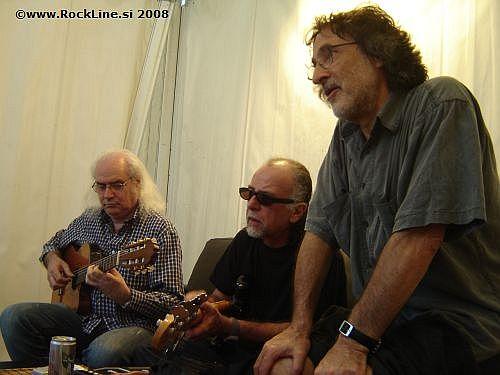
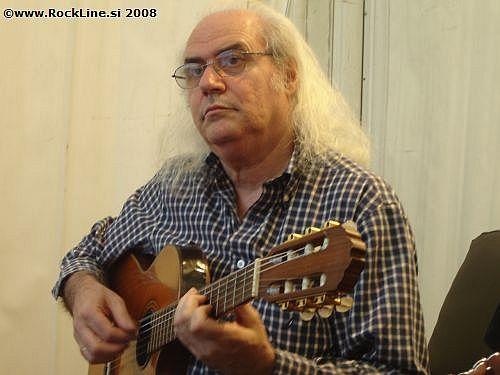
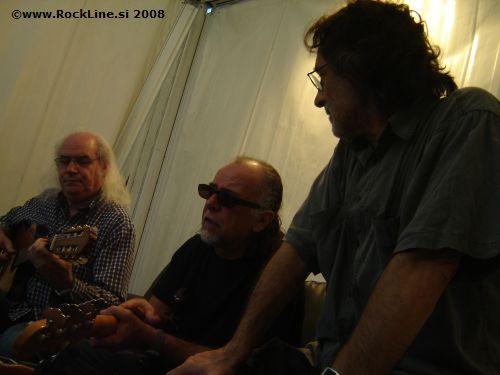
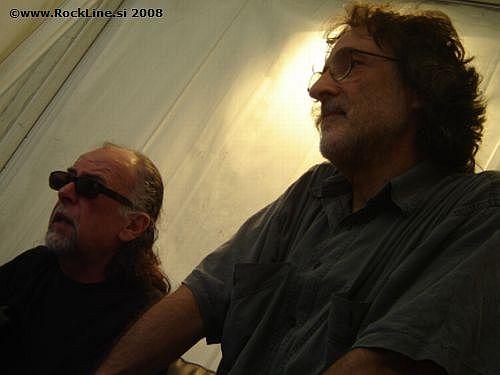
Premiata Forneria Marconi are big in every sense of the word. They were big when they played warm, romantic symphonic music in the early seventies, and they stayed just as big when they switched to jazz rock in the second half of the decade. The eighties brought a pop era, with growing commercial success (Suonare Suonare) and slots at all sorts of festivals. In the late nineties they went back to music similar to what they played in the seventies, and in Italy they’re still hugely popular and respected. Before their show (which was free) at Piazza della Repubblica in Monfalcone, they took a few minutes for our crew too and answered a handful of questions. We talked to the three longest-serving members of the band: original members Franco Mussida (guitar and vocals) and Franz Di Cioccio (drums and vocals), plus Jan Patrick Djivas (bass), who joined on the album L’Isola di Niente after leaving the jazz rock outfit Area.
Rockline: Can you tell us a bit about how your latest album came about?
Premiata Forneria Marconi (Jan Patrick Djivas): The latest album?
Rockline: Stati di Imaginazione.
PFM (Djivas): Ah, right. The album came from an idea by our manager, who knows what we need. She knows we need improvisation on stage. We were getting bored playing the same stuff every night. We were always looking for a chance to improvise, so she used films that were projected behind us. We watched the films and improvised. They tried a few songs that way and everybody liked it. Then we recorded more songs like that, and pretty soon the whole album turned out that way. I can’t say we wrote the songs, apart from a couple. For most of them only the entry and exit points are fixed, and everything in between is improvisation.
Rockline: Do you improvise on these songs live too, or do you play them like on the album?
PFM (Djivas): It depends. Because of the films, some parts have to be played the same way, and everything in between is improvised. Except for songs like Leonardo, which are composed.
Rockline: Any ideas for a new album?
PFM (Djivas): Two new projects are on the way. One is “PFM classic”, where we play classical pieces together with an orchestra. There are two versions. In one we play with a big sixty-piece orchestra, and in the other there are only six players. We play classical music, but we add our own interpretations.
Rockline: When will these shows happen?
PFM (Djivas): Early next year, I think. It’ll be a live album. It’ll be something completely new. You’ve never heard anything like it. It’s not your typical pop-meets-classical thing, it’s something totally different. That’s one project, and the other is a regular PFM album?
Rockline: Electric?
PFM (Djivas): Yes. That one will come out after the first project.
Rockline: Have you already written any songs for the second project?
PFM (Djivas): We’ve got some bits written already, in segments.
Rockline: Is it improvisation again?
PFM (Djivas): No. This time it’s composed.
Rockline: Let me ask you something about the USA. Next year you’re going back to NEAR fest. Do you enjoy playing there?
PFM (Franz Di Cioccio): Yes. It’s one of the most important prog festivals. Lots of bands from Europe come over for it too.
Rockline: So you still count yourselves as a progressive act?
PFM (Di Cioccio): No, we simply consider ourselves PFM. We play what we play. We were progressive and we still are. We’ve never made two albums that sound the same. We like to surprise listeners.
Rockline: What do you think of your pop albums?
PFM (Di Cioccio): We like them. We like doing different things. We made every album for a reason. Suonare Suonare was one of the most successful albums in Italy, and Fabrizio De Andre, who we made that album with, is one of Italy’s greatest poets. We wanted to make an album with more emphasis on lyrics. We wrote songs like Maestro della Voce, which we dedicated to Demetrio Stratos, or Suonare Suonare, which meant a huge success for us.
Rockline: Did you know the other Italian prog bands back then? Did you tour with them?
PFM (Di Cioccio): No, we didn’t play shows together.
Rockline: But you were aware they existed. Bands like Le Orme, Banco, Area.
PFM (Djivas): Of course. I was especially aware of Area, because I played there.
PFM (Di Cioccio): We’re friends and we know each other.
Rockline: What do you think about the progressive movement in Italy in the seventies?
PFM (Di Cioccio): It was very strong. Not just in Italy, but all over Europe. Later in the USA too. Prog was born in Europe. Not just in England. Every country had important bands.
Rockline: Do you see any difference between the albums you released in the seventies and the ones you’ve been putting out lately?
PFM (Franco Mussida): Our albums are better now.
Rockline: In what sense?
PFM (Mussida): The past is the past, the present is much better. Everything we play now is a combination of experience and emotion, not just instinct. The album Stati Di Imaginazzione is the best proof of that. I don’t like looking back.
Rockline: Italian progressive music is supposed to have an important romantic, Mediterranean, melodic side. Do you feel that matters for PFM?
PFM (Mussida): Of course. Melody is very important to us. It’s key to how we communicate with the audience’s emotions. We love composing grand melodies. When a melody affects your feelings, when it’s a dialogue of notes, that’s wonderful.
Rockline: Do you ever plan to use more electronic influences?
PFM (Djivas): No, we don’t want to do that. It’s not that we don’t want to use technology, but we don’t want computers on stage. If you use a computer, you’re boxed in. With a computer we couldn’t improvise nearly as much. We tried it for a while, but we didn’t like it. When you’ve played in the same band for so long, you get sick of always playing the same thing.
Rockline: So that’s why you spice things up with improvisation?
PFM (Djivas): Exactly. But it’s not just improvisation, we’re constantly trying to change things in the songs themselves too. We want the freedom to do whatever we want, and that’s not possible with a computer.
PFM (Mussida): And it’s boring. We like making mistakes.
PFM (Di Cioccio): On stage we like to play around. For example, Patrick starts with some line, then I jump in, and later Franco joins too.
PFM (Djivas): We like playing the kind of improvisations that make people feel like they were composed. Sometimes we pull it off really well, and other times a bit less.
Rockline: Patrick, do you think your arrival in the band was important for the shift toward jazz rock?
PFM (Djivas): I don’t think I was that important for our jazz side, more for the ethnic one. As for jazz, visiting America influenced us a lot. It’s true, I was jazz-minded, but I never tried to force that on the other PFM members. Visiting America really did influence us, though. PFM plays what it wants to play, and back then we wanted to play more jazzy music. It’s exactly these different sides that make PFM so important.
PFM (Di Cioccio): If we wanted to, we could play a six-hour show with three different sets. One would be “Stati di Imaginazione”, in the second we’d play De Andre’s songs, and the third would be “PFM classic”. It’s important to mix something like Suonare Suonare with a more jazzy approach. In Suonare Suonare, for example, we’re all waiting for Franco’s fucking great solo at the end of the track. If we used a computer, the spontaneity during the solos, for example, would be gone. The computer would become the master and we’d be slaves. We want to be masters of our own destiny.
PFM (Djivas): A computer is useful for recording. When we rehearse for “PFM classic”, we record on the computer and it becomes a demo. But we wouldn’t use a computer for anything beyond that.
Rockline: For your more jazzy albums you hired a new singer (Bernardo Lanzetti). Lots of people say he sounded like Peter Gabriel. What do you think?
PFM (Di Cioccio): I think Peter Gabriel sounds like Nina Simone. People like to compare.
Rockline: Thanks for the chat.
PFM: Thanks
Interview conducted and edited by: Rok Podgrajšek
Photos: Teja Podgrajšek and Aleš Podbrežnik
Photo gallery