Author: Jernej Vene
Location: Zagreb
Interview date: April 16, 2009
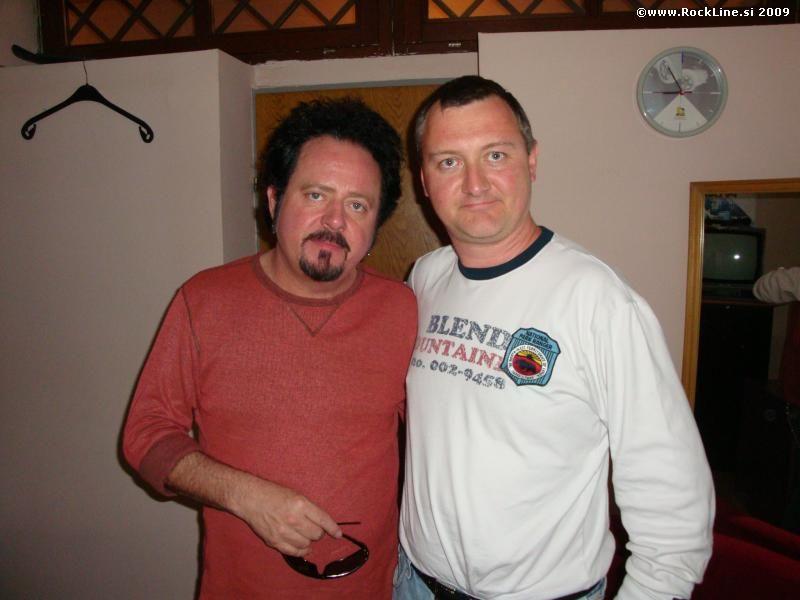
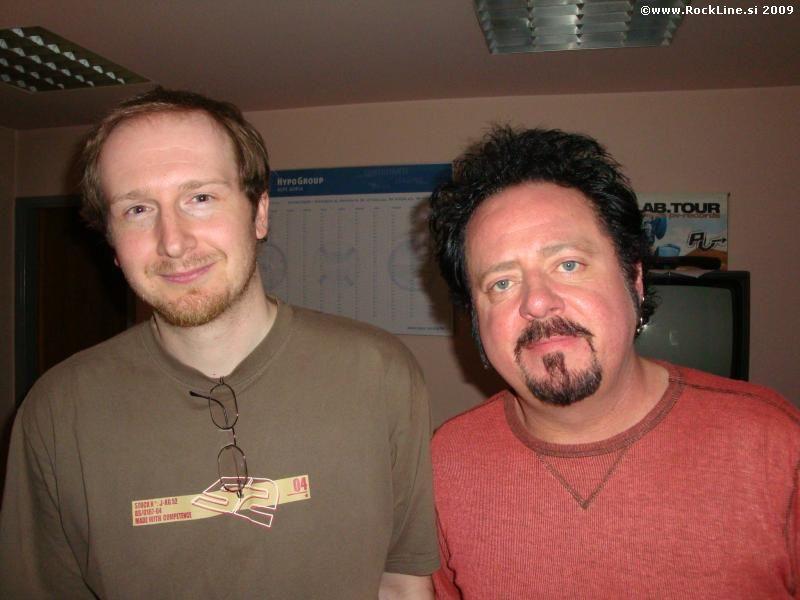
Modern guitar legend Steve Lukather, former member of the hugely successful Toto, stopped by Zagreb. He opened up to two Rockline guitar nuts about where music stands in society, his work ethic, and a few choice words on instant music production!
Rockline: I hear you’ve got a few days off now.
Lukather: Yeah, for the first time in two months I’ve got two days off. My son Trevor flew into Zagreb, he’s going to play with me.
Rockline: Looking back at a childhood dream come true: what does it take for a musician to get recognized, to get noticed, considering how many good musicians there are in the US?
Lukather: Tough question. I grew up in Los Angeles, which is a great place to be, geographically, for anyone who wants to do music. I had an advantage in that I met some influential people already at fifteen, among them the Porcaro family and David Paich (Toto keyboardist). We started playing together. I’d been playing since I was seven, actually. Meeting them was a huge turning point for me. Things got serious, and we put a lot of time into studying. In high school we were already really good, and I became very focused on playing. Through Jeff Porcaro (Toto drummer) and David Paich I got some great opportunities, met a lot of session players, who recommended me for certain gigs. I practiced a ton, I’ve got some natural talent, people liked hanging out with me, and I think your whole personality has a lot to do with how you do in music. That’s when the avalanche started. At nineteen I got a job with singer Boz Scaggs, right when we were putting together Toto, which was really an extension of our high school band. Then I started getting calls to play on other musicians’ records. I played on some very successful albums. I was really lucky; there are plenty of musicians born elsewhere who never get the chance to break through, and they might be better than me. There are so many great players out there today that I can hardly keep up. In the late seventies there weren’t that many good musicians, especially serious ones. Everybody wanted to be in a rock band, but they didn’t give themselves over completely to the music. That’s the difference between a rock star and a musician. I think I fall into the musician category.
Rockline: How has the response been to your latest album, Ever Changing Times?
Lukather: These days we’ve got to be realistic, because the music industry is falling apart. Record labels are dying. Major labels used to employ two thousand people, now they’ve got twenty. It’s happening all over the world. Record sales are dropping; for every copy sold, people download a hundred off the internet. The music business happens at concerts. Ever since I started playing live again, my life’s been comfortable. I’m in a transitional period after leaving Toto. After all these years, it’s not the band it used to be. I’ve been making solo records for twenty years, but they were always side projects. Ever Changing Times is a success story, and I stepped into it last year. We did a successful sold-out tour. Last year we played big summer festivals, with ZZ Top among others, and we were in the Netherlands. Our average is 1,000 to 1,200 people a night, and I’m staying realistic about that, since we don’t play the hits like Rosanna, Africa and Hold The Line. I’m consciously distancing myself from that; if I wanted to do it, I’d have stayed in the band, you know what I mean?
Rockline: Since you just mentioned Rosanna (Toto’s biggest hit), can you clear up the mystery for us: is it really a song about the actress Rosanna Arquette?
Lukather: Back then (1981) we saw quite a lot of her. David Paich wrote the song, and Steve Porcaro (Toto keyboardist) was dating her. Maybe he just used the name, I’m not sure the song was actually meant for her. As far as I know, Rosanna Arquette hates the song. She’s kind of odd about it, but the song helped make her famous. She became more famous through it than through anything else she did in her life. People say that Rosanna and the song In Your Eyes by Peter Gabriel are about her… Anyway, I haven’t talked to her in decades, but I once read some really nasty things she said about Toto, and they hurt us quite a bit. We were like: “We don’t wish her any harm, and now this….”
Rockline: What qualities do you think a good rock song needs to have?
Lukather: Ugh, I don’t know,… My son Trevor is a good songwriter, and I’m helping him make his debut. Our neighbor Steve Perry (former Journey singer) writes songs with him and produces his vocals. It’s great that he works with young people, and I thank him for that. Trevor isn’t easily satisfied, he’s looking for his place in music, following in my footsteps a bit, recording as a session player. He’s good, and I’m proud of him. Song structure is one thing, melody is another. Take thrash, say Slipknot, who I like…. that’s a different thing. For them it’s a whole genre, a whole lifestyle. I like all kinds of music, I listen to pop, heavy, country, a lot of bebop, jazz, old R ‘n’ B. I love every style, I’m open-eared. If I hear a beautiful melody, I perk up right away. Same with a good lyric. Your perception changes over time. When you’re a kid, you write about cars, girls and parties. When you get older….my current album Ever Changing Times is about change. I turned fifty, I’ve got a little daughter, I left my old band, some friends have died. I look back and I look ahead. The world’s in a real s… right now…. I hope it turns around soon.
Rockline: Which song are you proudest of, which one has that magic where a great melody and a great lyric come together?
Lukather: Oh, you’re talking about a few hundred songs… That’s really hard. I’m usually focused on what I’m doing at the moment. I’ve left Toto behind, though with very good feelings. We’re all friends, and David Paich and I are working on a song for George Benson’s new album right now. It’s not that we don’t like each other, we’re just not together as Toto anymore. There’s no real Toto left: Mike Porcaro (bass) can’t play anymore because of muscle problems, Steve Porcaro hasn’t been a member for years, David Paich is gone… From the first show to the last, I was the only one who was there the whole time. I felt it wasn’t right to carry on under that name, making money off old glory. Music isn’t just a way to make a living, it’s a form of art, which some people forget. It’s a business, and we have to be aware of that, I live off it, but the machinery got too big. Toto had forty-five people on the payroll: lighting guys, sound engineers and everyone else. We could have made millions of dollars, but at the end of the night, once you’ve paid all the bills, you ask yourself: “How much do I actually have left?” I earn about the same as a solo artist with my musician friends backing me, no entourage. We play smaller venues, so the costs are lower too. I’m not Madonna, I don’t need pyrotechnics and dancers, because people come to the show to hear me play. I’m an honest musician, I’m not pretending, we’ve got no Pro Tools, no samples, no pre-recorded vocals, it’s all real. Like in the sixties or seventies. I’m proud of that. There are plenty of musicians you’d never expect to have all kinds of crutches ready backstage. You’d be baffled if you saw it….. Lead vocals, backing vocals, extra instrumental parts. You’re at a show and you’re blown away: “Wow, it sounds just like the record.” Sure, it might, but it doesn’t have to be real. People hear the details. My mom, for example… She doesn’t know anything about music, but when she hears something, she says: “Did they use a computer here….it sounds so….?” You can’t fool them. If you go to a Britney Spears show, you know you won’t hear impressive vocals but you’ll get a circus. Everybody knows she can’t sing. The tragedy is that people like that sell out stadiums while real musicians have to play small clubs. Teen music is what it is, nothing bad to say about it, but their careers won’t last forever.
Rockline: Do you think people are happy with lower-quality music?
Lukather: Yeah, young people especially don’t care. They multitask: texting, watching TV, typing on the computer, with the music in the background. They don’t listen to whole albums, they’ve got songs on shuffle on their iPods. Their attention span is short. When I was young, buying a new album was an event. We’d sit in a room with friends and listen to the record, reading the liner notes and the lyrics. We were quiet while we listened, soaking up the music. Then we’d talk it over, listen again and form an opinion. Today everything gets consumed in an instant, it’s all the McDonald’s version, the moment….nobody wants to put in the work anymore. And everybody wants to be a rock star in a second. There’s a sea of quotes out there, and one is especially close to my heart: “It takes 10,000 hours of practice to become a real musician.” Lots of people put in 100 minutes, learn a few chords, fix their hair and get on stage. They play three, four chords up there, and if they’re lucky they write a song with a catchy melody and they’re stars for two or three years. Then it’s over. If they’re not good enough to be real musicians, they find some other job. Chances are they don’t even earn anything because of idiotic label contracts. The labels own their lives, their copyrights, the merch sales at shows, and they’re left with pocket change. My son has musician friends who live in a room like this one (4 x 4 meters) with a triple-platinum album framed on the wall. They’ve got no money, they earned nothing, but they were rock stars for a few years. It’s really sad, but that’s what the music industry has come to. Now we hardly need labels anymore; if you’ve got enough fans, you can do it all yourself. You can sell a tenth of what you used to and make ten times more than before. We’re in a time of change. The burden of mediocrity is heavy and people want to hear something different. Metal musicians are deeply committed to how they work, they invest a lot in their playing and spend a lot of time practicing. The average alternative guys, on the other hand, are more or less lousy. Of course there are exceptions.
Rockline: Has the music industry really changed in the sense that young players don’t practice as much anymore?
Lukather: Not really, like I said, my son hangs out with young musicians who are dedicated, they practice and they care. They’ve had enough of all this. At seventeen, Trevor played with Lindsay Lohan. She sang to a backing track while the band played live. She was arrogant, a product of the tabloids, and not overly talented. Once, during an AOL broadcast, she threw a microphone at him because he wasn’t playing exactly like it was on the record. Well, he was just a kid back then, making $2,500 a week, more than his teacher. That’s also why he left school. I knew he wasn’t going to be a doctor anyway, ha, ha..
Rockline: Can the guitar start a revolution in popular music?
Lukather: It’s happening right now. The only problem I see, as an older, more experienced musician, is that players learn all the tricks before they learn the basics. At the recent Frankfurt fair I wanted to kill myself after an hour. Everybody was ripping through lightning-fast scales, which is interesting for about four minutes, and then I said to them: “Can you play some actual music now? Can you accompany, play rhythm, lock in with a drummer, can you find the way out of this or that musical idea?” They’re really interesting at first, but…. there are a thousand kids in every city who play just as well as the ones I heard there. But what are they going to do with technique alone? You’ve got to write a song, work it out and get it to people. They’re seriously impressive technically, but something’s missing. It’s like a cake with no icing. The first few bites are great, and then… yuck… I’ve had enough.
Rockline: So what now, any rest on the horizon?
Lukather: We’ve been promoting the current album on tour for a second year now.. I’ll go home, finish the mix for Benson’s album, and I’ve been invited to a few new sessions. Friends talked me into teaching at the Rock ‘n’ Roll Fantasy Camp. I’d been dodging that for years, but they said, it’ll only take a few hours, give the kids a bit of your know-how. I’m going to slow down a little, I’ve got a little daughter who barely knows me. I think I’m a talking screensaver. When she sees me on the computer she goes: “Dada, dada…” The other day Bruce Springsteen was on the cover of the New York Post, with an article about him cheating on his wife. We look a bit alike, we’ve both got black hair and a beard. The little one held up the paper and went: “Dada, dada…”, and I burst out laughing and explained to everyone at home that I’m not cheating on my wife… Seriously, I’m going to give her a bit more of my attention, so she gets something out of me. I’ll put music on the back burner a little. In the summer I’m back for a few shows at European festivals. Then slowly it’ll be time to write new songs, and once the new record’s done, back on the road…
Rockline: Do you have something in mind like Steve Vai, when he played his pieces with an orchestra?
Lukather: Steve is a good friend of mine. People have asked me whether we’d do something with the band and an orchestra, but the project hasn’t happened yet. I’m open to that kind of collaboration. My music isn’t as out there as Vai’s. I like his music, he’s a genius. He’s very well educated musically, which I admire. He’s also one of the nicest people around. My music in a project like that would rely more on a proper orchestral accompaniment. It definitely wouldn’t be as Zappa-oriented. Everyone plays in their own way. I love him.
Rockline: What’s your practice routine, and how much time do you still devote to it?
Lukather: On tour I play all the time, and I warm up for half an hour before the show. I practice chord progressions, various scales, and at home I study new stuff from books (Slonimsky’s Thesaurus of Scales and Modes and Ted Greene’s Chord Chemistry). Our shows usually run two and a half hours, so I play a lot. Sometimes after long tours I don’t touch the guitar at all for a couple of weeks, to cleanse my soul and body. At home I don’t drink alcohol, just water. And I get a good night’s sleep. Life on tour is crazy: every night is Saturday night. I try to stay in shape, and at fifty-one I don’t look all that bad… I should already be in a wheelchair, ha, ha. Someone who isn’t used to it couldn’t handle it. If you were with me all the time, making the exact same moves and traveling all the same distances, you’d say: “I can’t take this…..”. And I’ve been doing it for thirty-five years.
Rockline: How did the Zagreb show come about, considering you had a few days off after the clinics at the Frankfurt fair?
Lukather: The culprit is my great friend Drago, who’s turning fifty. He invited the whole crew here for a private party. He said it’d be nice to have one more show on the side. I’d never been here, people hadn’t seen me play. We’d talked about it before, but it never worked out. It’s nice here, and I brought along my friend Bob Bradshaw (maker of Lukather’s effects, editor’s note). Trevor’s friends came by train from Amsterdam. Drago is a great host, he’s showing us around town, pointing out the sights… We’re eating and drinking well, and the people are really friendly. My son gets along well with the girls, they really are very pretty. If I weren’t married, I’d be in trouble…
Rockline: Is there a really good modern guitarist who gets you excited?
Lukather: Ugh, that’s a tough one. I’ll be honest with you two…. There’s Milan Polak, who works in Germany, he’s a friend of mine and I’ve known him for years. He’s more of a shredder, but he’s got soul. Robbie Mussenbichler is going to jam with us in Austria, I’ve known him for 25 years, so he’s not exactly a newcomer. Alexi Laiho from Children Of Bodom is good, his technique is excellent. Angry young man who’s made something of his music. I know the masked guys from Slipknot, though they’re not the youngest anymore. The guys from Radiohead have created some really beautiful musical textures. As for newcomers… it’s a bit hard to keep up with them. Eric Johnson is older than me and he’s a genius, one of the most melodic guitarists around, with his own distinctive technique. I know most guitarists, they’re my friends, and we’ve been through a lot together. They’re my contemporaries: Michael Landau, Nuno Bettencourt, and of course Joe Satriani, to whom I presented a lifetime achievement award at the Frankfurt music fair. We played fourteen shows in four days.
Rockline: Have you heard of Chickenfoot (the members are Sammy Hagar, Joe Satriani, Chad Smith and Michael Anthony)?
Lukather: My guitar tech used to work for bassist Michael Anthony. I know all those guys well, and the Van Halen brothers and I have been friends for thirty years. I can’t wait to hear what they’ve recorded. They must be under huge pressure, I hope they pull it off, because they’re really lovely people. The whole supergroup setup is kind of scary, people expect the next Led Zeppelin from you. But they’re just four guys who want to play their own music. They say the music’s good, but I haven’t had the time yet…
Rockline: They’ve got a few songs on their website…
Lukather: And how do they sound?
Rockline: Powerful drums, then Satch’s guitar and Sammy singing the way only he can, so, great…
Lukather: Okay, I’m sure it’ll be great.
Rockline: Thanks, and all the best going forward!
Lukather: Thank you too, guys!
Translated by: Jernej Vene
Photo Gallery