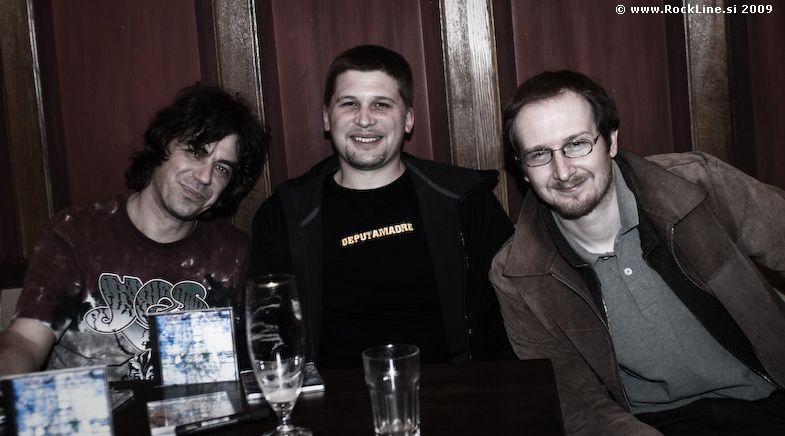
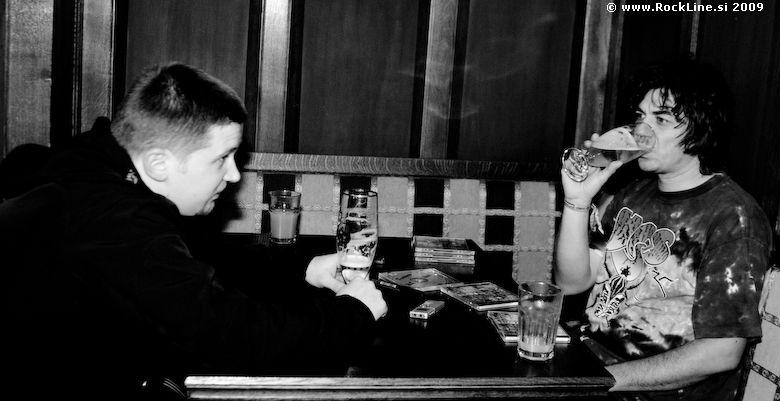
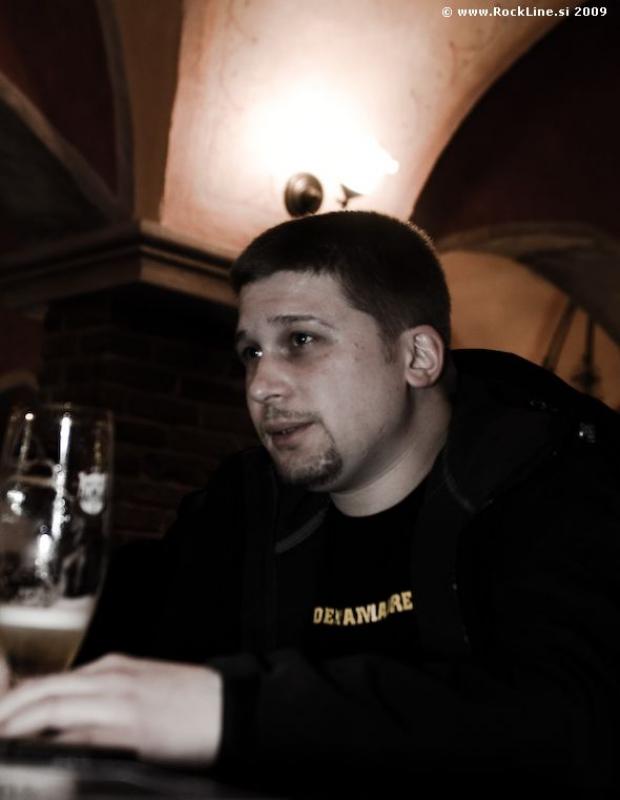
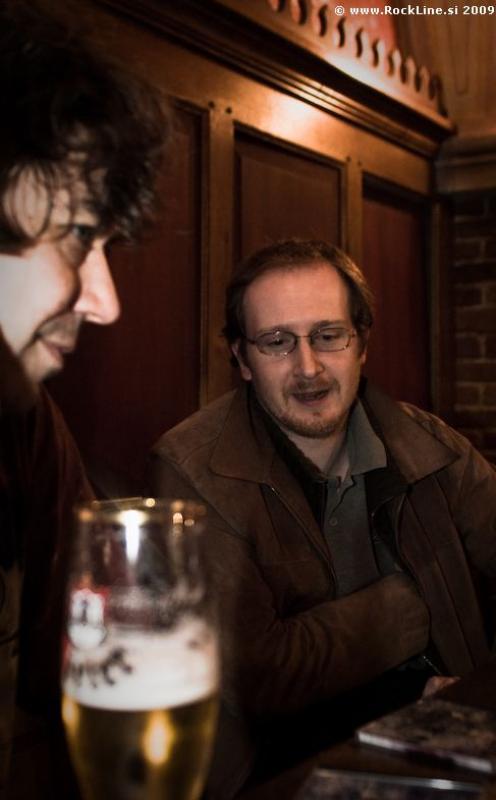
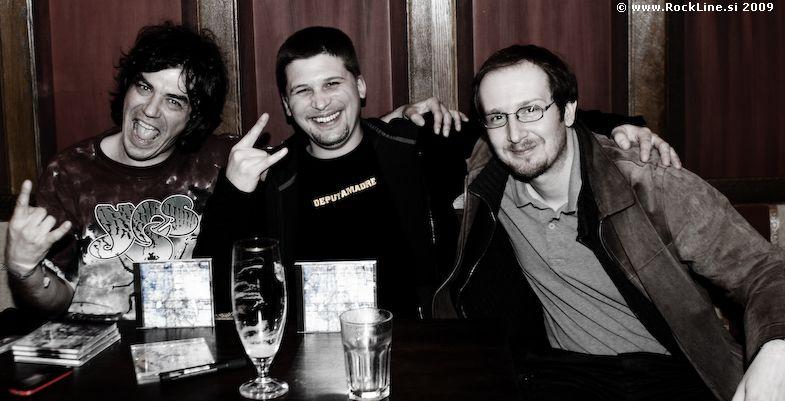
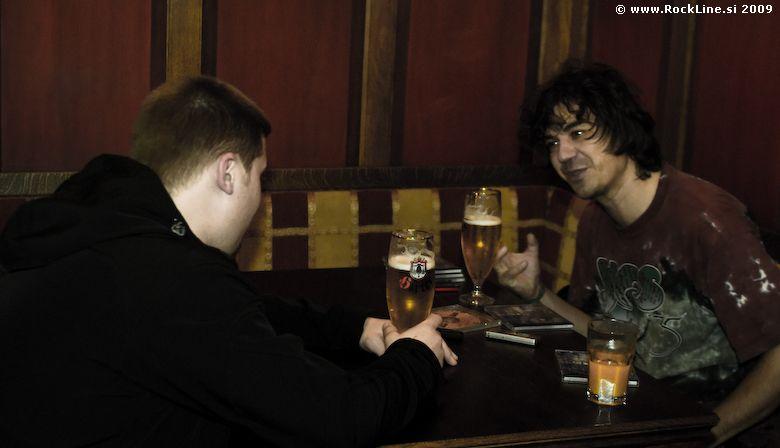
Location: Devil pub / Bled / Slovenia
Interview date: 14.05.2009
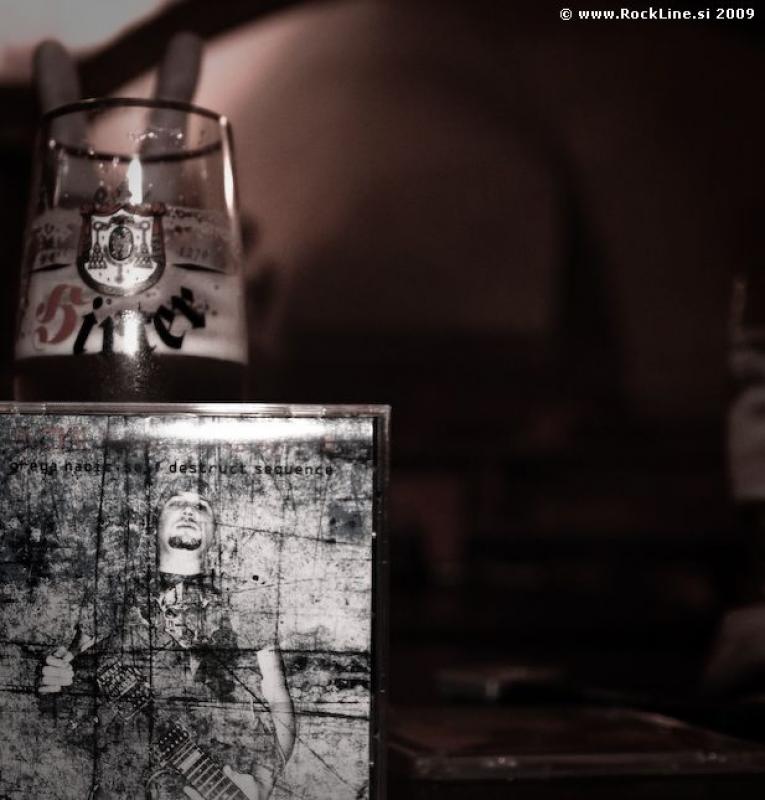
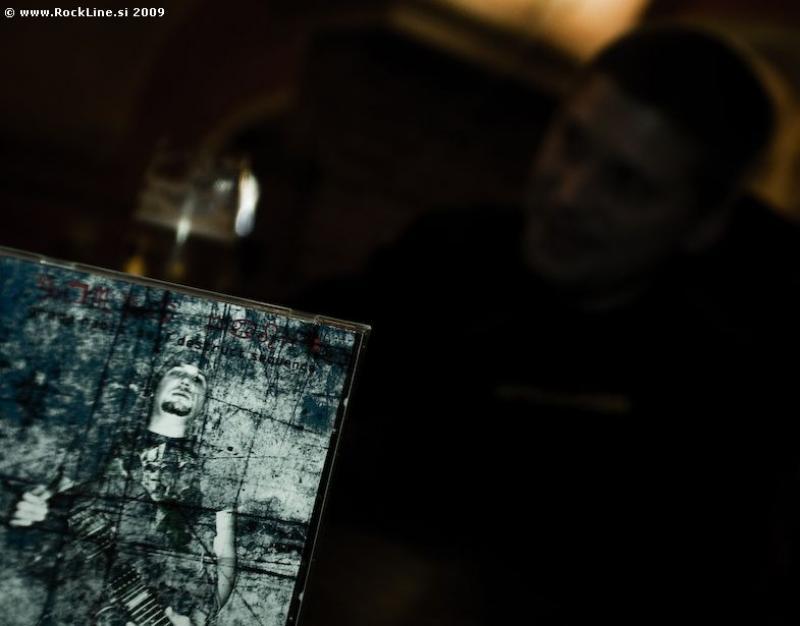
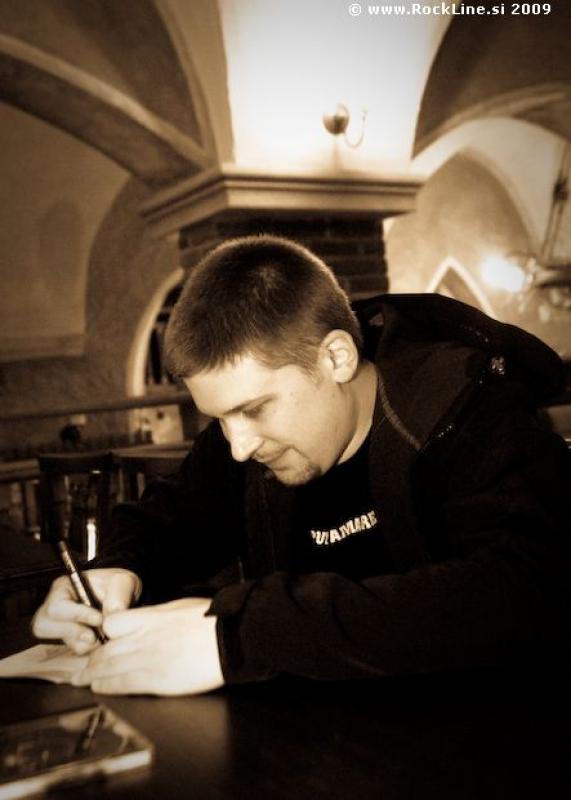
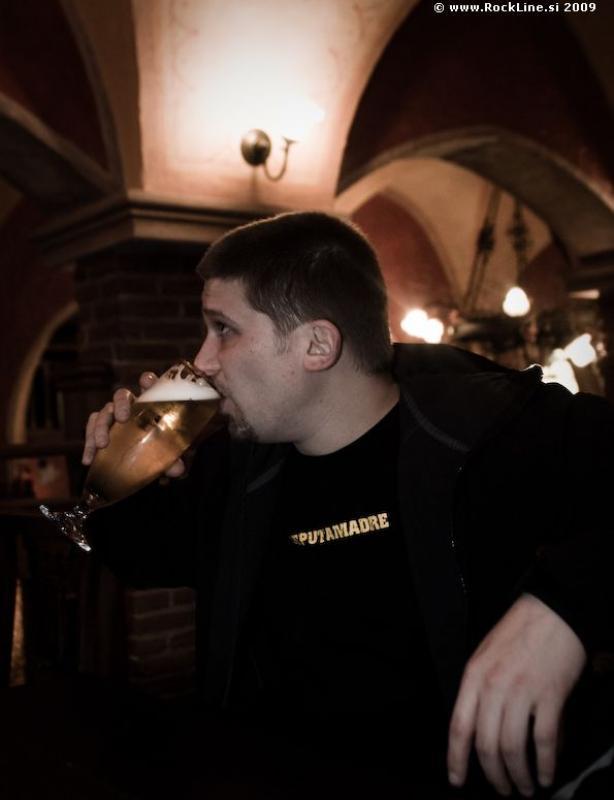
Grega Habič is currently the closest thing Slovenia has to the world’s guitar heroes, the Joe Satriani, Michael Romeo, Paul Gilbert, John Petrucci types,…. Or, if we peek just beyond the borders of the Republic of Slovenia, there are other Europeans too, like Croatia’s Damir Šimić – Šime, Bosnian national Emir Hot, Austria’s Milan Polak, or the Italians Arturo Falcone, Dario Mollo and Aldo Giuntini… And the list could keep growing and growing. Not that nobody else in Slovenia can keep up with the technique of those guys. It’s just that Grega Habič is a musician who’s creative in the sense that he lays “himself” down on studio tape. That’s why he’s already put out three studio albums. They reek of a thoroughly experimental fusion “jam” approach, in which the electric guitar takes priority over every other instrument. Grega Habič plays and creates his own original music. He’s a unique, one-of-a-kind gem in that respect, and honestly one of the best-guarded state secrets of the Republic of Slovenia. Grega has just released his fresh solo studio album “Self Destruct Sequence” (self-released, 2009), which is also his most mature album so far. In our chat for RockLine, a seriously heated and juicy discussion broke out among the participants, with words flowing off tongues that had no hair on them.
RockLine: Let’s start with a slightly unusual question. Have you ever imagined writing music with symphonic arrangements?
Grega: You can do all sorts of things. What Steve Vai did with symphony orchestras is really interesting stuff too. But I doubt my approach would allow for the kind of compatibility with orchestral elements that would fit with how I see playing guitar. And if I were ever pushed into that kind of situation, I’d probably turn to some jazz instead.
RockLine: Your new album, “Self Destruct Sequence”, which you’ve just released, clearly shows you as a multi-layered musician. You’re open to many genres, you see music broadly and take it in as a whole….
Grega: Honestly, I don’t really pigeonhole things when it comes to music. It’s simple: if I like a certain kind of music, I get into it, and if I don’t, I don’t. In the past I also played in a band that did strictly commercial music, which I basically hated. That was more for the money. I played right across the road from here, in the Bled casino. It was around then that I figured out it’s easier to go to a regular job every day than to play for money and sell your soul in the process. Looking back today, I can see that even that period of my career was useful for something.
RockLine: How did your music career start?
Grega: Hmmm… I played with Gregor Rožič from Game Over. We had a band for about half a year. And with Gasar (Klemen Gasar, Game Over guitarist, ed.), we work together quite a bit now. As for formal schooling, I only did music theory. My mum actually signed me up for trumpet lessons. I was eight, but I knew right away that nothing would come of it. I finished the theory all the way through, but I taught myself guitar completely on my own. My uncle did show me a few chords at the start, for the usual “scout camp” songs. But what really lit the fire was hearing Joe Satriani when I was about 12. That’s what drove me to buy an electric guitar.
RockLine: Well, you can definitely feel some Satriani in your playing on the tracks you’ve got up on your MySpace page.
Grega: Yeah, I admit it. But I’m not as into the new records Satriani is putting out now as I am the ones from the start of his career, especially the first two albums. He’s one of the main culprits for why I took up electric guitar.
RockLine: Take the first track on your new record “Self Destruct Sequence”, Razors Edge. It’s a vicious combination of metal riffing and a wah-wah groove underneath that kind of fires up the beat of the song from the other side.
Grega: Yeah, that’s one of those tricks to break up the monotony that can creep into a track. So it doesn’t get boring, you know. Personally, I think the easiest thing about playing guitar is the wanking. I mean, soloing isn’t the problem, but you have to shape the song so it makes some sense. Say you’ve got a singer in the band, it’s easier that way. You get the line right away. He sings, you add chords. By giving an instrumental piece led by guitar some sense, you break up the boredom that can set in if you were forced to listen to nothing but guitar soloing. Honestly, once you reach that technical level, you realize the easiest thing is wanking your way up and down the scales.
RockLine: Since we’re on the subject of technical level, I personally see that we’ve got plenty of musicians here who are technically well trained. The problem is that their original material often falls, or let’s say succumbs, into pure generic territory. How do you see it?
Grega: Ufff… I’d rather not comment on that. Among the musicians I’m in touch with, Mark Lemer is working on a new album at the moment. I think that album of his could be something special. There’ll be some vocals on it, and some instrumental parts. He’s one of those guitarists in Slovenia I really respect. Also when it comes to sound production. When you hear Lemer, you feel the difference between his playing and the rest of Slovenia. I do remember his obsession with Yngwie Malmsteen, though. He could play exactly like Yngwie, no worse. Then there’s Cveto Polak from Šank Rock, who’s preparing his own studio album. I expect that record to be special too. The problem is that when these albums come out here, nobody’s going to notice them anyway.
RockLine: Why is that the case here?
Grega: I don’t know.
RockLine: The times we live in aren’t kind to guitar music. And if you’re also an artist who makes music without vocals, that’s one more handicap when it comes to getting your music noticed.
Grega: Yeah, it actually seems to me that not just here but all over the world, knowing three chords is enough these days. They crank in some seven-string guitars on top and that’s it, done. These new guitarists don’t just not want to solo. They can’t solo, or can’t even manage it. I keep an eye on the MySpace pages of various new popular bands. All these kids, it’s hopeless. Just look at Jesenice, where I come from. There were always good guitarists here. Lots of them. Gasar from Game Over, Mičo from Heavy Company, Andraž Kalan…
RockLine: And Dejzi from Negligence.
Grega: Yeah, but he’s my age. But the ones younger than that, that means playing absolutely nothing on guitar. Only me and Dejzi are left from Jesenice, and then that’s it. That doesn’t bode well.
RockLine: Which track on the new album “Self Destruct Sequence” was the biggest challenge when you were composing it?
Grega: The track Scars, which Jesse Adams and I made together. Because it has vocals. It’s the only track with vocals on this record. Jesse used to be a rapper in the US. And a pretty well-known one. He sold something like 50,000 albums, he was a proper star. Then something in his head “flipped” and all of a sudden he became a guitarist. His dad’s a guitarist too. Jesse doesn’t give a damn about hip-hop these days. I could barely convince him, I spent two months diplomatically talking him into it over MySpace, to rap something for the track Scars. He did send me his album. The guy’s a king. There’s no hip-hop artist like Jesse in Slovenia. I’ve always wanted to try out that vibe, bring it into my own music. That energy that, say, Rage Against The Machine have. That’s great music to me.
RockLine: Has your music ever taken you to America?
Grega: Never. But Jesse and I are talking about it now. We’re even discussing him maybe coming to Slovenia to help promote this album.
RockLine: I only brought up America because I got an “American” feel from your new album?
Grega: Yeah, yeah, drummer Jure Rozman already told me that. He says I should just go to America, because here in Jesenice I’ll spend my whole life stuck at work anyway. But in America there are guitarists like me by the ton.
RockLine: Well, you never know. Have you ever thought about pitching one of your albums to a foreign label?
Grega: Right now there are some talks going on with the label Guitar Nine. I heard about them from music journalist Jernej Vene from Val 202, but you have to send them CDs with a glass master. The music you send them and want to present to them as a singer-songwriter can’t be on a CD-R.
RockLine: And what about Slovenian labels like Dallas, Nika and so on…?
Grega: I don’t even bother with that. It seems to me the times here in Slovenia aren’t kind to this kind of music at all. Maybe just for distribution, if I ever did contact them.
RockLine: I’m only thinking from this angle because there’s nothing like what you do in Slovenia. Or is there?
Grega: I don’t think so, really. Bor Zuljan was “scratching around” a bit in that direction. But as far as I know, nobody in Slovenia has made a strictly solo, guitar-driven album where expressing the music through guitar playing takes priority over the other instruments.
RockLine: Which other guitarists in Slovenia do you rate, based on their achievements? You mentioned Lemer earlier.
Grega: Well… besides Lemer there’s Primož Grašič. Those two are the kings when it comes to guitar playing in Slovenia. There are probably still a few hiding out there somewhere…
RockLine: But they’re commercial s…. They don’t let it “out of themselves”…
Grega: Yeah, probably.
RockLine: Your new studio album is also fresh confirmation that you’re developing your own recognizable approach and style, one you can’t just squeeze into the comparison mold of the Satrianis, Malmsteens, Vais, Gilberts and so on…
Grega: Well, that’s what I’m personally proudest of. I have a recognizable style. You can’t say that now and then things don’t remind you of one of the guitarists you listed, but it happens that when I listen to an album by some other guitarist putting out a guitar solo record, I hear literally copied soloing lines and the like. I don’t think that’s the right approach. It’s true that it’s hard to play the way those big guitarists dictate, but once you’ve “reached” them, you have to play “from yourself”. You can’t play them.
RockLine: Tell us more about your plans. How do you intend to promote your new album?
Grega: Jesse Adams is supposed to come to Slovenia in the summer. He’s supposed to stay for six months. He’s also supposed to get a visa.
RockLine: How and where will he live?
Grega: He’ll live with me. And he’s decided to find a job here in Slovenia in the meantime.
RockLine: Say, he’ll record 100 albums for you.
Grega: Ha, ha, ha, ha…. No, but seriously, we’ve got a project lined up. It’s called Fighting The Undertow. It’s a project where Jesse and I don’t guest on each other’s solo albums, but write the tracks for it together.
RockLine: So an album from this project is planned too.
Grega: Yes. If Jesse comes to Slovenia for six months, this project would definitely come to life faster. In that case we can also expect live shows. We’re even talking about something in Serbia. Miša Tricko has also contributed a few bass guitar lines on my material. He’s an excellent Serbian guitarist. He was recording with lots of musicians back in Yugoslavia. He’s a bit older. He’s an excellent studio bassist, has his own original material, and is very much into funk. Tricko actually offered himself to play bass on two or three tracks. He plays a few clubs in Serbia and I hope we’ll play there too. And of course in Slovenia as well. I’m counting on 10 concerts total at most, because you know how it is, right? It’s just hard to find much more interest in this music.
RockLine: How do you plan to perform? Solo? Will you put a band together for the occasion?
Grega: I’m counting on Jesse. He’s also a keyboardist. Besides rhythm guitar, he’ll play keyboards. Jesse is an excellent guitarist. Not solos, but rhythm. If everything goes to plan, Tricko will join us on bass. I just don’t know about a drummer yet. I’m in touch with Jure Rozman. He’s actually agreed, of course, but he’s constantly playing. He lives off it, and I’ll have to tell him well in advance when we’d be playing, so I hope it works out and we manage to line up our schedules. If I manage to get these people together, some truly crazy gigs are on the way. You know, in principle it’s not hard to put a band together, but honestly, I wouldn’t enjoy playing with, say, some hack on bass. Then I’d rather not play live at all. Because I, as a guitarist, already have my hands full with myself, my material isn’t exactly easy to play live. And now to have to deal with someone who can’t keep up, worrying about what’s going on to my left, my right, or behind my back while I’m on stage, no way, that’s out of the question. It would wreck my nerves. I’ve lived through that kind of thing a few times in my life and I really don’t want it again. That’s why, for example, I’m happy to work with Jure Rozman. When he comes into the studio, he doesn’t even ask how, what, where, why. He just plays, like you hit the “play” button.
RockLine: What will the band be called?
Grega: Just Grega Habič Band.
RockLine: Tell us laypeople what it looks like when you create your solo studio album completely on your own in the studio.
Grega: I don’t know how others do it, but my approach is to “make” the drums first. I already know in my head roughly how the guitar will look, how I’ll handle the guitar part, so I start with the drums. Then come the guitars, and the bass at the end. When I start a track, I don’t plan ahead or decide how and what. It develops completely spontaneously in the studio, in its own way. All the ideas come completely naturally. Then of course you fix things afterwards, delete, re-record. Then you track down someone like Jesse or Tricko to record something. All the tracks come about, grow and develop in the studio completely naturally. There’s no math in it.
RockLine: Which program do you use for recording?
Grega: Q-base.
RockLine: And for drums?
Grega: Addictive Drums. It’s a very pricey program, though.
RockLine: Basically, these days you can record an album at home by yourself on the cheap.
Grega: Yes, that’s true.
RockLine: What costs more is just the investment in promotion itself. A video and so on. Have you thought about anything along those lines?
Grega: Actually, I talked to someone about using animation for the basic shots. See, in my own video I wouldn’t want to watch myself and sigh about how handsome I am. Mostly I’d give priority to quality animation in a video like that, and add myself in just a pinch, minimally, symbolically.
RockLine: What about bands in Slovenia? What do you think of the quality? Which ones would you single out?
Grega: Game Over, for example. They’re really good in my book. Not because they’re also from Jesenice, but because they’re original. Honestly, too good for Slovenia. They’re about to play their first concert soon, after I don’t know how many years. Gasar recently asked if I’d come. At Teden mladih in Kranj. They’ve got these guitar synths in the mix, there’s tons of experimenting with sound, they’ve got synths recorded in the studio across eight channels, and I’m really curious how they’ll reproduce and present all that live at this concert in Kranj. The other band I’d like to point out, a younger one compared to Game Over, is Last Day Here. I especially like their singer. He’s no whiner, you can feel he really knows how and can truly sing, full throttle, with real power.
RockLine: Tell us how much time you spent practicing daily to reach the level of playing you have now.
Grega: That was pretty serious. For about ten years I played guitar 5 or 6 hours a day. Right now I don’t practice guitar at all anymore. Basically I only play guitar when I’m creating music, or when I’m actually playing a particular track. Today I don’t feel the need to practice anymore. But before that I over-practiced like crazy. Iron Maiden, for example. For about two years I practiced and played nothing but Iron Maiden. One of their records that’s especially close to my heart is “Somewhere In Time”. I hammered away at their songs endlessly. I even played along with cassettes. The tapes ended up completely stretched out.
RockLine: Were you ever tempted to play in a band?
Grega: Actually, right now it doesn’t interest me at all. In the past I played in quite a few bands, but it never fully satisfied me.
interview by: Tomo Jurca, Robi Lipej, Aleš Podbrežnik
edited by: Aleš Podbrežnik
photos: Robi Lipej
Photo Gallery