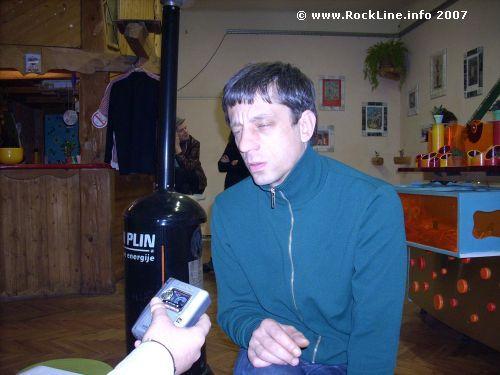
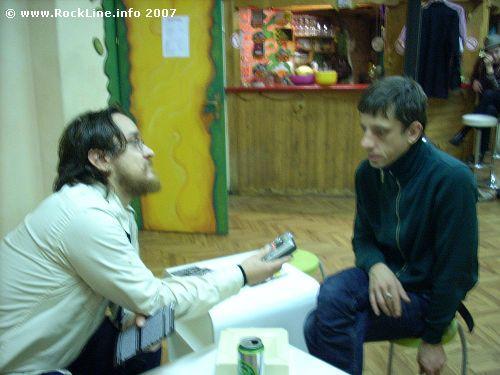
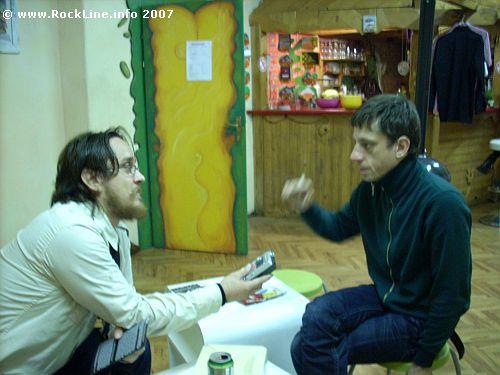
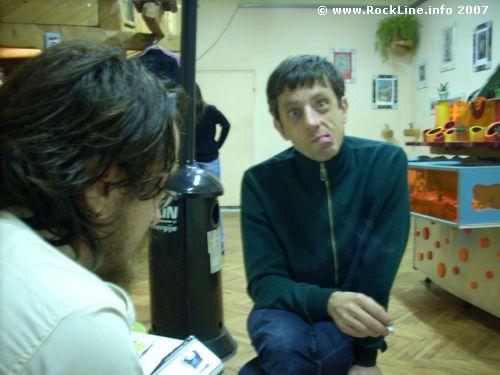
Author: Sandi Sadar Šoba
Interview date: 27.10.2007
RockLine: It’s truly an honor and a pleasure to have you here with us again. As far as I know, this is the fourth time you can be admired on our stages.
Thomas: That’s right!
RockLine: What are your expectations and thoughts, given that you’re way more than casually acquainted with the crowd here? What’s the mix of thoughts that ties Beatsteaks to Slovenia?
Thomas: Whoa, that’s actually quite a lot of questions, but I’ll try to answer them all as best I can … (laughs) If it’s even half as intense and good as our last visits, then it’s going to be truly phenomenal. We first visited here back in ’99, with the Deconstruction Tour. This time at Gala Hala is our fourth visit to Slovenia and our second here, and the first one was so intense and great that if we hadn’t come this time, the whole thing would have felt incomplete. It was a seriously wild and unexpected party. The most impressive thing about it all is that when we first played Gala Hala, we had your local band Multiball opening for us, and they told us they got together and actually started playing after we first played in your country! So it felt totally natural and relaxed to strike up real friendships with the guys. After the show they showed us around the whole town and I can say it was a truly unforgettable night! As for the gig climate: you Slovenes have a big element of surprise. Before the show I couldn’t have imagined it, and we got treated to something really one of a kind. That’s why we keep coming back here again and again, to meet new people and revive that elemental whole of pure human authenticity and unspoiled energy.
RockLine: It’s practically impossible to compare club gigs with playing in front of huge crowds. This year you’ve played the latter quite a few times, and I got to see 40,000 people eating out of your hand at once at FreQuency Festival. So how do you feel about the vibe of a club versus the big stages?
Thomas: Playing in front of loads of people at once is an honor and a pleasure for us. If I claimed anything else, it’d be a lie, but in my opinion it’s impossible to expect the feeling of a big stage to rival the intimacy and passion of small club stages. On those, simply because of the tiny space and its limits, it’s really the only way to build a tight connection between us and the listeners. The atmosphere is the kind you could cut with a knife, and the smell of sweat and libido hangs in the air. Erotic. (laughs) If the night is good, you can overcome the differences and the distance between the people on stage and those below it. If everything’s as it should be, there’s really no difference between performers and listeners. Still, it’s a luxury to play for the masses at big festivals. Actually, comparing the two shows you both sides of the coin. One can’t exist without the other. In a club you long for the masses, and on big and often impersonal stages you long for the intimate vibe of a small club. After a pretty grueling summer festival season, that more than hits the spot. The advantage of a club is simply that you don’t have to play everything so tensely and perfectly, with that big question in the back of your mind about whether you were clear enough that someone in the hundredth row understood you too. And that’s the main criterion separating the bands I like from the ones I don’t. Some bands radiate an energy at first glance that tells you they want to be and live like a big stadium act. You can hear it in their playing and in the music itself. They lose authenticity and the feel for people.
RockLine: I definitely felt a close link between the two approaches after your FreQuency show, which was my last brush with your live machine – while the last time we caught you on home turf was of course at Trnfest last year.
Thomas: Oh right … The place that stuck in my mind and left me with great memories is one they told me was a “place with an unfortunate name” – Trnovo. Really great vibe.
RockLine: Now you’re probably presenting material from your latest, fresh album more than anything else – .Limbo Messiah.
Thomas: Hmmm… I don’t really think we’re that predictable, since our live menu is a mix of old and new material. We don’t just play the new record plus a few older songs, we play material from pretty much all of our records so far.
RockLine: To balance out the energy and satisfy the widest possible range of people …
Thomas: Of course. Anything for a good party.
RockLine: In your opinion, how does the sound and logic of the latest album compare with the sound and mentality coming off the old records?
Thomas: I’d have a hard time judging the differences, but whenever we go into the studio, we long not to repeat ourselves in sound or in content, and not to recreate what’s already been heard. We want to be sure we’re not repeating ourselves. The big thing that separates us from imitators and bands that yearn to copy some already-heard cliché and ideal is that we just don’t like that. Every album has to sound different. On the new record we did decide to draw on the tradition of the real classic American HC bands like, say, Dead Kennedys, maybe with a pinch of Bad Brains thrown in. It’s more about focusing on the tension and energy of those early bands, where the basic ingredient was passion and fire. You could always feel a kind of drive there, every musician wanting to nail the song as fast and confidently as possible. That energy attracts us, and it was the basic motive and picture we followed while recording. We write as a whole, and if we can pour the energy of the rehearsal room or of an incredible gig onto a record, then the goal is reached. Limbo Messiah wants to be exactly that kind of record. You can feel it, right?
RockLine:And what was the thought driving it all?
Thomas: We wanted to play, let’s say, pop music the way hip hop feels to us. The point wasn’t to reinvent rhythm, but just to play what we had to say in exactly the way that suits us.
RockLine: Turning to sonic comparisons: compared to its predecessors, Limbo Messiah has less in common with the punk revival and more with the sound of the new wave of British guitar bands, or with something like the Pixies. So what were the influences that guided you musically while creating, toward a perfect fusion of everything you were saying into one solid whole?
Thomas: I don’t think modern British guitar bands influenced our sound. Still, there’s one common denominator: we both come from the same foundation, the same base, since it’s a reworking of the logic of the old British guitar bands … (laughs) So we both draw from the same well of knowledge. The sounds are pretty much identical to the sounds from the rehearsal room. That’s what we do at rehearsals, and it’s entirely and only the sound of our amps. The sound of the drums is the sound of drums, and that’s the real deal. On top of it all we added a pinch of what we learned from playing live and testing recipes on stage. Since we play a huge number of gigs, something from that has to reflect the state of mind in the studio and steer things in front of the recording console, right?
RockLine: And what’s the connecting thread tying all eleven songs into one whole? Is there a shared concept or story?
Thomas: It’s not a concept album. We’re not exactly fans of seventies prog rock. There’s potentially one main axis weaving through the lyrics, of course, but it’s not so much dry storytelling. It’s just a collection of associations. With certain associations you get certain images that are entirely your own and aren’t the same for somebody else. We just wanted everyone to have the chance to see something uniquely their own. We don’t like preaching. Let everybody come up with their own images! Everyone has their own life and experiences that we all carry in our hearts and minds, and they’re far from being the same for everyone. That’s what draws me to lyrics and what gives me fresh drive and joy, again and again, to ponder mental states and images. It’s the preservative that keeps the dish always fresh …
RockLine: Still, a lot of this is fundamentally different from what you were doing at the very start in ’95. What was the call of the wild, the first principle that drummed you all together? And what’s the story behind the name, which brings beef to mind? Beatsteaks…
Thomas: I honestly don’t even know how we came up with the name. It’s probably some silliness that won Beatsteaks a spot right after the Beatles on music shelves and in alphabetical band lists. That’s undoubtedly the upside of the name. The basic common thread of Beatsteaks and everything we stand for as a band, though, is friendship. Not so much technical musical ability. When the bassist joined the band, he didn’t really have much of a clue about playing bass. It was about wanting to coexist as a whole. And that’s how we develop and grow together.
RockLine: What about lineup changes? Have you been through those too?
Thomas: There were actually two changes in the band. The first drummer left Beatsteaks, and you can still hear him on the first album. A change also came on the bass side, since we replaced the bassist who played on the first two albums. But the parting was amicable, and he suggested himself who could replace him. It was a suggestion for our common good. And it actually turned out he’d suggested the right person. Of course, you can’t blindly trust anything like that, you have to test the energy at trial rehearsals, which only strengthened our friendship-and-business bonds.
RockLine: From the very beginning you’ve also been closely tied to playing alongside big bands that any musician would want to share a stage with – one such big opportunity was playing on the tour and comeback of old punk legends and veterans Sex Pistols … Who would you personally like to share a stage with, and which names would you like to add to your catalog of joint shows?
Thomas: Faith No More and All. You know All? It was originally Descendants, who had one singer in that lineup who left, and the band was renamed All.
RockLine: And what about bands that aren’t dead, ones lined up as additions to the tour you only just got well underway with?
Thomas: On the continuation of the German tour we’ll play with the German band Turbostadt, who are from northern Germany. They sing in German and their lyrics are really something special. We’ve already worked with them and even recorded a song. Martin, TurboStadt’s guitarist, wrote the lyrics, and we came up with the music, which in the original is performed by Fu Manchu. We play the song every night, and I hope we’ll hit the road together with them so we can at least play that one song together on stage. Then there’s another possible collaboration with a guy from Germany called Dendemann. He’s one of the biggest hip hop acts in Germany, who has also already contributed lyrics, and maybe we could perform together too …
RockLine: Some steps have already been taken, and in tune. So what might be the next logical step for Beatsteaks that we can look forward to?
Thomas: The next logical step is a live LP … (laughs)
RockLine: Seriously? When can we expect that?
Thomas: If everything goes the way we imagined and luck is on our side, you can hope for it as early as next year. Besides that, we’re also writing new songs. We hope it won’t take another eternity, or three years, before we can offer you the next Beatsteaks studio album.
RockLine: When can we hope for it, and do you have anything freshly written yet?
Thomas: We all write songs, but we haven’t played them for each other yet. We’re probably too shy and scared (laughs). Besides, we’re not one of those bands that, despite a hectic gig schedule and total focus on performing, would dare to write music for the next record on top of it all. We recently recorded and released an EP for the song ‘Demons Galore’. We’ve also played quite a few covers, and maybe one or two will make it into our live repertoire. When we stop playing – and we’re on tour until next summer – we’ll take a short break and then get down to work fast. We’ll only have a one-month break, and I think that’s plenty of time to recharge the batteries. Then, courage, we play through the sketches we haven’t yet (we’re honestly pretty lazy … (laughs)). Given all that, I can’t give you an exact release date for the next record yet …
RockLine: And what about short-term and long-term plans?
Thomas: Short-term: playing and performing around Europe and Germany until December 18 this year, heading off on another European tour in spring, hitting a couple of festivals in the summer, and I wouldn’t even dare predict anything beyond that. Long-term: writing material, recording, releasing phenomenal records, putting out a live album, and then developing new and fresh ideas. I hope we manage to stay level-headed and sane through it all … (laughs)
RockLine: One last message for our readers and your fans, and then you head into frantic preparations for the show …
Thomas: We want to keep doing what we do for as long as possible. Considering I’m not a guy who gets inspired to give such condensed speeches … “I’m Not a massage guy, baby…”(laughs) Keep those horses galloping and enjoy it to the max!
photos: Špela Šoba
Photo gallery