Location: Kino Šiška / Ljubljana / Slovenia
Interview date: 27.01.2011
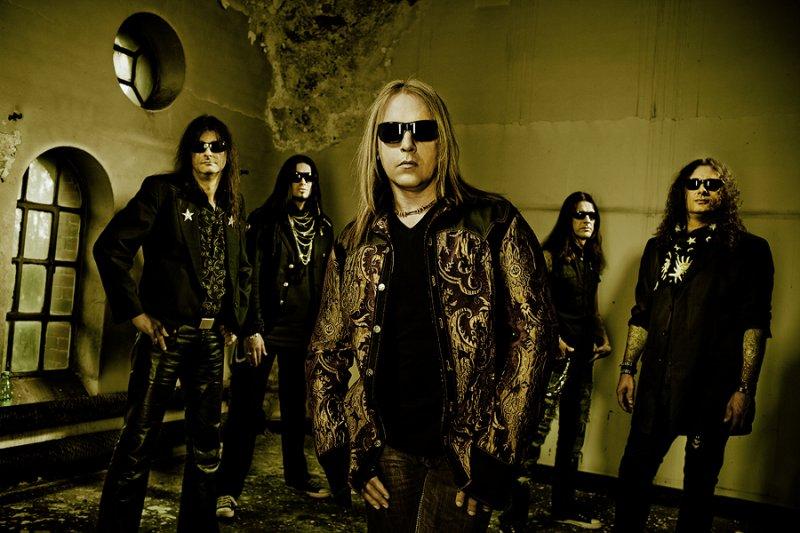
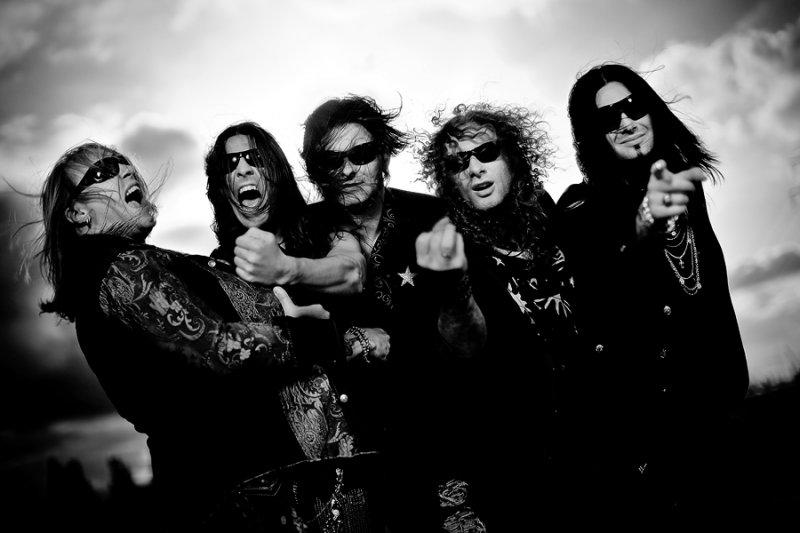
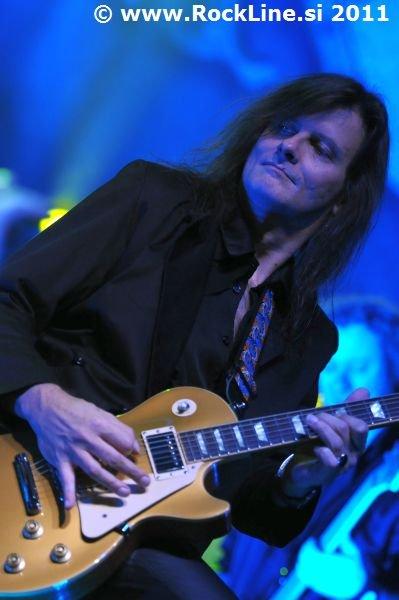
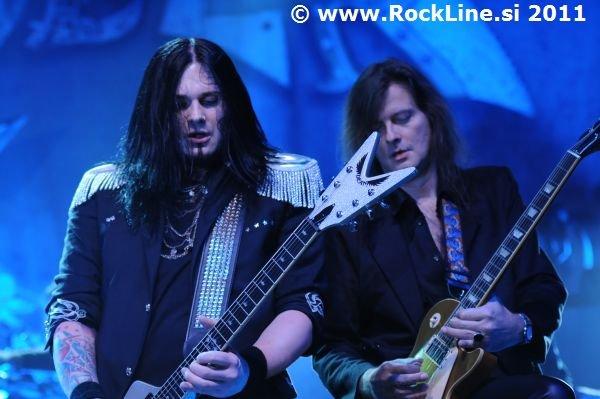
Helloween are more than just one of many bands – they’re a foundational pillar of modern heavy metal and a franchise that promises great music and a mix of speed, melody and heavy metal classics. Two years after their last show in Slovenia, armed with their thirteenth record 7 Sinners and joined in steel by Startovarius and Avatar, they packed out pretty much every last corner of Kino Šiška on Thursday. Guitarists Michael Weikath and Sascha Gerstner talked about the magic of the live show and the symbolic meaning of the thirteenth record, 7 Sinners.
It’s really great that we get to claim you as our own again after that phenomenal show at Metalcamp two years ago. So what are you expecting from tonight, your first headline show in Slovenia?
Michael Weikath: We’re pretty sure everything will be very civilized and European in spirit, but on the other hand we really hope the fans will let their animal nature out during the show. Still – judging by what we’ve seen so far, it’s becoming very clear to us why Slovenia was the first to step over the threshold of the European Union. We feel right at home here. We just ask that you don’t stay so civilized during the show itself. (laughs)
Yesterday you played Zagreb. The vibe of the crowd there and ours is pretty similar. So what are the main arguments you plan to blow us away with for good? If you have to pick the best out of as many as thirteen albums, the selection must be brutal …
Sascha Gerstner: We put songs from pretty much every era of Helloween on the list, as far as that was actually possible, of course. An hour and three quarters, or a measly two hours, of show is really not enough, so picking for such tightly measured time was really tough. When a band puts out that many records … We’ll play songs from the Keepers (Keeper Of The Seven Keys Part I. & II. translator’s note), so there’ll be no shortage of songs from the time of Deris’s membership (Andi Deris, Helloween vocalist since 1993 translator’s note). Of course we’ll play songs from newer records too – 7 Sinners being the latest. It’s going to be amazing!
On your official website you’re advertising a special event on this tour – picking the best Dr. Stein out of all the Dr. Steins in the world, right from the audience. Can you tell us more about the contest itself? How does the selection work and by what criteria?
Michael: I don’t know, that’s entirely in the hands of our merch guy. Choosing the contestants is totally up to him, since he’s the one who sees most of the crowd best – people come to him to buy shirts, and he does that every single day. He picks the nicest people. Of course you can’t put someone in the lineup who’s completely puked all over themselves, and it’s also important that they’ve mastered the basic norms of civilization, since they have to be on stage with us, as far as I know. Usually anyone’s allowed. There were only a couple of cases where we couldn’t hold the contest, because either the stairs were too steep or there was other stuff on stage that made it impossible to guarantee the full safety of the people up there and everyone who just came to headbang with us. These problems don’t usually happen, but every now and then there are complications.
Sascha: Of course it’s also important that you look at least roughly like Dr. Stein …
Let’s point out the rather shocking fact that you’ve been on the scene for a whole 27 years. In that time the meaning of metal and the way the masses take to it has changed and been chiseled quite a bit. How do you look at metal’s long road, from your first days to today?
Michael: That’s pretty hard to judge. The beginnings were of course wild and more alcohol-fueled, because the original heavy metal fans – fans of Mötörhead and Rainbow back in the distant year ’77 – were bikers in all their glory. They had patches of both bands on the backs of their leather jackets. Then came listeners who looked exactly like the young crowd today, who were into Pretty Maids around the Red Hot And Heavy record, or Def Leppard – with all that striped denim and all the junk. We recently saw a revival of that at the show in Barcelona, and there’s more and more of it elsewhere too. Apparently it’s becoming fashionable again to follow the trends of ’82.
Sascha: Fashion’s coming back. I remember that when I first picked up a guitar, all I was after was being a rebel doing rebellious things. Now it’s turning into more of a fashion thing. At the same time people are getting more tolerant. I saw this notorious German TV show called Harald Schmidt, modeled on David Letterman. Schmidt was explaining the differences between metal genres to an audience that wasn’t metal in the slightest. He had a keyboard sampler in front of him, and every key he pressed introduced a different band – with thundering vocals. Then he’d press the next one: “That’s something totally different! That’s gothic metal!” and a classical female vocal and epic guitars blared out of the speakers, and people couldn’t tell the difference, because to them it was all just noise. So the attitude toward metal has changed, and people have become more tolerant and accepting. More and more people identify with a certain kind of music, but they’re no longer open-minded. In my first days only metal that was heavy metal counted, then we gradually moved into thrash metal. There was a slight split, but that was it. At its core, it was all basically metal.
Considering you’ve been part of the band since 2002, and you once said that although being in Helloween means something sacred to many zealots, you yourself were never a fan of the band.
Sascha: That’s right! I was never a fan. (laughs)
Can you tell us more about how you came to Helloween and what Helloween means to you?
Sascha: In the beginning there was a little sea of long-haired hard rock bands, and since I was allergic to all that posing, I couldn’t even listen to that music. Take Pretty Maids, since we were just mentioning them – that was about the hardest stuff from that scene I could listen to. I was more into Bad English, Toto, Dokken and stuff like that. I figured Helloween were always more of a thrasher thing, going by the image, the shirts, the black-and-white pants and the crowd in Helloween shirts. Those same people listened to Kreator, Megadeth and similar bands. It all went the same way and came out of music I wasn’t listening to at the time. Still, I knew Helloween songs without knowing they were Helloween songs. Like March Of Time (from the album Keeper Of The Seven Keys, Part II. translator’s note), which I had taped on a cassette – besides March Of Time I had Dr. Stein on there too, and I had no idea it was Helloween. A friend gave me the tape and it had a few songs without titles. I realized it was Helloween after Freedom Call covered Dr. Stein, and that’s when I got into the music. That’s when I got to know the band Helloween, and everything they stood for back then and still stand for today. When Michael first called me, I saw it first of all as an incredible opportunity, since I hoped I’d play a lot live and record albums in studios, and after the albums came out I’d head off on tour again. I already had some experience like that, but I was longing for good experiences. Joining the band meant hanging out with the guys. I didn’t even touch a guitar, because what mattered more was checking whether we even got along personally. You don’t even expect that from band work, since people think it all works by you sending the band some recordings and so on … I had no idea they were looking for anyone. Charlie Bauer, our producer, called me and asked if I wanted to meet Michael. We really did meet, and after hanging out and chatting everything developed and moved on.
On one side there’s you, Sascha, as the band’s new blood, and on the other sits a founding member of Helloween, who’d be the right address for summing up Helloween’s evolution from the first days on … What was the basic concept, and how has it changed since the beginning? What is it that Helloween represent today?
Michael: At the start, the concept was that we couldn’t even take it for granted that we’d be releasing records. The first goal back then was to sign a deal with a label, and we created and wrote songs with the aim of shaking things up as hard as possible and burning into the listeners’ memory in the clubs, so they wouldn’t forget the melody and the riffs, and after leaving the show they couldn’t shake our music, humming or whistling it. Then we did sign the deal, and we poured that concept of a metal show in a metal club onto the record, so that people would have a hard time getting our record out of their heads. Then we started writing songs better suited to bigger venues and stadium shows, that work well on big stages and not in clubs. Of course we can play stadium-pompous compositions in clubs too and people like them, but it’s not proper to reach for that kind of pomp at the very start, when you’re doomed to the club scene. You don’t usually work with a stadium approach then. If you do, it all comes out bizarre and weird. So the development of the music was gradual and based on what was available to us at any given moment. At the same time we developed studio effects and, let’s put it this way, commercialized the music. For instance, when we released the Dr. Stein single, it really got on my nerves when Kai Hansen (the first vocalist of Helloween, who was a member between 1984 – 1986) said we’d started making dance music. I thought “Who the hell would want to dance to something like that?”, but still – why not? We kept exploring what we were capable of. Ballads were very important to me. The early Helloween releases weren’t exactly naturally tied to ballads, because most of the band thought ballads were crap and not worth bothering with. Over time we widened that corner as acceptable and musically allowed, and now we’re at the point where we can more or less do whatever we want! That’s definitely a good thing. Then on 7 Sinners we took a step back toward a heavier, more direct approach, while the production is very modern. You’ve got strumming in the manner of crossover punk on the guitars – when I was starting out in ’77, Sex Pistols were the big thing. And what did they do? Strum! Everything has grown and intertwined up to today, when it’s all embodied in Helloween’s music on songs like If I Could Fly or some other one. All these elements are there, growing with you and the fans, and with the novelties and renewals we keep pace with the natural flow of things. It’s not about sitting around trying to add a gram of this or take away a bit of that. We’re not fixated or locked into procedures like we once were. At the very start we actually wrote out plans and diagrams in our heads and on boards, which I think was necessary and smart back then. Maybe fans will be disappointed now, since they thought we wrote songs from the heart. Yes! That too! Of course it carries on to this day …
Since you just touched on the latest, phenomenal record 7 Sinners. What was the common thread, what was the concept, maybe the idea that hit you while writing or recording the record?
Sascha: These days it’s usual that a person sits at home and records all the captured moments of inspiration and flashes of ideas, which leads to a rough production and a draft of the product that hints at what songs are taking shape and which will actually make the record and which won’t. We weren’t chasing some concept or recreating a Keeper Of The Seven Keys Pt. III record. There’s no common thread you could cite as conceptuality, or use to conclude that the lyrics are rigidly tied to such a concept. It’s more that we feel really good with each other now. After a few tours and records in this lineup you could see a natural evolution, an important building block of which was already Gambling With The Devil, which in my opinion is very close to the feel of 7 Sinners. 7 Sinners shows what we are as Helloween today. We just gather ideas, hang out, then comes brainstorming where we pick what can go on the record, and then we just record. The approach is pretty fresh. We don’t overthink what we should be doing. We did that in the past and it caused a ton of problems. If you overthink things, you lose the pure feel of the music, so today we just let ourselves be surprised.
Michael: It’s natural that everyone tries to contribute their best ideas. That very experience, when someone’s a composer or lyricist or someone comes up with a riff, is amazing. You somehow don’t need to ask anyone: “Hey! Do you think this riff I wrote is great, or this melody good? Do you agree?” – that’s no longer central.
Sascha: Now it’s totally clear that we all know what we’re doing and how things are served up. The fact is we expect outstanding songs from one another. We somehow don’t dare come forward with a half-baked, unfinished song. We don’t dare present something sugary, “cheesy” and cheap to each other! I kind of already know what he’d tell me if I served him a sugary piece of crap! “Yeah … Hmmm … You could’ve written that better!” So I don’t do it, and the others also want to present the best we’ve got!
There’s also a big difference in the list of credits anyone can pin on their chest, at least when it comes to the latest record … Everyone contributed a song – from start to finish – on the latest album!
Sascha: Everyone except Dani (drummer Daniel Löbe translator’s note), who focuses more on his drumming, but all the rest of us write songs, yes!
And what about the seven deadly sins, the thirteenth record and the symbolic meaning of numbers – is there anything more to it? Is it really just a coincidence?
Michael: The symbolism could be traced to the seven-pointed star I wanted to make as a symbol for my magic on my computer desktop while I was recording demos, which I didn’t have yet at that point, and I also couldn’t find a large version of that little star from my iPhone. When I enlarged it on my monitor it looked truly awful. Then I set about working on it in Photoshop, trying to make a high-resolution version, and I gave up on that too. But when we got to writing demos, I played my ideas to Deris from my iPhone and saw this mystical star again. Then I told myself that since we’ve got seven things, seven keys and stuff like that, a seven-pointed star was more fitting than the usual pentagram, which really everyone already has, whether you take it positively or negatively … My star is a symbol of pagan magic and very powerful. These are things you want to show off. For instance, Sascha and I had a discussion about stars. Like “I wear stars on my jacket, and now you wear them too!” Sure, because I have them too, and I hadn’t even thought about it. Showing these things to the audience really does have a magical effect. I had pants decorated with 43 stars during the Keeper I Tour. When you show this stuff around, it inspires people with the magical. If you’ve got good songs, that’s always a good thing, if a musician has them … Let’s say you’ve got bad songs but magic, you can sell more albums than if you’ve got outstanding songs and no magic, but that depends on … I just wanted to have something new. Then we talked about two songs we’d already worked on that were connected to sinners (Where The Sinners Go and The Sage, The Fool, The Sinner), and we didn’t want to go changing song names when the exact same thing is going on in both. So we named the record with something that goes together with sin and “sinners” – 7 Sinners fits perfectly.
Let’s wrap up the interview with short- and long-term plans for Helloween. Can you serve us something concrete, right between the eyes – for us and our Slovenian audience?
Michael: We’ll keep touring, then festivals follow. We’re going to Asia, then South America, and in between there’s nothing but an endless chain of shows and festivals. In the breaks between festivals we’ll already start gathering new material for upcoming songs, since after all, sometime in the future a new album is coming. If we don’t carry on like this and play live, because in the times we live in – you said it right to my face – in times of pirate downloading, it eats away our bread as musicians and nobody can sell as much as they deserve. Every musician in the world today sells only 7% of what used to be normal in the past, just a few years or decades back. If you used to make a hit record full of hits, you sold 30 million copies, and today that’s trimmed down to a measly 7% of that. Phenomenal! So we’ve been thinking maybe we’d play more, and maybe record albums in between (or not), so it’s clear what we’re even doing.
Like Grateful Dead …
Michael: Possible, though they were on the scene way before us and played for quite a long time. I think they released, I think, 33 albums?
A hundred or so more if you count the live ones, but any reason to tour is a good reason … All we can do is hope you’ll be around for a long time and keep writing the sequel to your story for as long as possible.
Michael: That’s why we’re here! We have to keep going, there aren’t many other things we could do. Sascha maybe, but the rest of us … We do what we can …
Sascha: It’s phenomenal that we get to be out on tour, recording records regardless of sales figures. We’re happy to be here and doing what we do!
Thanks for the in-depth chat!
interview by: Sandi Sadar Šoba
text translated and edited by: Sandi Sadar Šoba
photos: Helloween – archive & Aleš Podbrežnik
•-
Photo Gallery