Location: OŠ Koper / Koper / Slovenia
Concert date: 17.10.2008
Attendance: 600
Ticket price: 20.00€
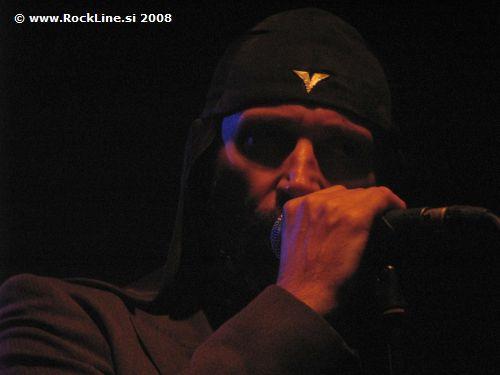
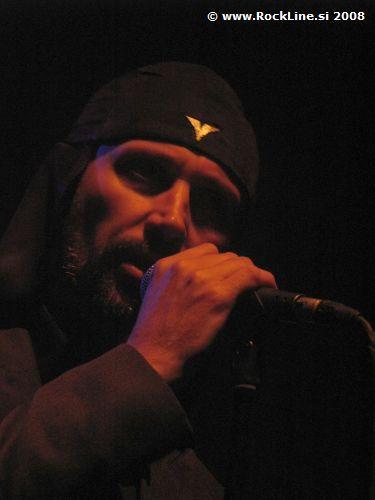
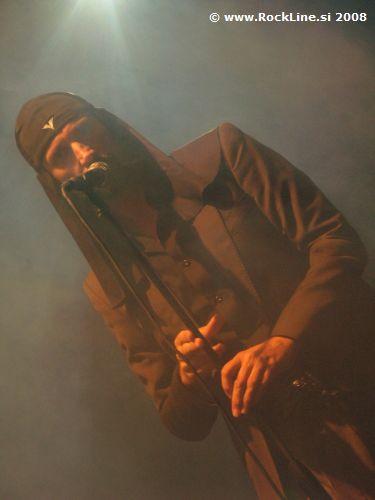
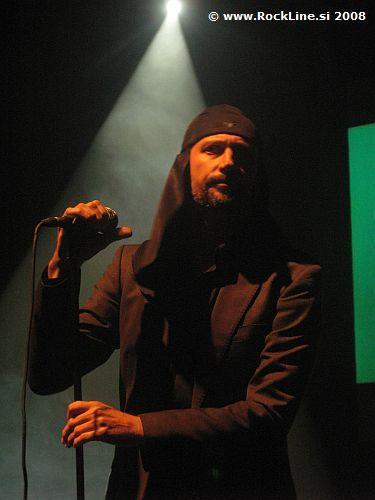
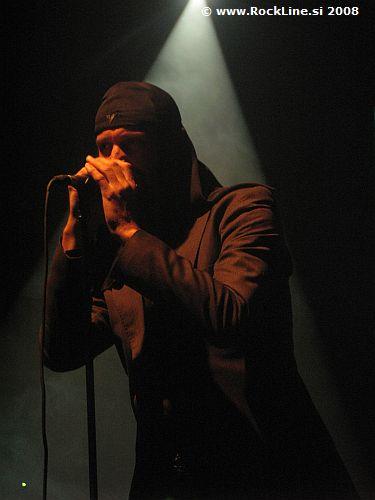
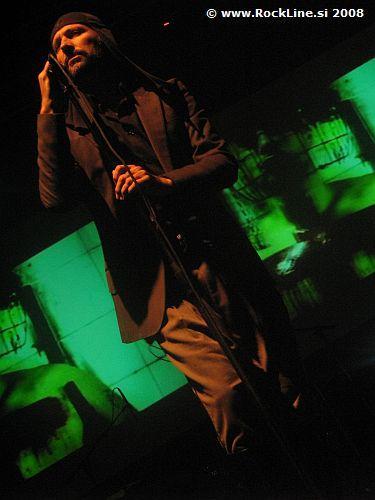
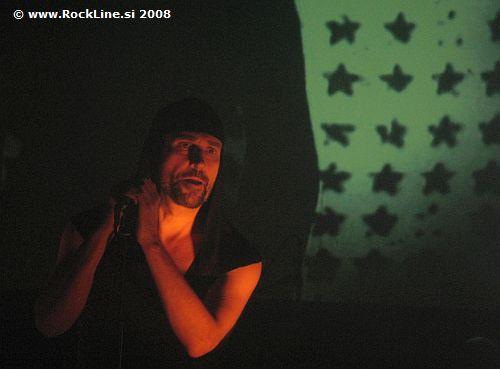
Even though only people in the Primorska region knew about the Laibach show, a solid crowd of fans of Slovenia’s most successful and internationally best-known musical export turned up at the sports hall at OŠ Koper on the evening of October 18. The moment you walked into the fairly spacious hall, the special lighting and the huge panels above the stage made it clear that, as is usual with Laibach, a proper audio-visual performance was on the way. Some of us were even hoping this would be one of the first outings for their newest release, Die kunst der fuge, but when the Slovenian national anthem solemnly poured out of the speakers before the show, we knew we were in for yet another staging of the album Volk. As you probably know, that record, made in 2006 in collaboration with Silence, features idiosyncratic, utterly distinctive interpretations of the anthems of various countries, with plenty of social and political criticism cleverly woven in.
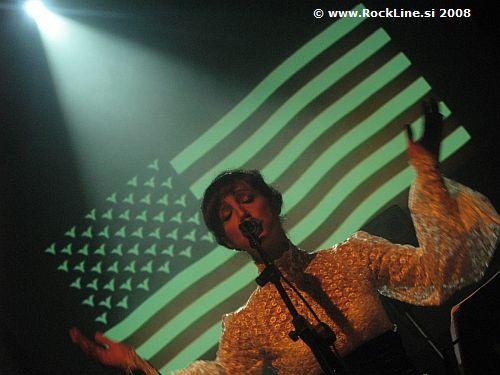
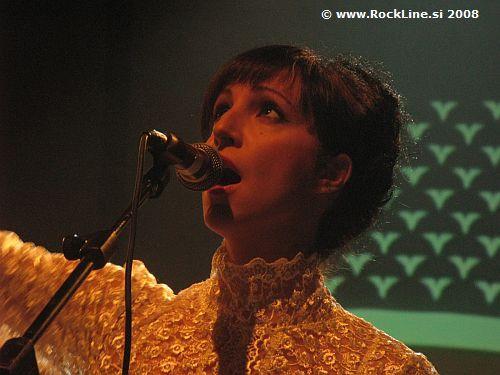
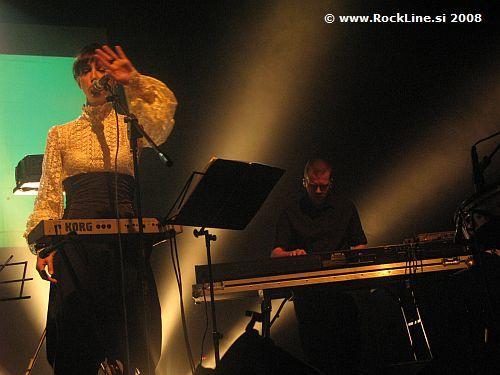
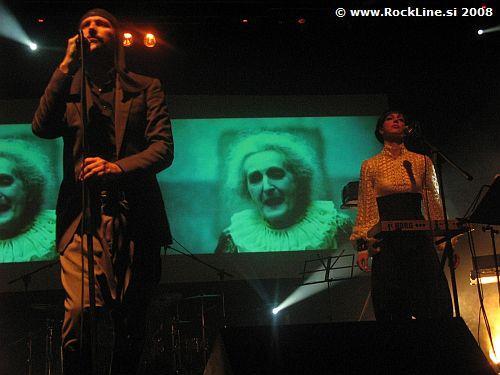
Following the album’s example, the show opened with Laibach’s take on the German anthem, while the screen played something that most closely resembled pre-war Nazi propaganda films. For the American anthem, the stage backdrop was symbolically decked out with oil pumps, the ones that have been shaping politics across the Atlantic for decades. During the track America we also saw Jadranka Juras for the first time. She sang the familiar lines about the land of the free and the home of the brave with real feeling, and Fras closed the song with the telling words from the album: “America, the end of history, the end of time, the end of family, the end of crime”. After a bitterly biting interpretation of the English anthem came Rossija, the record’s first musical peak. Its childlike chorus strongly recalls Moskau by Rammstein, a band that has named Laibach as a source of inspiration on more than one occasion. Floyd-style animations of French guillotines then chased the Russian Orthodox domes off the screen, bearing witness to the horrors of the revolution over reworked sounds of the Marseillaise. The people behind the show’s visuals really hit the nail on the head with Italy, during whose anthem the opening and closing credits of two cult Italian films played on the screens: La dolce vita by Federico Fellini and Salo’ by Pier Paolo Pasolini. The first is still considered a classic today, while the second, based on the Marquis de Sade’s book The 120 Days of Sodom, is still counted among the most controversial Italian films, both for its overly graphic content and for the fact that Pasolini was murdered shortly before the film hit cinemas. A very clever choice, in other words. The second peak of the show could be found in the Japanese anthem, marked by a moving, almost operatic solo from Juras. It had us wondering why Jadranka doesn’t delight us with such vocal heights more often. The girl sings seriously well, and if she managed to draw proper attention to that with her own music too, the future is hers. Before the end we also heard Hej Slovane and the NSK anthem (Vaticanae, the second-to-last track on the album, wasn’t played, and since Laibach hadn’t altered it, nobody missed it), which wrapped up the Volk presentation with a sort of copy of the well-known Churchill speech (especially for the metal-oriented part of the crowd).
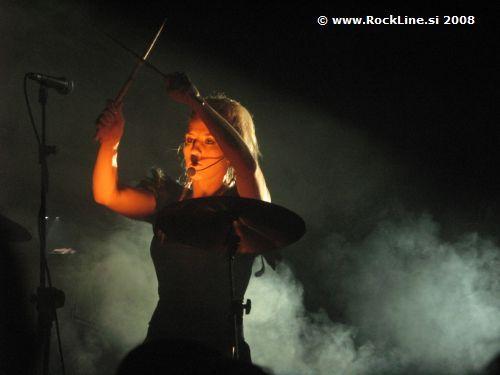
After the Volk presentation was over, the members of the group Make up took the stage for the closing part of the show (that addition is without a doubt Laibach’s best stage move in the last ten years), announcing the band’s older hits with their drum acrobatics, songs like Tanz mit Laibach, Alle gegen alle and the like. After a roughly twenty-minute medley of old favorites, all the players gathered on stage once more and, while their names and other info about the concert project scrolled across the panels, said goodbye without a word.
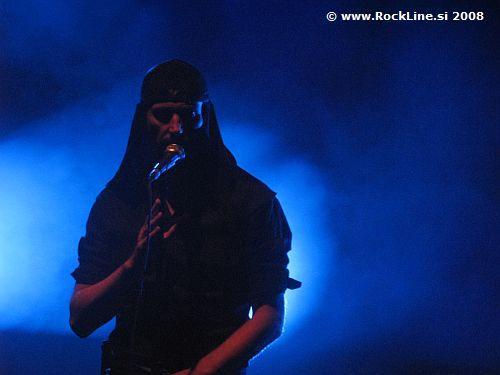
The kind of spectacle Laibach put on at their shows is always a one-of-a-kind experience, at least in our neck of the woods, because it fuses the musical and the visual in the best possible way. Combined with the monumental stillness of the protagonists on stage, which most resembles something like Kraftwerk, this extremely effective mix is surely the best vehicle for getting the messages of the NSK ideology across. And Laibach really is above all an ideology, one that draws its inspiration from the contradictions of today’s world, and whose overall image, finally, also includes a component that is sometimes dominant and sometimes hides away completely behind the mighty visual symbolism, and which we call music.
Text: Tomo Jurca
Photos: Aleš Podbrežnik
Setlist
1. Zdravljica (taped intro)
2. Germania
3. America
4. Anglia
5. Rossiya
6. Francia
7. Italia
8. Espana
9. Yisra’el
10. Turkiye
11. Zhonghua
12. Nippon
13. Slovania
14. NSK
—encore—
15. Tanz mit Laibach
16. Alle gegen Alle
17. Du bist unser
18. Hell : Symmetry
19. Achtung!
20. Das Spiel ist Aus
21. Laibach medley (taped outro)
Photo gallery