Location: Ljubljana / Cankarjev dom / Slovenia
Date: Wednesday, 15.05.2019
Laibach remain an unstoppable fortress of Slovenian musical art. Last year they released a new album reworking the musical from the film “The Sound of Music” and, in their trademark, finely honed cunning of art eclecticism, added yet another hugely successful transformation of art into new art to their body of work, titled »Sound of Music«. For the arrangements they teamed up generously once again with the duo Silence, and at the same time they pinned a distinctly Slovenian note onto the basic premise of the story behind the musical, while on the other side building a brilliant bridge all the way to the heart of Asia and North Korea. A superb synthesis of Kekec and the Kim dynasty, if you will. Unmistakably, uniquely Laibach.
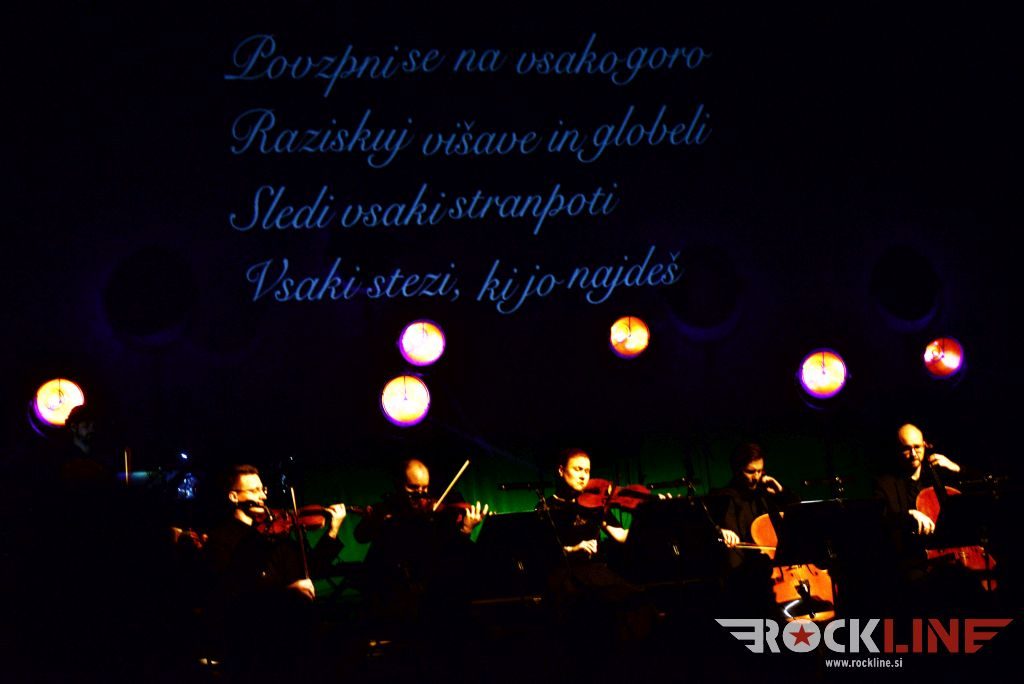
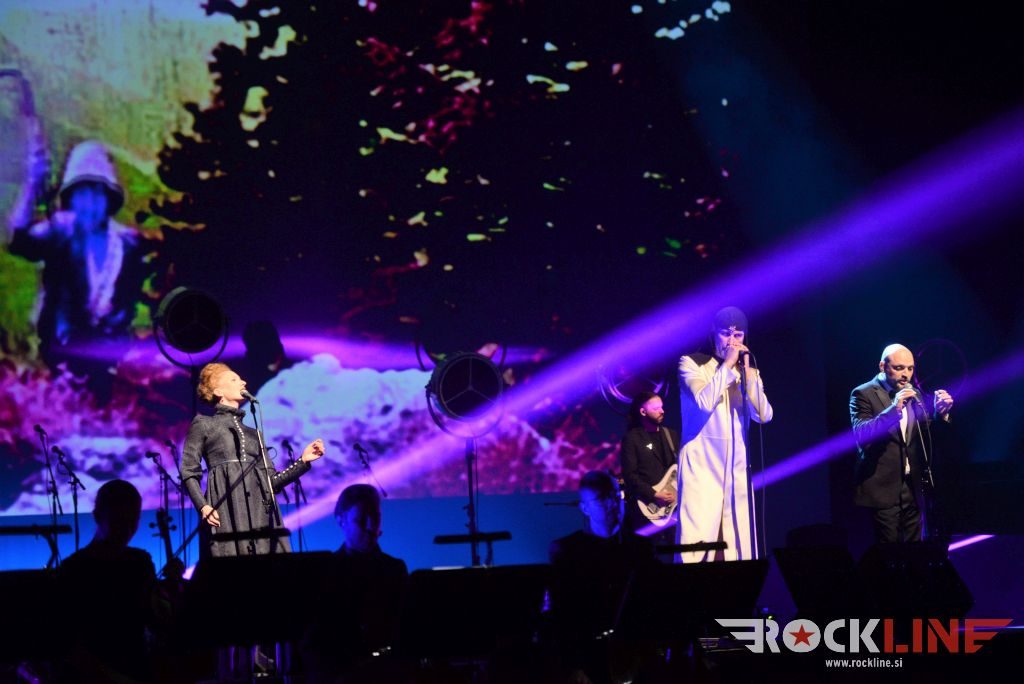
The band presented their new, current musical achievement at Cankarjev Dom, that is, in Ljubljana. Right where they’re at home? Laibach in Laibach. A sold-out Gallus Hall. Packed to the last corner. The stage was dressed in true-blue Laibach scenography, where the sweeping Alpine vistas even left room for a bit of botanizing (edelweiss), which the children’s choir, named Edelweiss, identified with as well. Add to that, as a must, a string sextet, the duo Silence (Boris Benko and Primož Hladnik), vocalist Marina Martensson, then the skilled and refined sound and programming manipulators and keyboard players, namely Jani Novak, Rok Lopatič and Luka Jamnik, plus a fresh injection on drums and guitar from the Litošt crew, Bojan Krhlanko and Vitja Balžalorsky. And of course, Laibach wouldn’t be Laibach without its one and only charismatic, iconic figure, the one-of-a-kind thunderer, let’s just say the thunderous Milan Fras. In his familiar outfit, white this time.
The band, fresh off an extensive spring European tour in support of the latest musical achievement, or chapter, of the group’s art, played the entire album from start to finish. They made sure to upgrade and reinforce it with matching stage scenery of projections incredibly rich in messaging, and with Laibach’s typical stage lighting, where the intimacy of soft glimmers gets riddled by occasional salvos of light beams.
But the opening belonged to yet another figure who completes the mosaic of the Laibach story, Peter Mlakar. In his intro he addressed the audience in a “wonderfully brutal” way. The red thread of the message was love. It’s stronger than everything, imperishable, and it makes us eternal. Only sincere love leads to love. Even after death. It’s boundless, endless energy, it’s new life, new death, a light that only an individual’s sincerity can reach. At a time when we’ve reached the edge of ecological apocalypse and more, the apocalypse of a system that, in its “democratic evil”, is playing the last cards of absurdity just to hold on, it’s an extremely important message. And more. The concert built on it from there. In this new concept Laibach present themselves as “earthly”. Here they look for a primal, immaculate contact with nature, Mother Earth. And the sound of music is love. It’s contact with the depth and eternity of the soul, which liberates without limit and makes us real and strong. Yet through all of this, that familiar face is mirrored alongside, the one that has long since become a parody of itself, and which gives the group its extremely likable, singular, playful character. A musical body that always shakes you up, wakes you up to perfection, reborn, and sets your insides on fire.
Boris Benko, Marina Martensson and Milan Fras took the central positions, with Fras moving about on an additional small platform. The string sextet was up front. Once again the sharp spirit of the unbridled ideas of the duo Silence was clearly present, with Benko once more casting a spell with the incredible penetration of his layered vocal expression. Whether in moments of tenderness, falsetto tricks, or the solemnity of almost operetta-like melodies. The irreplaceable, ever-distinctive, thundering Fras and Martensson with the grace and flexibility of mezzo-soprano purity. An extraordinary triple vocal contrast, then, joined by the children’s choir, adding a fourth contrast. And that synthesis of arrangement framework, which brings under one roof the well-known culture of Laibach’s industrial sound, this time cunningly woven into the arrangement tricks of the duo Silence and a touch of neo-classical structures (the string orchestra). Vitja slipped skillfully in among the strings too, occasionally playing guitar with a violin bow, and also showing he’s very sharp at sound manipulation, as his guitar, in a heavily distorted massive wall of sound, resounded with a unique sonic character. It’s surely a modified guitar and one of a kind among six-string instruments. Krhlanko, who here and there deepened the industrial theatricality of the march of Laibach’s rhythms with cannon-like snare blows, saved his jazz side for the next day, when he took the stage in an entirely different musical story at this year’s edition of the Jazz Cerkno festival. In paving the bridge from the Alps to Korea, Laibach this time didn’t even stop at integrating traditional Korean melos. Add to that all that distinct Slovenian note which Laibach carry within themselves and express through their musical confession, and it’s no secret that the synthesis in the new musical context, that is, the new Laibach, once again fully succeeded.
So across the vast expanse of their artistic vision, Laibach once again fascinated, one more time. In everything. They captivated, enchanted, and carried us away as they built a bridge between West and East. A bridge of peace, reconciliation and acceptance of Earthlings. United us. Where on earth they’ll go next, in the spirit of their own artistic genius and freedom-loving penetration, already stirs the sweetest curiosity.
author: Aleš Podbrežnik
photos: Aleš Podbrežnik