Author: Aleš Podbrežnik
Photos: Aleš Podbrežnik
Location: Plovdiv / City Hall / Plovdiv
Interview date: 24.09.2017
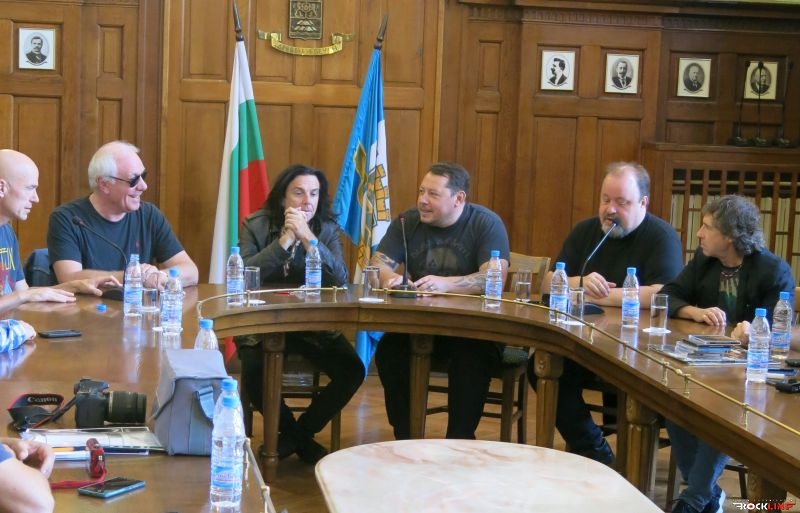
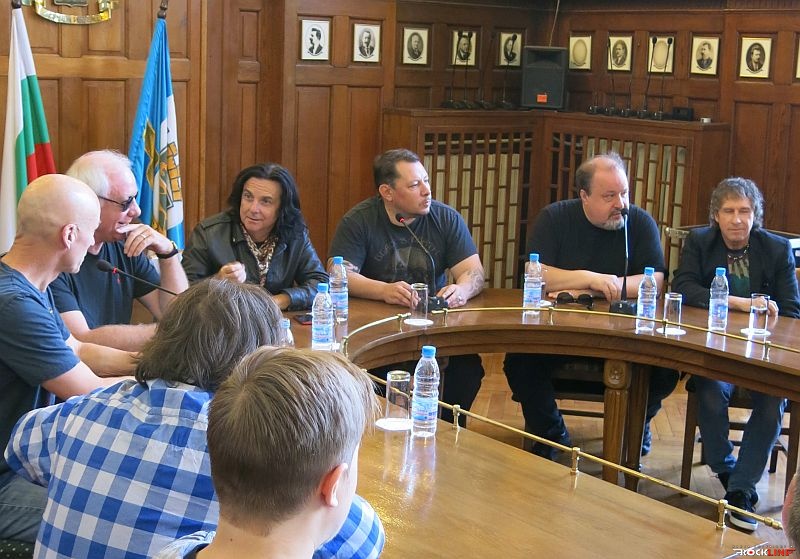
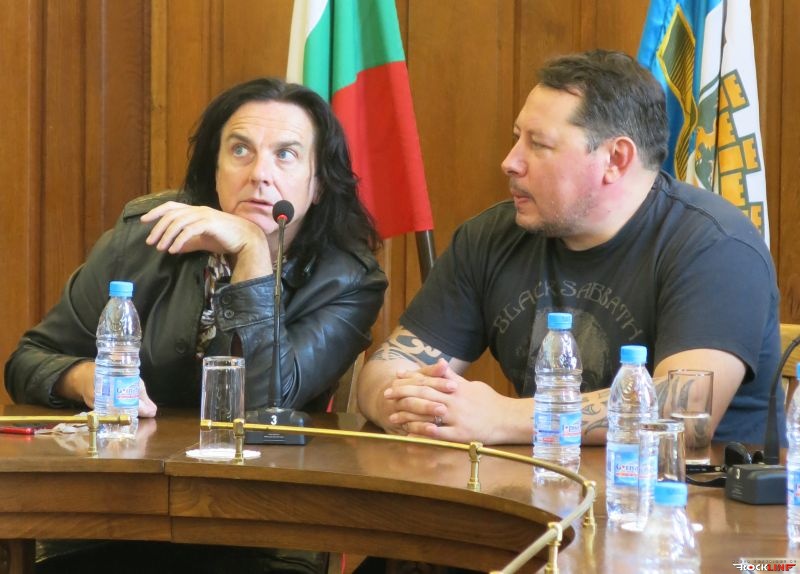
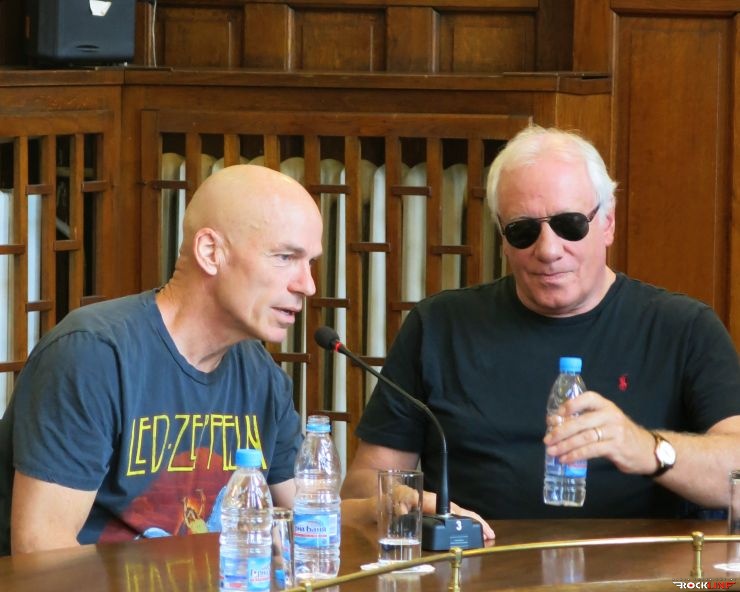
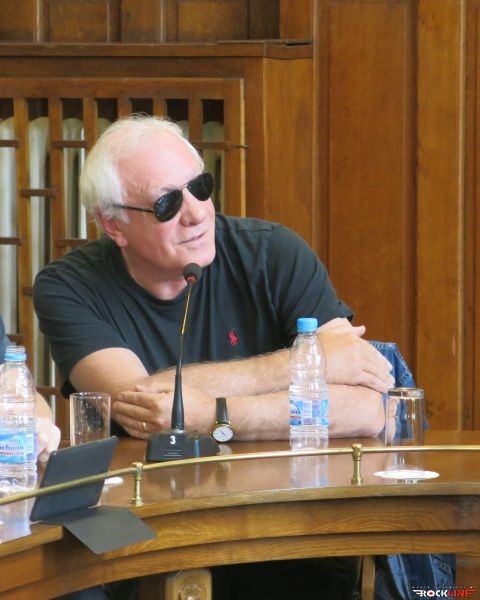
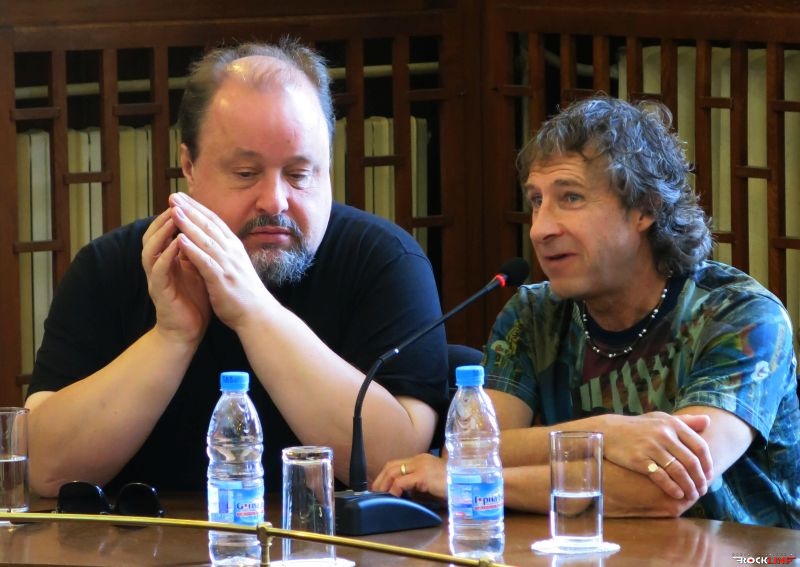
Riding the huge wave of success from the release of “F.E.A.R.” (2016), Marillion’s tour has “stretched” into autumn 2017 after a run of successful summer festival shows. The first stop on this leg is the ancient Roman amphitheater in Plovdiv, Bulgaria. Before the show, though, the band turned up at a press conference in Plovdiv’s City Hall in front of a crowd of curious journalists.
You haven’t made a single lineup change in 28 years, which is almost double the average length of a marriage. What’s the secret to this lineup’s longevity?
Steve Hogarth: Probably forgiveness.
In an interview, Steve Rothery said he expected the year »F.E.A.R. came out, meaning 2016, to be one of the most successful of Marillion’s entire career. Is that true?
Steve Rothery: Times have honestly been wonderful for us since »F.E.A.R.« came out. It got great reviews from both the press and the public, and the current shows, where we’ve been playing songs from the new album, have been hugely successful. That’s why we’re still doing shows focused on presenting the current album. We’ve been out on tour for a second year now. Today’s show here in Plovdiv is actually part of the closing leg of the tour for »F.E.A.R.«, and among other things we’ll be playing two shows in Japan.
Not long ago, four years ago to be exact, you already visited Plovdiv. You were playing with your side project band then. Do you still remember anything from that visit?
Steve Rothery: Of course. As the Steve Rothery Band we played Bulgaria for the very first time, and that show really stuck with me. I remember the crowd’s incredible enthusiasm and the intense feelings, so I’m really happy we’re back. I made a lot of friends in Plovdiv, and the city is especially close to my heart.
Considering how long Marillion’s career has been, you win over different generations of listeners with your music. How do you try to get the youngest generation, say teenagers, interested in what you do?
Steve Hogarth: We don’t try to win them over at all. We’ve never written anything like that, or gone into making anything musical in a calculated way, with the aim of winning over an audience. We know we have lots of fans around the world, and we’re extremely grateful to every one of them for their support. And we respect them a lot. But when we write music and record albums, we really do it only for ourselves. For the five of us. We also never think about whether there’s some kind of music market out there. I believe that the moment an artist becomes aware of the market, they stop being an artist and turn into a factory.
Luckily for us, the audience simply embraces our music, and in a very positive way, so we can all breathe easy, because we really do create strictly for ourselves and start from ourselves when making music.
You were the first band to use the power of the internet for promotion. Do you still see the internet as something positive, and have your feelings about it changed over the years?
Mark Kelly: When we came up with the idea in 2001, we made really good use of what the internet offered at the time. Those were days when we were struggling just to stay on the scene. Days that weren’t exactly rosy for Marillion. Since we were in financial trouble, we took advantage of the internet and started selling our music through it. But today we face the fact that it’s harder and harder to survive by making new music this way. Even though almost anyone can record their music, which is then freely available online, it’s hard to earn anything from it these days. Things are slowly getting better, though, and the future looks a lot brighter, especially in terms of what an artist can do to get their music properly received.
What the internet has done for us that’s good is that it activated all our fans around the world and somehow brought them together, connected them, into a kind of community that Marillion live in too. I’m including social networks here. That doesn’t mean you can sell as many albums today as twenty years ago, but your fan base keeps growing and growing. Marillion have a much bigger number of fans today than we used to. For many years we were just a target for criticism and comparisons from the “mainstream” media. Social networks broadened that critical conversation, and our image in the music world has become far more relevant largely thanks to this phenomenon, in the sense that any music enthusiast digging into our music can build a much clearer, fuller artistic picture of Marillion. Through social networks you get to the relevant information faster than if you had to read about a band only in magazines that specialize in measuring an act’s success by how well its records sell. Those days are over. That’s no longer the real measure of success, and people today have far more chances to get, through social networks, to the essential information about an act they’re interested in, so they can then properly discover the value of its artistry, its work.
Marillion’s career is nearly four decades long and you’ve released 18 studio albums. The question for Ian Mosley goes like this: »Which three albums from the whole Marillion discography would you pick as the most important works in the band’s entire career?
Ian Mosley: Honestly, I don’t have a personal favorite among the Marillion albums. I can only judge by the present moment. Right now I’m really fond of the newest one, »F.E.A.R.« I think this album is, from start to finish, an extremely polished piece of music, a real studio achievement. The best way to test an album is to play it live. If it ignites live and works, then you’ve succeeded. But I don’t have any personal favorites. I can single out some songs from individual albums, like Easter, which has an outstanding arrangement, or somewhat older material, say songs from the »Clutching At Straws« album.
And how would Pete Trewavas answer that question?
Pete Trewavas: If I had to choose, I’d pick »F.E.A.R.«. Mostly because it works so incredibly well as a whole. Second would be »Brave«, which fans also consider one of the most popular Marillion albums. Until recently we honestly had never played this album in full at concerts, but not long ago we played it at the Marillion convention. It turned out great, and the album passed its live test with flying colors. Third, I’d mention »Sounds That Can’t Be Made«, which really is a very strong album too. Right now these albums are, let’s say, my three favorite Marillion albums. But that changes. You can fall in love with an album by, say, playing it live again after many, many years. With the sheer amount of music we’ve made over the years, you actually forget about some songs and albums. Then you run into them again, feel them again, and start enjoying them enormously. Listening and playing.
A lot of people have been wondering for ages when the next Marillion album will come out.
(Everyone laughs)
Steve Rothery: We’re asking ourselves exactly that. I can predict: 2020.
Given the title of the album »F.E.A.R.«, we’re curious what your biggest fears are and how important it is for an artist to express their fears in the music they compose?
Steve Hogarth: Personally, I’m afraid of fear of the unknown. And of course you’re afraid of weirdos in times like these, like Donald Trump and Kim-Jong-un. But if we leave those two aside and I take a swipe at the media, they love to shine a light on things in a way that scares someone to death, and with all that you never find out about the most dangerous thing, which hasn’t even happened yet. If you’re paranoid like me, then you’re afraid of “the unknown” all the time. As for expressing fear in music, say in writing poetry, for someone who writes poetry and lyrics it’s always a very good chance to test all their demons and face them, whatever those demons may be. It can be something you were sure couldn’t be any other way, and then it turns out the opposite; it can be a personal thing, when you’re being wronged; or it can be something you notice in someone else, and then the poetry is about that other person. In all of this, what’s really important and essential is that when writing lyrics you stay honest with yourself first.
Tonight you’ll be playing at a special venue. Have you ever played in a Roman amphitheater before?
Steve Hogarth: We played one of those shows, and not that long ago. In Italy, but I can’t remember which city it was in (luckily the writer of these lines does: Verona, 10.09.2016, author’s note). It was gorgeous. Whenever you play open-air venues, outdoors, it stirs up special feelings and passions. You get carried off into a trance while singing, and then suddenly the moon, just risen, appears in front of you. The feelings are especially intense when you’re playing outdoors, particularly in nice weather. When you’re at a venue like a Roman amphitheater, and that’s where we’ll be playing tonight here in Plovdiv too, you get a sense of timelessness. You realize you’re among 2,000-year-old walls that have been here all along and suddenly come alive, and with them all that ancient culture and the spirit of the past.
Here’s one more question, of a more political nature. What do you think about Brexit? Given the new circumstances, will bands from Great Britain have a harder time getting gigs in Europe than before?
Steve Hogarth: If Europe starts treating Great Britain the way the US does, where they demand work visas and there’s a pile of checks and conditions, then in time we’ll become a band that only plays at the royal court. I condemn Brexit, I think it’s out of place, and I’m against it. Against labels that make people in another country feel they’re different from everyone else or valued differently. In the end we’re all the same. There are no differences between us. Labels are given to us by others. All these obstacles, walls, nationalisms… All of this going on right now is totally absurd, and I think that after all of human history, up to this day, we should have learned plenty of useful lessons by now, so that delusions like these wouldn’t happen anymore.
Photo gallery