Location: Tolmin / Sotočje / Slovenia
Date: 25.08.2017
And then came day two of the first (and historic) edition of the “Motörcity” festival in northern Primorska, on the idyllic spot where the Tolminka and Soča rivers meet. It’s the home of a whole bundle of the most important festival events that happen in Slovenia each year, especially when you weigh up the programming credibility and (above all) the genre consistency of the music on offer.
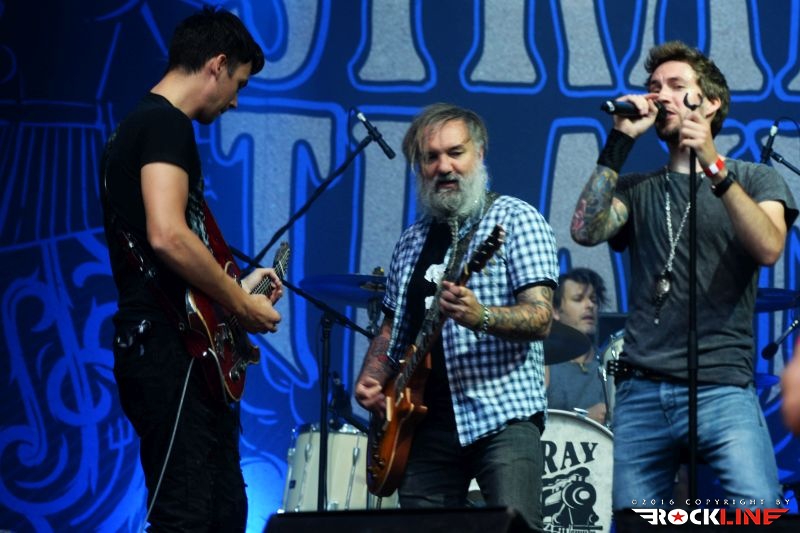
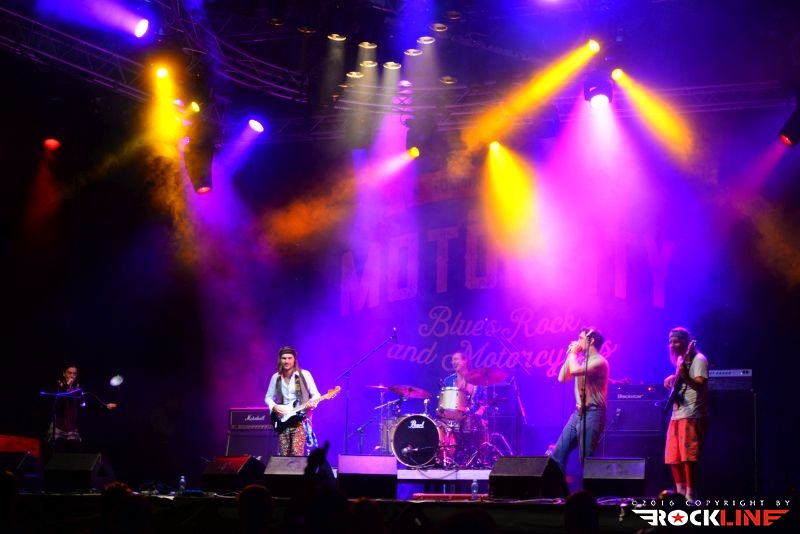
At a quarter to seven in the late afternoon, Slovenian hard rockers Stray Train hit the stage. In a relatively short time together, this band has taken some seriously big strides toward wider recognition, well aware that the Slovenian market is far, far too small for the group’s appetites and vision. Stray Train have broken through on the international scene. The launchpad was their excellent, cunningly polished studio debut “Just ’cause you got the monkey off your back doesn’t mean the circus has left town,” released last year, which carried them to, if I’m not mistaken, a full 40 shows with Blues Pills and Kadavar. The number 40 doesn’t even sound “scary” until you add that those forty shows were played in a measly 43 days. Truly worthy of respect.
I finally got to see the band on a concert stage for the first time, too. The chance had finally come my way. Stray Train are a crew of excellent, seasoned musicians: Luka Lamut (vocals), Jure Golobič (guitar), Boban Milunović (guitar), Niko Jug (bass) and Luka Čadež (drums). They served up that same tightness at the Tolmin show, from the first second to the last. You got the required high level of togetherness, of reading each other, of real day-to-day working chemistry on stage, of eager and skillful use of the stage, and of sheer power, with Luka Lamut naturally taking the initiative with vocals tailor-made for the style the band cultivates. In that sense, we have to admit that bands of Stray Train’s caliber are desperately lacking in Slovenia today. Hard rock is played by a minority here nowadays. Stray Train are a band that lays down razor-sharp, pointed guitar riffs and infuses them with a hefty dose of blues. You can really pick up the influence of legendary seventies rock bands in the style, but Stray Train deliberately give their sound a slightly modern smudge, a “torn-up garage” feel, with the guitars also sounding lower. Luka Lamut impressed with his polished stage show and (especially by Slovenian standards and circumstances) an extremely pleasant, well-crafted “hard rock” voice, with a nice measure of authoritative melodicity plus some rasp, and at moments just the right amount of sophisticated sensitivity. Boban and Jure added excellent, honed soloing in the mid-eight passages, with Jure’s unexpected virtuoso escapades grabbing the initiative and the attention. The tight, grooved-up rhythm section dots the “i” on the perfect credibility and confidence of the band’s stage performances, and the whole thing came with a full bag of heart and commitment. The band played a mix of songs from the current album and from the upcoming new studio album, which is already recorded but announced for official release this December. Sixteen songs, an hour and fifteen minutes of tight and unbelievably infectious show, with the following originals going by: Soulseller, Wish I Could Be Free, Wanderman, Electrified, Heading for the Sun, Days Gone, Green Card Paradise, Emona, Blues From Hell, Blow, My Baby’s Ride, Mad Machine, No Easy, House of Cards, Give It Away and the closing Man or a Stone. So we will definitely be back for more Stray Train shows. And with great joy!
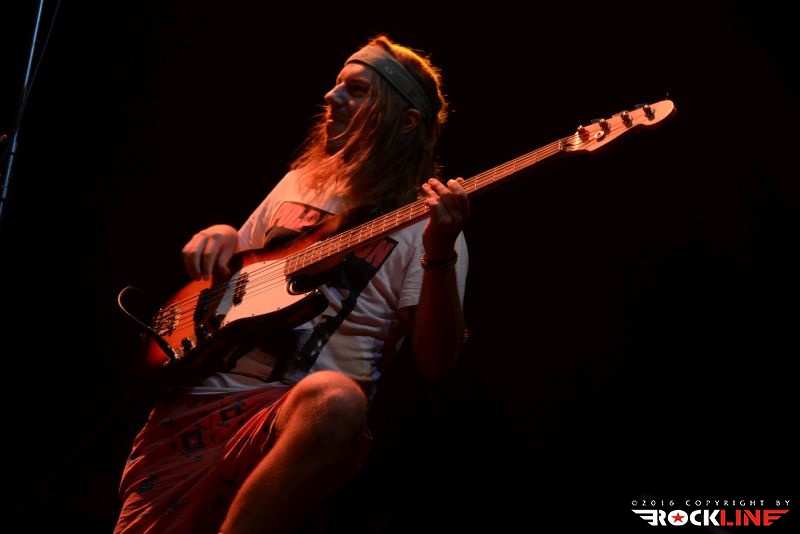
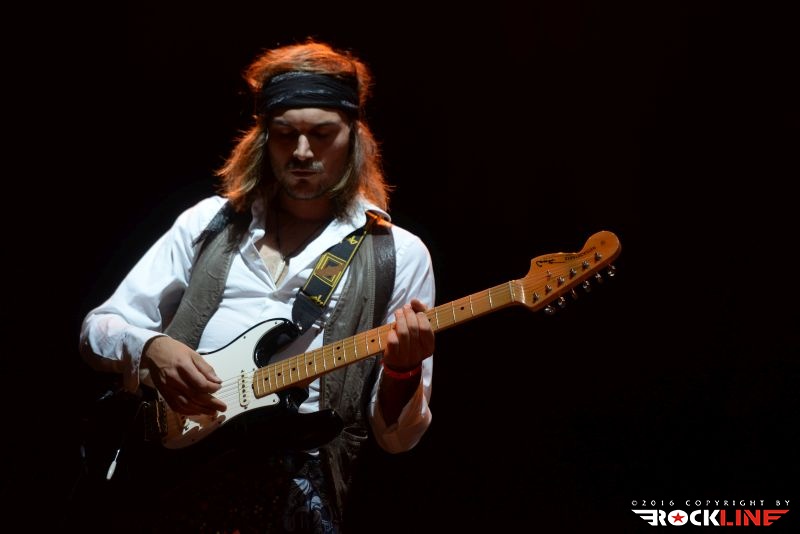
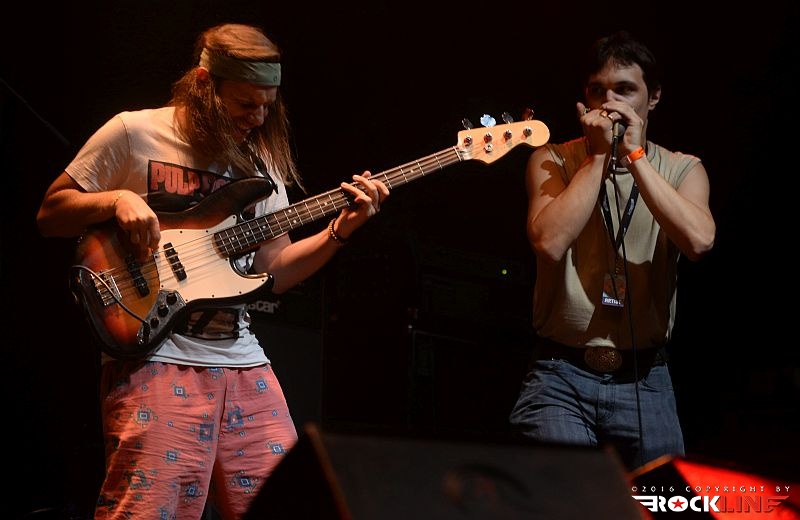
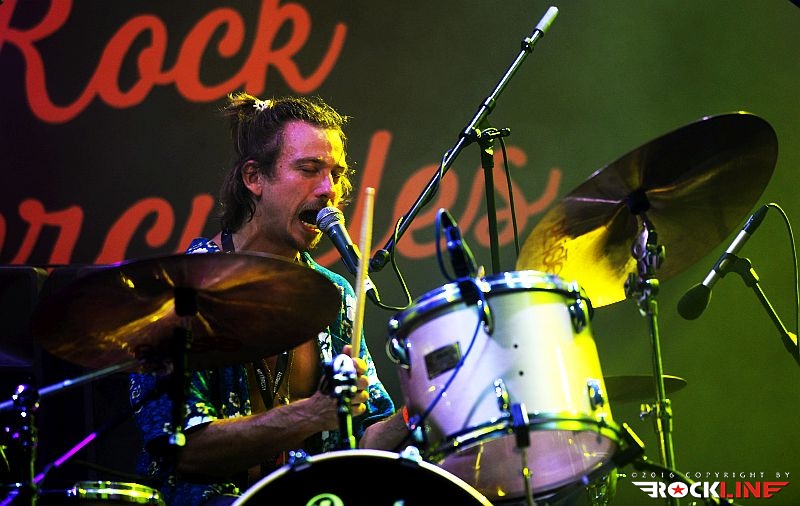
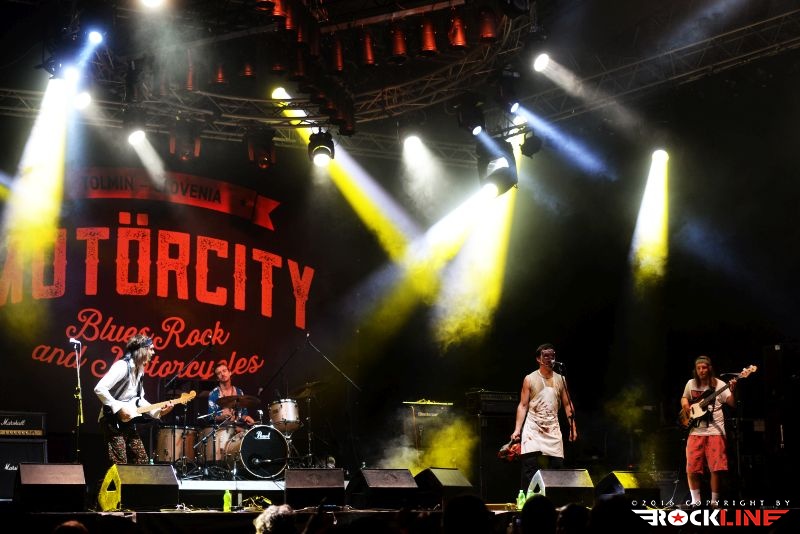
Next up was a wild bunch who, in just under three years, have also made enormous strides toward the focal point of the current music scene. Especially in Slovenia, and they’ve also had their baptism by fire, gathering and swapping experiences on a months-long “wander” across the USA. That’s of course Prismojeni profesorji bluesa, who went on to set the stage on fire with a heaping helping of spaß theater. We’ve written a lot about Prismojeni profesorji bluesa at RockLine, but never enough, because that’s their very essence. They’re a blank sheet of paper. Every time they stand on stage, you don’t know what a concert-goer is in for. They keep delivering their charming axiom with great skill: “Expect the unexpected!” So Julijan politely asked the crowd a few times during the show to bear with the slightly long pauses between songs, which the band needs for on-the-spot advertising, and with the fact that they simply can’t predict where, in all those cosmic improvisations, one of their songs will carry them. Jam # 32 (I hope I caught the number right), an almost obligatory Ragin Mad from the debut album, knotted together in a 20-plus-minute “solo carousel”. For one of the songs, the band called up onto the stage the brave wind player Roberta, who masters playing the funnel, with the homemade prop producing the sound of a trumpet. Roberta had already “teased” the audience with her talent the day before, when Hans Theessink personally called out from the stage that he and Evans needed a saxophone solo. She ran onstage at the band’s explicit invitation, and was otherwise “based” with a little family of Tuscan pizza bakers who had their camp to the left of the plateau (as seen facing the stage). Likable, a bit shy at first, but unbelievably warm-hearted, Roberta used her sense of improvisation to pleasantly and seamlessly spice up one of the band’s songs. The band also presented new material (the song Vigilante) and announced the imminent release of a new studio album. In one of the songs, the excellent harmonica player Miha Erič sat down at the front of the stage and picked up a lap steel guitar, whose soft wail of course blended perfectly with the other building blocks of the sound. The vocals are shared mostly by three of the band (though really all four), but this time Miha Ribarič’s FTP didn’t get its turn. In that respect it’s incredible how well the guys have worked out the split of vocal roles between Miha and Julijan Erič and, especially, the very interesting performer Zlatko Đogić, who you’d swear is the neighbor of some tobacco-chewer holed up in the most remote corner of the American state of Texas. Insane. It can’t be described in words, you have to see it and live it. Zlatko remains an incredible heavyweight combiner of first-class drumming and exceptional vocal delivery. And that’s not all. Prismojeni profesorji bluesa kept building their excellent show until it hit its crescendo right in the closing part. Suddenly Miha Erič leapt onto the stage in a “bloodied” apron, a mask on his head, brandishing a chainsaw high above him. A real little Chainsaw Charlie of the blues. Absolutely Miha’s moment. Theatrically and vocally. The stage became Miha Erič. The band doesn’t lack for mischief, and Prismojeni profesorji bluesa know that such theatrical moments have to be worked into their shows throughout, since that’s the real guarantee of the constant big appeal of their performances. The band subdues the audience in an instant with its incredibly intense stage show. Add to that the contagious likability of all four members of the crew, their exceptional heart and devotion to the magic of music, and it’s so strong and convincing that this element simply opens the door to the heart of every taster of their live shows. The band comes across as down-to-earth as can be. At the Tolmin show, Prismojeni profesorji bluesa proved once again that they’re not just one of the most special and polished stage acts around, one that is still developing by leaps and bounds in those respects, but also a crew with no shortage of boldness in flirting with the “extremes” of cultivating spaß theater itself (Miha and his chainsaw moment). The question hung in the air the whole set: when would Julijan start teasing the crowd with one of Hendrix’s songs? The jangle over muted strings soon announced that he’d decided to play Hendrix’s Voodoo Chile. The closing act of the show confirmed once again that Julijan has studied Hendrix in every detail. Jimi himself should have lived to see it, if he’d been fated to still roam the planet. In performance. In sound. Vocally, as well as in the guitar style and approach itself. Insane. Wild, out of the ordinary, and an experience that takes your breath away. A band you can’t praise enough with just a description in a few sentences of a gig report, and a band that literally brings you to the realization that every time you set about describing them, you get the feeling you’re writing about them for the first time in your life.
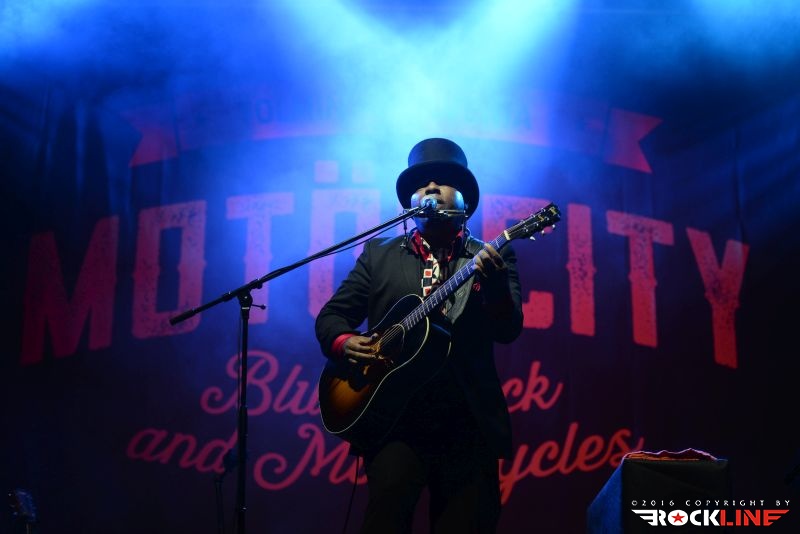
Chris Thomas King was billed as the main draw of the second day of the festival. The Black multi-instrumentalist and highly esteemed musician of the international scene arrived in Tolmin without his backing band. He performed in a “one-man” format. In the first part he mostly played songs where, alongside his vocal delivery, he was accompanied by an acoustic guitar and harmonica. In everything he touched, you could pick out a refined mix of Delta blues, country folk and soul and it was also easy to hear how a female gospel choir would have slotted superbly into King’s tunes. Somewhere in the middle of the show, Chris Thomas King sat down at the piano and showed off all his mastery of that instrument too, while keeping all the compact coherence and red thread of the songs he played. During the concert the crowd thinned out a bit, the man noticed, and he made an effort to rouse the few onlookers to get more actively involved in his set. In his banter he didn’t forget to thoroughly rake over the madness of the new American president’s actions, which is hardly surprising. Let’s leave politics well alone. The man, who in a few days will give birth to his 27th studio project, called “Hotel Voodoo”, is known as the sort of father who united blues with hip-hop (rap), but at this solo show, without a backing band, that didn’t really come through. What did stick in the memory was King’s unique “Oooh-Ooooh” chant, which he used several times to fill the transitions between songs. He also played Hard Time Killing Floor Blues, once performed long ago by Skip James, and I Am A Man of Constant Sorrow (written by Dick Burnett). Both songs are tied to the film “O Brother, Where Art Thou?”, in which Chris Thomas King also appears in one of the acting roles. So that wasn’t missing either. Soulful, with strong emotions, vocally relived and one of a kind. Although King put on a really beautiful show, it turned out that, solo, he was simply too tough a nut for the audience. So there were fewer people in front of the stage than a performer of his caliber deserves. Let’s hope the man comes back. Next time with his band.
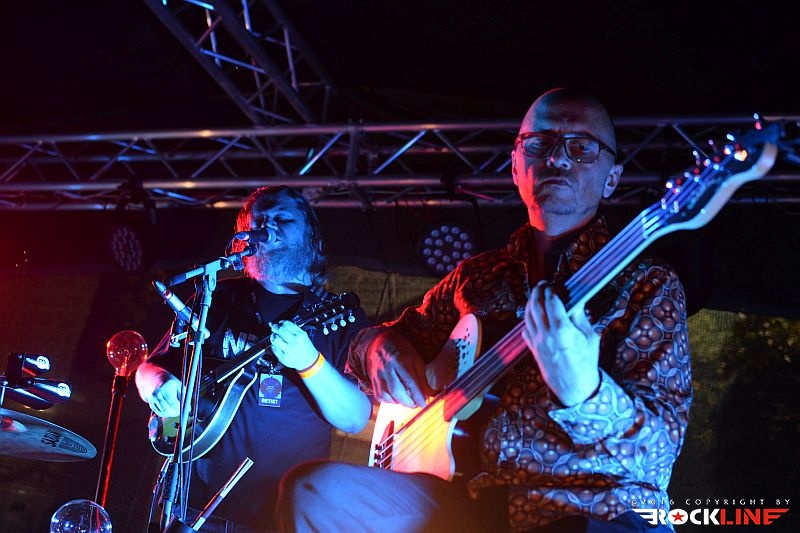
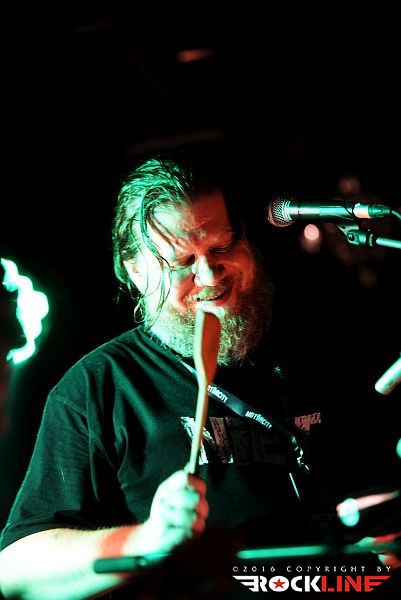
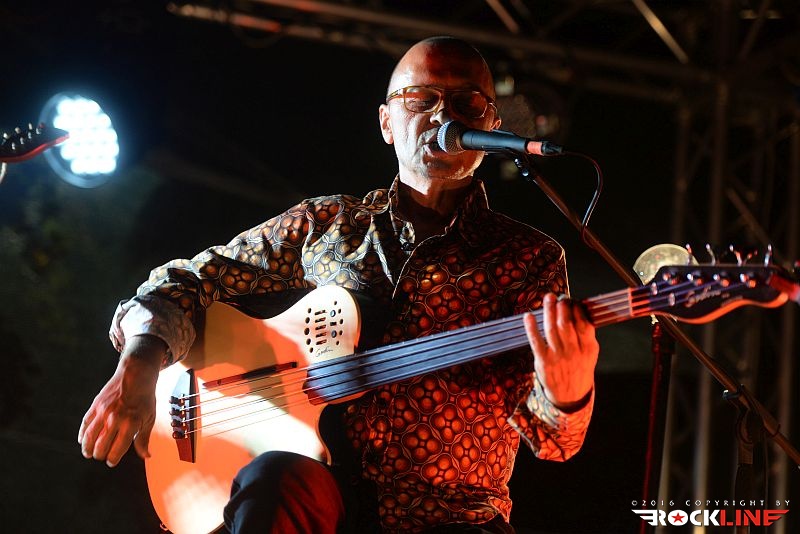
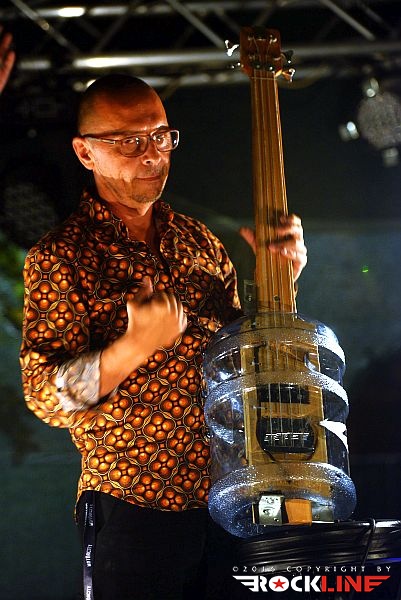
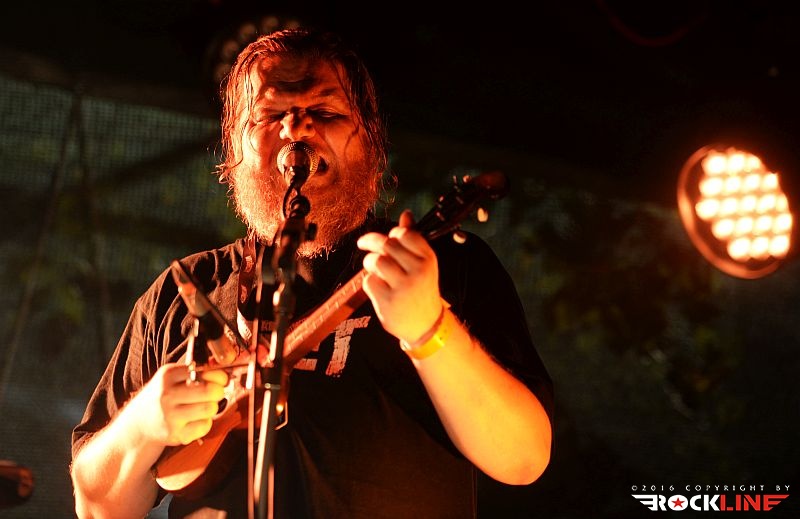
Even though the second day’s program on the “B.B. King” stage had already wrapped up, the music wasn’t over yet. Right at the confluence of the Tolminka and Soča, down on the riverbank, Slovenian art rockers Dan D announced their show in the “Tiho” (“Quiet”) format. Intimate and quiet, in other words. The Tiho format means a complete restructuring of the arrangements, with which Dan D touched on some of the most prominent and recognizable songs of their rich catalog (hits included). To that end the band built homemade, that is “house” instruments and, alongside other “exotic” instruments, also brought in some hugely fun and interesting handmade inventions, the sort born in the imagination of a musical artist. There were noticeably fewer strung-up bottles this time than in 2012 and 2013, when the Tiho tour was in full bloom (the one from Radenska, from back when it was still a Slovenian company, was a surprise). Obra left his tuba at home this time, and in Za naju punca it was replaced by him playing a comb. That means Dan D take on a concert in the Tiho format today only as an exception, at the promoter’s request or when there’s a demonstrated bigger interest in something like that. Even so, this get-together with the band brought nothing less than great concert enjoyment for the assembled connoisseurs. Not only did Dan D show once again how this well-tuned quintet is still united and bound together by exceptional camaraderie that has held the band together through the years, but it was also a show of unbelievably cheerful and fun mood, which showed off this experienced band’s excellent form on the day. The intimate atmosphere was also boosted by special stage lighting, with bulbs set about a meter above the ground, which the lighting crew could keep adjusting for brightness. Tomislav Jovanović “Tokac” on bisernica and mandolin, Marko Turk “Tučo” on ukulele, bisernica and mandolin, Boštjan Grubar on melodica, bells and vocoder, Nikola Sekulović on a fretless semi-acoustic bass and Dušan Obradinović “Obra” on cajón, congas, tarabuka, cymbals and comb, also made use of an extensive arsenal of props that belong in the standard kitchen kit. Cheeky, playful, sparkling and as always. With a heaping helping of positive vibes and fun. People felt it instantly, and the energy of the back-and-forth between crowd and band was incredibly tight. Dan D reworked the songs this way. Some so strongly that, compared to the original, you could barely work them out. Rhythmically too, with the song Čas, for instance, grabbing attention, set to a salsa rhythm. And also in terms of the melody itself, with the song Tiho, for instance, at moments pulling toward “arabesques” in its melos. In short. Those who happened to miss the “Tiho” tour definitely made up for lost time at the confluence this time. The extremely cheerful Tokac also kept the good energy going the whole way. At the start he asked if anyone had a good joint on hand, and later during the gig he did get one, not forgetting to warmly thank the girl in the crowd who gave it to him. Homegrown is homegrown. You can’t get better stuff. We all know that. Those are the facts.
Dan D played the following repertoire, in this order: San San, Počasi, Rekli so, Plešeš, Pozitivne misli, Polna Luna, Kozlam, Moj problem, Kamn, Voda, Love Song, Čas, Tiho, Tvoje je vse, Daj mi daj, Jutranja, Za naju punca.
Bringing Dan D into the festival grounds proved a very wise move, stretching the revelry into the night, and the drink vendors consequently sold a few more beers and cocktails. And the ambience was top-notch for the kind of intimate sophistication that the “Tiho” format brings. Gnarled willows, gray alders, a big ash tree bowing to the confluence of the two rivers and nodding a greeting to both, wisps of mist rising over the water and luring you into a mysterious, charming mysticism wrapped in the glitter of young-moon rays. And music. Music, music. Everywhere. Quietly, Saturday arrived, and with it the third day of the festival.
author: Aleš Podbrežnik
photos: Aleš Podbrežnik