Author: Sandi Sadar Šoba
Location: Kino Šiška, Ljubljana
Interview date: 03.11.2009
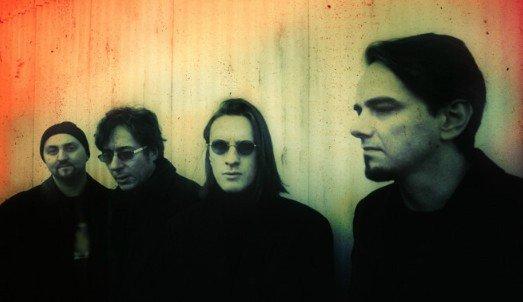
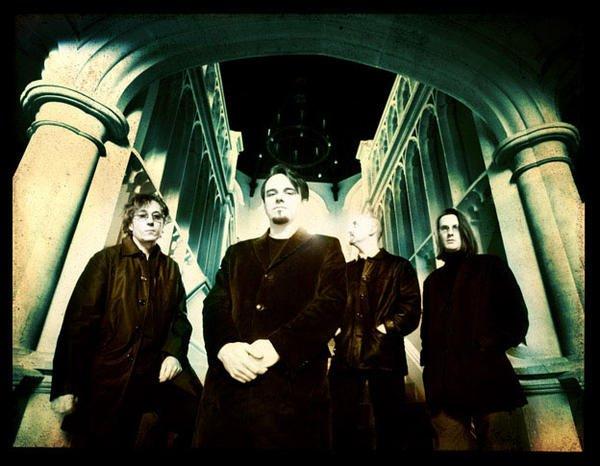
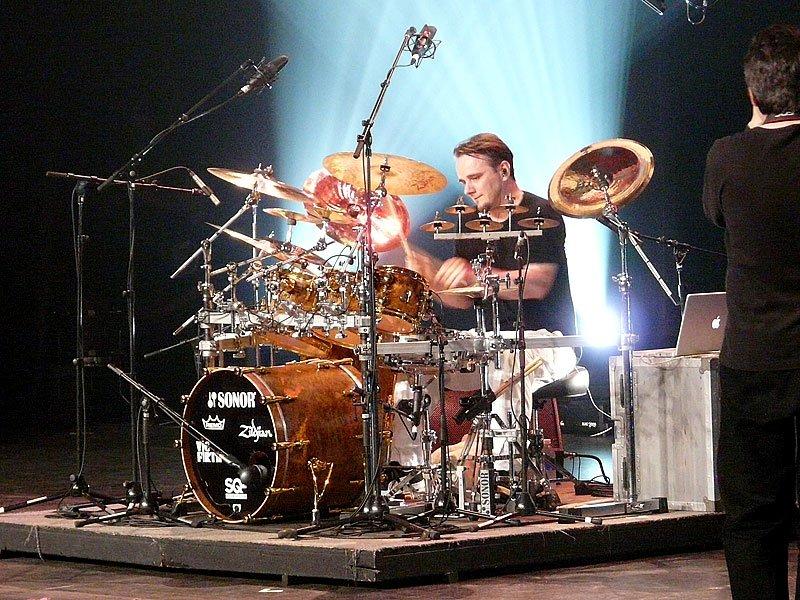
This November was marked by shades of prog. Part of the fan of prestigious names filling halls in Ljubljana are Porcupine Tree, the British progressive wizards who, wrapped in veils of mystery, are in the view of critics, listeners and an ever-growing army of fans the conceptual high point of RoadRunner, the label they come from. The backdrop for this round of musical pampering was the Kino Šiška hall in Ljubljana, and before the show we sat down at a shared table in a nearby hotel with the multi-award-winning drummer and rhythmic heart of the band, Gavin Harrison. Gavin is a calm character with a rich vocabulary, a gentle personality with a clear vision and plenty of experience, having been forged in numerous bands like Incognito, Blackfield, BJ Cole, worked with names like Eros Ramazzotti, Iggy pop and with King Crimson, and is currently the hot name in Porcupine Tree, with whom he co-created the epic part of the catalog that made the eminences of modern music.
RH: Greetings to Slovenia! We consider it not just a great honor but an immense pleasure to finally host you here after years of waiting.
Gavin Harrison: Thanks. I’m happy too, and I can speak for the whole of Porcupine Tree when I say we’re glad to finally be in your beautiful country, where we get to present our latest creations. You’ve got a lovely country, it’s just that the weather has spoiled our sightseeing in Ljubljana a bit, but oh well. (laughs)
RH: The Slovenian audience knows you mostly from catching the odd live show in our neighborhood, and even though you’re not exactly all over radio and TV, you’re a band whose fanbase keeps growing. Tell us, what are you going to serve us over the next four hours or so?
Gavin Harrison: The concept we’ve set for this tour is actually an in-depth presentation of our latest album, The Incident, so the first part of the show is built around playing the whole 55-minute record front to back – without any real breaks. Then there’s a pause so both you and we can catch our breath, and after that comes the second part, where we play tracks from a few recent albums, like Deadwing, Fear Of Tha Blank Planet and In Absentia, and we might throw in a surprise or two from the older part of the Porcupine Tree catalog, including the period before I joined the band.
RH: Lightbulb Sun or Stupid Dream?
Gavin Harrison: Who knows? You’ll find out soon enough.
RH: Since you just mentioned The Incident. Fear Of The Blank Planet was already conceived as a concept album lyrically, so the question is what the underlying concept was this time. The concept is kind of hidden, and the whole thing doesn’t seem to rest on a single idea.
Gavin: True. We’ve all grown up a bit in the meantime, gotten older, filled the empty pages of our lives with experiences and memories of certain events that marked us for better or worse. From births to deaths, accidents, and at the same time Steven (Wilson, founder, leader and singer of Porcupine Tree – editor’s note) decided to set the lyrics in somewhat more subtle spheres this time, where you can smoothly blend, say, stories about religious cults, “incidents” in the sense of media reports on catastrophes, where numbers are remembered rather than names and people are depersonalized, just an interesting item or news story, and the standards of impersonal, alienated relationships between people in general. Add the personal bits of our stories and especially his perception and feelings, and you get the picture. Serious, satirical, meaningful and above all full of music …
RH: What was it like working on the record this time? Given that Steven is the one who lays the foundations and writes and composes most of it – how much room is actually left for your group experimenting and adding your own musical engravings?
Gavin: Steven put the whole thing together and came with a finished story and a thread, which he handed to us as a rough recording with lyrics. The lyrics are entirely his territory and that’s how it should be, since it’s easier for him to identify with them, and each of us followed the idea and added our own pieces to the mosaic. Personally, I’m a man of inspiration, because I can hardly follow the imperative of repeating certain rhythmic forms perfectly. I let the rhythm breathe and follow the flow of the music, with the inner rhythm as the driving force, and in my opinion that’s the only natural way of composing music. It used to be that we had to play the whole thing together a thousand times, but these days Pro Tools make the work easier, at least as far as “homework” goes, and things are easier to remember. It’s easier when we have a certain direction and directive, a musical or conceptual signpost for where to go, but otherwise most of what you hear is a matter of mutual synergy. The group jams were a good foundation, but most of the material was more experimenting that you don’t hear on the album, because it didn’t fit the context. The ambient of emotions is the field we move in. The playing with time and different approaches to feeling time are a matter of chance and naturalness. We create rhythmic illusions, and speaking for myself, I’ve always loved rhythmic oddities, if I can put it that way. What matters is that they’re natural and don’t disturb the rhythmic balance of the music, and that the final studio product is a thought-out combination of the basic idea, aired out with our contribution, that strives to move forward, into musical and sonic evolution. Into development, if I can put it that way. I hope we’ve pulled it off.
RH: The fact is that your albums keep building on each other and that every now and then you find new musical shades, which makes it fair to say your studio records have identities of their own and are by no means plain craftsman’s products.
Gavin: Porcupine Tree could be described with plenty of labels. We’re prog, psychedelia, progressive rock, metal, a fusion of different influences and I don’t know what else, as I read in the media. These are labels that could stake out our territory of what’s allowed and what isn’t rather stiffly. We take the freedom to express our own states expressively and put our “statement” out there so that, despite the different musical influences, we can all identify with what’s being played. Each of us has a different musical pedigree and listens to music that challenges us. Sonic evolution is then the sum of all the elements. There are no borders and no limits. Progressive can be bloated and overdone, though. Genre tags are labels that make it hard to judge qualitatively whether music is good or not. You have to listen to the music, and that’s all that matters. I’m a jazz drummer myself, as I’ve pointed out many times. Porcupine Tree were a completely different band with a completely different sound before I came along, and until 2001, the year before I joined, I didn’t bother with how to pigeonhole them. Already in my youth I figured out that prog is a pretty hefty and demanding mouthful, but challenges are always healthy and thank God I picked up discipline early on. Lots of rhythm changes and different passages demand digging deep, and I did my homework the way you should – with a lot of hard work and effort I was already “blending” my jazz approach with a rocker approach in my youth, and progressiveness demands the best of both directions. As for the Porcupine Tree initiation: I knew Richard Barbieri, who told me they were looking for a drummer, so I agreed to collaborate. I don’t like fumbling in the dark, and then all of a sudden I was in the progressive waters of Porcupine Tree. I actually got to know them quite gradually, but it’s true that since In Absentia the sound has been getting heavier and more and more people coming from the metal waters can identify with what we create. I think the RoadRunner label, which we’re part of, helped with that too. It’s true that metal is exactly the area where I’ve noticed a lot more daring, technicality and progress lately than in other spectrums of music making. Every member shapes the whole and offers their own contribution, and the band sounds different with different members, which also shaped our development and our synergy in the direction we’ve gone.
RH: And what from that metal side is the stuff you can identify with?
Gavin: Hmmm … More than metal, I was marked by punk, which I actually didn’t even like, and then in 1986 I had the honor of working with Iggy Pop. Besides the technical side and the rhythmic variety modern drummers play with, there’s the widening of possibilities to a previously unimaginable degree. For example, I recently bought the album Destroy Erase Improve by Messhugah, which completely surprised me and glued me to my chair listening. Thomas Haake is an incredible drummer and the band is a high point of our time. I’m thrilled by the double bass and the dynamics they dare to put in the music. It’s metal brilliance and at the same time the music is written the way it should be. I played the record to my jazz friends and they were totally blown away too – in a positive sense, of course. The next record that floored me is by Fredrik Thordendal, Fredrik Thordendal’s Special Defects. I’d describe it most easily as perfect experimental jazz metal. An incredible contribution to music, going beyond the narrow confines of a single genre, also came from bands like Radiohead and Tool, with whom the prog revival arrived, and King Crimson, to whom I contributed musically myself a few years back … Otherwise, if I’m up to date, on my music player I’ve got artists like XTC Nonsuch, Yutaka, Ry Cooder, The Tubes and many others. The names are countless.
RH: What about your personal influences that shaped you as a drummer?
Gavin: Primarily it was my father, whom I followed around as a kid at his work, including at the BBC. My father was the first inspiration. He taught me a sense of music that was natural, and a passion for making music flared up in me. My father was a professional musician, a trumpeter, and my brother and I tried to learn that too, but I have huge respect for the instrument, because it’s a hard instrument to play. If I weren’t a drummer, I’d reach for the guitar or the trumpet, piano or whatever else, like he did. Like I said, I tried the trumpet too, but I soon figured out it wasn’t for me. When I sit down behind a drum kit and make music, I melt into it and express myself completely. Already as a kid, at six, I figured out I had a natural sense for coordinating movements. Back then I learned to dance, and besides dancing I was also pretty good at controlling a soccer ball, and it went well because I have a natural feel for movement and the harmony of movements, so drums were the natural choice. Very early on I decided my path in life was to become a professional drummer, and thank God that goal has been realized and fulfilled. Besides my father and his jazz record collection, which was a real treasure trove of sounds and music and in which I could dive deep into the work of Miles Davis. Soon I found myself at lessons feeling the baton of Joe Hudson, then the tutor role passed to Dave Cuttler. After Jeff Porcaro there are also Steve Gadd and Billy Cobham. I’ve actually always gravitated more toward names from the American music scene. Like I already stressed: music can only be good or bad. There’s good jazz and bad jazz. It’s the same with metal. If I feel like using elements of metal in a jazz piece, I’ll do it, and I follow that inverse relationship the other way around too, in the name of creativity and creative freedom. Right now my inspiration is working with the musician 05ric, with whom we’ve already made a second album, and it sounds like a means of personal freedom, unpretentiousness …
RH: Since you mention him – can you tell us more about that collaboration and how it came about? 05ric is a complete unknown over here.
Gavin: Absolutely! 05ric is one of the most creative musicians I’ve had the chance and honor to work with, and there’ve been quite a few on that list. I met him on Myspace, which I don’t usually do or practice, but what drew me in was his free-spirited view of the concept of music and the fact that the guy is a phenomenal multi-instrumentalist. A lucky coincidence that I was drawn to visit his Myspace page, where, listening to the music, I realized the material was more than promising. Some of my friends had known him before, and after some chats and a meeting I got together with him. Besides keyboards, bass and guitar, he can also sit behind the drums and, I have to admit, does a pretty solid job. But since he wanted a deeper, more refined relationship and a focus on individual sides of the music, after a bit of persuading I sat behind the drums and gladly contributed my share. I’m not good at writing music, but I had bits of musical ideas that I didn’t know how to use anywhere else. And that’s how the foundation of the album Drop came about, followed now by the album Circles, which features Robert Fripp, Dave Stewart and Gary Sanctuary along with 05ric and me, plus numerous guests – quite a lot of them, but sadly we don’t have much time … Groove and thick layers of bass are up front, and the language is universal – music – with plenty of gray areas and a resistance to being classified as black or white. Much better than talking and writing about it would be to listen to what’s on offer and get to know it intimately – by listening (laughs).
RH: I absolutely agree. Since time is already nudging us, we should finish by touching on what you’ve achieved and what you still want. You’ve accomplished a lot already – what’s still on your to-do and wish list for the future?
Gavin: Now we’ve released the record and it’s up to us to present it properly and thoroughly to the masses. After a pretty intense European tour that runs until December, then comes India, then Australia, and after Australia the US, I think, and next year, which will be festival-heavy and full of grind. We’re hoping for proper promotion of the album and, I hope, a fan or two more, and after the tour comes the routine of writing and putting together a new record. That’s our commitment and our iron-clad plan, which we have no intention of straying from for now.
RH: When can we expect the next release, and has anything been done toward it yet? Any ideas? Can you drop a hint?
Gavin: The sketches of the future are already drawn, and I think the record we make will consistently follow our inner inertia of that moment when we sit down at the recording consoles and start working. There’s already a batch of lyrics, which Steven always writes, but let that be just an invitation to impatiently await the next record, which isn’t to be expected before 2011. All in its own time. Our natural cycle needs two years, and it’ll be the same this time. There’s no need to rush and I think patience will pay off.
RH: Thanks for your precious time and the chat.
Gavin: Don’t mention it, and once again: greetings to all the readers of your magazine and don’t forget – music is all that matters! Everything else is trivia, media gossip and needless ballast!
Photo Gallery