It was the first year of the new millennium when Iron Maiden dropped their comeback album with the re-recruited “deserter” Bruce Dickinson. It was an album of salvation, an album of relief, an album that landed at the right time in the right place, and we wrote at length about it on its 20th anniversary HERE. The screamer of Judas Priest also returned to the classic realms of metal, still carelessly enjoying his artistic freedom at the time. Rob Halford, with the album “Resurrection”. It was effectively the “lost” successor to the cult “Painkiller”, something Judas Priest could never get close to again. That holds true even after Halford’s return to the band. Then there were releases from bands that came from other genre backgrounds, yet you could still feel in the music that they’d caught the power metal bug. Take Finland’s Children of Bodom with “Follow the Reaper”, or “Clayman” by Sweden’s In Flames (melodic death metallers back then). The whole thing touched the progressive metal crowd too. Symphony X confirmed it with “V: The New Mithology Suite” released that year, and so did Ayreon from the Netherlands with “Universal Migrator pt. II The Flight of Migrator”, and they never again came close to flirting with metal on their progressive rock path. Even the fifth studio album from Seattle’s speed/thrash metal gloomsters Nevermore, the cult “Dead Heart In A Dead Wolrd”, which fans still rank highest among their records today, carried some of these traces. Former Iron Maiden singer Blaze Bayley released his debut solo album “Sillicon Messiah” that year, and the metal community still holds it in high regard as one of his best achievements. And finally, even though this one isn’t pure-blooded metal, it fits the context, with a merciless sneer. Mortörhead, with the album “We Are Motörhead”, thoroughly fixed the “blown fuse” impression left by the predecessor “Snake Bite Love” (1999).
We mustn’t forget another musician who also released his solo debut that year: vocalist Rob Rock with “Rage of Creation”. Until then Rob was known for working with Axel Rudi Pell, Chris Impellitteri, and the M.A.R.S. project (MacAlpine, Aldridge, Rock, Sarzo), but in 2000 his debut delivered an exceptionally beautiful and polished studio album, with lyrics colored by Christian themes and plenty of power metal elements, and Roy Z played a key role behind the production desk. Still, amid all these triumphs of old-school metal resurrection, some bands were making questionable decisions at the time, and those did them more harm than good. Among them were the legendary Hamburg metallers Running Wild, who swapped in a computer going by the name Angelo Sasso as their permanent drummer, spoiling some very good ideas that watered down into the mediocrity of the album “Victory” in January 2000.
So the focus at the time landed once again on chasing greater musical payoff, with inspiration drawn from the legacy of early-eighties metal. A phalanx of new bands led the charge, most of them overwhelmingly power metal, if not downright pure power metal. That included bands that had come up in the eighties but radically changed their style through the nineties, as well as those that only formed in the nineties. The latter in particular used their records to rediscover the musical principle in heavy metal and focused on clean, melodic vocals, which the labels of the day seized on as a trend. Among them was also a band that released a new studio album in 2000 and hadn’t changed much over time. Not even after two decades of activity. Not even after lineup changes, not much at all. It formed in the eighties and actually became the most important force in shaping the term power metal. Helloween.
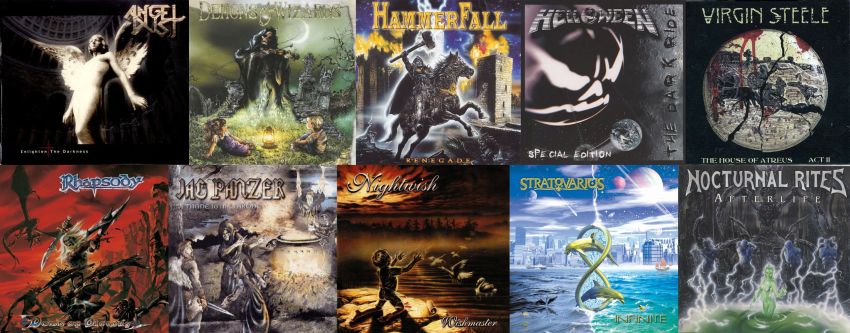
So 2000 served up a fresh crop of exceptionally good, high-quality releases in the then red-hot power metal genre. From the albums that came out that year, we picked ten that stand out even more in terms of quality, and the memory of them is all the sweeter on the 20th anniversary of their official release.
10. Virgin Steele: »The House of Athreus Act II.«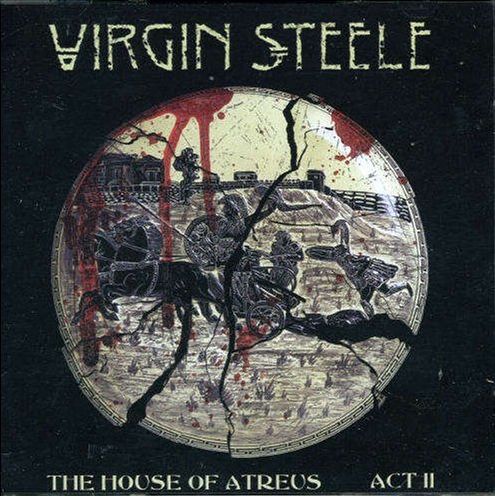
Virgin Steele are an old American heavy metal outfit formed back in 1981. Despite a turbulent career and a pile of excellent albums, the band never managed to grab the attention of the wider metal masses. Especially through the series of albums released from 1995 onward, the band found artistic coherence and kept growing. It peaked in 1999 with the first part of the two-album saga about the Atreides. Just a year later, the band’s boss and chief visionary David DeFeis put out the second part of the Greek mythological tale. The second part of the concept is also a very high-quality effort, but on the other hand it already shows a slight lack of fresh ideas, which results in a less consistent record than its predecessor. Perhaps DeFeis set the whole thing up as overly ambitious. The second part was so musically sprawling that it came out as a double CD, which, while listening, deepens the feeling that the album’s peaks are simply scattered and that the album as a whole doesn’t ignite as fiercely as the first part of the conceptual story. Still, David DeFeis triumphantly brought his vision of a very demanding musical setting of the concept to fruition with the last in the series of albums from the classic Virgin Steele era, one that has to adorn the record collection of every fan of this unique brand of pagan-savage power metal. Sadly, the band never returned to its old glory after this album, as it couldn’t reach such a high level of songwriting again.
9. HammerFall: »Renegade«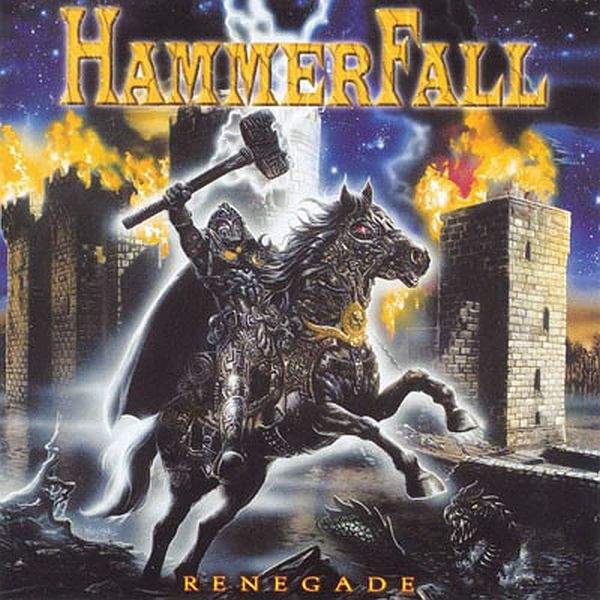
“Renegade” was the third album from a band that is in a way to blame for the global euphoria called power metal sweeping the metal world at the time. Let’s say instead that HammerFall were the chosen standard-bearers for Nuclear Blast Records in that. On “Renegade”, HammerFall “sold” the musical formula of their debut “Glory to the Brave” (1997) and its follow-up “Legacy of Kings” (1998) for a third time, very successfully and effectively. At a time when power metal was reaching its peak, that was entirely enough. The euphoria was huge and the fans were more than happy with the band’s new record. Still, “Renegade” shows that by this point HammerFall had said everything they had to say. From here on they mostly recycled their formula, with more or less success. But “Renegade” is still, through and through, an orthodox power metal beast with some very good and striking hooks, like in the title track, the predatory Way of the Warrior, and the opening detonator Templars of Steel. The recycling of hooks worked flawlessly, and in their classic era HammerFall diligently struck the iron while it was white-hot.
8. Rhapsody: »Dawn of Victory«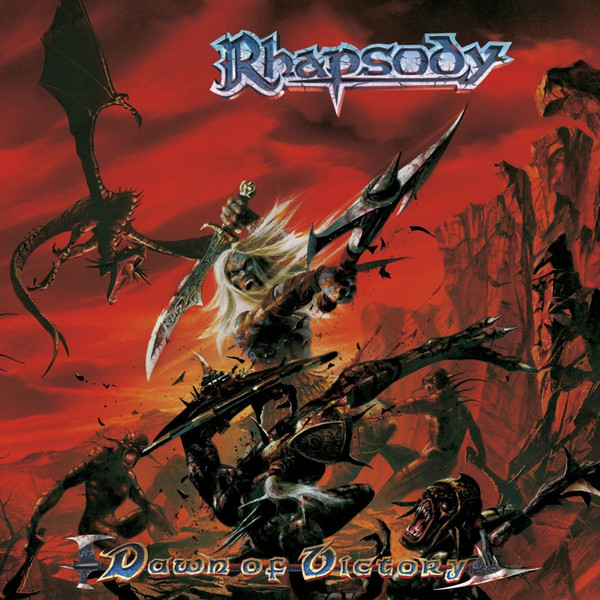
In their classic days, before the confusion over names and multiple incarnations and lineups, even though guitarist Luca Turilli released two separate albums right around then, Rhapsody were simply an unstoppable machine at what they did. Although the debut “Legendary Tales” and its successor “Symphony of Enchanted Lands” are still spotless classics of what the band’s members called “symphonic epic holywood metal”, “Dawn of Victory”, much like HammerFall’s “Renegade”, already showed signs of cloning syndrome at the time. Rhapsody simply cooked up another album very quickly, one that follows the winning formula of both predecessors down to the last detail. Very quickly, because it paid off and power metal was in demand. A bestially and baroquely decorated power metal album where the heads of goblins and dragons and other fantasy-world nasties roll again and blood sprays and flows in rivers, it once more shamelessly went for the maximum possible payoff of pomp and bombast. Theatrical. Crossed with a top-notch dose of neoclassicism, with the Turilli – Staropoli duo proving a gorgeous songwriting tandem. It was a time when everything worked for the Trieste power metal machine, and “Dawn of Victory”, even if Rhapsody are already repeating themselves a little on it, ranks among the band’s best studio achievements.
7. Nocturnal Rites: “Afterlife”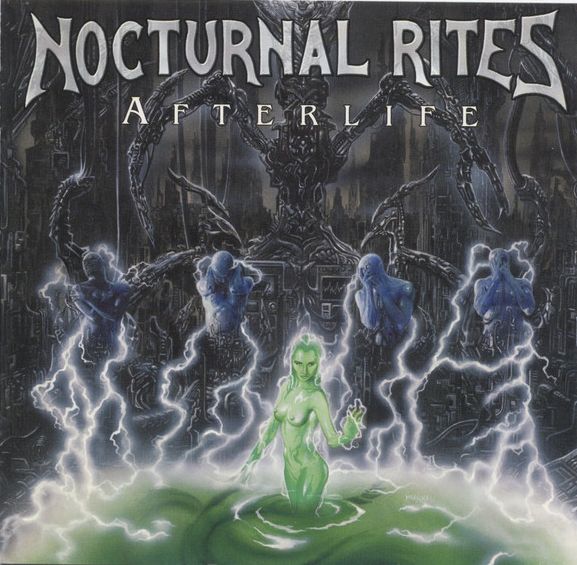
In 1991, when Nocturnal Rites were still playing death metal under the name Necronomic, they never dreamed that just three years later they’d be writing power metal albums. The fourth of them, “Afterlife”, released in 2000, carries that title because the band went through a little suicide and rebirth at the time. A “life after life” title, which continued with Johnny Lindqvist joining the band on vocals. He brought a fresh creative wind into the group. Just considering that he was a considerably better vocalist than his predecessor Anders Zackrisson. That let the band draw on a much broader arsenal of ideas when crafting hooks. “Afterlife” was the darkest and most bristling record Nocturnal Rites had put out up to that day, and it also overflowed with a wonderfully judged dose of striking hooks that kept Nocturnal Rites plugged into the core of the hot bands driving the wheels of power metal at the time.
6. Angel Dust: »Enlighten the Darkness«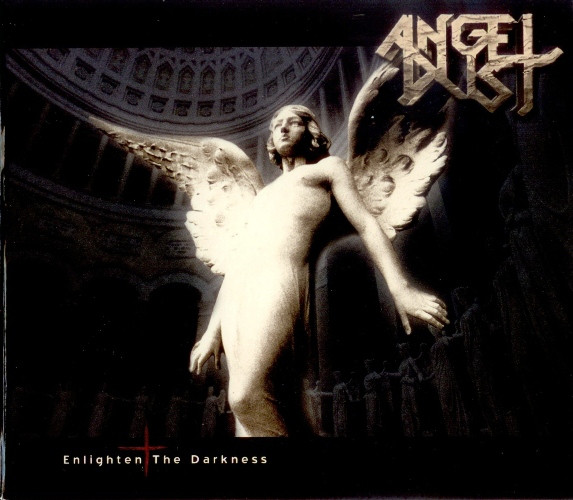
Angel Dust are legends of eighties German metal. Although Germany boasted a giant crop of classic heavy metal bands in the eighties, Angel Dust played thrash metal in their early era and broke up for the first time in 1990 after two albums. The band reactivated in 1998. That’s when the era of its greatest stability began. With two important additions to the lineup, singer Dirk Thurisch and guitarist Bernd Aufermann, the band released two fantastic albums right before the nineties ran out, equal in quality but noticeably different in character: first “Border of Reality” (1998), then a year later “Bleed” (1999). But those two albums had absolutely no connection to thrash metal. Instead, Angel Dust served up a homegrown formula of incredibly bombastic and musically infectious power metal that at points flirted with classic hard rock and even progressive rock. “Bleed” confirmed this in particular. Its successor “Enlighten the Darkness” continues that direction. It no longer brings the shockingly exciting ideas of its two predecessors, but it still builds a distinctly dark atmosphere that grabs even more relentlessly than the gloomy “Bleed” does. Yet another outstanding record, and the third in three years. Incredible.
5. Stratovarius: »Infinite«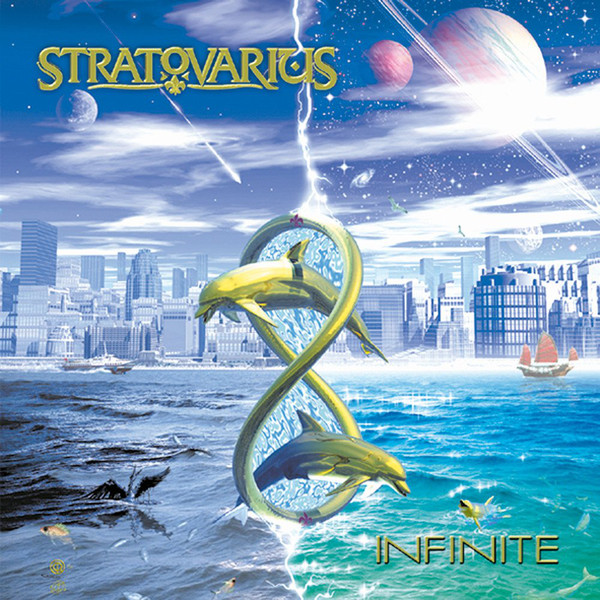
When power metal exploded in the second half of the nineties, Stratovarius were actually at their commercial peak. Stylistically, they found themselves in the right place at the right time. Considering the band formed in 1984, Stratovarius were legends a good ten years later. From humble beginnings, they perfected their artistry with every next album and contributed significantly to popularizing the genre. With the exception of the obscure debut, the band created its magnum opus especially through the series of releases from the album Episode onward, and above all with the trio of “Visions”, “Destiny” and “Infinite”. As the last of the band’s golden-days run, “Infinite” is considered a brilliant combination of everything that adorned the songwriting talents of Timo Tolkki and his crew. Power metal with a tendency to flirt with progressive metal elements. Played when needed with bravura sonic speed, where unbridled sparks fly in the crossfire of flawless solos from Jens Johansson and Timo Tolkki. From the punchy, instantly gripping opening assault of Hunting High And Low, to the speed mass in Phoenix, all the way to epic suites with a progressive streak like Infinity and Mother Gaia, “Infinite”, alongside “Visions” and “Destiny”, is one of three crown jewels of the entire Stratovarius discography. The lineup with Tolkki as commander then released three more albums that were solid but no longer reached the magic of the second half of the nineties. Tolkki left the band over health problems. Given that it’s his band, Stratovarius could have been dead with him gone, but the musician allowed the new lineup to use the name and legacy, and led by singer Timo Kotipelto it has released four more very good, if not downright excellent, albums to date.
4. Demons And Wizards: »Demons And Wizards«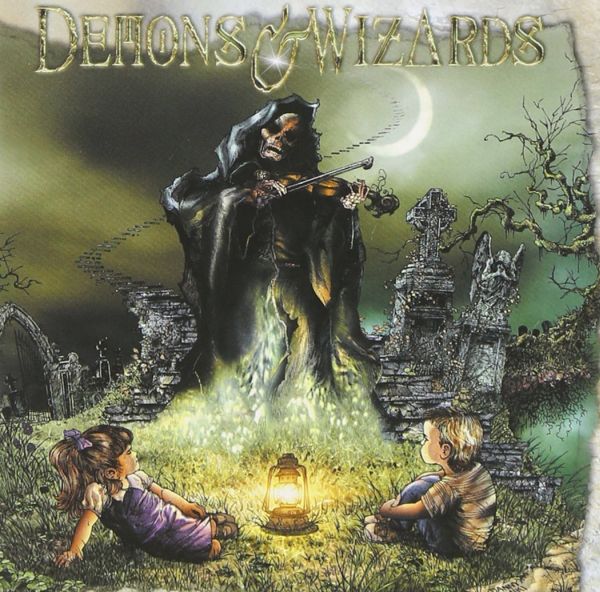
In 1998, Blind Guardian and Iced Earth released two excellent studio albums that are still considered career peaks for both bands. Iced Earth crowned it all with the excellent triple CD “Alive In Athens” (1999). Blind Guardian vocalist Hansi Kürsch and Iced Earth boss Jon Schaffer thus sealed a creative bond and launched a joint project. As fans of the character and work of British rock legends Uriah Heep, they picked the name Demons And Wizards for the project, which embodied a brilliant stylistic blend of the vocabulary of the core musical directions of both parent bands. What came out was an album full of bombast, strikingly dark theatrical dramaturgy, sudden epic upheavals, and above all a first-class mix of punchy marches and mysticism. As such it became one of the best achievements in power metal for the year 2000. The “Florida” production by Jim Morris gives the album a special aura too.
3. Nightwish: »Wishmaster«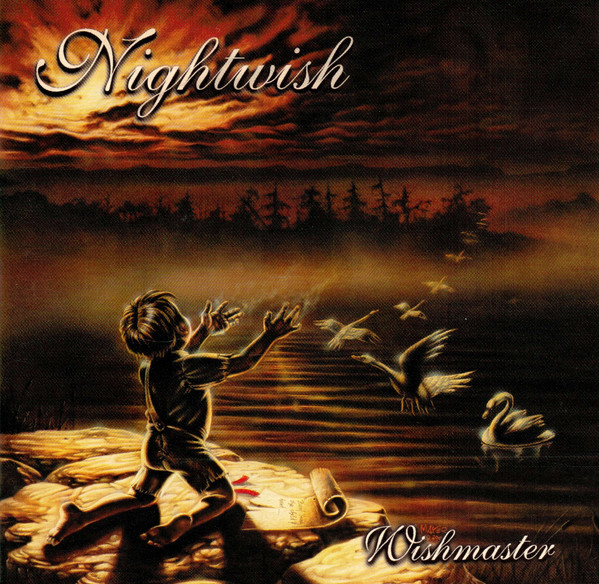
“Wishmaster” is certainly one of the best records of Nightwish’s entire career, and for many simply the best. The third album of the band’s classic days, fronted by the charismatic and unforgettable mezzo-soprano Tarja Turunen. Let’s be honest: the band’s die-hard fans won’t get over her departure for the rest of their days. This album confirms the band’s tremendous commitment, drive and great courage to give their very best. And the chemistry of the team worked fantastically at the time. In every respect. A team of exceptional musical talents who managed to artistically top their predecessors “Angels Fall First” (1997) and “Oceanborn” (1998) and, as it later turned out (partly thanks to “Wishmaster”), very soon built a cult as the world’s leading symphonic power metal band. Nobody could take that away from the band later either, after it parted ways with Tarja. On the songwriting side, with an even more striking interplay fusing operatic elements with power metal, the band firmly established its status as the leading figure in popularizing the merging of classical music elements with metal, which more and more bands followed. “Wishmaster” is marked especially by the whirlwind, endlessly bombastic and furious title track, the ultra-hypnotic She is My Sin and The Kingslayer, and the mystical, fan-beloved A Deads Boy Poem. In terms of speed, noise, musical payoff and the right ratio of classical to metal, “Wishmaster” is the crown jewel of classic Nightwish.
2. Helloween: »The Dark Ride«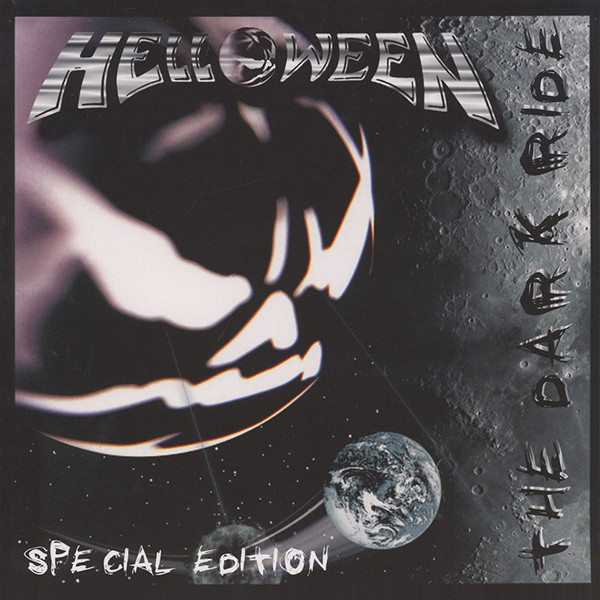
“The Dark Ride” is the closing album of the lineup that strung together four fantastic albums between 1994 and 2000. Which of the four is better is always up for debate, because they’re noticeably different. Weighing it up, though, that flattering title would still go to “The Dark Ride”. “The Dark Ride” is an album that served up a wonderfully judged combination of the essential elements of the band’s musical formula, with a production that was very modern for the time, dark and slightly dirty, intensifying the massive sound of the guitar phrasing. Not as devastating as on the predecessor “Better Than Raw”, but “The Dark Ride” became the true embodiment of the darkest album in Helloween’s entire discography. Songs like If I Could Fly, Escalation 666, The Departed (Sun is Going Down), and the strikingly dark closing mini title epic would never have been so compelling if guitarist Roland Grapow and drummer Uli Kusch hadn’t taken on a bit of the songwriting initiative on the album. Sadly, “The Dark Ride” is also a quiet signpost to what happened soon after. Both musicians just mentioned had to leave Helloween, and the new ideas they were preparing for the next Helloween album came to life on the debut of their new band Masterplan. After this album, with the new lineup, Helloween never again came close to such high-quality songwriting.
1. Jag Panzer: »Thane to the Throne«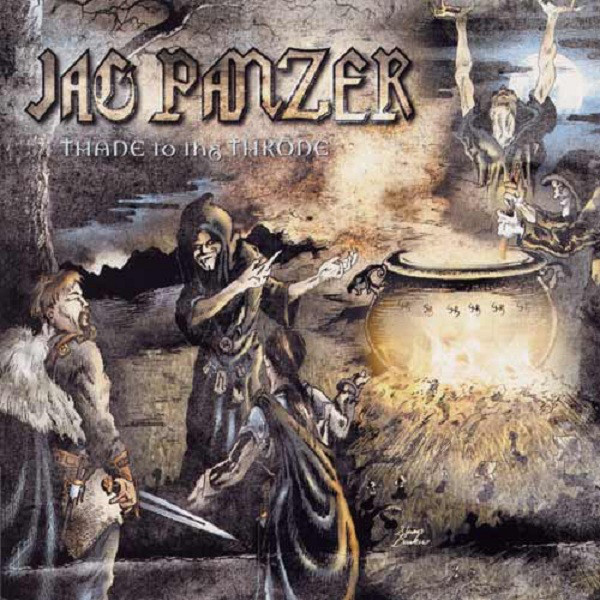
“Thane to the Throne” is, no beating around the bush, the best album of Jag Panzer’s entire career. Everything released before it counts as a gradual artistic climb to the zenith, and what Jag Panzer released later was a quality continuation, but no more than that. It’s a masterpiece that brilliantly combined all the pomp and drama you can squeeze out of power metal in order to set the chosen concept to music. After the missed shot called “Dissident Alliance” (1994) and a thorough course correction in musical taste with “The Fourth Judgement” three years later, Jag Panzer flirted more seriously with European power metal trends too, yet still developed a totally unique sound and style. Colorado metal wrapped in the sonic blanket of Jim Morris’s Florida production. That fact alone puts a band in front of the listener that is special in every way. The concept Jag Panzer chose for “Thane to the Throne” comes from Shakespeare’s tragedy Macbeth. They set the whole story to music in a series of 17 acts, and it wouldn’t be surprising if the band confirmed that at the time they took as a model how Blind Guardian approached the conceptualization of their masterpiece “Nightfall in the Middle-Earth” (1998). If the predecessor “The Age of Mastery” (1998) was a collection of excellent songs, “Thane to the Throne” is a very different album, one that adapts to the concept and offers a series of exceptional mood swings that keep the listener at a peak of tension throughout. In real ecstasy from the first second to the last. It’s seasoned with a series of outstanding smashers (King At A Prize, Three Voices of Fate, Hell To Pay,…), interrupted by instrumental interludes and atmospheric chillers like Fall of Dunsinane, while the album closes with the superb melancholic epic Tragedy of MacBeth. On “Thane to the Throne”, Jag Panzer carried their musical formula to its creative peak. It’s one of the best achievements in power metal, period. From a band that, to this day, remains unjustly overlooked and condemned to playing clubs for a crowd of 100 heads.
Author: Aleš Podbrežnik