

»With »Trespass«, their first prog record, the band took a massive step forward from the previous album and showed that, despite the members’ youth, they were one of the most mature groups of the day. Or rather: the music they started making from this record up until the mid-seventies was their “golden” era, when they were practically unstoppable and there were few bands that could match the polish, complexity and intelligence of their compositions. So here’s a band that, even so early on and despite the members’ young age, was way ahead of its time and still stirs up debate today. Young as they were, their music sounded like it was coming from some legendary, forgotten, primeval age of Celtic tales and legends. And »Trespass was also the first step on their road to becoming music legends.
The brilliant singer and occasional flutist Peter Gabriel, still misunderstood by most today, became the central figure of the lineup on »Trespass«. With his striking interpretations of the lyrics and unforgettable, original stage performances, which even included a whole range of costumes, he became the soul of the band, a sort of Lennon of Genesis, a personality “larger than life”.«
You can read the full review of the album »Trespass«, which Peter “Dr. ProgRock” contributed to RockLine back in 2006, HERE.
In August 1969, Genesis decided to go the professional music route. Founding members Peter Gabriel, Tony Banks, Anthony Phillips and Mike Rutherford, together with then-drummer John Silver, parted ways with producer Jonathan King and started writing more complex songs. That took them a long way from what they’d made on their pop debut »From Genesis to Revelation«, released that March. The band had scraped together enough cash to buy new gear at the time, including a new bass guitar and a Hammond organ, and headed into Regent studio, where they recorded a few demos. Among them were two new songs: “White Mountain” and “Dusk” (“Dusk” was originally called »Family«). John Silver, who had played on almost the entire debut album, soon decided to go off and study in the USA.
Well, the band didn’t sit around, and already in September new drummer John Mayhew joined, and with him they played their first gigs at local clubs. They managed to strike a deal with the owner of the jazz club Ronnie Scott’s to play there once a weekend for six weekends in a row. At one of those shows they caught the eye of Charisma Records in-house producer John Anthony. He convinced the label boss, and then Van Der Graaf Generator manager, Tony Stratton-Smith, to sign them. The band wanted to branch out and shake up their style, moving away from the pop-leaning songs that marked the debut and creating music the world hadn’t heard yet. Mike Rutherford remembers: »Our gigs were pretty demanding, even grueling, but still a great way for our new musical identity to take shape.« In February 1970, the band recorded two brand-new songs, »Looking For Someone« and »Stagnation«, for a BBC Sessions broadcast.
After a few months on the road, Genesis had plenty of material for a new album. In June of that year they headed to London’s Trident studio to record it, with John Anthony as producer. The songs were recorded on an analog sixteen-track recorder. Anthony Phillips says the recording was far more sophisticated than on the debut, and that John Anthony started grumbling whenever someone in the crew had to jump in separately and record their parts individually. John Anthony remembers: »It happened that Mike Rutherford had to listen to a certain track for a good few minutes because he didn’t know what kind of guitar solo to add to it. It threw him off so much that when he finally got to it, all nervous, he made a bunch of mistakes.«
Genesis had enough material for two albums, but they also knew some ideas just weren’t good enough to use. They picked the best ones. Recording took a solid month, which was a lot for those days. The band tried out loads of ideas, rearranged them over and over, and the top brass at Charisma Records figured the band would never come out of the studio again and had basically moved in. The group worked closely with John Anthony and was very happy with the result. With his ideas, experience and a keen sense of sharp-eyed awareness, Anthony contributed a big share to shaping the final arrangements.
Peter Gabriel later recalled: »We tried to combine acoustic and electric music within the same composition. Other bands were doing that back then too. That way we wanted to get different moods inside a single song. When I listen to this album today I cringe, because I know we could have played some of this stuff on a much higher level even then. Still, I knew back then that some of the things we were doing were moving in the right direction. But we were all still learning.«
The songs on the album were basically written by two band members at a time. That is, the lead motifs and the basic skeleton of the song. They usually worked in separate pairs, Gabriel – Banks and Phillips – Rutherford. Then they presented the composition to the whole band, which developed it to the end. Tony Banks says: » We were gigging quite a lot at the time, so we could really test how all the new songs worked on stage. We had at least twice as many songs written as ended up on the album, and individual versions of songs changed rapidly.«
Mike Rutherford says: »The songs were composed and arranged in advance, so there was very little chance to change anything later when we were recording. Neither the sound nor the arrangements.« The band usually took Gabriel’s vocal melodies as a starting point and added elements of classical, pop and folk music, and everywhere layered in motifs played on the twelve-string acoustic guitars of Rutherford and Phillips. Gabriel in particular loved the twelve-string arrangements, feeling that this element gave the band an innovative and unique sound.
“Looking For Someone” was written by Gabriel and Banks together. It grows out of a soulful vocal melody by Peter Gabriel, to which the band added folk elements and, of course, a touch of utterly distinctive artistry, which as a genre was only just finding its feet and dictated the progressive development of lively, shifting structures in the compositions. The final form of the song was a group effort. Gabriel later said that “Looking For Someone” is at its core “idiosyncratic” enough (standing out on its own, one of a kind) to “redirect the audience’s attention within a few seconds”.
“White Mountain” and “Dusk” were co-written by Banks and Rutherford, and once the two agreed that both songs were good enough to earn a spot on the album, they presented them to the band. The quintet wrote »Stagnation«, originally called »Movement«, together, with Gabriel writing the lyrics only at the very end. »Visions of Angels« was originally written during the sessions for the debut »From Genesis to Revelation«, but the band didn’t use it. Genesis felt that none of the recorded versions was good enough, so they decided to change the arrangements and record it in a completely new version for »Trespass«. The original »Stagnation« was defined by a piano piece from 1968 written by Anthony Phillips. Phillips’ piano playing was still technically very limited back then. Combined with a very direct chorus melody, the band feared the song sounded too much like The Beatles or The Beach Boys. »Stagnation« and »Dusk« showcase the combination of Phillips’ and Rutherford’s twelve-string guitars, backed by Banks, who added lead motifs on piano as well as mellotron and organ. This approach actually grew into a trademark of early Genesis arranging. Rutherford later explained that for certain parts of »Stagnation« the band first recorded at least ten acoustic guitar tracks, but they were trimmed down in the final mix. Gabriel described the song as an adventurous piece, without a typical verse/chorus form, but with all kinds of mood shifts. At one point in its evolution this song ran as long as 13 minutes, but certain sections were later cut or changed. The opening part of the song stayed untouched.
The album closer »The Knife« was written by Banks and Gabriel. It was first called »The Nice«. The name came from a tribute to the band »The Nice«, since the Hammond organ playing on it recalled the style of The Nice’s keyboardist at the time, Keith Emerson (who, in that same year, 1970, was already co-founding ELP). Genesis were big fans of the heavier sound The Nice were developing, and that’s how they approached »The Knife« too. Peter Gabriel said they wanted to create »something more dangerous« that would break away from their points of acoustic delicacy. Gabriel adds: »This was our first peak of the dark vibes we’d discovered at the time. The song, which is only eight minutes long on the album, was played in a much longer version live, coming in at just under 20 minutes.«
Anthony Phillips said that the songs »Everywhere is Here«, »Grandma«, »Little Leaf«, »Going out to Get You«, »Shepherd«, »Moss«, »Let Us Now Make Love« and »Pacidy« weren’t developed any further in the studio. Banks also confirmed that »Going out to Get You« was simply too long to put on the album, and that concrete parts of »The Knife« had to be cut too, so it landed on the album in a considerably shortened final version. Tony Banks adds that Genesis never recorded Phillips’ »Let Us Now Make Love« in the studio because they were afraid, or figured, that it could become a hit single. That song is included in a live version played in February 1970 on the archival compilation »Genesis Archive 1967-1975«.
Even though the recording took place in a relaxed atmosphere, Phillips grew more and more dissatisfied with his position and role in the band. He drifted further and further from the musical direction itself, as well as from the fact that the band was playing so many gigs, which hurt his work on writing »Stagnation«. He no longer found real common ground with Genesis. Phillips also felt that too many band members were contributing ideas to the compositions, making it hard to reach a conclusive decision on which idea the band would use to develop a given piece further. Mike Rutherford also noticed Phillips’ growing unease already during the recording of the album. He started worrying the band would fall apart if Phillips left. Phillips said that performing on stage, in the public eye, put extra stress on him, and while some accounts claim he decided to leave because of poor health, that supposedly isn’t true. Phillips held on until the band’s gig at Hayward’s Heath, and after a meeting at Gabriel’s house in Cobham, the band decided to carry on with their career.
As the band was parting ways with Phillips, it also started thinking about replacing the drummer. Mayhew, who was more experienced, older in years, and expected to handle the job thanks to his longer mileage, wasn’t much use when it came to contributing ideas while writing the material. He also just couldn’t loosen up and breathe more freely during live shows. Nor could he develop the confidence that was needed. The band had started promoting »Trespass« already in August, so it quickly set up auditions. Phil Collins applied and got the job as the new drummer. Around that time Genesis were also looking for a new guitarist and temporarily performed as just a quartet. In late autumn the band appeared on the TV show »Disco 2«, presenting the album »Trespass«. Mick Barnard played guitar with the band then, and he lasted only a few weeks. Peter Gabriel later said that the performance was a complete disaster. Everyone except Gabriel was miming to a backing track. In December 1970 Genesis held an audition for Steve Hackett, who was taken on as permanent guitarist in early January 1971.
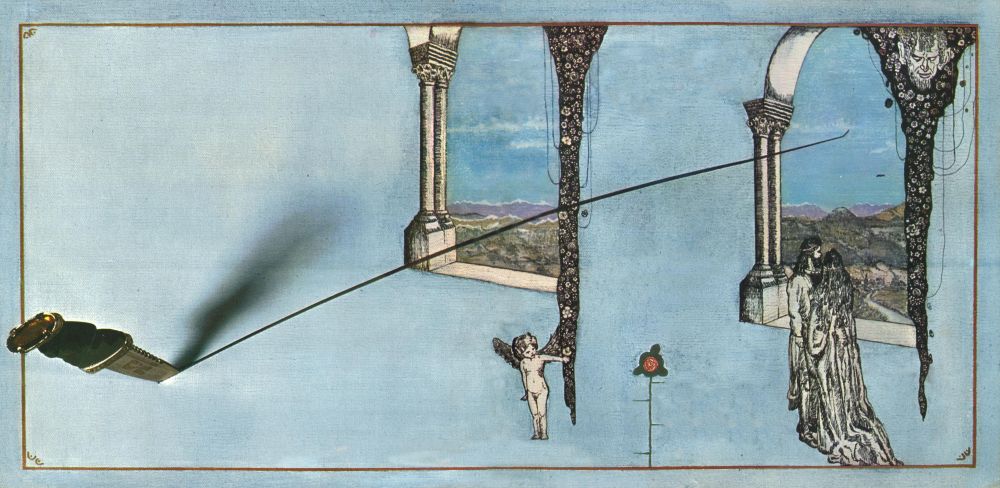
The cover for “Trespass” was done by Paul Whitehead, Charisma Records’ in-house painter, who also designed the covers of the next two Genesis albums, »Nursery Crime« and »Foxtrot«. Whitehead created the cover inspired by the pastoral and ancient folk-Celtic touches that run through the album. But he worked from a track list that didn’t include “The Knife”. Genesis tacked that one onto the very end of the album, right before release. Because the song departed so much from what Whitehead had painted originally, it was no surprise that he was seriously annoyed when band members came to him and told him a change was needed. When they wouldn’t back down, he grabbed a knife and slashed a diagonal cut across the canvas. The knife stayed stuck in the canvas (back of the sleeve).
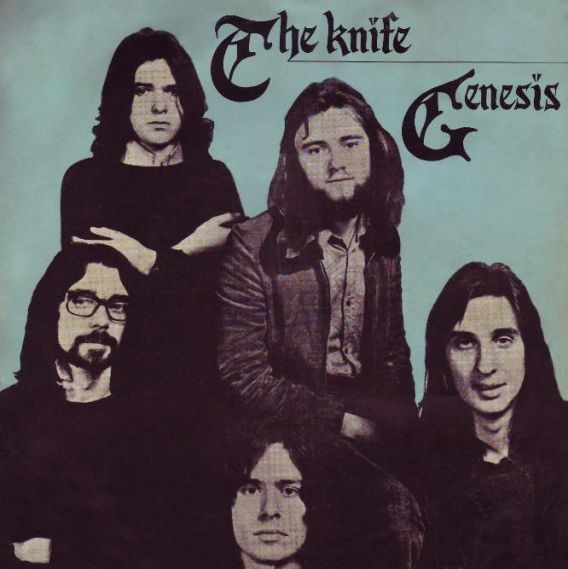
The album »Trespass« came out on October 23, 1970 on Charisma Records. In the USA it was released on the jazz label Impulse! Although sources don’t agree, the most reliable one gives June 4, 1971 as the release date of the “The Knife” single. The seven-inch vinyl single for “The Knife” had the song in two parts. The first on the A-side of the vinyl single, the second on the B-side. It didn’t chart, though. The album sold 6,000 copies, which was enough to activate a new part of the music public, which soon started faithfully showing up at the band’s gigs. Although »Trespass« didn’t chart in the USA or the UK, it hit number one on the Belgian best-selling albums chart, which opened the door to the band’s first shows on the old continent. In 1980 the album got a reissue. It briefly reached number 98 on the best-selling albums chart in the UK at that time. By that year the band’s popularity had already grown considerably.
»Trespass« is a great record, a classic, really, marking the beginning of classic, progressive Genesis, and precisely because it was followed by records of which each next one was long said to be even better than the last, it has today been unfairly somewhat overlooked by fans. With it, Genesis laid the foundations of a musical direction they stayed true to and built on throughout the seventies, when they recorded and released timeless prog rock classics.
Author: Aleš Podbrežnik
