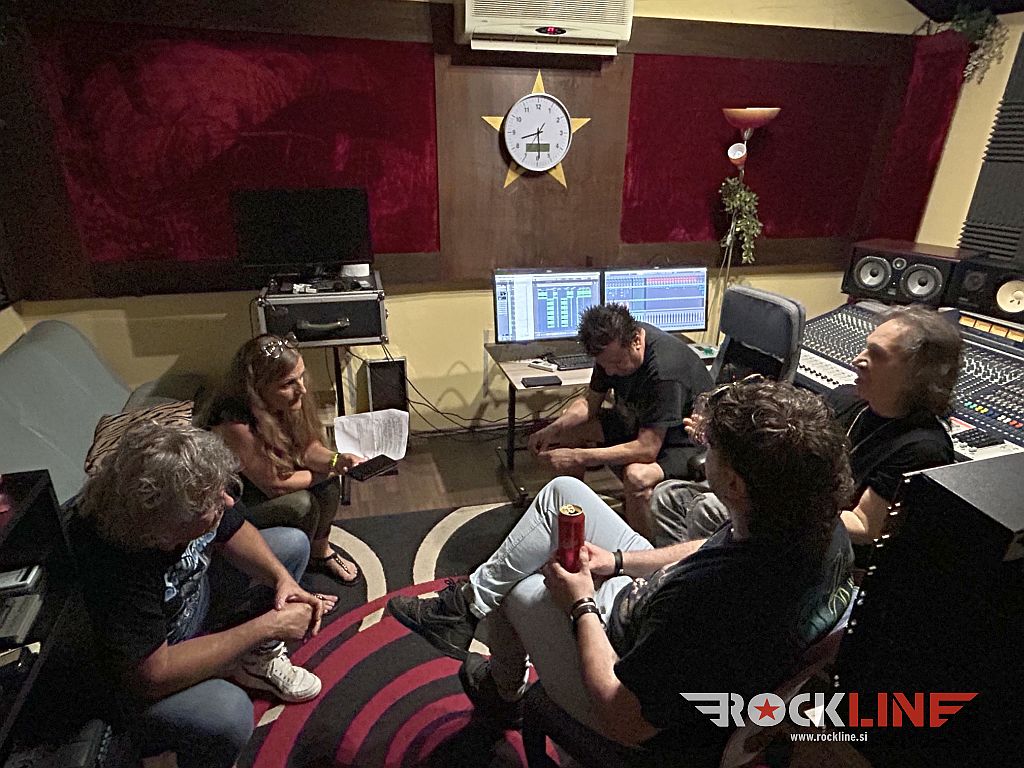
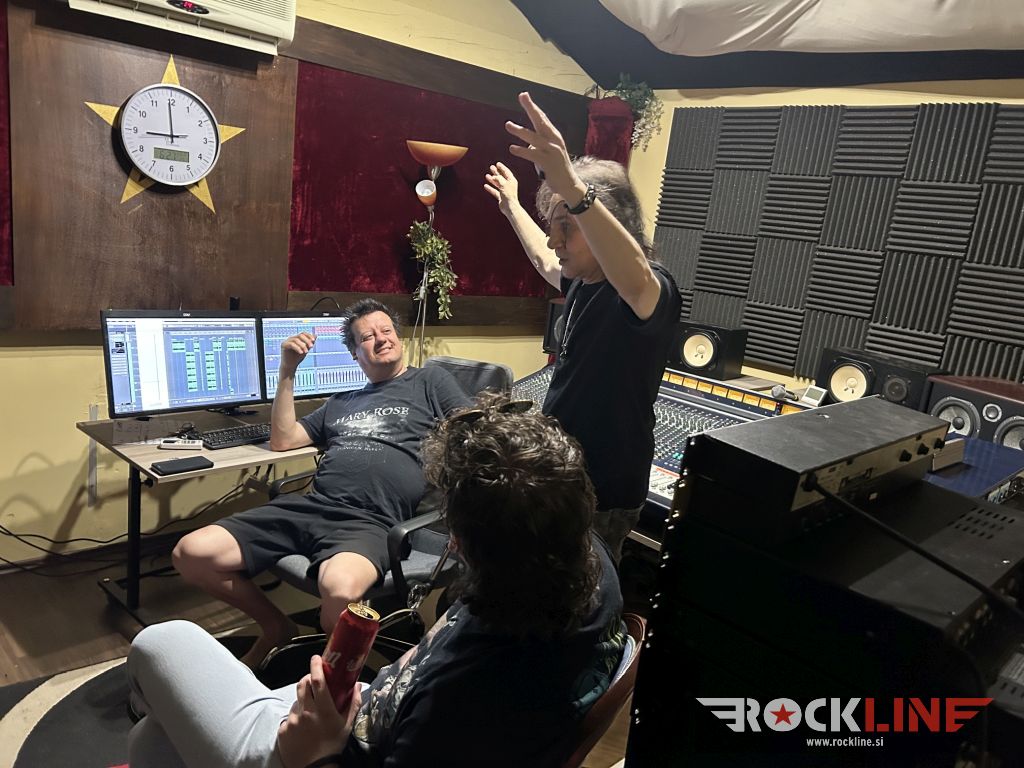
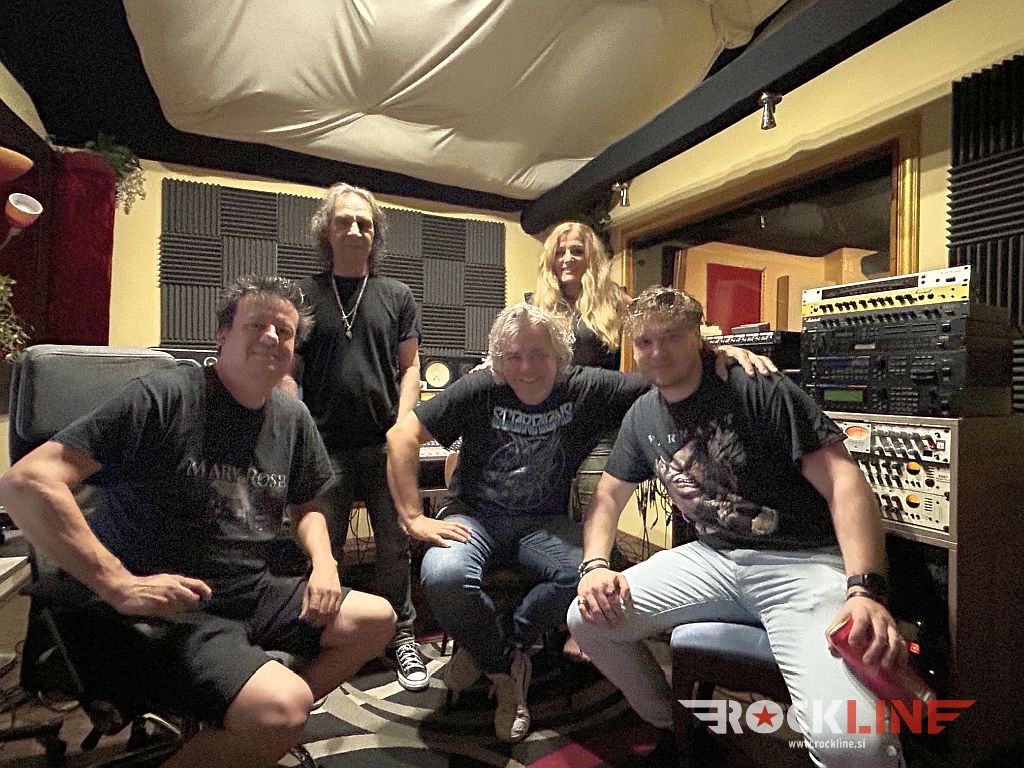
Mary Rose from Postojna are one of Slovenia’s best-known hard rock and heavy metal bands. Formed in 1987, they’re still creatively active in 2026, three studio albums in, despite plenty of ups and downs and lineup changes. Their music comes from an honest dedication to creating and a love of rock as a form of expression. They recently dropped a new single, “Zbudi se”, and are planning to record a new album in the coming months. I sat down with Eki Alilovski, Sandi Trojner and Miha Horvat in their studio.
If you could only listen to one of your songs for the rest of your life, which one would you pick?
Eki: Tough question, since every one of our songs has its own origin story. Maybe “Zven tišine”? Honestly, it’d be easier for me to name my favorite Van Halen hit (laughs).
Sandi: I could find a favorite on every album, but if I have to focus, I’d go with “Zven tišine” from the album Feniks. Then again, once you’ve recorded an album, you can’t stand to hear it for half a year. What we like playing live on stage is a whole other story.
Miha: Definitely “Hold on” – that’s a track I could keep on repeat nonstop. And I’d throw in “Zvezda” from the album Feniks too.
Which song in your discography is the most underrated?
Eki: It always goes like this: the songs you bet on the most in the studio don’t land with listeners as well as you actually expected. It’s happened to me that I was convinced a certain track was great and told myself, “This is it!” You record it, you see that both the music and the lyrics are good, and in the end it turns out differently. “Zven tišine” is one example – we never played it live. We just couldn’t fit every track into the live set.
Which moment in the band’s history would you most like to relive?
Eki: For me, the best moment was when we opened for Joe Cocker and walked out onto the stage of a packed Bežigrad stadium. That’s when you see what it’s like when it’s the real deal and every last detail is taken care of at the highest level. I told myself, “This is what it’s like when they treat you like a real musician.”
And I’ll never forget when we opened for Whitesnake in Ljubljana, and I spotted Doug Aldrich on stage giving me a gesture of approval for my playing. After the show, their manager invited us to play three shows together. Anyway, every gig in the ’80s and ’90s was something special. These days, more than the moments on stage themselves, I remember the adventures on the road. And of course the period when we backed John Lawton. Those are wonderful memories – moments like that are why you make music in the first place.
Sandi: The years that stuck with me most are when we were the house band at Rock cafe in Postojna and played every Friday. We’d regularly meet up there after work, play a game of pool, have a drink, do a sound check and hit the stage. We often came up with a new song there too and played it right away.
Miha: For me, the best moment was our first rehearsal together. Walking into the room, singing Mary Rose songs and seeing Eki play live … That was unforgettable.
Mary Rose, you’ve survived political change, the shift between media, and the arrival of the internet and social media. What has changed the most for a musician – and what hasn’t changed at all?
Eki: Back then you had a real chance of getting played on the radio. Today it’s totally different. You call a radio station and often hit a wall; there’s no real support anymore for presenting original music, and they brush you off fast. I don’t expect much, just a chance to show people our work. And bands aren’t as tight and “sworn brothers” with each other as we used to be, either.
Sandi: The big turning point was the decline of CD sales and the move to streaming platforms. The musical genre itself has changed a lot too, especially in Slovenia from the ’90s onward. Those of us who stayed loyal to rock got the short end of the stick back then. But we keep at it because we simply enjoy what we do.
Why aren’t you out on the scene as much anymore?
Eki: The key thing in a band is that everyone’s goals line up. If members have different priorities and plans, the band as a whole has a hard time surviving. It all depends on whether you’re working for the band’s success or for your own ego. I remember how driven we used to be – we rehearsed the second album so much that we then recorded it in the studio in a mere five days.
Is it harder or easier to be a rock band today than it was in 1990?
Eki: Today it’s incomparably easier, but back then it was more beautiful. You had to work brutally hard just to get your hands on an instrument and gear. If you weren’t top-notch on stage, the audience simply booed you off. Not to mention how high studio recording rates were.
What excites you most about the modern music industry, and what bugs you the most?
Eki: Every era brings something good, and you can’t compare the technology directly. Back in the day you had to show up to the studio one hundred percent prepared – if you made a mistake, you had to record the whole take again. Today that’s technically much easier. If someone likes creating with machines, let them. But there’s a big difference between AI just helping you create and AI doing everything for you.
Sandi: Back then, as a band, you had nowhere to hide – if you weren’t tight, you could hear it right away. Today, sloppy playing in the studio can be cleverly covered up with technology. But the stage doesn’t lie; live, you can’t hide anything, and that hasn’t changed. If you fix your studio recordings artificially and then can’t play at the same level on stage, that’s no plus for me. We used to have to record everything in five days because of money limits, whereas today you can lock yourself in a room, sit at a computer for hours and hours and record something all by yourself.
Miha: Hard rock is a genre that demands a musician show something and give something of themselves. You simply can’t bluff your way through a lack of skill here.
How do you know when a song is finished?
Eki: The measure is that everyone in the band is happy with it. Though, to be honest, a song is never truly finished. When you listen to it a few years later, you’d always change some little thing or play it differently.
Sandi: When we all line up and say together: “That’s it!”
Do you ever argue about the music while you’re creating?
Eki: We create everything ourselves, so there are no serious fights. If we agreed on everything right away, I’d seriously wonder whether something was wrong with us (laughs).
Sandi: There are no classic arguments with us. Of course different ideas and views come up, but we always manage to square them.
What surprises you most about people discovering Mary Rose for the first time today?
Eki: It’s an incredible feeling when someone calls you up and sincerely, enthusiastically praises you. And the write-ups and reviews from the editor of Rockline.si, who really holds us in high regard, pleasantly surprise us again and again.
Sandi: When people hear our music for the first time and stress how high-quality it is. At first I sometimes think they’re exaggerating a bit, but then I realize they mean it completely.
Miha: When my friends listened to the album Rocks Off, they even thought it was a record by some established foreign band.
Why does rock in Slovenia always seem like a bit of a rebellious choice?
Eki: I absolutely love the fact that rock remains a rebellious choice. I’ve always enjoyed wearing long hair and having a different, daring look.
Miha: That impression of rebellion comes from the whole package – the lifestyle, the music itself and a strong sense of belonging to a community.
Do Slovenian musicians undervalue their own rock heritage?
Eki: Personally, I have enormous respect for Slovenian musical heritage. But I think that respectful attitude is formed at home. If parents listen to quality rock music, they’ll most likely pass it on to their kids.
Sandi: It depends heavily on the generation. The younger generation may not appreciate rock heritage enough simply because they don’t know it – and in today’s flood of information they can’t even fully discover it.
Which Slovenian album do you think every rock fan should know?
Eki: September – Domovina moja.
Sandi: Mary Rose – Rocks Off, and of course albums by Buldožer and Pomaranča.
Miha: Definitely Rocks Off.
Given that quite a few years pass between your album releases, do you feel like beginners on the scene?
Eki: Every single time, we feel like beginners.
Sandi: I think even if we released albums every two months, the feeling at the start of the creative process would be exactly the same – like we’re beginners all over again.
Rock bands often fall apart because of egos. How do you manage to keep the friendly chemistry through lineup changes? If things ever blew up in the band, did you learn anything from it?
Eki: Ego is an interesting thing … What matters most is whether a person is aware of it or not. A healthy dose of ego has to exist in rock, but the trouble starts when there’s too much of it. Over the years you learn to spot people who aren’t aware of their ego, and they’re hard to work with. I’ve never treated music as a business. Experience shapes you into admitting your real capabilities and knowing where you stand at any given moment.
Miha: You can learn something from every situation. But there are people you can simply never get certain things through to.
The world is racing toward AI. Where do you draw the line?
Eki: AI can be a very useful tool for certain technical things. Young people are growing up with it today and will definitely work it into their creative process in the future. Personally, though, I know that if an algorithm created an entire song in my place, I’d have a serious moral hangover.
Sandi: In our band, we haven’t used it so far.
Miha: Like I said before – hard rock demands a human touch and know-how. You can’t fake it on stage.
As new members, how do you navigate between respecting the legendary sound of the Rocks Off era and wanting to put your own modern stamp on it?
Eki: The guys are young, incredibly driven, and I truly want us to make an album with top-notch music together. We’ll most likely release it ourselves. Gig plans are laid out as well, but it’ll all depend on my health – because of that I’ve even started thinking about getting a backup guitarist to jump in if needed.
Miha: For me personally, the album Rocks Off is the pure peak and the real soul of Mary Rose. I can completely identify with that soul and energy with no trouble when I’m creating new material.
The new single ‘Zbudi se’ carries a strong message. What is it that Slovenes still don’t want to hear, and what should be written about going forward?
Eki: With topics like this, there’s quickly a fear of getting labeled as someone who wants to preach. In reality, through the lyrics we’re just thinking out loud. We also communicate very openly within the band; when we create, we rely on our own feel – what works well and what doesn’t. With our music, we mainly want to pass a story on to people.
Sandi: While creating in the studio, it’s sometimes incredibly useful to take a step back and look at the whole picture from a different perspective. When you’re sitting right behind your own instrument, you quickly start judging things too technically instead of listening to the whole.
One word that describes Mary Rose today?
Sandi: Power.
If someone opened the archive of Slovenian rock music 20 years from now and came across the name Mary Rose for the first time – what would you want them to think of you after listening to your songs?
Eki: “Those really were beautiful times …”
Sandi: Let them form their own honest opinion.
Miha: I’d like that person to come up to me one day, shake my hand and say: “Hats off for such good music.”
And finally… Vinyl or streaming?
Eki, Sandi, Miha: Vinyl!
Studio or stage?
Eki: The studio has its own hidden charm. The stage is great, of course, but the studio is where the real creative magic happens.
Sandi: I’d rather pick the stage.
Miha: Stage.
First rehearsal or encore?
Eki, Sandi, Miha: Encore! It’s always the cherry on top of every show.
Deep Purple or Rainbow?
Eki: Tough question. Rainbow (after some thought)
Sandi: Deep Purple
Miha: Deep Purple
The best show you’ve been to as a listener?
Eki: Van Halen (Munich)
Sandi: Dream Theater (Tivoli)
Miha: Whitesnake (Zagreb)
Mary Rose lineup:
Eki Alilovski – guitar
Sandi Trojner – keyboards
Anže Stegel – bass guitar
Gian Žgur Islami – drums
Miha Horvat – vocals
Thanks, guys, for an interesting and honest conversation! Going forward, I hope you make your best album yet and that the crowd embraces it with the same enthusiasm they showed for your new single. Rock on!
Interview written up by: Silvija Makovec
Photos: Edita Klemen
Link to the official website:
https://www.maryrose.si
Link to the FB page:
https://www.facebook.com/maryroseslo
Link to the IG page:
https://www.instagram.com/mary_rose_band