Author: Peter Podbrežnik
Location: Orpheum Theater / Graz / Austria
Concert date: 06.07.2007
Attendance: 1300
On the very same day as the big interview with the legendary master Ian Anderson, which was without a doubt a one-of-a-kind experience I’ll remember for the rest of my life, his band played a gig too, stopping once again at our beloved, tried-and-true concert haunt, Graz’s Orpheum. After the interview, which unfolded in a super relaxed and really pleasant atmosphere, Aleš and I had loads of time left, which we spent checking out some local sights, since the show only kicked off at half past eight. Among other things, we climbed up to Schlossberg castle, where we got to reminiscing about great gigs. Four years ago, right between the castle walls, I had the honor of seeing Jethro Tull live for the first time. That show has stuck in my mind as their best (especially when it comes to atmosphere), and it’ll be hard to top. Since then I’ve caught them three more times, and even though they always gave their absolute all on stage, the awful conditions down in the crowd (Munich was like a furnace, in Pordenone a storm crashed the party, and in St. Pölten we were stewing again in steam and stale air) meant they never managed to conjure the same magic as that first time. This time, though, I had every right to expect this evening to be one of the best get-togethers with the sturdy troubadour and his sidekicks, since they were playing on thoroughly familiar turf, at one of my favorite venues.
When we got back to the hall about an hour and a half before showtime, the place was already packed with people (apart from a car with Žalec plates, there was no trace of any Slovenian presence, not a single familiar face, which says a lot about why the promoters don’t dare invite them to our parts, but that’s long been a general Slovenian trademark when it comes to prog rock). Meanwhile, the locals (and plenty of visitors from Italy too) once again proved how well they still know how to appreciate legendary bands. The hall was stuffed to the absolute limit, and as great as it was that Jethro Tull can still fill a venue (it may even have been sold out), and that alongside the many couples, mostly middle-aged, there was also a not-insignificant number of young faces of both sexes (Ian talked about that in the interview too), it meant that this evening was also insanely “hot” and we sweated like boiled lobsters. Jethro Tull, totally unintentionally of course, thus keep up their tradition of sweltering gigs pretty much every time I see them. To everyone’s huge relief, this time the band demanded a smoking ban from the promoters, which earned them an enthusiastic round of applause from me before they even played a note.
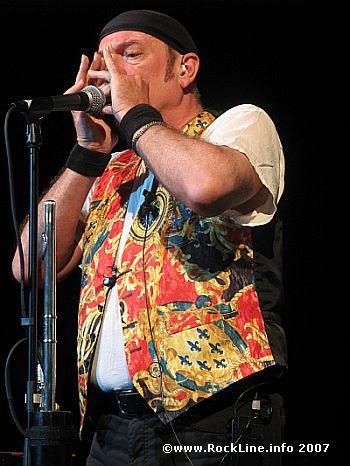
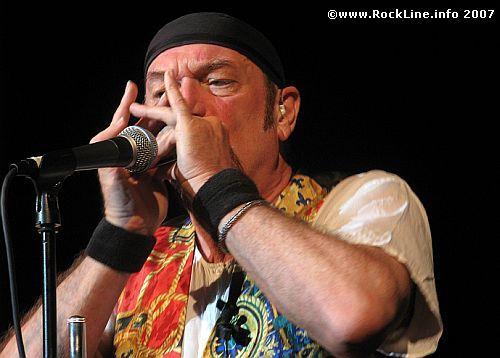
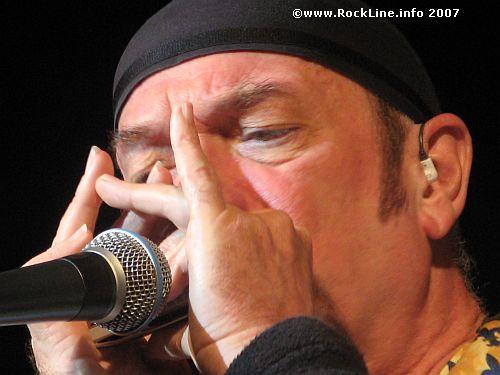
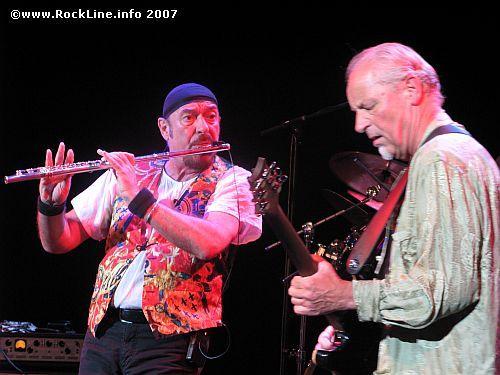
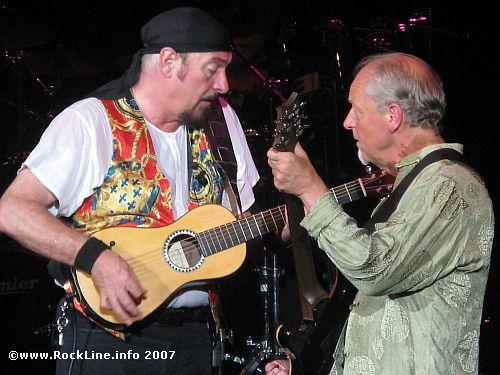
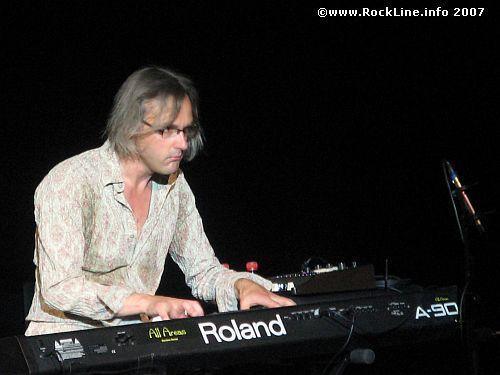
After that announcement the lights dimmed, and tense anticipation settled over the hall as we waited for the “vagabond” and his crew. For the sound, and because I had no intention of feeling like a sardine, I stood near the mixing desk, which turned out to be a very smart choice. I wasn’t expecting any surprises in terms of the setlist this time. The selection was completely identical to Pordenone (except that this time they actually managed to pull off the encore). They came on stage with pedantic precision. The lights picked out Ian, once again in his traditional “pirate” getup, and guitarist Martin “Lancelot” Barre, the band’s other main pillar. To warm up, they started, as they did last time, with the still-beloved “Some Day The Sun Won’t Shine For You” (This Was, 1968), a rustic blues-country rocker that took people by surprise during the British blues rock invasion of the late 60s. Ian once again wowed with his energetic work on the harmonica, sharpening his breath on it, while Martin briefly turned back into a blues guitarist. On “Living In The Past” (Living In The Past, 1971), the strengths of the other band members came through more strongly for the first time, especially new keyboardist John O’ Hara, which showed in the greater amount of symphonic arrangements compared to the usual version of this classic.
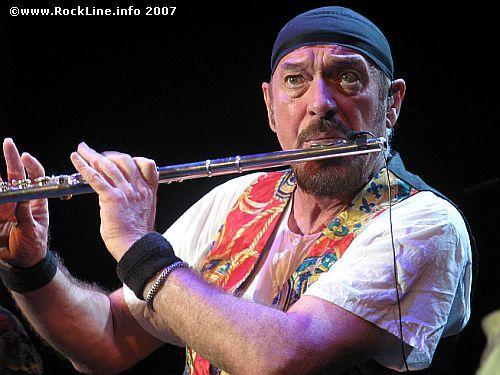
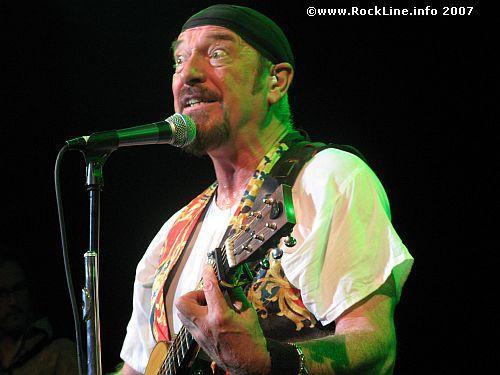
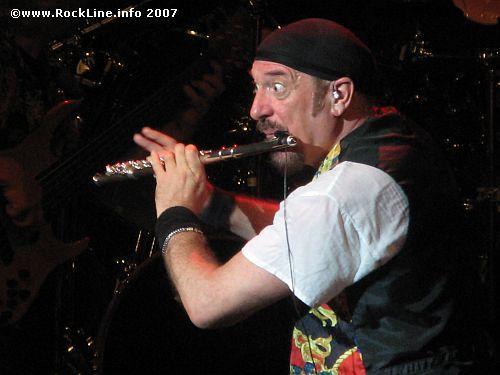
Ian then pulled us forward a few more years with his “time machine”. Even though they’re one of the longest-lived bands around, with enviable mileage on the clock, the odd slip-up happens to them too, which of course they get through like true professionals. At the start of the folk-rock acoustic treat “Jack In The Green” (Songs From The Wood”, 1977), the good old Irish elf mixed things up for a moment. While Ian was playing the intro melody on acoustic guitar, he impatiently started playing a passage that should have come in much later. But that happens to the greatest too, so he showed no embarrassment whatsoever and calmly waited for his moment. As has long been his tradition, Ian cracked his funny anecdotes between songs again this evening, which were only slightly different from last time. Even so, the hall shook with laughter once more. And if the anecdotes don’t make you laugh, his stage act surely will, since it usually involves a string of bug-eyed stares while he wheezes on the flute or hops around on one leg. Despite his enviable age, the man is still incredibly sprightly, and he proved his youthful vigor again with a comic use of the flute as a phallic symbol during his rowdy stomping around the stage.
How well he and his band hold out against the pressure of the years was also proven by the brand-new instrumental “Donkey And The Drum” (inspired by John O’ Hara’s favorite pub), which is due on their new album, one we’ve been waiting eight years for. With its elements of oriental music and jazz, the “donkey and drum” looks set to become a respectable cousin to the kind of tunes Ian has liked writing over the last ten years. No Tull show is allowed to pass without an epic prog rock classic, “Thick As A Brick” (Thick As A Brick, 1972), even if they always cut it down to just 11 minutes. Although Ian did well vocally, since he can’t sing the older classics the way he once could, as instrumentalists they once again showed up in one of their strongest forms. Alongside a string of solo spots (new bassist David Goodyear was very active too, on xylophone and with a notable solo turn), they created excellent harmony and a flow of energy between stage and audience, who made no secret of their delight at the superb performance.
They confirmed their musical versatility once again with a splendid rendition of the almost-forgotten baroque instrumental “Pastime With Good Company” (once better known as “King Henry’s Madrigal”; you can find the original version on the reissue of the album Stormwatch, 1979). Ian and the gang briefly transformed into Elizabethan medieval minstrels, and although I’d have preferred to hear something from “Minstrel In The Gallery” (1975), I have to admit they delivered one of the better performances of the night. Still, in my opinion the title of best performance of the night once again went to the evergreen “Mother Goose” (Aqualung, 1971), which they again expanded with interesting acoustic bits and extra passages on Ian’s flute. Giant drummer Doane “Big Boy” Perry, for whom this was the last show before a vacation back home in California (James Duncan will fill in for him until autumn), once again headed for the little bongo drums while Martin and John grabbed their pipes, which Ian used once more for his traditional quip that “size doesn’t matter, right girls (at the expense of the keyboardist’s noticeably shorter pipe)….ah, apparently it does after all” (after one of the women in the audience disagreed with his claim).
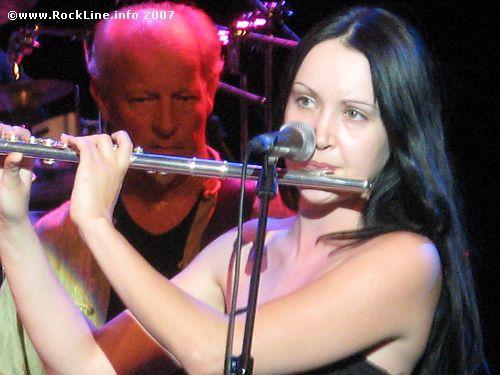
Ian, a known lover of Eastern Europe, introduced “Sweet Dream” (Stand Up, 1969) as a lullaby of the kind they play for kids in Ukraine before they fall asleep (at the previous gig it was Estonia). With its red-hot riff, “Sweet Dream” is anything but a lullaby, and that was the moment the band first got the floor under my feet properly rocking from the crowd jumping. During the instrumental classic “Bouree” (Stand Up), which Ian likes to call porn jazz these days, a big and very pleasant surprise happened, one Ian had already hinted at during the interview. Ian invited a special guest on flute to the stage, who was none other than the lovely Miss Tinkara Kovač. She and Ian hit it off brilliantly during the song, each on their own flute, including in the solo duels, with Tinkara even letting out a few “puffs” in pure Ian style. I have to admit that I’d pictured the likeable Tinkara, who showed excellent command of a wind instrument I know little about myself, as a much more extravagant musician, but she charmed with a thoroughly professional approach and showed just the right amount of respect for the legends. Tinkara’s appearance undoubtedly gave the band some special energy and extra motivation. After one of the best moments of the night, the old fox bade a passionate farewell to the pretty young woman, with whom he also collaborated on her new album, and the crowd’s excitement just wouldn’t die down. Even though plenty of people wished she’d come back for another song, Tinkara headed off for a well-earned rest.
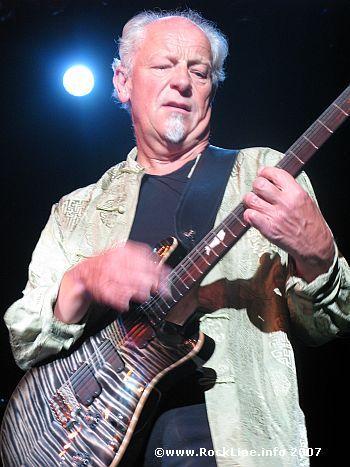
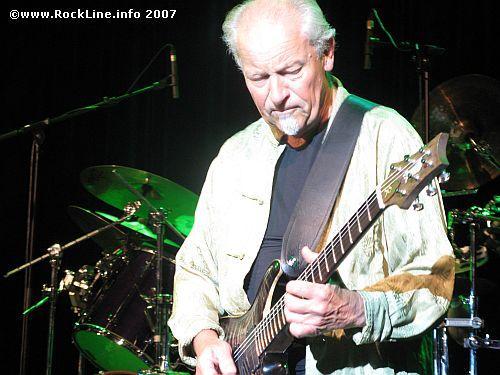
So as not to drift too far into classical and jazz waters, they carried on with a trilogy of songs from Ian’s most beloved album, “Stand Up”. With “Nothing Is Easy”, which Ian introduced by saying that “even Status Quo would envy its rhythm, but luckily they’re not here”, they headed back to their hard rock roots. Then came Martin’s solo spot, the solid instrumental “After You After Me” (Stage Left, 2005). Martin made good use of his “star” moment, proving during the “chieftain’s” absence why he’s the only musician who’s been in the band almost as long as Ian and why he’s one of the best rock guitarists of his time, though a jazz guitarist at heart. The choice of the melodramatic “Farm On A Freeway” is eloquent proof of why “Crest Of A Knave” (1987) is also one of the most important Tull albums, the one that brought them back among the “living” and earned them a controversial Grammy for best heavy metal band of the year (Ian has cracked so many jokes about that already that he skipped it this time). The movie “West Side Story” and its hero John Wayne came alive again in Bernstein’s “America”, which Tull play in an arrangement written by the legendary Keith Emerson (The Nice, ELP). Along with “Bouree”, it was another superb cover from the world of classical music, giving the band a moment’s breather from some of the classics they’ve been playing since forever.
One of those ancient classics they absolutely have to play every night is of course “Aqualung”, which for this tour they cunningly upgraded with a very interesting instrumental intro and a great flute arrangement. Ian jokingly introduced it as “Stairway To Aqualung” (sometimes he calls it “Smoke On Aqualung”). After charming everyone with an extremely refreshing, acoustic-tinged and jazz-spiced intro that of course contained the central motif, they switched to the standard “hard rock” version, which, despite being completely overexposed, still unleashes an eruption of incredible energy and a proper madhouse in the crowd. That “Aqualung” is the most important album in their history, the one they usually play the most songs from, was confirmed by the classically tinged suite “My God”, Ian’s cynical burlesque at the expense of organized religion. During the closing flute-blowing solos, Ian once again got a “bellyache” and groaned loudly, which of course was yet another of his comic moves.
To close out the regular set, they played the Cold War-era “Budapest” (Crest Of A Knave), one of the best epics in their rich treasure trove. This time there was neither rain nor smoky air, so the “story from the Eastern side” also worked superbly atmosphere-wise. A very short goodbye followed, then the obligatory encore with the completely expected “Locomotive Breath” (Aqualung), their best-known classic, which, despite being thoroughly worn out, is one of the most magical moments of a Jethro Tull show, and an invitation to an unforgettable train ride. Interestingly, Tull no longer end their shows with the taped toast “Cheerio” and by throwing balloons at the audience, which was their longtime tradition. Apparently Ian has gone off chasing balloons for a few years, and Marillion have now borrowed the practice for a while.
Jethro Tull once again served up a concert of superlatives and fully justified their legendary status. Then again, what else would you expect from such sturdy musicians, whose gray hairs hardly show and whose leader still jumps around the stage like some youngster, if not perfection? If the Pordenone show was spoiled by a storm, and in St. Pölten the atmosphere was undermined by the promoters’ poor ventilation and a shortened setlist, then this evening, by my reckoning, they delivered the second-best performance since I started following them to gigs. Ian, the incarnation of charisma and uprightness, completely enchanted once again with his gang and offered up some of the best melodies from the days when people still knew how to appreciate music, music that to this day is marked by exceptional expressive power, and through which the images described in the individual songs shine with ease. I’d have loved to offer Ian a shoulder bump once more (given that he doesn’t shake hands) for such a great show, if he weren’t such a complete professional, since you can only meet him in person with press accreditation or a special invitation. I simply can’t find enough words to describe all the charisma and sturdiness he’s capable of creating (with his band), both on stage and off, which the interview confirmed too, and which under special circumstances could certainly have gone on for two days.
Setlist
1. Some Day The Sun Won’t Shine For You
2. Living In The Past
3. Jack In The Green
4. The Donkey And The Drum
5. Thick As A Brick
6. Pastime With A Good Company
7. Mother Goose
8. Sweet Dream
9. Bouree
10. Nothing Is Easy
11. After You, After Me
12. Farm On A Freeway
13. Aqualung
14. America
15. My God
16. Budapest
—encore—
17. Locomotive Breath
Photo gallery