Author: Urban Bolta
Location: Križanke / Ljubljana
Concert date: 24.09.2009
Attendance: 3000
Ticket price: 20€ / 25€ (day of the show)
The legionnaires of Serbian rock’n’roll, standard-bearers of the old Yugo rock school who stormed the top of the charts in the early eighties, conquering them with every new record, and who are now gray-haired men, have hit Ljubljana again after a year and a half break, or more precisely, the cozy surroundings of Plečnik’s Križanke. Let’s take a quick run through the band’s colorful and fascinating past. In 1978 Bora Đorđević gathered a bunch of guys around him who, in just a few years, grew from a garage band that started out covering Humble Pie, Johnny Winter and ZZ Top into a proper monster, smashing one record after another and by the mid-eighties climbing right up next to Bijelo Dugme in popularity. With his political lyrics, the controversial frontman Bora poured oil on the fire of the heavy, uncertain situation in the country, and landed Čorba in plenty of trouble. Even the name they picked, Riblja Čorba, which in Belgrade slang is a word for menstruation, vividly expresses the bluntness of the band’s lyrics. The peak of the outrage in the media came in February 1982, when the Croatian crowd at a gig in Zagreb trampled a barely 14-year-old girl to death, which put the band under the microscope of the ruling establishment, who weren’t exactly fond of “Još jedan šugav dan”, “Na zapadu ništa novo” and other double-edged lyrics, so censorship was constantly hanging over Čorba. As a curiosity, the debut album Kost u grlu (1979) had to be pulled from sale right after release and a few lyrics changed. The 100 copies already sold with the original lyrics are of course a huge rarity and out of reach, a pipe dream for “die-hard” fans. From the mid-eighties, when Momčilo Bajagić – Bajaga, the author of most of the arrangements, left the band, Čorba swapped authentic rock’n’roll for its more commercial version, sales slowly started to drop and settled around a middling average, but the fans of what is today one of the biggest bands from our part of the world stayed. What Čorba did with the albums Kost u grlu, Mrtva Priroda, U ime naroda and other records from the turn of the seventies into the eighties will forever remain an integral, central part of the Yugo rock encyclopedia. The newest album Minut sa njom, released a few months ago, and the thirtieth anniversary of the cult Kost u grlu were reason enough for a September visit and a celebration with the Slovenian crowd.
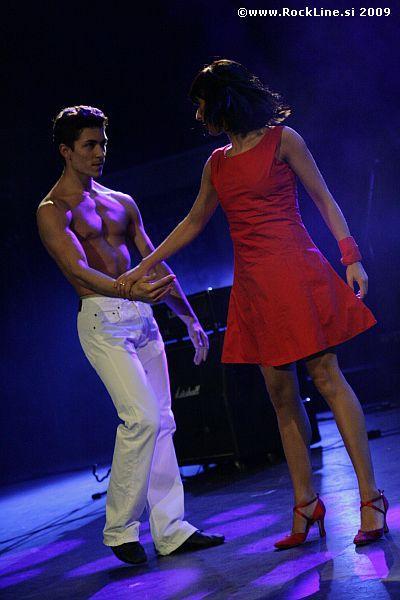
Riblja Čorba’s best years are long gone. Still, a full house of fans awaited them at Križanke, people who value what the band achieved and the big hit Čorba landed long ago. The age of some of the attendees showed they’d been breathing Čorba 20, 25 years ago, and in memory of their young days they met their rebellious teenage idols again this evening. So what can Čorba show today? These well-oiled oldtimers gave Križanke a proper lesson in rock’n’roll. Compared with the dismal two shows in Ilirska Bistrica in May and Murska Sobota in June, this evening was a big band-aid on an open wound and won back the big plus point I’d long ago “stripped” Čorba of. So let’s go step by step! They kicked off with the older classic Ostaću slobodan, continued with the newer Nojeva Barka, and then came Srbin je lud. That last song is interesting because an ultranationalist lyric carries the year 2001. We know Bora, we know his radical views on everything that crawls and walks. But over time the radical streaks, and with them Čorba’s controversy, moved aside, so it’s slightly surprising that a song with that kind of content turned up on the studio album Pišanje uz Vetar in the new millennium. If I may digress a bit, the newest album Minut sa njom is the first album since 1981 without a single political lyric, in other words the first one after fourteen releases in between. So Bora is really getting better! Not to mention that midway through the show he greeted a group of fans from Split who stretched a banner with their city’s name high in the air. We know what Bora thinks of Croats, after all. Čorba carried on with a mix of old indispensable tracks, seasoned with a few ballads, and the current album got a generous helping too. Even though it’s not a bad album, that helping was probably too big, since this was a gig for a venerable anniversary, not so much for the release of a new record. The performance of the last two songs of the main set was excellent, as Čorba were joined onstage by a 30-member women’s choir from Brezovica. The songs Kada padne noć and Anđele took on entirely new dimensions, and the mighty, numerous female backing vocals that accompanied Bora (and the audience) on the choruses were simply begging for goosebumps! The other guests too, the dancers during Minut sa njom and the two strippers during Lutka sa naslovne strane, livened up the show, but the title of best guests undoubtedly goes to the women from Brezovica. These cleverly woven-in guest spots were one of the factors that tipped the scales from average to a super show!
The interplay between the crowd and the band was excellent, and the band noticed, with the loud support of Križanke giving them fresh momentum and new strength for every next song. The audience’s reward was no fewer than two encores. If the first was expected, the same can’t be said of the second comeback to the stage, as the people who caught this year’s shows in Ilirska Bistrica and Murska Sobota weren’t that lucky. Odlazim and Dobro jutro were a more than welcome gift for the great atmosphere the crowd cooked up.
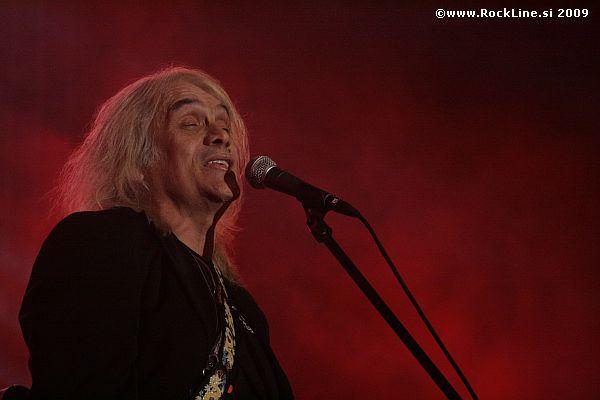
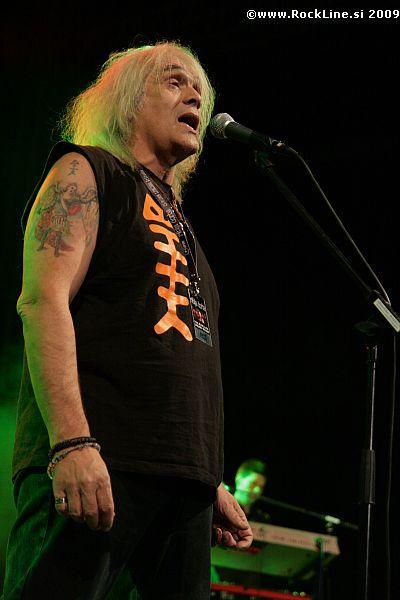
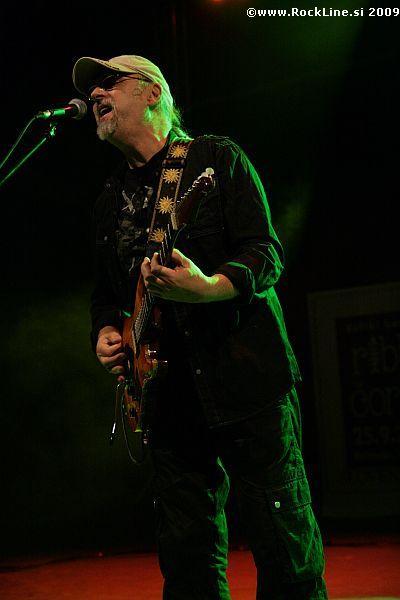
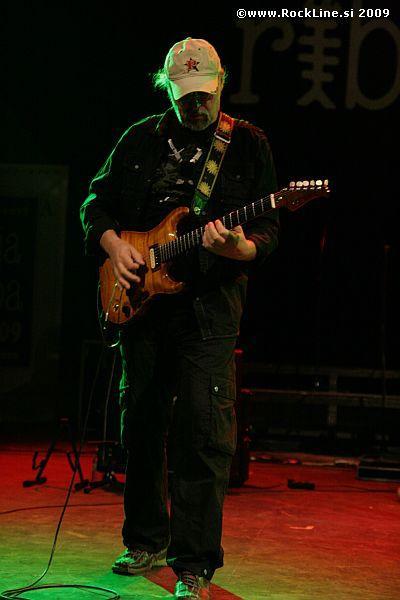
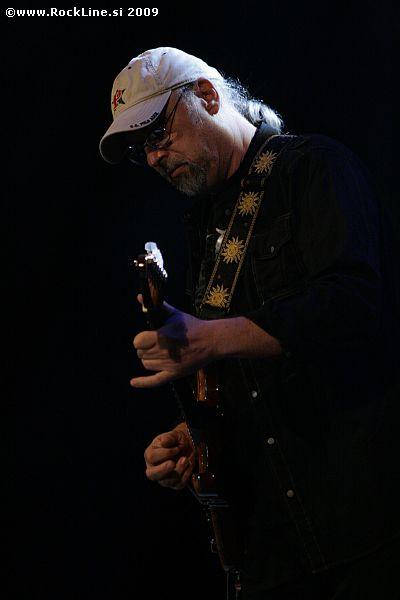
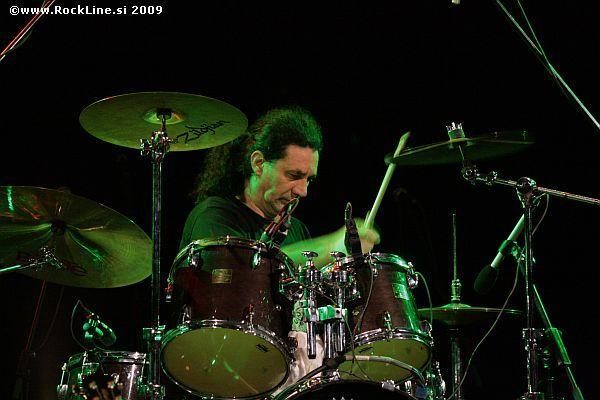
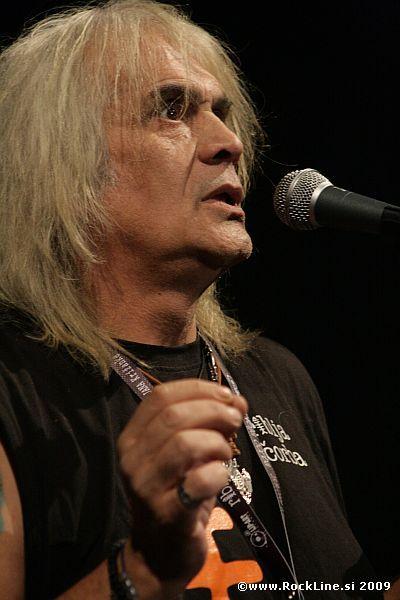
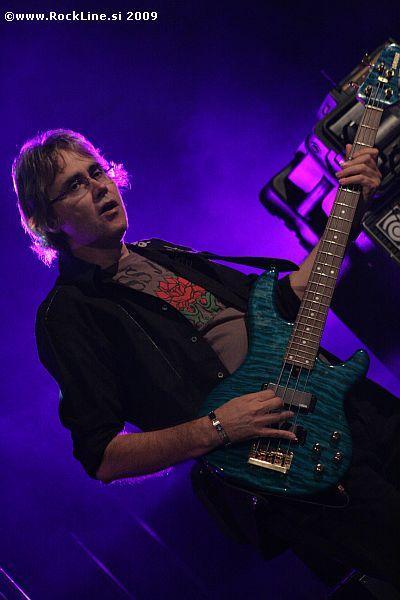
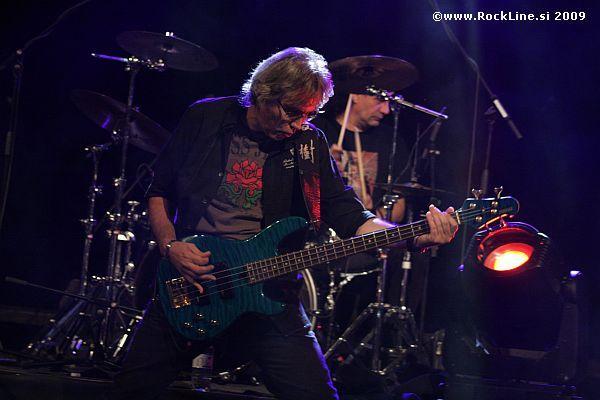
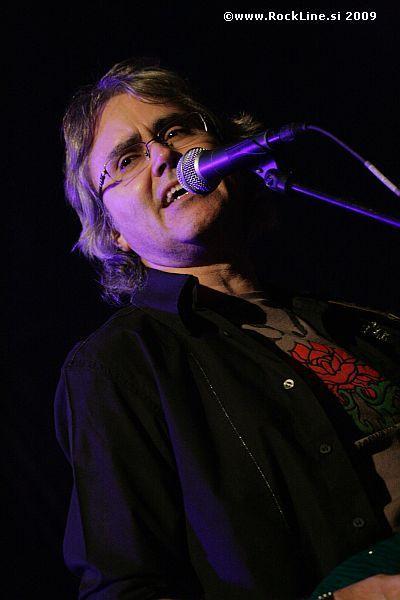
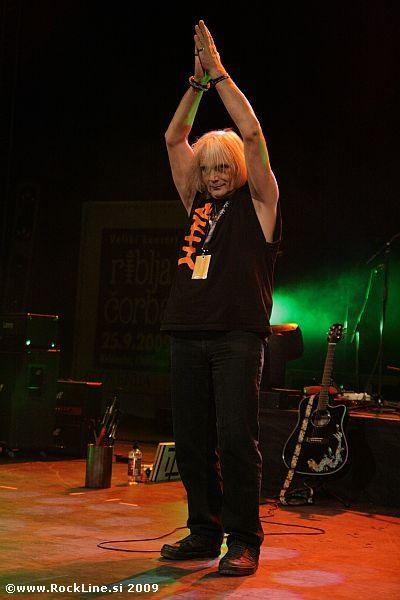
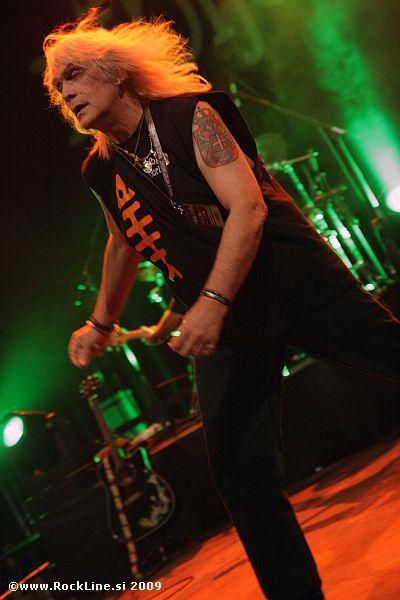
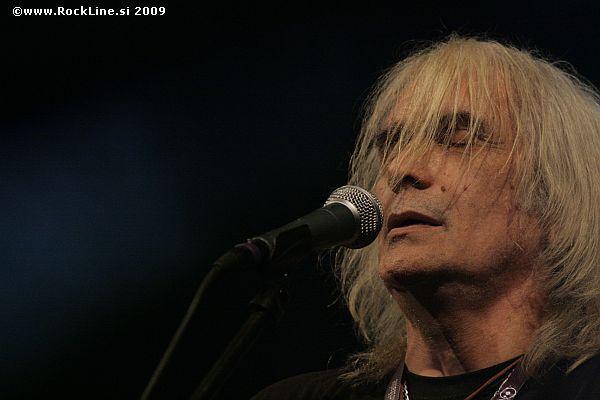
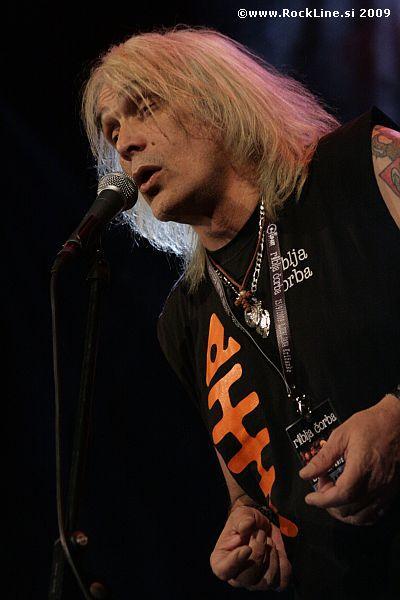
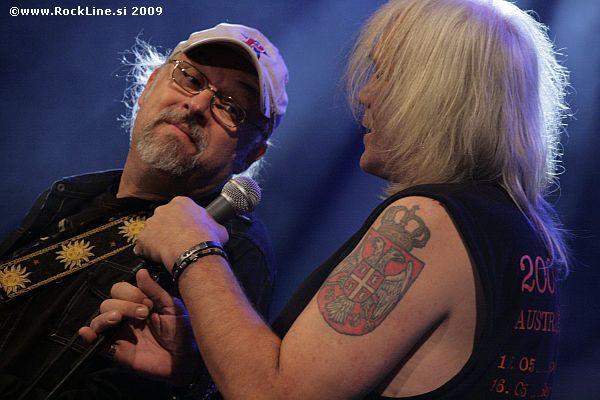
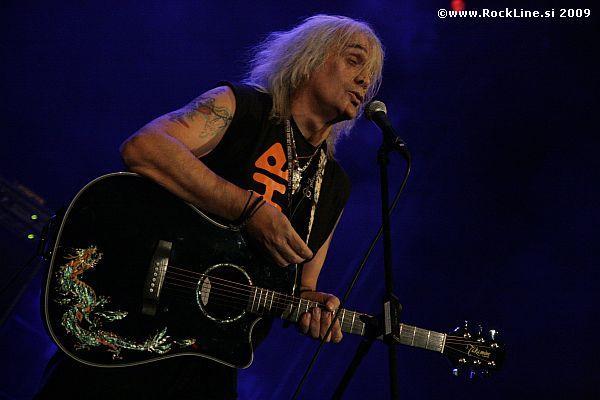
Borislav Đorđević, or “Bora majstore” as Križanke chanted a few times, a problematic personality without whom Čorba would probably never have climbed to where they are today, right among the cream of the biggest, showed how to conduct and keep a show under control from start to finish. The crowd followed his every address, his every word, with ears pricked, and wanted more and more. Memorized verses about this and that topic, whether it was Americans, women or something else, Bora sent it all off to a place nobody would want to end up, in a friendly way with a generous dose of mischievous joking. During Rock’n’roll za kućni savet and Kad sam bio mlad, Bora even proved himself with acoustic guitar accompaniment (long ago the acoustic guitar was indispensable for Bora), and this new-old element sounded very fitting. Bora’s right-hand man, the always smiling bassist Miroslav Aleksić “Miša”, a member since the very first lineup in 1978, was in an especially good mood this time, adding his bit to the banter by jumping in and putting his two cents in on Bora’s words. The rhythm section is rounded out by Vicko Milatović on the drum stool, who with the same 31 years of service in Čorba does his job like a pro and with his “left hand”, without any strain. Judging by his facial expression, the more serious guitarist Vidoja Božinović – Džindžer is less visible onstage, despite his important role as the band’s lead guitarist. He got his moment during Vetar duva, duva, duva, when the members of Čorba always line up next to each other and, to Džindžer’s guitar accompaniment, sing the lyrics of the legendary song together with the crowd. It’s similar with Nemoj srećo, nemoj danas, except that the guitar is joined by the sound of keyboards from under the fingers of the band’s youngest member, Nikola Zorić – Nidža, who joined seven years ago.
Riblja Čorba surprised with freshness and with energy they are obviously still able to give the audience. The big turnout helped the performers show the most they’ve got. In short, Riblja Čorba is still here, still alive, still with us! But I’m afraid that next time we meet, at the next village-fair gig where they’ll sooner or later pop up again, they’ll once more serve up just some mediocre misery…
Photos: Mojca Perdih
Setlist
1. Ostaću slobodan 2. Nojeva barka 3. Srbin je lud 4. Jedino moje 5. Poslednja pesma o tebi 6. Minut sa njom 7. Rock’n’roll za kućni savet 8. Nemoj da ideš mojom ulicom 9. Vetar duva, duva, duva 10. Dva dinara, druže 11. Nemoj srećo, nemoj danas 12. Muško od plastelina 13. Krilati Pegazi 14. Gde si u ovom glupom hotelu 15. Volim, volim, volim, volim žene 16. Al Kapone 17. Amsterdam 18. Avionu slomiću ti krila 19. Kada padne noć (upomoć) 20. Pogledaj dom svoj anđele ——- 21. Bože, koliko je volim 22. Kad sam bio mlad 23. Ostani đubre do kraja 24. Lutka sa naslovne strane ——- 25. Odlazim 26. Dobro jutro
Photo gallery