Silence. Words. Piano. After Six Years, Duo Silence Wowed and Inspired Ljubljana All Over Again

Venue: Katedrala / Kino Šiška / Ljubljana
Concert date: 21.09.2012
Attendance: 900
Ticket price: 12 EUR presale / 15 EUR on the night
After a full six years away from the stage, duo Silence returned to play the capital. A little less than half a year after the release of their latest, critically acclaimed album, ‘Musical Accompaniment for the End of the World’, they played at the anniversary celebration of the Center of Urban Culture Kino Šiška, so let me start with a few words about what this place means (the celebration week kicked off back on 15.9. with a concert by Canadian electronic act Junior Boys, which they also recorded, followed by a concert by the first lady of Sonic Youth, Kim Gordon, in her experimental project Body/Head, and a documentary about the remarkable artist Marina Abramović; for a look back, they put together a photo exhibition of concert moments from the past year, which now decorates the facade of the neighboring (former) municipal building, home today to cultural and volunteer societies).
Kino Šiška keeps proving, year after year, just how essential it has been for the Slovenian, and especially Ljubljana, music and culture scene. Its contribution is highly visible, and after only three years it has already left a strong mark in Slovenia and beyond. Despite some flaws (underestimating the audience a few times – e.g. The Kooks; at moments not keeping up quite closely or actively enough with contemporary music trends, trouble understanding young people (which, admittedly, is a broader problem)…), Mr. Kardum and co. have taken the concert standard to another, higher level. The team stands out for excellent organization and a refined, careful choice of program. Besides performances by relevant international and local acts, picked on quality and/or freshness (they’re not hung up on genre – quite the opposite, what defines them is an openness to alternatives to the traditional and commercial line), Kino Šiška looks after other cultural sides too. It opens up space for art through frequent photo exhibitions, film screenings (LIFFE, films with musical themes…), all kinds of installations, fashion weeks and numerous workshops. And let’s not forget the many (music) projects they’ve brought to our scene: Urbani Festival, the Yu Go! cycle, Tresk festival, Ping-pong jazz nights… Given all that, we can only thank the programmers (and the City of Ljubljana) and hope they won’t veer from the vision they’ve laid out. Without Kino Šiška, many other clubs would be impoverished in the medium term and left without prospects. A public institution is, in this case, a huge help to the development of the concert scene. The concept and status of Kino Šiška fill us with hope that someday the other art institutions and the wider cultural landscape will be looked after in a similar way.
Kino Šiška always takes the celebration of its ”birthday” very seriously. The renovated hall was opened in 2009 by the cult Slovenian band Laibach. For the first anniversary they got Melodrom, and last year rapper Klemen Klemen warmed up Šiška with his show. This year they pulled off something truly special: bringing the enigmatic duo called Silence back to Slovenian stages. They’ve been on the scene for twenty years now and can boast a rich body of work. The duo is Boris Benko (vocals, lyrics) and Primož Hladnik (keyboards, arrangements). Behind them are four studio albums (1. Ma Non Tropo, 2. Unlike a Virgin, 3. Vain, A Tribute to the Ghost, 4. Musical Accompaniment for the End of the World), a collaboration with Laibach that produced the joint record ‘Volk’, and music for theater productions. According to Benko, it’s the latter that’s supposed to keep them going musically. Matjaž Pograjc brought them into the theater at the start of the millennium, and for the last few years they’ve been working with Tomaž Pandur on his international theater spectacles. Early in their career, many in Slovenia took them for a poor Depeche Mode imitation, and some even labeled them a gay band. Those labels soon faded, and now the media carry them on their shoulders and sing their praises in superlatives. It’s also well known (as with many truly successful Slovenian bands) that early on they were received far better abroad (especially in Germany) than on home turf. Even today they’re a one-of-a-kind on the Slovenian music scene. The very fact that there aren’t many imitators says a lot about the value of their songwriting. Not because nobody would want to, but because it’s simply impossible to recreate or imitate what they do (anyone who tried would come off as ridiculous and banal).
Their music has always been steeped in melancholic tones, excellent poetic lyrics, and the meaning of silence as a part of the music (as the name itself hints). They excel at building dynamics and drama (theatricality). Earlier works still drew heavily on the legacy of many electronic musicians of the seventies and eighties and were more baroquely adorned, while the latest studio record led them down the paths of minimalism (the influence of theater). ‘Pieces for piano, considerate synthesizer and voice’, as the subtitle of the latest record ‘Musical Accompaniment for the End of the World’ reads, are defined above all by delicate expressiveness, small notes and pauses (here parallels arise with classics like Arvo Pärt and Erik Satie, and with younger contemporaries, the British indie act The xx, who come across as a kind of kiddie version of duo Silence). The music isn’t technically demanding, but it’s complex to perform. There’s no room for mistakes. Every note speaks to you in its own particular way and creates its own mood. Genre-wise the record is very slippery, and even phrases like ”classical wrapped in pop” and ”contemporary pop” sound more like catchphrases. The album wins us over with its stripped-back, often acoustic form, which sets off a real little eruption of the most varied emotions in us. These feelings are often distinctly pessimistic (apathy, fatalism…), yet on some level they still work optimistically (utopia,…). The songs calm you down and create a parallel, intimate, spiritualized world with no room for the maddened modern age. The duo wanted to highlight one particular cluster of meaning with the title itself, a musical accompaniment for the end of the world. Besides the everyday apocalyptic and catastrophic scenarios (after all, the record came out on the centenary of the Titanic sinking), it also raises a very special question about the role of artists in contemporary society. Their answer here is that music can, sadly, only ease pain, not change the world. It’s accompaniment. On top of that, the album problematizes the relationships between music and ending, between beginning and end, fake happiness and facing one’s own mortality. An album that captures the spirit of the times, yet still wrestles with eternal themes and questions. Slovenian album of the year?
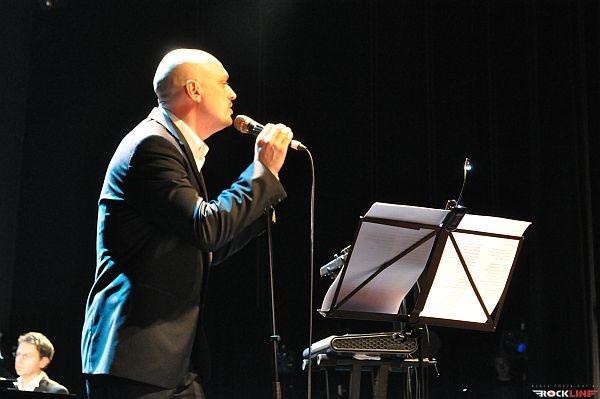
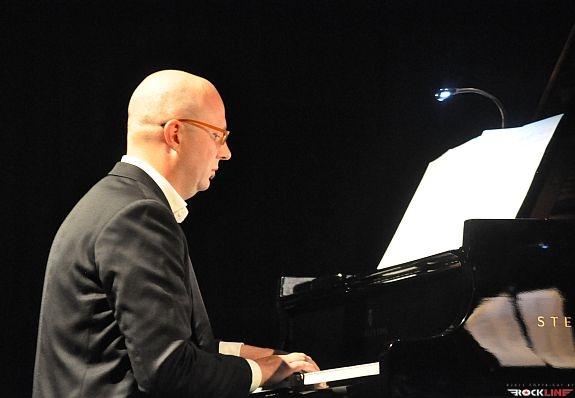
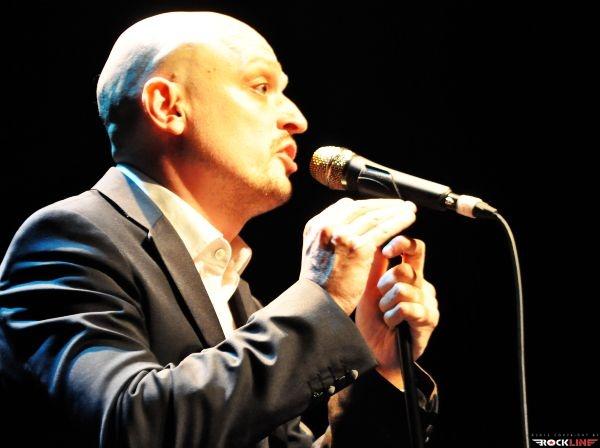
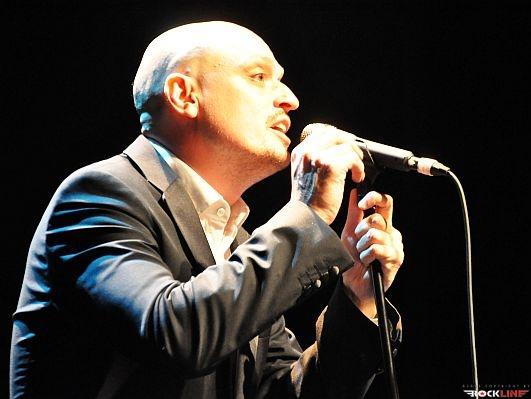
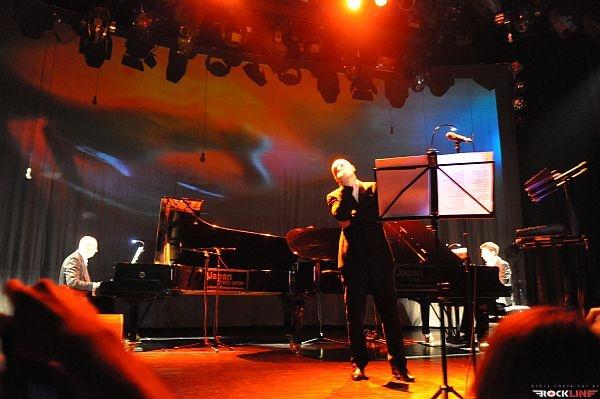
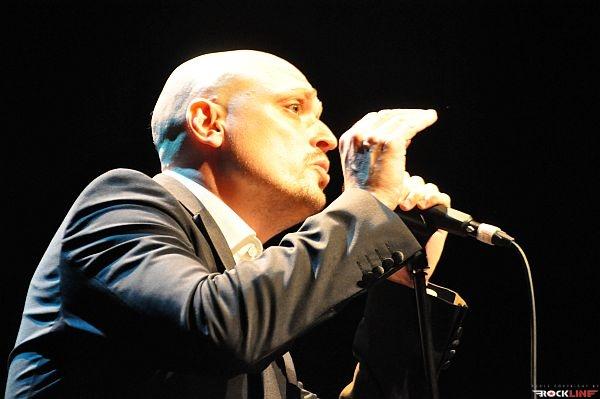
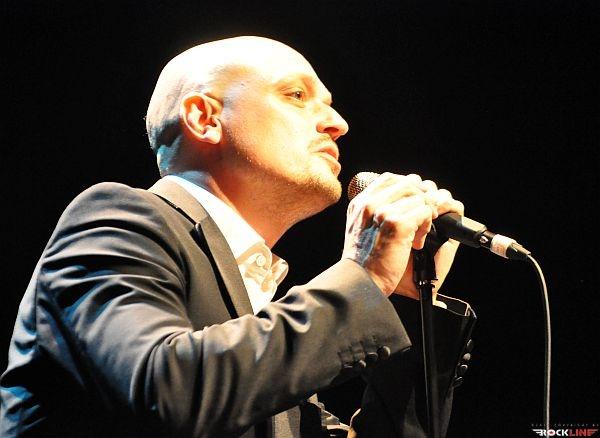
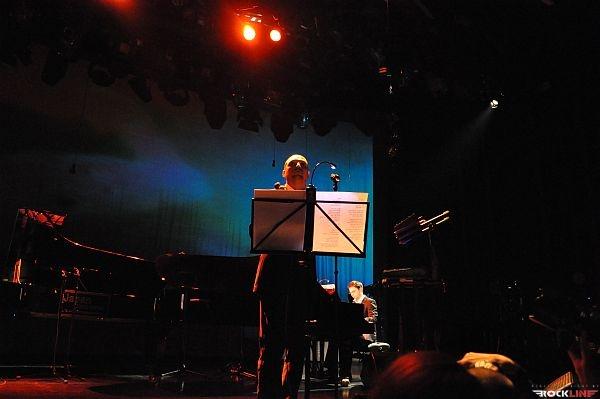
The ‘musicians from the end of the world’ devoted the evening to presenting the latest record. From the very first bars of the opener Hunger, it was clear we were in for an unforgettable night, and any remarks that duo Silence aren’t performers were beside the point. In the jam-packed Katedrala a special kind of atmosphere reigned even before the start, a bit gloomy but full of impatient anticipation. The stage set-up was relatively simple and minimalist, in keeping with the music. In the middle, two pianos faced each other, and in front of them stood only a microphone and a synthesizer. Piano master Igor Vicentić joined Silence for the live show, forming a piano pair with Primož Hladnik. The musicians were dressed formally, like classical performers, and the concert itself felt like the performances of classical masters offered by various orchestras and soloists in Cankarjev dom’s Gold and Silver subscription series. The audience was quiet, with very few shouts, only a few toward the end; here and there you could hear a sigh or see a tear, and even before the applause came a moment of silence. Since there were (this time) no seats, people swayed lightly and dreamily on the spot, hypnotically soaking up what they heard and saw on stage. A contemporary touch came from the carefully chosen, abstractly shaped accompanying visuals, built from dark impressions. Thanks to the exceptionally cultivated audience, the sonic minimalism from the stage came through even more. You could hear every detail. And when silence speaks, it speaks louder than any tone or noise. How surprisingly eloquent silence can be. How silence can be the climax of a song. How silence can define not just a song but its author. Boris Benko and Primož Hladnik picked the right name. While Hladnik enchanted with magical touches on the black and white piano keys, Benko won us over with exceptional expressiveness and a tender, playful voice. Many weather and climate terms would come in handy to describe the soundscape: drizzly, rainy, foggy, gray, starry, sunny…Everything flowed together and formed a gorgeous concert rainbow. Unreal, otherworldly. Music that’s ideal not just for endings but for drowning in the tragedies and beauties of this world (aren’t they the same thing?). Transience, transience.
The setlist had fifteen songs, ten of them new tracks played in the so-called main set, while four songs from earlier albums got a spot in the two encores and were reworked to fit the concept of the new album (I Love You, Silver Bloom, P.S., The True Nature of Happiness). In the second encore they also played an excellent cover of the famous Fever, which musicians have been delivering with more or less success since the fifties, and which was first sung by Little Willie John. Still, despite two encores people didn’t want to leave, and Silence ran out of prepared repertoire. So they played the second-to-last song from the main set once more, Heart of Darkness. The finale was very emotional, and the following painful lines especially burned themselves into my memory: ”Please don’t smile / I am in love with your sadness / with the grace of your despair / You stand tall above the rest / Lifted by the cross you bear /My little heart of darkness / You shine brightly when you wane / Wear no jewelry but your tears /Nothing can outshine your pain”. The peak of the concert came with the two newer songs, Electricity and Death is New York, both of which also have videos made up of collages from films by the 20th-century Slovenian director Boštjan Hladnik (Primož’s father, incidentally). The entire show lasted an hour and twenty minutes, but thanks to its intensity and moving perfection it passed in a flash. No boredom, no needless dragging things out.
Duo Silence came, played, and wowed. In a ”Less is more” package. All of it with just a refined blend of poetry, piano, and apocalyptic ambience. They’re the Slovenian musical ideal: they’ve built a personal artistic identity that they don’t needlessly smear with every collaboration under the sun and gigs at every village fair. If you’re good, it shows. When heart and intellect meet in music, you get duo Silence. Next time we can see them very soon: on November 27 they’ll play with a symphony orchestra at Cankarjev dom. I hope this heralds a time when we’ll be able to see and hear them in the capital again in less than six years.
Setlist
SILENCE
1.) Hunger
2.) Sing
3.) Silkskin
4.) Pioneers of Nothing
5.) Naïf
6.) Sturmschlager
7.) Electricity
8.) Wish Me Well, Wish Me Hell
9.) Heart of Darkness
10.) Death is New York
Encore 1:
1.) I Love You
2.) Silver Bloom
3.) P.S.
Encore 2:
1.) The True Nature of Happiness
2.) Fever (Little Willie John cover)
Encore 3:
1.) Heart of Darkness
Photo Gallery