Author: Peter Podbrežnik
Interview date: 06.07.2007
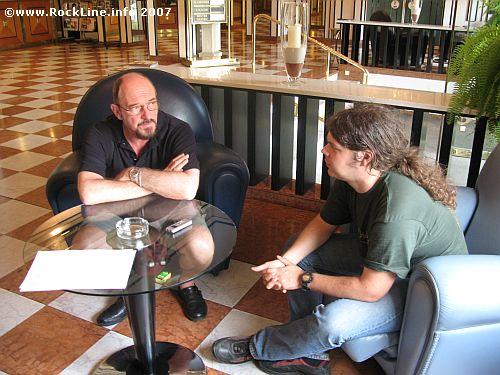
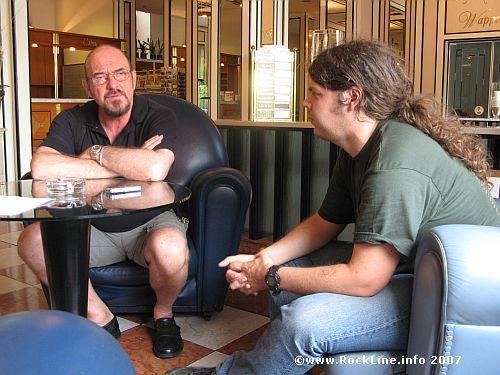
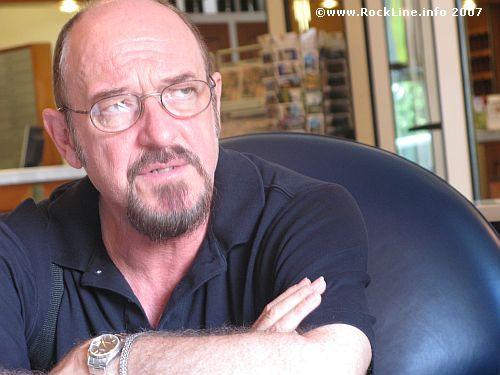
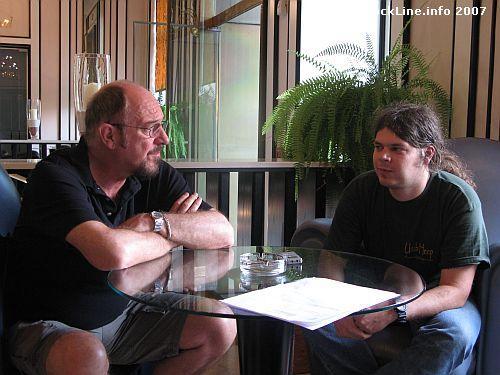
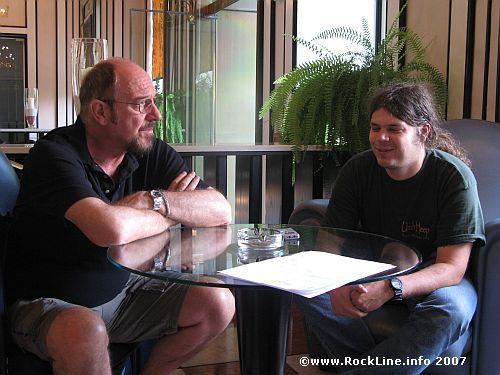
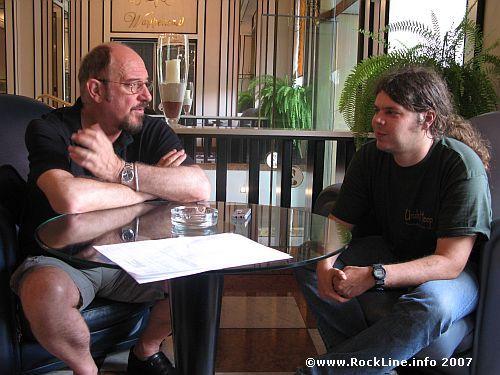
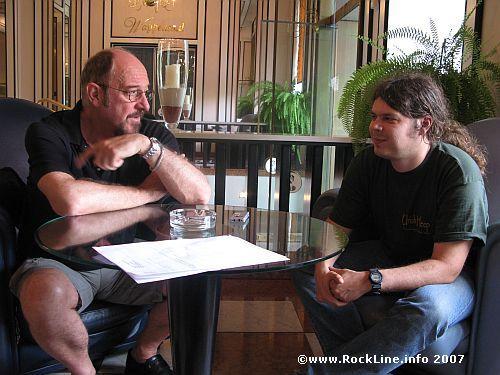
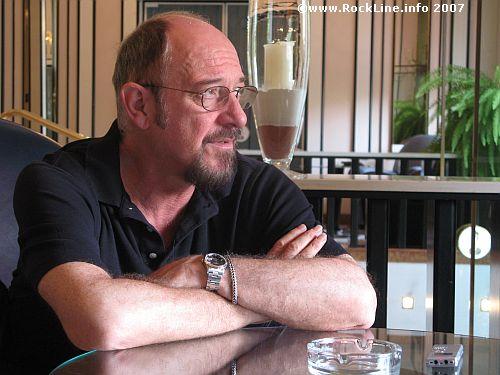
Legendary flutist and singer Ian Anderson is without a doubt one of the greatest personalities in the history of rock music. Since the late ’60s, his band Jethro Tull has built a reputation as one of the most respected and long-lived rock bands of all time, and under Ian’s baton it’s still blowing people away with stellar live shows well into its fourth decade, even though he himself has stopped counting how many members have come and gone over the years. I had the honor of sitting down with Ian in a hotel four and a half hours before his show at the Orpheum in Graz. Ian is known not only as a brilliant musician and stage entertainer, but also as an incredibly charismatic, funny and quick-witted conversation partner, radiating total professionalism, a clear creative and life vision, and a heart of gold. He pairs all of that with a down-to-earth warmth and not a hint of rock-star airs, which he could easily justify. At the same time, he keeps you entertained the whole way through with his one-of-a-kind humor and endless supply of sarcasm, which this Scottish gentleman never runs out of. If we hadn’t invented this thing called time, this interview could have gone on until the early morning hours. A conversation partner as fantastic as Mr. Anderson is something you can only dream of, so I’m struggling to find the right words for all the feelings that are still washing over me after this meeting. This was an experience I’m certainly not going to forget for the rest of my days.
Rockline: Hi Ian, it’s an honor to be interviewing a music legend like you. Yesterday I caught your show at the Lovely Days festival in St. Pölten, where you blew me away once again with a great performance.
Ian: Thanks. So you were at that festival? By the way, very nice Uriah Heep shirt.
Rockline: Thanks a lot. To start off, how are you feeling about how the tour’s going?
Ian: Which tour? You mean the one from 1968 that we’re currently on?
Rockline: Yes, that one (laughs).
Ian: Well, it’s always the same tour anyway (laughs). While other bands break up, say their goodbyes and get back together, we’ve basically been on the same tour since 1968. We just organize concerts. We never identify with any particular tour, which is usually tied to the release of some album. Some bands, for example, go on tour around America and call it the “All-American Tour.” We just play a few shows and head back home, no fanfare. A tour is a tour. It’s one part of our lives and something we make a living from. Every now and then we swap a few songs in the set list or add a new arrangement, but our touring rhythm has stayed the same since
the very beginning. It’s all one long tour.
Rockline: But if I look at the list of songs you’ve been playing at your recent shows, it seems like most of them come from your latest release, “The Best Of Acoustic Jethro Tull.” If you ask me, that means a bit more emphasis on the acoustic side than usual.
Ian: Well, yeah, I wouldn’t quite agree with that. It’s true that next month we have
a few more acoustic-leaning shows lined up, including two festivals in England, but I think the current shows have a pretty balanced set, and this time too there are more electric numbers than acoustic ones.
Rockline: Could you tell us a bit more about the two new members, David Goodier and John O’Hara, who replaced Jonathan Noyce and Andrew Giddings on bass and keyboards? What are their strengths, and what does their arrival mean for Jethro Tull’s sound?
Ian: I’ve been playing with both of them for five years, on solo acoustic shows across America as well as orchestral gigs, so I know their talents well. I’ve worked with them a lot in recent years and been able to fit them into my musical vision easily and successfully, because they’re both very versatile musicians. I think I’ve made good use of them at the orchestral shows too, since they know a lot of orchestral arrangements and know how to work well with an orchestra. They’re both far more useful for playing eclectic music than most of their predecessors. Meanwhile, tonight is the last show until October for our longtime drummer Doane Perry, since he’s heading off on vacation back home to California. He’ll be back in time for the American tour, though. Next week James Duncan will fill in for him for three months. Jethro Tull is like a football team that swaps out its players now and then.
Rockline: Next year the band turns 40. Are you by any chance planning a special event or a special tour to mark the round anniversary?
Ian: No, to be honest, I’m not planning anything special. I’m not much of a fan of anniversaries and the like. That said, next year on tour we’ll try to promote the fact I just mentioned in a suitable way, so we can sell as many tickets as possible. At the same time, the anniversary won’t have any influence on what we play. As usual, we’ll play a varied selection of our work from 1968 until now. I don’t think next year will be any different. There’s also no chance of us playing with any of the former members again. The three most important members of the band from the ’70s have stopped playing and making music altogether, so a reunion like that would make no sense at all.
Rockline: Interesting, that’s exactly where my next question was headed. So you’ve never thought about recording some special project with former Jethro Tull members?
Ian: No. Those musicians no longer fit my current musical vision. Most of those former members, like the original lineup, which was mostly rooted in the blues, would admit themselves that they didn’t have all that much musical talent, especially for making eclectic music. Apart from a few exceptions like Dave Pegg, Peter-John Vettese and Eddie Jobson, I don’t think there are many musicians I could successfully work with again. And even the ones I just mentioned have totally different musical outlooks these days. So the chances of any reunion are absolutely zero.
Rockline: If we go through Jethro Tull’s whole career, which albums do you think are the most important ones?
Ian: Definitely “Stand Up” (1969) comes first, a very eclectic album where we started bringing in more elements of jazz, classical music and folk. “Aqualung” (1971) is also an incredibly important album for us, because it’s our first one that’s more socially engaged, touches on religious themes and is dominated by more serious lyrics. At the same time, it’s an album with a lot of acoustic songs, so I don’t see it as a typical rock album but as one that brings a big contrast between hard rock riffs and acoustic music. I also have to mention “Songs From the Wood” (1977), which was likewise a very important album that put the folk elements of our music front and center. “Crest Of A Knave” (1987) is another key album with an important place in our history. And I can’t overlook “Roots To Branches” (1995) either. That’s another album that brought a lot of new musical ideas, the use of different kinds of flutes and above all lots of Oriental music influences. I’d say these are the key albums of my musical career.
Rockline: Let’s say a few words about your solo career too. What was it like the last time you performed with an orchestra?
Ian: For me, doing orchestral shows is above all an acoustic experience, since there are usually lots of acoustic musicians involved. Even as a teenager I was far more into acoustic music than rock. I was never much of a rock fan. For me, orchestral music is a way of bringing orchestral textures into the music I arrange or write. Making that kind of music is always exciting but very demanding, because you can’t expect a hundred percent success when you’re working with a larger group of people. There’s always some compromise, so you can never find pure perfection there. So far I’ve worked with some very good orchestras, like the one from Iceland and the one from Budapest. In America, for instance, I discovered a group of students from Boston, aged 20 to 23, and we played a string of great shows together. I can say they proved to be the best backing musicians I’ve ever had at my shows. For them too it was certainly a great experience, since they got to know the world of much more rhythmically varied music. Funnily enough, there was only one guy in the lineup, everyone else was a girl. When we held auditions, only three guys showed up, and only one of them got the job, as the bassist. The girls behaved very nicely the whole tour. I don’t know what went on on the bus, where they were all together with that bassist. I wasn’t there. It’s possible they’re all pregnant by now (laughs).
Rockline: Ian, in many people’s eyes you’re also respected as one of the best and most important musicians in the history of progressive rock. How do you see that, and what do you think of modern progressive rock and the bands playing that kind of music today?
Ian: Jethro Tull were certainly a progressive rock band, but we only played progressive rock during a certain period of our career. I have to admit we weren’t bad at it and that I’m proud of what we made back then. You could say that in ’72 and ’73 we were a progressive rock band. But I think you always have to distinguish between progressive rock and prog rock. The latter took shape in the mid-’70s, mainly through bands like Emerson, Lake & Palmer, and it still carries a fairly negative connotation today. Plenty of definitions of Jethro Tull’s music use the term folk rock, which isn’t the best definition of our music either, since we never stick to genre boundaries. Still, I’d agree with it a lot more than with the prog rock label. For me, prog rock was played by bands like Yes, early Genesis and ELP. As for modern prog, I know there are lots of younger prog rock bands out there, most of whom have a great deal of enthusiasm for early Genesis. Prog rock is still alive, but commercially it’s no longer all that successful. The rare exceptions, in my opinion, are for example the Swedes The Flower Kings and a band whose name I always forget – Porcupine Tree. Those two are among a handful of solid, likable bands that I think have no chance of ever being rich and famous. I personally think it’s a kind of music that mostly suits young guys in black T-shirts. Like you, for instance (laughs). Prog rock is a distant cousin of heavy metal, I’d say, since it mostly attracts a male audience, and at the shows you’ll hardly spot a single girl. Honestly, it cracks me up to see almost nothing but men at shows by bands whose music is full of sexual provocation and messages. I much prefer playing for a mixed audience, both in terms of gender and age, which also better reflects society at large. A sea of men in front of the stage irritates me. Fifty percent is fine, anything beyond that is too much. The girls mustn’t be missing. As a flutist, it matters to me, and it’s nice, to stir up certain feelings in the girls. It’s fun to watch how quickly you can make her boyfriend jealous that way (laughs).
Rockline: Word is you’re recording a new Jethro Tull album. How’s it coming along, and what can we expect from it?
Ian: We’ve already started recording a few things during this tour, but right now we’re short on time again. We’ll be recording again toward the end of the year. By January or February next year it should all be finished. I don’t think it’s good to rush albums. On the other hand, it’s always great to play live, because I’m aware I’m no longer young. So I perform a lot and with joy for as long as I can. Anyway, there are a few songs that will be on the new album and that we play on this tour, like “Donkey And The Drum.” “Pastime With Good Company (King Henry’s Madrigal)” will also come out on the new album as a bonus track. I’m planning three or four bonus tracks that won’t be typical Jethro Tull creations. Because of all the touring, especially in August, the album will most likely only come out next February.
Rockline: What do you do in your free time, when you’re not on tour or making music?
Ian: I feed the cats, grow chili peppers, take care of the garden and sit in the office, since I’m actively involved in running our tours. I want to keep as many of the band’s administrative matters under my control as possible, so I’m often pretty busy in my office. I spend a lot of time on organizing and promoting our tours. I actually have two offices at home. I think a lot of musicians would benefit from getting properly into the organization of the business they work in.
Rockline: Is there any flutist, in the rock world or outside it, you’d like to play with, the way you did with Tinkara Kovač?
Ian: I usually meet other flutists at orchestral shows, and sometimes we play a duet. I’ve also done a few shows with flutists from the classical world and with an Indian flutist who plays traditional Indian music. I’ll be honest, I much prefer playing with musicians who play other instruments rather than with flutists. Too many flutes isn’t good. I find that right now there aren’t many well-known flutists in the rock world that I could point to. Ray Thomas of The Moody Blues stopped playing years ago, Chris Wood of Traffic is dead, Herbie Mann, the well-known jazz funk flutist, is dead too, and Peter Gabriel played flute in the early Genesis years but later gave it up. Then there’s Thijs Van Leer of the Dutch band Focus, who I don’t even know is still active or not. The only flutists I run into in folk/rock are usually members of various Jethro Tull tribute bands (laughs). I think one flute in the music I play is more than enough, and two would be absolutely too many.
Rockline: In Jethro Tull you’ve played with a huge number of different musicians who came and went. The one constant, and a musician you’ve worked brilliantly with almost since the band’s beginning, is guitarist Martin Barre. How do you see his contribution to the band?
Ian: Yeah, Martin has been an important part of the Jethro Tull legacy since 1969. This year there’ll be a few shows he can’t make, because he’s going on vacation to Canada with his family. Then he’ll come back, of course. Martin gives the band a sense of continuity. Apart from me, he’s certainly the most important member of the lineup, and I think the audience is well aware of that.
Rockline: In the collective consciousness, I think Martin is best known for his hard rock riffs.
Ian: Yeah, that’s true, although Martin loves playing acoustic music too. But because he’s better known as an electric rock guitarist, and I’m the one playing acoustic guitar, he’s much more recognized that way. As far as I know, he’s currently recording a new album that’s acoustic-leaning and will come out in the next few months. Years ago I bought him a bouzouki as a present, and he plays it at some Jethro Tull shows too. So he’s a big fan of acoustic music as well.
Rockline: It’s been seven years since you last visited Slovenia. Is there any chance you’ll come back to our neck of the woods soon?
Ian: That’s true. We’d love to come, but it all depends on the local promoters. The possibility is always there, but we can’t just hop on a plane and show up. There’s a chance in 2008, when we’ll be doing lots of shows around Eastern Europe, definitely the Czech Republic, Poland, Bulgaria, Romania, maybe Slovenia too. I’d like us to be able to come to you as well. I think Slovenia is one of the most interesting countries in the region, which is otherwise quite assimilated into the Western European way of life. I’ve visited Ljubljana a few times, and it strikes me overall as a very relaxed and calm city. In that way, Slovenia seems to me to have quite a bit in common with its northern cousin, Estonia.
Rockline: We recently caught you at a show in Pordenone, Italy, where it rained heavily and you had to cut the show short because of a power cut. Do you remember?
Ian: Yeah, that was the show where it really poured. Some of the shows in Germany were similar, and we didn’t have any better luck there. With most of the shows in the previous days
we were lucky with the weather though, because it could have been a lot worse.
Rockline: Yesterday, when you played the hall in St. Pölten, you played indoors while it was raining outside again.
Ian: Ah, right, you were in St. Pölten. Did you happen to catch the Riders On The Storm show? How did they do?
Rockline: I’m not exactly a big fan of The Doors’ music, and besides, I think that singer doesn’t fit in that band at all. I didn’t even watch the show to the end, because I went home early.
Ian: Well, as I figured, it’s basically just another tribute band. The Doors were always centered around one central, irreplaceable personality. This move shows that the band decided to cash in on old glory in a not-so-honest way. There’s a similar case with another band that played yesterday and also strikes me as a tribute band – Blood, Sweat & Tears. That’s a band that bought itself a name and has no original members, which doesn’t seem fair to the audience. It’s the same with Queen and plenty of others. On the other hand, if Led Zeppelin got together with Jason Bonham, the son of the original drummer, that would be completely legit. These are all bands that had one hugely important central figure. Then again, if Freddie Mercury were still alive and the other three were dead, same with Jim Morrison and The Doors, and the bands still went by the same names, surely nobody would have anything to say about their legitimacy. Anyway, there are quite a few cases of tribute bands drawing crowds out there. Like The Jimi Hendrix Experience without Jimi Hendrix or a James Brown band without James Brown. I think people should think hard about who they’re giving their concert money to. So watch out for tribute bands (laughs)!
Rockline: Thanks, Ian. It was a special honor to interview you. Best of luck at the upcoming shows of the summer tour.
Ian: Thanks, guys. I’m glad I met you two. I wish you both lots of luck on the music front too.
Photo Gallery