Location: mailer
Interview date: 09.11.2010
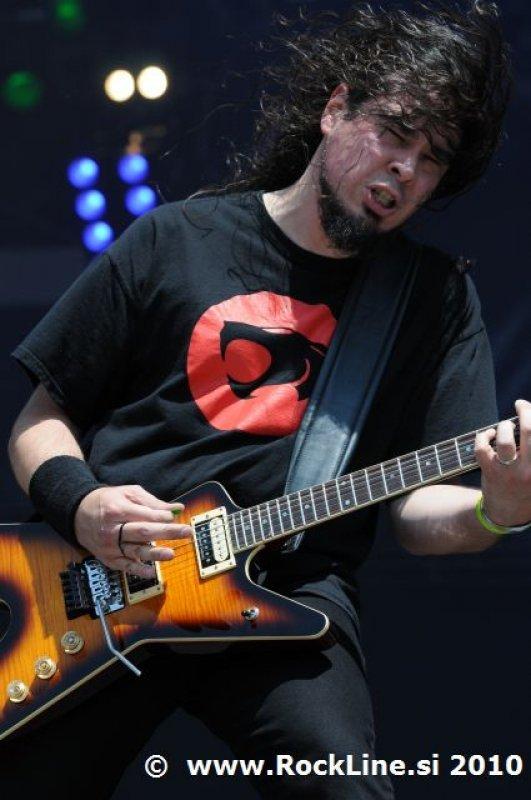
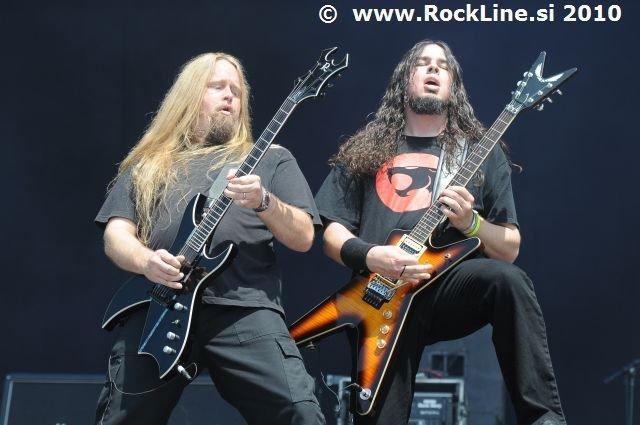
Craig Locicero is the main creative engine behind the legendary Bay Area thrash metallers Forbidden, who reunited two years ago after a long hiatus and recorded a new album, “Omega Wave” (Nuclear Blast Records, 2010). Craig let us in on some of the backstory of the Forbidden reunion, the making of the new album, and his work with Spiral Arms and Demonica.
“How did you end up working with Hank Shermann on the Demonica record, and how has the band evolved from the very start?”
Craig: We’d just gotten Forbidden back together, and soon after that Hank sent me an email asking if I’d be interested in playing guitar on one of his records. Asking if I’d be down to take part in a thrash album. “A thrash album?” Hank Shermann and a thrash album? I just couldn’t wrap my head around it. But when he sent me the music, I changed my mind in a heartbeat. I really liked the riffs he showed me. He sent me raw recordings, with only guitar and vocals, a drum machine added, no bass. Hank comes from the classic heavy metal school, “thrash” isn’t exactly his natural mode of musical expression, but to make a long story short, I reworked and rearranged the whole thing a bit, and it took me quite a while. Half of the album was recorded in 2008, we tracked the drums in the Bay Area, Mark Hernandez recorded them (Forbidden’s drummer, ed.), and it was kind of logical that he’d become part of the team. Hank had already seen Forbidden play in Copenhagen in 2008, and that’s where he became convinced Mark was the right drummer for his project. All we were missing was a bass player. Hank remembered Corruption bassist Marc Gabrowski, who’s from Denver. It’s true that it dragged on for quite a long time before the album actually came out, not until early 2010. I really like the album, Hank is definitely my hero, and I can only congratulate him on this achievement.
“Where did you dig up Klaus for the singer’s spot?”
Craig: Hank had known Klaus very well from before, and I met Klaus in person too, when we both appeared on the TV show Metal Show in Copenhagen. The man is very communicative, gives tons of interviews, knows absolutely every band, but I had no idea how well he could sing. Whether he could even scream. But Klaus convinced me he’s excellent. His presence and style remind me of Tom Araya (Slayer) and Arnold Schwarzenegger rolled into one.
“Where does the idea for the name Demonica come from?”
Craig: Demonica is Hank’s baby. The name too. I only contributed a few melodies, a few solos, and suggested a few arrangements. The whole thing happened between us over Skype. That played an important role. We sorted out a lot of the album that way.
“Why did it take so long for the album to actually come out?”
Craig: The reason for that lies on my shoulders. I was involved in the Spiral Arms album, we got Forbidden back together, and at the same time Hank asked me if I’d work with him. So that’s three albums piled up at once. Until the Forbidden reunion, Spiral Arms were of course my first priority. Then came the tours, and the work for Demonica suffered because of that. I had to make quite a few sacrifices, but in the end I was really happy that I got to contribute to the Demonica album, and I know I’d love to record the next Demonica album too, with Hank of course.
“Has Demonica played any European shows so far?”
Craig: Just three shows. One in Belgium at the Alcatraz Festival, one in the Netherlands, and one in Copenhagen, Denmark. We were totally surprised at the Alcatraz Festival, because on a bill with Pretty Maids, Raven, Epica, Evile, Moonspell and Lizzy Borden we seemed pretty exotic. And yet people knew us. They even knew the songs from the album and created an incredible atmosphere. It was a real pleasure to play there. We were very happy.
“What can you tell us about what you’re currently up to with Spiral Arms?”
Craig: Spiral Arms came out of two bands. Tim Narducci and I started the band in 2004, and he had previously played in Sistematic. They’d been with a major label before that, and Lars Ulrich (Metallica) himself signed them, so they had really solid financial backing. The other band, signed by Rick Rubin, was Manmade God. The difference was that Sistematic went on tour and put out an album, while with Manmade God things kept getting stuck, and there was a lot of bureaucracy holding up progress. Anyway, Manmade God fell apart, but the people who knew the band really loved its music. One of them was Tim, who came to me after Manmade God broke up and admitted that he liked that music even more than his own band’s. So he suggested we start something together with a new band. But we had the whole thing backwards. We wanted a big deal and got burned, because things in the music industry had changed in the meantime and the big deals were gone. Time kind of ran us over. We’re too old for a big deal, too heavy, and of course not exactly “poppy”. Spiral Arms is a strong rock band that’s hard to put into any category, we build on the sound of bands like Black Crowes and Clutch. We’re on the road all the time. And I have a plan for Spiral Arms. This band is very important to me.
“So Highest Society (2010) is the album you put out with Spiral Arms.”
Craig: That’s actually the only real record, in the sense of a studio album, that we’ve recorded and released. Before that they’d put together another record, but it was just a collection of demos.
“Have you played in Europe as Spiral Arms?”
Craig: In 2007, and we got a wild response from the crowd. I’ve joked many times that Spiral Arms should sign a deal several times, and break it several times too, in order to stay in the music industry. It’s really important to sign with a good indie label that then helps build your career. Right now we’re paving our own way, and we’re doing very well with it. With Spiral Arms I totally relax when I play, I even switch off my consciousness. With Forbidden it’s different. That’s grinding, hard work in terms of performance! There’s no time for too much daydreaming. But it’s hard to satisfy both sets of listeners, or to convince them to start following what we do with Forbidden and Spiral Arms.
“So would you agree it’s very important to be on stage all the time and widen your base of loyal fans that way?”
Craig: I’d say it’s even more important to connect with the audience when you’re up on stage. Even more important than twenty years ago, when it was enough for your videos to get played on MTV. Today you make a video that basically won’t get any further than YouTube. Even if you just record a demo and put it on YouTube, it does more good for spreading the word about the band than any promo campaign.
“How did it feel to be back on stages in Europe, Japan and the USA with Forbidden after so many years away?”
Craig: I can say I felt great. I love playing with these guys, especially with Russ (Russell Anderson, vocals, ed.) and Matt (Matt Camacho, bass, ed.). I’ve known the guys forever, and it was very important for the lineup to come together in the right shape so we could pick up from where we left off. At first I was very skeptical. We were trying out a drummer, and we weren’t sure how he’d fit in with us. With Mark (Mark Hernandez, drums, ed.) we knew he could play the songs, but at that point I didn’t have a clue we’d ever play in Europe again and write a new studio album. Somewhere halfway through getting back together with the old buddies, I felt again that I could write music. I got inspired again by the things I hate in this world, I’m always inspired by the things in life that bug me. First I went after the political climate. I wanted to complete the lineup. I turned to Glen (Glen Alvelais, guitar, ex-Forbidden 2007-2008, ed.). He’s a great guitarist, but we just couldn’t get along with him. Still, we somehow gritted our teeth and hit the stages with him. As for Mark, I only started trusting him 100% once we began writing the new material, that’s when we clicked in the studio, and only then did I know for sure that Mark was the right guy for Forbidden.
“And do you think it’s easier to get along now than when you were younger?”
Craig: That’s very relative. Depends on the angle. It’s easier today than it was at the start. In the beginning I was stubborn. I was the youngest in the band, but kind of its leader, since almost all the music ideas in Forbidden came from me. So I often had trouble with communication and respect toward the others, or the other way around. What I’d imagined had to be how it was. I rarely made compromises back then. Tim (Tim Calvert, guitar, ex-Forbidden 1989-2001) and I were really good friends, but we often “went at each other”, especially when we were locked in a room together writing music, and it was hard to agree on everything in a way where both our ideas counted equally. Today, working with Steve (Steve Smyth, guitar, ed.) is different. Steve lives in London. He writes his music, I write mine. We swap demos, then I meet up with Mark and we work out the arrangements together, and once we’ve shaped the raw material, Russ joins in too and it gets reshaped to suit his vocals. These days that stuff is a lot easier. Back then everybody waited on me to contribute the ideas and music, and they waited “at the door” for their turn to make their contributions. That was getting more and more stressful for me. The difference is that today I can put together an album that’s finished and clear in its vision much more easily.
“And that brings us to the new album, “Omega Wave”.”
Craig: The album is excellent, complex, you always find and discover something new on it when you listen. Above all, I was very positively surprised by Russ’s work. It’s an album that grows on you slowly, so you have to listen to it several times for it to really get under your skin. Tim and I produced it ourselves. The feeling is unique. I’m very proud of this album.
“What kind of reaction did you expect from the public after all those long years of pause, after the band’s reunion and the release of the album?”
Craig: I always used to make the mistake of thinking ahead about what would happen, even about stuff I didn’t want to happen. I did that in the past, but now I’ve left that behind. I told myself I wouldn’t repeat that mistake. I stopped thinking about what would happen when the new album came out and what would happen when we were back on stage. All I had was the hope that people would accept us and appreciate us once they got to hear the new album, which was made with huge enthusiasm and whose basic mission, in today’s times, is vital for the survival of metal and the thrash metal scene. I also wanted people to realize that the new album is one that comes completely from the heart. When we got back together we got a lot of approval and tons of support from the fans, and that gave us big wings for making the new record. But we could have turned into self-satisfied, unapproachable birds who couldn’t care less about the everyday world. That’s just not how it works. Now we have to stay solid, united and clearly focused. I hope we’ll get the chance to present the new album more widely, all around the globe. I can be grateful for this support from our listeners, because it keeps us on our feet and moving. It gives us purpose and the desire to become a better band, and last but not least, not just a better band and better musicians, but also better and more mature people.
“How important is it to you to get your music and messages across to people in this day and age?”
Craig: The beauty of art is that you can do whatever you feel like, but that can also become a trap, because you can end up imposing on people what they have to do, how to think and so on. It works a bit like fingerprints. Every piece of art is different. The way I see Forbidden’s mission today, I can say that Russ and I really spent a lot of time shaping individual verses. We talked a lot about how we’d approach things this time. We dug into the madness of today’s world, how competitive we are, how paranoia and conspiracy eat away at us… we wanted to make an album that goes on the attack across the board!
“So the most important thing is to offer people what you actually carry inside you?”
Craig: Very important. For people to feel what we actually feel inside. Each of us creates our own reality, our own cosmos, or if you like, our own “matrix”. Everybody fights in their own way for that humble daily sandwich. Today it’s a lot harder to get through to people with genuine information, because they’re being bombarded with all kinds of it. People use it to give themselves security and control over everything, not realizing that this is exactly how they let themselves be controlled by the handful of most influential individuals who spin and steer the way we live on this planet. It’s harder. People first have to wake up, start listening to their own feelings again, and find principles that come from within themselves, instead of accepting someone dictating how they must live and what to choose in life.
“How would you bring the messages on “Omega Wave” closer to, say, your son, and try to steer him onto the right path through the information on the new album?”
Craig: Great question. There’s a song on the album called Overthrow, the third track on the record, that answers this question. In this case the answer can hardly be anything other than that you first have to get “smacked in the face” before you get all the answers to your questions. I definitely wouldn’t want to scare my son or shock him, clip his wings, I just want to give him extra motivation to stick to the path he’s set out on in life. That’s the vital point here, if you listen to the lyrics of that song, it’s not hard to picture blood on the streets, violence, devastation, death, while at the same time it paints a picture of a family forced to stare at this image of doom and destruction. It all revolves around corporate fear-mongering. The fear of the masses is the key with which corporations make massive money today.
“Let’s wrap up with a more cheerful topic. Forbidden and the 70.000 Tons Of Metal festival.”
Craig: 70 000 Tons of Metal! That’s going to be awesome. Guys on a ship who are in love with metal. I’m bringing my wife too! Everybody’s playing there, friends I know, and we’ll all be on the ship together! There are 30 or 40 of them. Over the five days of this festival we’ll play twice. I don’t even know the exact schedule of when we play yet, but I’m already sure it’ll be one huge party for us.
questions prepared by: Pascal Rogl (Rock Hard Slovenija)
text translated and edited by: Aleš Podbrežnik
photos: Aleš Podbrežnik (photo archive RockLine 2010)
The interview was done in cooperation between RockLine and Rock Hard Slovenija:

Photo Gallery