Author: Urban Bolta
Location: Orpheum / Graz / Austria
Interview date: 20.02.2014
John Mayall is a music legend who, at a full eighty years old, is still tirelessly touring the world. This is a gentleman who has earned the nickname »the godfather of British blues« honestly! Mayall’s albums from the mid-sixties paved the way for the British blues rock boom as the decade turned into the seventies, and his lineups were the breeding ground for names as eminent as Eric Clapton, Peter Green, Mick Fleetwood (Fleetwood Mac), Andy Fraser (Free), Mick Taylor (The Rolling Stones)… One of the most influential white blues guitarists of his time, he kept nurturing his soul in the decades that followed, too, in his new home on the other side of the Atlantic, with a steady stream of new releases, all the way up to today, when the silver-haired veteran is (be)coming one of the truest monuments to the musical sincerity of the sixties.
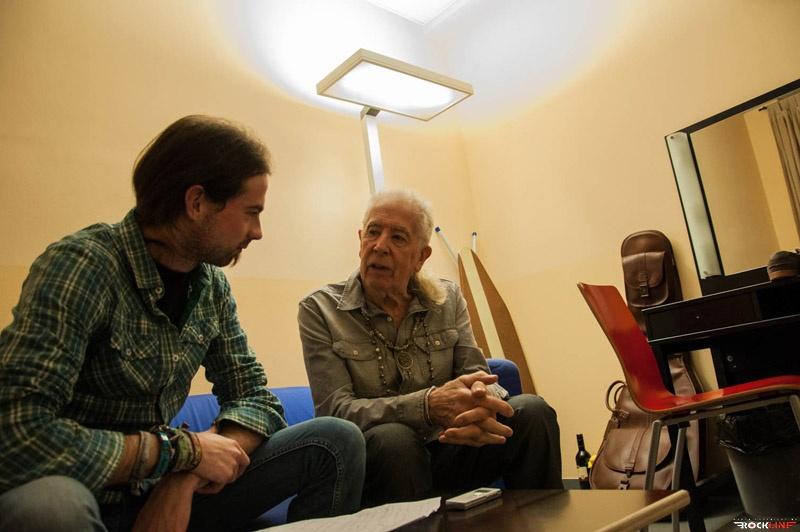
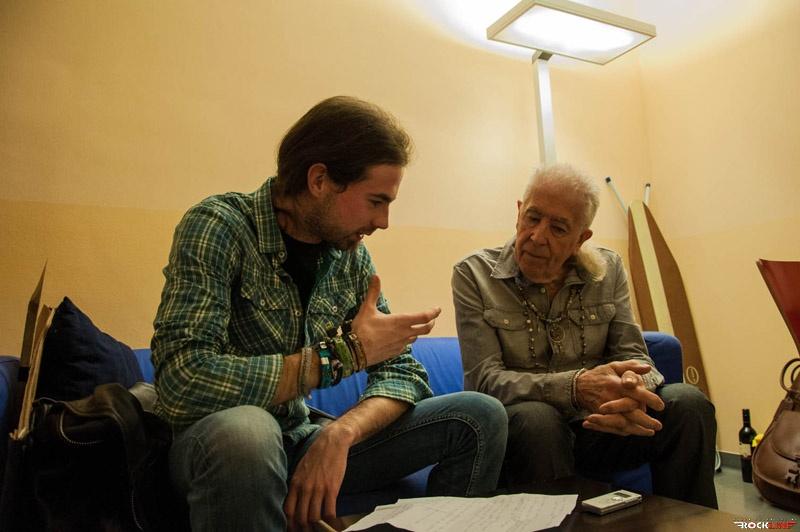
In the late afternoon, after the soundcheck, the still-vital John Mayall took a few minutes for a quick chat with Rockline. Although a bit reserved and diplomatic in his answers, Mayall, in the relaxed atmosphere backstage at Graz’s Orpheum hall, laid out a few interesting thoughts and proved that, despite his age, both mind (and body) are still in seriously respectable shape.
Hello, Mr. Mayall! You’re in the middle of a tour of continental Europe. Are you happy with how it’s going so far?
John: The middle of the tour is still a long way off (laughs). But everything’s going according to plan, so I’m happy.
I was browsing your website. I saw that you play literally every day, and you rarely allow yourself a day off on tour. Doesn’t it ever happen that you get up in the morning, look in the mirror and ask yourself: “Do I really need to play every single day”?
John: Playing live is my passion, it’s how I express myself through music. Any musician will tell you that playing live is a wonderful experience, and on top of that, playing puts bread on my table. It’s my job, but not just that, it’s more than that. Music is the path of my life, and all the energy I still have comes from it, so even at this age, playing every day is no trouble for me.
When you disbanded the Bluesbreakers, you put together a new crew of backing musicians, and you’ve been playing with them for five years now. It seems you get along well and work well together?
John: Yes, that’s right. They’re exceptional musicians and I really enjoy touring with them. We’ve enriched that good chemistry and understanding of one another with a brand new album, which will come out in March. It’s called »A Special Life«, and it’ll be available to buy today, so people at the show will be able to hear what we’ve been creating lately. So even though the album officially comes out only in March, people at the shows on the current tour can get it earlier.
Over the years you’ve played with numerous outstanding musicians. Are you still in touch with all these big names today, or have you drifted apart over the years?
John: If you mean the musicians who are better known than me, then the answer is: mostly no. I respect their private time and it wouldn’t even occur to me to ask for their phone numbers or anything like that. Every now and then I run into one of my old friends by chance, but we don’t keep in regular contact.
I read that you once studied design.
John: Yes, that was a long time ago, I did that before I committed myself more actively to music.
Over the course of your career you designed a few of your own album covers. What about today, does that kind of art still live in you?
John: You won’t believe it, it still does. I actually designed the cover of the current album, »A Special Life«, too.
Do you think music and design have a lot in common?
John: Both music and design are distinctive types of art through which an artist expresses themselves and their thoughts. It doesn’t matter whether we’re talking about music, film or some third kind of art, in every one of these fields the artist needs a gift, a feel and the right spark, and maybe that’s exactly the connecting point between the thousand different faces of art. In the end you find that all the spheres of art are connected to each other in one way or another.
You’re an extremely experienced musician and you’ve combed the world with your concerts. Over the years, has anything changed among your listeners, do people still receive your music the way they used to?
John: No, not at all, I don’t notice any real difference between then and now. We’re talking about the blues, people all over the world love the blues, and over time things haven’t changed much there.
Do you think the blues has a future? Because, to be honest, that kind of musical expression is completely foreign to my generation today.
John: I don’t know. Wherever we play, and we play all over the world, we get a warm reception from the audience, and the audience is usually made up of all generations, including younger blues fans. Obviously we’re doing something right. (laughs)
Your words sound very optimistic, but like I said, among my friends there’s at most a handful of people who can identify with the blues.
John: Then all I can say is that they don’t know what they’re missing.
I know! (laughs) As for my next question, I’m sure I already know your answer, but still: the Beatles or the Rolling Stones?
John: That question has no answer. It’s impossible to compare two such superb bands. Sure, both come from the same era, but they’re two completely different groups, each with its own story, unique sound and development. All musicians of their caliber, no matter how successful they are at a given point in their careers, cultivate a recognizable, inimitable style, and it’s impossible to compare different musical expressions with each other.
Throughout the sixties you were quite closely connected with the Rolling Stones. You hung out with the late Brian Jones, you knew Mick Jagger, and last but not least, Mick Taylor played in your band. Were you connected with the Beatles in any way, do you have any interesting anecdotes involving them?
John: The only one I knew better was Paul McCartney. I knew Ringo Starr in passing too, we once talked at some party. More or less, though, Paul was the only one I was actually friends with.
One last question. What can we expect from tonight’s show, will you be presenting some fresh material too?
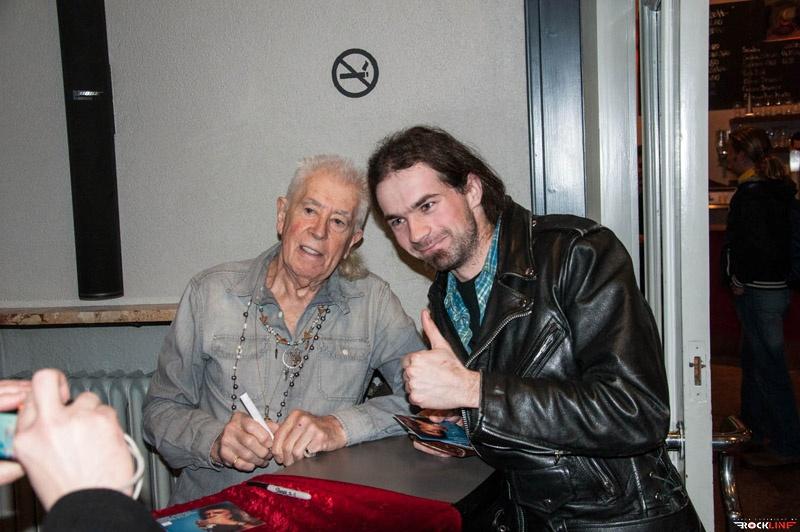
John: You can expect a pleasant evening (Mr. Mayall then stands up, bends down quite youthfully to a nearby suitcase, pulls out a copy of the new album and hands it to me). So you can listen to my latest songs at home, too. Enjoy tonight and spread the word about our new album, enjoy all the good music in this world.
Thank you very much for your time, Mr. Mayall!
Interview by: Urban Bolta
Photos: Mitja Groznik
You can read the concert report here.
Photo Gallery