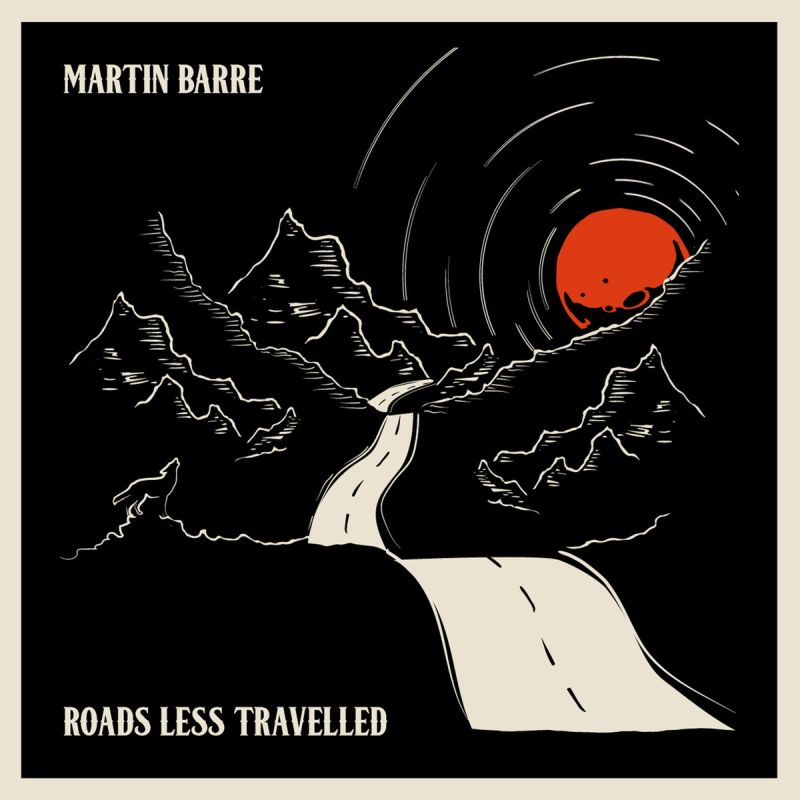
Label: Garage Records
Release date: 12.08.2018
Album length: 43.36 min
Produced by: Martin Barre
Genre: Progressive Rock / Art Rock
Rating: 9.0 / 10
Martin Barre is the musician whose eclectic guitar playing defined the sound and style of prog rock giants Jethro Tull. His musical sensibility is so distinctive that his quirks always leave a strong mark on the band, and the character of his ideas shapes the voice (the artistic growth, or the decline) of any act he’s in. That’s exactly what happened when he joined Jethro Tull in 1969. Sure, there’s no Jethro Tull without Ian Anderson, but at the same time it’s impossible to imagine writing Jethro Tull music without Martin Barre’s essential contribution. Jethro Tull has been no more since 2012 – well, Anderson did revive the name for a tour celebrating 50 years of the (non-existent) band, but it’s just not the same (the fact that his voice is thoroughly shot isn’t even the main point). We simply can’t credibly talk about using the Jethro Tull name if Martin Barre isn’t part of the band. While Barre’s far more famous former Jethro Tull partner-in-crime enjoys one of his last tours, riding on the wings of past glory, Martin diligently records and releases albums in his shadow. He mostly tackled reworkings of Jethro Tull classics, serving them up to Jethro Tull fans in many different ways from the originals; even on “Back to Steel” (2015), alongside the original material you can still find two Jethro Tull covers. The newest one, “Roads Less Travelled,” is finally an album for Martin that is 100% Barre originals.
“Roads Less Travelled” is a much calmer album than its predecessor, with acoustic instruments far more prominent, and it boasts a lot more detail and added tricks. Above all, this time Barre has created an excellent interplay of electric guitar with mandolin, banjo, mandola and acoustic guitar, which especially tugs at the nostalgic heartstrings of classic Jethro Tull fans.
“Roads Less Travelled” also feels like Barre is deliberately teasing Anderson, since he’s once again recorded a few songs that, with their worked-out lead (guitar) phrases, sound more Tull-like than any Anderson album released in the new millennium. On this album Barre is particularly cunning, thoughtful and deeply committed in how he shapes and crafts the arrangements. In crossing the famous sound of his guitar playing, his bone-deep affinity for blues rhetoric and the integration of acoustic extras, a real pastoral Celtic folk breeze often sneaks onto the album, reaching its peak in conjuring mysticism and magic on the instrumental Trinity. Only the very predictable Badcore Blues, which flirts with Delta roots, is a bit of a bore, and Barre handed the vocals over to Becca Langsford here.
Dan Crisp is a vocalist with his own identity, yet his character teases out the vocal essence of Anderson extremely well, even though he’s far from a copy and differs in vocal timbre. Still, the meter of his verses and the way he phrases them occasionally recall Anderson’s approach. In other words, Crisp works superbly with Barre’s guitar. This album will be explored with the greatest interest by everyone who has been missing a real Jethro Tull album since 1999, and what will fascinate them most, of course, is how close Barre’s ideas get to the style and sound of Jethro Tull. Barre is Tull. No doubt about it. With plenty of these songs it’s easy to imagine Ian Anderson jumping into the arrangement at any moment.
What’s new is that Barre also pushed female vocals to the front on three tracks, though they don’t leave quite as strong a mark as the other vocal songs, where the charismatic Dan Crisp takes the lead. Headed up by the mellow, folk-tinged For No Man.
“Roads Less Travelled” feels like the most mature solo release of Barre’s long career, which as a solo artist is actually relatively short, especially once you subtract the pile of releases where the Jethro Tull man plays through Jethro Tull classics. It’s markedly more varied in ideas and arrangements, and more ambitiously conceived, than his past efforts. It carries a bunch of “wound-up” and “thunderous” moments, like (This Is) My Driving Song, Out Of Time, On My Way, the title track, Seattle and Lone Wolf (the latter with an outstanding combination of electric guitar and banjo), plus delicate, mellifluous moments that sneak in especially in the second half of the album with For No Man, You Are An Angel and And The Band Played On, not to mention the exceptional instrumental Trinity. The first part of the album hits hard, and it’s in the hardest-hitting numbers that we get to enjoy the eclecticism of that particular blend of folk elements and Barre’s signature blues vocabulary. His playing only ripens with the years, and “Roads Less Travelled” demonstrates this vividly. In short, an album full of colorful ideas and highly flowing dynamics, graced by this musician’s outstanding guitar playing. In his doctrine and mastery of his own guitar artistry, Barre matures like a fine old wine. Let him keep teasing Anderson this effectively, because it’s clear the two will never again unite under the Jethro Tull name.
author: Aleš Podbrežnik
Tracklist:
1. Lone Wolf
2. Out Of Time
3. I’m On My Way
4. Roads Less Travelled
5. Badcore Blues
6. Seattle
7. For No Man
8. (This Is) My Driving Song
9. You Are An Angel
10. Trinity
11. And The Band Played Only For Me
Musicians:
Dan Crisp – vocals, electric guitar
Martin Barre – electric and acoustic guitar, banjo, mandolin, mandola
Alan Thomson – bass guitar, fretless bass guitar
Darby Todd – drums
Josiah J – Hammond organ, keyboards, percussion on tracks 4, 7, 8 and 11
Becca Langsford – vocals on tracks 5 and 11, backing vocals on tracks 1, 3, 4 and 6
Alex Hart – vocals on track 9 and backing vocals on tracks 1, 3, 4, 6 and 11