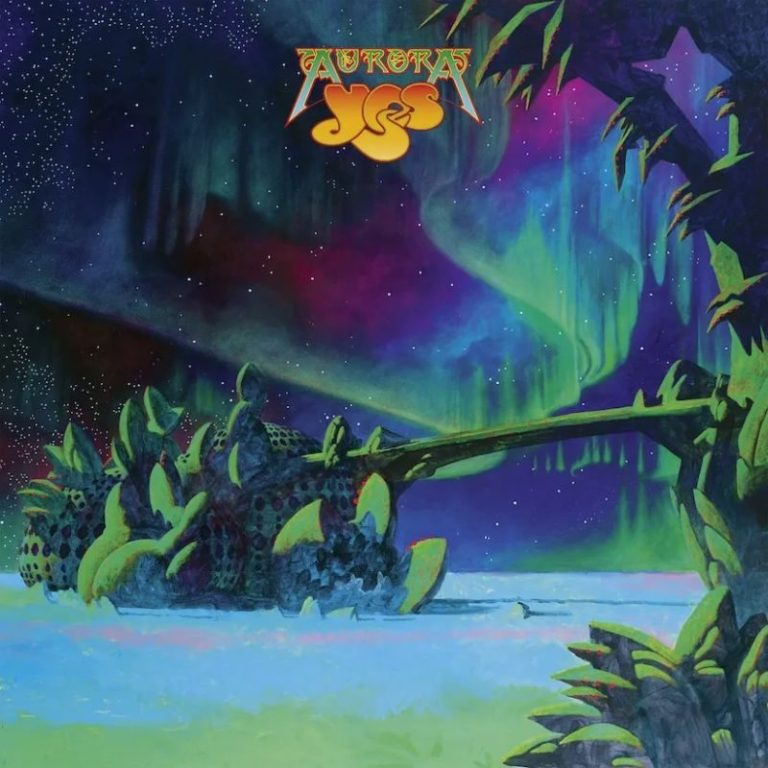
Label: Insideout Music
Release date: 12. 6. 2026
Production: Yes
Length: 59.47 min
Genre: Progressive Rock
Rating: 7.0/10
There are a handful of legendary bands out there who’d honestly be better off never walking through a studio door again, focusing purely on live shows instead of making a mockery of their own name. Sadly, prog rock titans Yes are increasingly joining that unfortunate crowd whose shelf life (in the studio, at least) has run out, and that’s still painfully obvious on their latest studio effort, “Aurora”.
Ever since founding singer Jon Anderson left and his current replacement Jon Davison came in (most people have already forgotten the brief, inglorious stint with Benoit David), and especially after the death of founding bassist Chris Squire, who on his deathbed gave the green light for the band to carry on, Yes have been wandering more and more creatively from album to album, with only rare compositions that are truly thrilling and interesting in the long run. Of course nobody (anymore) expects new prog masterpieces in the vein of “Close to the Edge” (1972) or “Relayer” (1974), nor a return to the sound of their hugely commercial eighties, à la the album “90125” (1983), but it’s still clear that the usual Yes songwriting standards have noticeably slipped over the past decade.
After the death of longtime drummer Alan White, on the pretty mediocre previous album “Mirror to the Sky” in 2023, guitar wizard Steve Howe finally took over the baton as the band’s chief and creative leader, and he’s doing his best to recreate at least some of the magic that made Yes one of the key and most successful prog rock bands on each new release.
The results on “Aurora” are once again very mixed and often not all that exciting. The main problem is that Steve Howe is, in every respect, a completely different man from the young Steve Howe who, with his fresh guitar technique, totally reinvented Yes in 1971 and helped launch them among the greats. Nowadays Howe, whom nobody dares tell out loud that he’s a dreadful lead singer (he still takes the lead vocal on no fewer than two new songs), often falls back on guitar repetitiveness and clichés heard a hundred times before, which makes some of the new material come off as forced and empty. Since he also has the final say in production, he often drowns out the other instruments with his guitar.
Despite all the shortcomings above and the increasingly difficult struggle to stay relevant in the studio, Yes do deserve some praise on “Aurora”. Unlike the previous two albums, “Aurora” was recorded with a real orchestra (the Czech National Symphony Orchestra), which appears on two tracks. Longtime keyboardist Geoff Downes deserves a pat on the back too. He’ll obviously never be on the level of his famous predecessor Rick Wakeman, but he’s improved quite a bit since returning to Yes and has deservedly gotten a slightly bigger role on “Aurora” than on the last two albums. Davison remains an excellent vocal copy of Anderson, even if his take on the ‘new age’ lyrics so essential to Yes is nowhere near as sincere as the previous Jon’s was. Sadly, Davison will forever be condemned to live in his shadow.
Every now and then Howe and company manage to pull off some good, inspired moments on “Aurora”, and the opening title track is definitely one of them, continuing the tradition of strong opening songs in the Davison era of Yes. The grand orchestral arrangements sit beautifully with the central melody and an effective chorus that won’t leave your head anytime soon. Commendable. The length is just right too, so it doesn’t come off as empty, pretentious and forced the way it tends to with some newer pieces from prog legends. “Turnaround Situation” is decent enough, but sadly forgettable. “Love Lies Dreaming” comes off slightly more inspired. It does contain some of Howe’s thousand-times-recycled, regressive guitar excesses, but the great atmosphere earns it a bit of leniency.
“Countermovement”, a failed attempt at a (mini) prog rock epic, embodies all the problems of modern Yes listed above, and “regressive rock” fits better than “progressive rock” here. Not only is the whole thing overly stretched out and packed with a pile of clichés, but this time Howe ends up on lead vocals, and in that role he (predictably) goes down in flames. It all feels like a soulless collage of shorter songs forcibly thrown and glued together, originally meant for Steve’s solo album. The closing instrumental section feels like a poor, forced attempt to revive the magic of the melancholic super-epic “The Gates of Delirium”.
What the distinctly baroque orchestral arrangements have to do with the ancient Greek princess in the composition “Ariadne” only its creators know, namely Davison, Downes and bassist Billy Sherwood. After a very slow start it turns into a solid piece where Howe’s guitar ego isn’t front and center, while the orchestral arrangements again sound genuine and natural. “All Hands On Deck” is Howe’s obvious, somewhat forced attempt to sound punchy and youthful with sharper guitar passages. It would probably have come out perfectly decent if it weren’t for the maestro’s annoying vocal harmonies. Any song that starts with ‘la-la-la’ doesn’t bode well, nothing inspired, and that goes for “Outside the Box” too, which sounds less like a serious, finished composition and more like a demo recorded before the lyrics for the lead vocal were written. The solid closing acoustic ballad “Emotional Intelligence” slightly redeems the bad impression.
A very pleasant surprise waits at the very end of the album in the form of the closing bonus track “Watching the River Roll”, created by Sherwood, which is without a doubt among the best achievements of the Davison era, with all the harmonies perfectly balanced, especially the interplay between guitar and keyboards. The romantic central arrangement with its layered vocals works especially well. Sherwood’s backing vocals sound great too. It’s a shame they’re no longer able to come up with more songs in a similar style and with a similar dose of inspiration. “Jambustin'”, the first of the two bonus tracks, on the other hand, isn’t worth a mention. There’s some irony in the fact that the best songs on “Aurora” are the first and the last.
“Aurora” falls into the category of ‘we asked the fans, then made an album nobody really needed anyway’. After the departures of Anderson, Squire and White too, modern Yes simply lack the soul, the creative chemistry and above all the real vision that would let them create something more than a merely average effort. “Aurora” is far from a bad album and, with a few surprising and inspired moments, it’s slightly better than its predecessor, but there’d still be no serious harm done if Yes called it quits on studio work after this release.
Author: Peter “Dr. ProgRock” Podbrežnik
Tracklist:
1. Aurora (7:27)
2. Turnaround Situation (5:50)
3. Love Lies Dreaming (6:24)
4. Countermovement (13:48)
5. Ariadne (6:18)
6. All Hands on Deck (3:04)
7. Outside the Box (4:20)
8. Emotional Intelligence (3:30)
9. Jambustin’ (bonus track) (4:24)
10. Watching the River Roll (bonus track) (4:42)
Lineup:
Steve Howe / guitar, vocals
– Geoff Downes / keyboards, vocals
– Billy Sherwood / bass, vocals
– Jon Davison / vocals, guitar, keyboards, percussion
– Jay Schellen / drums
Guests:
The Czech National Symphony Orchestra, conducted by Vladimir Martinka