Label: Polydor Records
Release date: 1968
Production: Joe Boyd and Tod Lloyd
Album length: 37.46 min
Genre: Folk Rock
Rating: 7.5/10
The debate over which British folk rock band was, or still is, the best of all time will never get its epilogue, yet pretty much every listener agrees on who matters most in the genre: Fairport Convention. The legendary pioneers of British acoustic and later electric folk rock, who wrote themselves into music history for all eternity with evergreens like “Crazy Man Michael,” “Matty Groves,” “Sir Patrick Spens,” “Meet On the Ledge,” “Fotheringay,” “Farewell Farewell,” “Walk Awhile,” “Rosie” and so on, took their first steps in 1966, when bassist Ashley Hutchings and guitarist Simon Nicol (today the band’s only original member) met in the middle of north London, where they were playing together in a outfit called Ethnic Shuffle Orchestra. They rehearsed together in a house the locals called “Fairport,” which gave them the idea for the name of their new band.
They lured guitarist Richard Thompson and drummer Shaun Frater into the original lineup. Right after their debut gig in some church, the first of many lineup changes happened, and those would follow them through practically their whole career. After the show, Frater was replaced by Martin Lamble (1949-1969), who walked up to the band straight out of the audience with an offer to take over on drums, claiming he could do a better job than Frater. He really did live up to that claim and stayed their drummer until his tragic death in 1969. Singer Judy Dyble joined next, which let them develop a recognizable ethereal sound right from the first steps. At the urging of their then manager and producer Joe Boyd, who got them a deal with the famous label Polydor, the original Fairport Convention lineup was rounded out by singer Ian McDonald (later better known as Iain Matthews, so he wouldn’t be confused with the former King Crimson and Foreigner woodwind player/keyboardist of the same name).
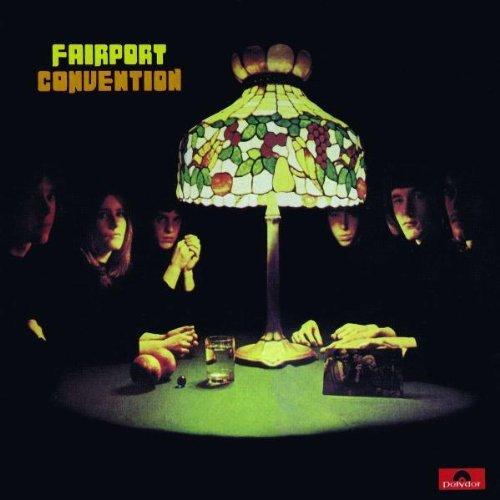
Their self-titled debut was in many ways a reflection of the era it was made in, and sounded little like their later folk rock masterpieces tinged with Anglo-Saxon and Celtic flavors, since it drew its inspiration mostly from the work of American folk and folk rock musicians of the sixties, led by Bob Dylan, Joni Mitchell and The Byrds. Because of their name and the use of female and male vocals, plenty of people thought they were an American band, some kind of successors following in the footsteps of Jefferson Airplane, which is pretty funny when you think about it. This was the only Fairport Convention album with Judy Dyble on lead vocals, as she left to go solo right after its release, having earlier briefly tried her luck in the burlesque proto prog rock outfit Giles, Giles & Fripp, from which the mighty King Crimson later grew. Her spot was taken by the legendary Sandy Denny (1947-1978), who over the following years completely eclipsed the memory of Dyble with her distinctive voice and charisma, even though Dyble was an immensely talented singer who had a slightly eccentric habit of knitting socks during gigs whenever she wasn’t standing at the mic.
The album opens with a cover of American musician Emitt Wiser’s “Time Will Show the Wiser,” a simple rock’n’roll standard with an easy pastoral melody on Nicol’s acoustic guitar and nice dual vocal harmonies, with Matthews taking the lead. Richard Thompson fires off decisive electric guitar riffs that show he’ll have to be taken very seriously in the future when it comes to great guitar talents. “I Don’t Know Where I Stand,” originally by Joni Mitchell, is a lovely folk ballad with Dyble’s ethereal vocals, where you can also clearly make out Hutchings’ elegant bass lines and Lamble’s witty cymbal work. Even though the original is by an American songwriter, Fairport Convention manage, already at this early stage of their career, to add some pastoral English charm, something they’d only crank up in the years to come.
“If (Stomp)” is an original, where you can feel the influence of both American folk and the Beatles. The key roles go to Thompson’s refined use of acoustic chords and Matthews’ almost characteristically traditional English vocal. “Decameron” is another pleasant folk ballad laid over an acoustic guitar melody, which, thanks to Matthews’ hypnotic singing and the gentle backing from his bandmate, borders on a children’s lullaby. “Jack O’Diamonds” originally belongs to Bob Dylan, at least as far as the lyrics go. At its core it’s a traditional folk song from Texas, telling the story of card players’ contests. Besides a tasteful take on the classic folk melody, the band experiments a lot here with high vocals, and even with blowing into a jug as a stand-in for a whistle.
The short instrumental “Portfolio” is an original with jazzy chords on the piano, played by Dyble, and crisp mandolin sounds. “Chelsea Morning” is a nice interpretation of a folk classic, originally written by Joni Mitchell and popularized by Judy Collins. Here the female and male vocals complement each other nicely over a cheerful acoustic melody, building a slightly psychedelic ambience. “Sun Shade” is another pleasant folk number with a gentle run of guitar chords and a distinctly romantic, nostalgic mood, with a dominant Celtic pathos to boot. The complex experiment “The Lobster,” at almost five minutes the longest piece on the album, opens with psychedelic improvisation on guitars, bass and percussion before making room for a dramatic motif with a short vocalization from Matthews. You could easily talk about proto prog rock here too.
“It’s Alright Ma It’s Only a Witchcraft” is a jokey little number with burlesque lyrics, where Thompson’s wry guitar riffs bring in even some blues rock influences, something that doesn’t happen all that often with this band. The melodic chorus is once again nicely pulled off in the interplay between male and female vocals. “One Sure Thing,” under the baton of Dyble’s melancholy vocal and a piercing acoustic guitar melody, is another successfully Britishized take on an American folk rock standard, originally performed by Harvey Brooks and Jim Glover. “M1 Breakdown” is a short closing folk instrumental with playful mandolin sounds and a rowdy rhythm.
Fairport Convention’s debut was a colorful grab bag of more or less successful folk and folk rock standards with precious few originals, but every take on the American source material was at least solid, and the first signs that a key band of British folk rock had been born were already there. The urge to discover new horizons was already smoldering in instrumental talents like Hutchings, Thompson, Nicol and Lamble, and only a few more steps were needed for the big breakthrough into the pantheon of rock giants. The first of them was the arrival of Sandy Denny, whose ethereal, intoxicating vocal approach brought a hefty dose of rocket fuel with her.
Author: Peter Podbrežnik
Track list:
1. Time Will Show the Wiser
2. I Don’t Know Where I Stand
3. If (Stomp)
4. Decameron
5. Jack O’Diamonds
6. Portfolio
7. Chelsea Morning
8. Sun Shade
9. The Lobster
10. It’s Alright Ma, It’s Only Witchcraft
11. One Sure Thing
12. M1 Breakdown
Lineup:
Judy Dyble – vocals, electric and acoustic autoharp, piano
Ian MacDonald (Iain Matthews) – vocals, Jew’s harp
Richard Thompson – electric and acoustic guitar, mandolin, backing vocals
Simon Nicol – electric guitar, acoustic guitar, backing vocals
Ashley Hutchings – bass guitar, double bass
Martin Lamble – percussion, violin
GUEST MUSICIAN:
Claire Lowther – cello