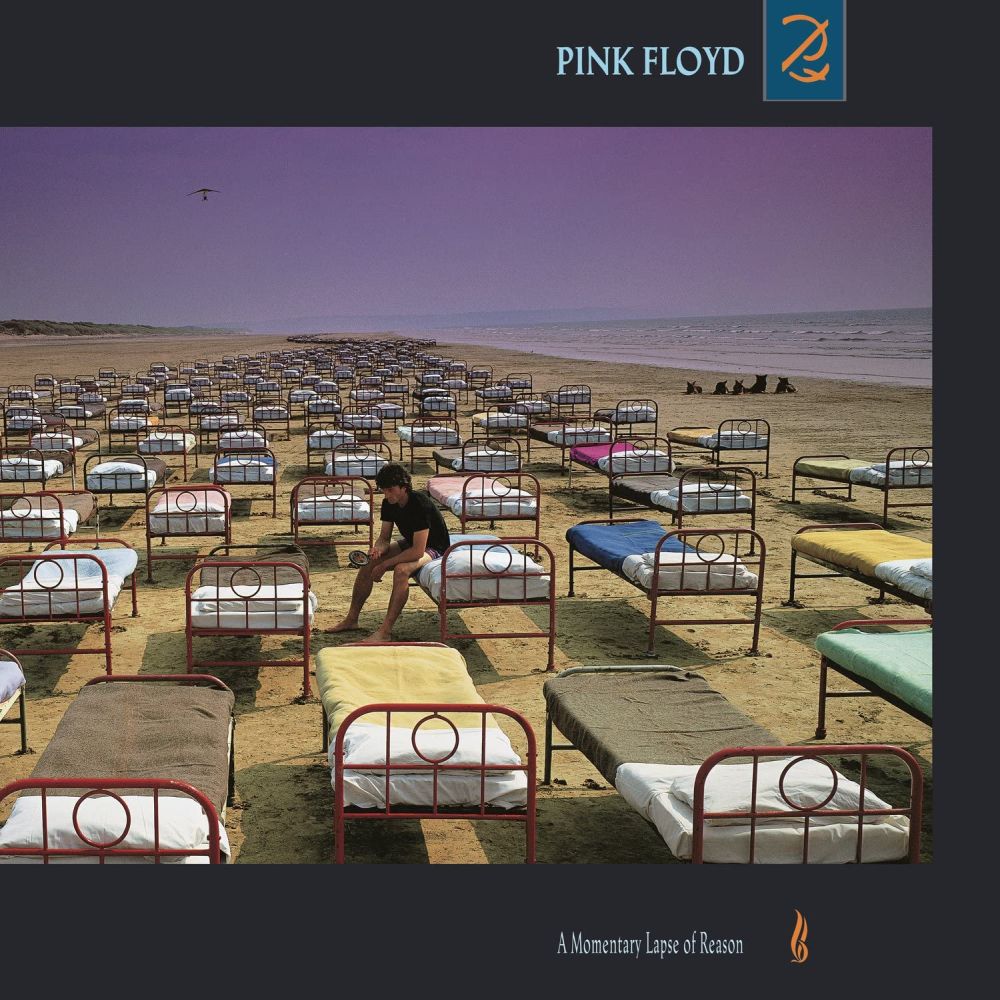
Label: EMI
Release date: 9/7/1987
Production: Bob Ezrin & David Gilmour
Album length: 51:14 min
Genre: Art Rock/Progressive Rock
Rating: 9.0/10
By the mid-eighties, Pink Floyd were a defunct band that only existed on paper. After the concept album “The Final Cut” (1983), the personal testament of bassist, singer and lyricist Roger Waters, which sounded more like his solo album than the joint work of a legendary band, all the members turned to solo projects. For Waters, determined to make his mark as a successful solo artist with “The Pros and Cons of Hitch Hiking” (1985), the Pink Floyd story was over, so he never expected either of the other two members to dare poke the hornet’s nest without him.
On the other side stood guitarist/singer David Gilmour and drummer Nick Mason, both fed up to the back teeth with Waters’ dictatorship, which had been going on since the album “Animals” (1977). The two guys, by then well into middle age, decided during the recording of Gilmour’s third solo album that they would revive the legendary band’s name and keep it alive. That ultimately led to Waters’ outrage and a court battle over the right to use the name Pink Floyd. The whole affair came, of course, with a hefty dose of media pomp and noise and a good bit of dirty laundry aired in public. Gilmour and Waters hadn’t spoken to each other in the studio since the late seventies, and this only deepened their mutual hatred and led to the final split. It’s only in recent years that things have slowly calmed down, with the former sworn enemies talking to each other again and even joining forces on stage now and then.
Plenty of fans were convinced that Pink Floyd without Waters, who besides playing bass was the key lyricist, the driving creative force and one of the two lead vocalists, were completely irrelevant. His former bandmates swore to prove otherwise. First they decided to right the great wrong done to original keyboardist Richard Wright, who had been kicked out of the band at Waters’ demand in 1979, and invited him to work on the album. Wright gladly accepted their invitation, though he chose not to take part in the project as a full member of the band just yet, so Pink Floyd officially remained a duo.
The most valuable and impressive collaborator on the album was definitely bass grandmaster Tony Levin (King Crimson, Peter Gabriel), who contributed a range of rhythmic tricks on individual tracks that Waters can only dream of. Other important reinforcements as session musicians were producer and keyboardist Bob Ezrin, keyboardist Jon Carin, drummer Carmine Appice (Vanilla Fudge) and saxophonist John Helliwell (Supertramp), whose skills and experience contributed greatly to the album’s exceptionally rich sound.
The project actually started out as Gilmour’s third solo album, and only midway through the creative process did he decide it would be better to release it under the Pink Floyd name. That’s also one of the main arguments of the post-Waters era Pink Floyd detractors: that they sounded too much like Gilmour’s solo band, which is of course exactly the same argument made by those who were frustrated with Roger’s dictatorship. The fact remains that Pink Floyd were at their strongest when all four of them had their hearts in it and every member had equal standing, something they themselves realized many years later, when it was already too late and Wright was no longer among the living.
It should be mentioned that among the few flaws of “A Momentary Lapse of Reason” are the lyrics, where you miss Waters’ cynical, intellectual, socially critical edge, as they don’t reach the depth you’d expect, even though Roger’s constant attacks on social deviance, mixed with gloominess and the stirring up of his personal demons from the past, were already pretty worn out by the mid-eighties. That’s exactly why Gilmour’s melancholic, love-driven, somewhat naive and far more optimistic view of the world, which you can feel in most of the lyrics, came as a welcome breath of fresh air and, in that respect, added to the album’s distinctiveness and uniqueness.
The opening instrumental “Signs Of Life” is soaked in a mysterious, tense and slightly dark atmosphere, created by the splash of oars in water and Mason’s electronically processed voice, which sounds like the speech of ‘little green men’. “Learning to Fly”, the album’s first single, which also got an unforgettable video about a Native American who turns into an eagle at the end, quickly established itself as a first-rate Pink Floyd classic and helped the duo successfully present the band’s new image as well as win over plenty of new fans. The hypnotic chorus is accompanied by female vocal harmonies that bring back memories of the band’s best days. The lyrics are infused with Gilmour’s fascination with flying, which comes from his time as an amateur pilot, and are also a neat metaphor for a major life change. In David’s case, that was his new, unexpected role as the band’s leader. Unlike most of the other old-school progressive rock bands, who tended to overdo the second generation of synthesizers in the eighties, Pink Floyd kept the retro symphonic keyboard sound, so most of the tracks on the album have stood the test of time phenomenally well and still sound fresh and modern today.
The album is nonetheless not without minor dips in quality, which goes especially for the Cold War-paranoid “The Dogs of War”, steeped in bluesy rock guitar finesse and also released as a single, where Gilmour’s thunderous barking doesn’t leave the most convincing emotional mark, and for both parts of “A New Machine”, which play practically no real role in building dramatic atmosphere or linking the tracks together. Gilmour’s relentless barking through a vocoder sounds like the whining of someone who’s just got out of bed after a sleepless night. Good enough for a Gilmour solo record, but not by the usual Pink Floyd standards.
All the remaining tracks on “A Momentary Lapse Of Reason”, though, are pure balm for prog rock gourmets. The phenomenal “One Slip”, the album’s third single, enchants in an instant with its nostalgic and upbeat atmosphere, which conjures up unexplored earthly expanses before your eyes thanks to the furrowed bass line of the indestructible Tony Levin, who adds an unexpected rhythmic dimension to this evergreen composition with his Chapman Stick. Gilmour’s mighty singing is loaded with a special emotional essence that blends beautifully with the melodic guitar passages, while the lubricated synth lines keep underlining the melancholic depth of this highly romantic track.
The power ballad “On the Turning Away”, the album’s fourth single, whose lyrics deal with coping with life in times of depression and crisis (which makes it especially relevant today), is brimming with optimism and a mystical atmosphere of a kind Pink Floyd hadn’t had since the mid-seventies. In that respect it’s quite close to the unforgettable wake-up classic “Wish You Were Here”. The next composition, made up of its first part “Yet Another Movie” and its second, instrumental part “Round and Around”, is another excellent piece with multidimensional depth and a mighty, mystical atmosphere. Besides Wright’s symphonic synth curtains, what impresses most are Gilmour’s trademark ‘weeping’ slide guitar leads. The next instrumental, “Terminal Frost”, is soaked in a mysterious atmosphere that conjures up icy plains and snow-covered peaks. These idyllic moods are the fruit of the harmonious interplay of Gilmour’s guitar slides, Helliwell’s saxophone solo passages and Carin’s symphonic synth textures. Interestingly, Mason was forced to use a drum machine here, since after three years of sitting idle as Pink Floyd’s drummer he was a bit rusty, and he could afford to do so.
The album peaks with the monumental closing epic “Sorrow”, which in every respect ranks among the most magnificent achievements in the band’s story and also contains one of the best solos of Gilmour’s career. He has admitted many times that writing lyrics was never one of his main strengths, but he singled out “Sorrow” as a rare exception he’s proud of. You have to agree that it’s the best lyric on the album, even though the opening verses are inspired by the literary classic The Grapes of Wrath. Gilmour’s singing is at the best possible level here, especially when it reaches that emotional breadth and melancholic depth which, in harmony with his weeping guitar solo finesse, conjures up an incredible atmosphere of the kind only Pink Floyd were capable of creating. This is the masterful composition with which the duo finally tells all the doubting Thomases to go jump in a lake, the ones who thought that without Waters they’d stumble badly on the first try, screw it up and never get back up.
“A Momentary Lapse of Reason” was a more than welcome breath of fresh air after two Waters’ dark confessions in a row, and it dispelled the depressive mood that had started to choke this legendary band. Even though the album isn’t a classic concept masterpiece of the kind fans were used to in the past, Gilmour and Mason hit the nail on the head and made one of the most interesting and, at the same time, most overlooked records in the band’s story. Following Gilmour’s creative lead, Pink Floyd convincingly kept pace with the production and synthesizer technology of the time and squeezed it for all it was worth. They also managed to win over a new, ‘MTV’ generation of fans, which was crucial for the band’s future. Despite Waters’ grumbling and contempt for the album, it deservedly got a warmer reception and more enthusiasm than “The Final Cut” from both fans and critics at the time, so Gilmour and Mason came out of this battle of egos as the winners and carried on the Pink Floyd story, full of fresh energy, for a few more years.
Author: Peter “Dr. ProgRock” Podbrežnik
Track list:
1. Signs Of Life
2. Learning To Fly
3. The Dogs Of War
4. One Slip
5. On The Turning Away
6. Yet Another Movie/Round And Around
7. A New Machine (Part 1)
8. Terminal Frost
9. A New Machine (Part 2)
10. Sorrow
Line-up:
David Gilmour – vocals, guitar, keyboards, sequencer
Nick Mason . drums, percussion, drum machine, sound effects
GUEST MUSICIANS:
Richard Wright – keyboards, backing vocals
Bob Ezrin – keyboards, percussion, sequencer
Tony Levin – bass guitar, Chapman Stick
Jim Keltner – drums, percussion
Steve Forman – percussion
Jon Carin – keyboards
Tom Scott – alto saxophone, soprano saxophone
Scott Page – tenor saxophone
Carmine Appice – drums
Patrick Leonard – synthesizer
Bill Payne – Hammond organ
Michael Landau – guitar
John Helliwell – saxophone
Darlene Koldenhaven – backing vocals
Carmen Twillie – backing vocals
Phyllis St. James – backing vocals
Donnie Gerrard – backing vocals