Label: EMI
Release date: March 21, 1983
Production: Roger Waters, James Guthrie & Michael Kamen
Album length: 43.14 min
Genre: Art Rock
Rating: 7.5/10
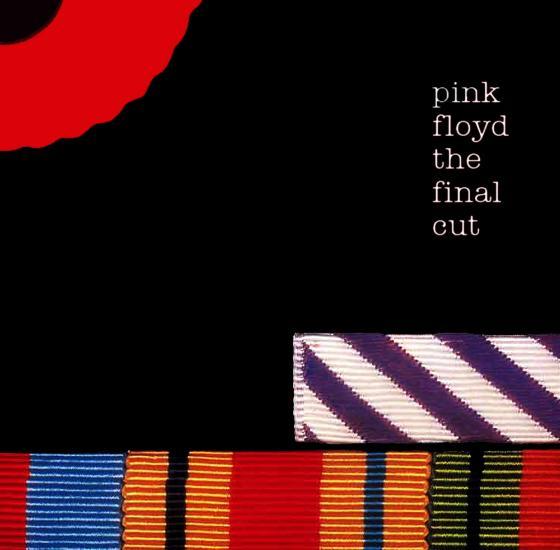
An anti-war and Cold War political manifesto, “The Final Cut”, the last Pink Floyd album with Roger Waters, felt more like the bassist/singer’s solo project than a group effort by the legendary English progressive rock band that broke worldwide in the 1970s. One of the most controversial albums in the entire Pink Floyd story, it was a concept record and a somewhat less ambitious follow-up to the monstrously successful masterpiece “The Wall” (1979). Waters, who never hid his socialist philosophical convictions, used this egocentric project to keep pushing his acerbic anti-capitalist, anti-war manifesto, and to pay a moving tribute to his father, Eric Fletcher Waters, whom he lost in the maelstrom of World War II and to whom “The Final Cut” is dedicated.
The album’s anti-war concept touches on the personal story of Waters’ father, who fell in World War II hoping to secure peace for future generations, which, as we all know, sadly didn’t happen in the decades that followed. Waters was especially disillusioned with the Conservative British government of the day, led by the infamous champion of neoliberalism Margaret ‘Maggie’ Thatcher, who had gotten herself tangled up in a war with Argentina to hold on to Britain’s colonial outpost, the Falkland Islands. In the lyrics, Waters also takes a swipe at assorted other world leaders of the time, headed by US president Ronald Reagan, who, amid Cold War paranoia, kept poking the hornets’ nest of a possible nuclear apocalypse.
Roger’s ‘dictatorial’ appetites hit their peak on “The Final Cut”, where, as main producer, he wrote all the songs, arrangements and lyrics himself. Back in 1981 he had already forced out original keyboardist Richard Wright, for whom this was the only Pink Floyd album he never appeared on, while guitarist/singer David Gilmour and drummer Nick Mason were ‘graciously’ handed the role of session instrumentalists. All three musicians recorded their parts separately, given that Roger and David weren’t even talking to each other anymore. At first they tried working in the studio the way they used to, but with no luck. While Roger raged furiously around the studio with the guest musicians, trying to get his songwriting material down as fast as possible, David and Nick spent their free time playing the video game ‘Donkey Kong’, so in the end they just preferred to record separately.
Roger, who had a relationship with David at the time like that of a cat and a dog, allowed him to sing on only one track, “Not Now John”, which of everything on “The Final Cut” sounded the most like classic Pink Floyd. While Gilmour contributed some splendid solos on par with his best years, Mason’s contribution was drastically cut down, mostly to the use of various percussion effects. Most of the percussion was provided by guest musician Ray Cooper, while the drums on “Two Suns In The Sunset” were played by Anyd Newmark. The National Philharmonic Orchestra took care of most of the orchestral arrangements, while the hole yawning after Wright’s departure was patched up by American keyboardist (and later renowned film composer) Michael Kamen and Status Quo keyboardist Andy Bown.
“The Final Cut” opens with “The Post War Dream”, whose lyrics radiate Roger’s disappointment that his father died in the war for ideals that fell on infertile ground in modern society, while wars are still a fact of life. He also takes a shot at the decline of the British shipbuilding industry, which had by then passed into Japanese hands. Roger’s versatile vocals, shifting from calm to raging cynicism, are accompanied in the background by hushed harmonium arrangements. The special thing about “Your Possible Pasts” is that Roger once again uses the character of the sinister teacher from “The Wall” in the lyrics, this time set in the past, when the future tormentor of British schoolchildren, full of optimism and victorious zeal, is just coming home from the war. His return to civilian life goes badly, mostly thanks to a possessive wife who speeds up his metamorphosis into the pedagogical monster to come. This transformation is brilliantly conveyed through the music, via Roger’s vivid vocal swings between optimism and cynicism and David’s bitter guitar solo.
The teacher’s story from his younger days continues on “One Of The Few”, a short and depressing track originally intended for “The Wall”. “When The Tigers Broke Free”, another vivid tribute to the late father, found on the 2004 reissue of “The Final Cut”, was also supposed to appear on “The Wall” originally, but the rest of the band deemed it too personal at the time. Pompous orchestral arrangements successfully back Roger’s paranoid vocal delivery. The teacher’s story rolls on with the dramatic “The Hero’s Return”, which almost manages to turn the despised, psychologically wrecked schoolmaster into a sympathetic character, as he increasingly recalls Cankar’s Martin Kačur, the tragic schoolmaster of Slovenian literature. This is yet another “The Wall” reject, originally titled “Teacher, Teacher”.
“The Gunner’s Dream”, one of the album’s highlights, is a moving anti-war requiem telling the story of an anti-aircraft gunner who dies wishing for a future world with no more wars. The futility of his wishes, and the present-day rule of war and terror, come through in Roger’s vocal fury and an expressive saxophone solo, before pompous symphonic arrangements come crashing in. On “Paranoid Eyes”, Roger returns for the last time on the album to the teacher character, the former war hero, with the help of fragile piano arrangements, as he slides into alcoholism and final personal ruin. “Get Your Filthy Hands Off My Desert” is another deeply personal piece, in which Roger theatrically and somewhat satirically lays out his philosophical views on wars and invasions, and lashes out in passing at the Cold War leaders of the day, headed by Leonid Brezhnev (the Soviet invasion of Afghanistan), Menachem Begin (the Israeli invasion of Beirut), Leopoldo Galtieri (the Argentine invasion of the Falklands) and Thatcher (the retaliation for the Argentine invasion, which kicked off the Falklands War).
One of the most vivid and successful pieces on “The Final Cut” is undoubtedly “The Fletcher Memorial Home”, where Roger’s vocals tear with rage and cynicism as the fictional lyrics imagine what would happen if all the leading politicians of the day gathered at the home of his late father, while ordinary people got to decide their fate. This interesting and deep composition also features a superb Gilmour guitar solo, on par with his best “The Wall” contributions. “Southampton Dock”, a lament for soldiers just heading off to war (and coming back in coffins), carries a faint folk undertone via gentle acoustic guitar chords.
The title track is another of the many creations originally intended for “The Wall”, and in terms of direction it could easily have slotted right onto that album. The lyrics deal with a would-be suicide who experiences total isolation, depression and sexual frustration, strongly reminding us of “The Wall” protagonist Pink. Moving orchestral arrangements are paired with David’s trademark melancholic guitar solo, which, alongside Roger’s vocal chameleon act, helps make this one of the highlights of “The Final Cut”.
On the previously mentioned hard rock/prog rock hybrid “Not Now John”, the heaviest and most commercially minded piece on the album, which also features backing female vocal harmonies, the mic finally goes to Gilmour, even though Waters’ vocals still occasionally butt in. David’s vocal and guitar performance here sounds like he’s trying to let out all his pent-up frustration over Roger and the resulting dysfunction of their band, which by then existed only on paper. The lyrics, which contain the most obscenities in the whole of Pink Floyd history, are a bitter attack on a modern society obsessed with war and profit, ruled by greed, and sadly sound damn relevant today (actually more than ever). The closing track “Two Suns In The Sunset”, despite its fatalistic lyrics, in which a nuclear explosion makes two ‘suns’ appear in the sky, is an atmospherically very pleasant anti-war requiem. Worth noting here is that Andy Newmark had to fill in for Mason on drums, because the latter was technically unable to pull off the demanding time changes.
Waters’ personal frustrations, which hit their peak on “The Final Cut”, would surely have come across as more credible on a solo debut, instead of being projected through the Pink Floyd frame, with his longtime partners in misery reduced to mere backing roles. Still, he managed to get all the traumas that were burning him at the time across to the world, and the album as a whole doesn’t come off as just a second-rate sequel to the classic “The Wall”. The long-simmering frustrations between Roger and David peaked in 1983, so it’s no surprise there was no concert tour that year. When Roger released his solo debut “The Pros And Cons of Hitch Hiking” in 1984, as far as he was concerned Pink Floyd simply no longer existed, but Gilmour and Mason thought otherwise, and they dug in their heels over it.
The following year brought the ugliest chapter of Pink Floyd history, a court battle after which the rights to use the Pink Floyd name went to David and Nick, while Roger kept a monopoly over most of the stage scenography and concepts. For more than two decades there was no communication between Waters and Gilmour, but after their appearance at ‘Live 8’ the relationship thawed considerably, so an occasional joint performance is no longer pure science fiction.
Because of the Cold War themes that dominate its lyrics, “The Final Cut” has stood the test of time somewhat worse than most Pink Floyd albums, though, ironically, the Cold War has lately become relevant again, as history bitterly repeats itself. Plenty of music fans believe music should stay separate from politics, and they’re mostly right, given that the two usually end up abusing each other, but now and then there are rare exceptions like Waters and especially Frank Zappa, who always found the right, intelligent and often grotesque way to satirize politics, police states and senseless social institutions and patterns. That’s exactly the main strength of “The Final Cut”, and the reason so many Pink Floyd fans missed Roger’s lyrics so much after he left.
Author: Peter “Dr. ProgRock” Podbrežnik
Track list:
1. The Post War Dream (3:00)
2. Your Possible Pasts (4:21)
3. One Of The Few (1:26)
4. The Hero’s Return (2:58)
5. The Gunners Dream (5:04)
6. Paranoid Eyes (3:49)
7. Get Your Filthy Hands Off My Desert (1:19)
8. The Fletcher Memorial Home (4:10)
9. Southampton Dock (2:05)
10. The Final Cut (4:53)
11. Not Now John (5:03)
12. Two Suns In The Sunset (5:17)
Line-up:
Roger Waters – bass guitar, acoustic guitar, lead vocals
David Gilmour – guitar, lead vocals on “Not Now John”
Nick Mason – drums, percussion
GUEST MUSICIANS:
Michael Kamen – piano, harmonium
Andy Bown – Hammond organ
Ray Cooper- percussion
Andy Newmark – drums on “Two Suns In The Sunset”
Raphael Ravenscroft – tenor saxophone
National Philharmonic Orchestra (conducted and arranged by Michael Kamen)