

Iron Maiden released the live album »Live After Death« 35 years ago. It was mid-October of that long-gone year. The story behind it is a feat on the level of the biblical exploits of gray-bearded Moses. A story about Eddie the mummy shooting fire, about pharaonic sarcophagi, the creaking of a ship’s deck, and 189 shows played (out of 194 announced). Iron Maiden pulled all of that off in just eleven months. They crammed the packed gig schedule and marathon world march in between August 1984 and July 1985. A story that finally cemented Iron Maiden among the biggest bands in the world. A triumph that crowned the band on the metal throne of the world. The story of the tour of all tours the world had seen up to that point, and, last but not least, a via dolorosa that also left the band utterly drained. This historic Iron Maiden epic around the globe is documented very well on the 2008 double DVD reissue, the film »The History of Iron Maiden – Part 2: Live After Death« (RockLine review).
By 1984, Iron Maiden had firmly cemented their position. The whole world knew them. Thanks to the rocket launch they got from the albums »Number of the Beast« (1982, RockLine review) and »Piece Of Mind« (1983, RockLine review). After two necessary lineup changes – the first was a crucial one, when Bruce Dickinson joined – the band entered its most fruitful creative period. With Nicko McBrain arriving in 1983 as the permanent drummer, Iron Maiden were ready to conquer the world. With a world tour of “slavery,” or more precisely, the »World Slavery tour«. The tour’s name comes from the title of the album »Powerslave« (1984, RockLine review), which today counts as one of the crown jewels of their entire discography.

Behind it all stood EMI Records, who had spotted a gold mine in Iron Maiden very early on and dug deeper into their pockets for the band than they would have for any other heavy metal or hard rock act of the time. When the shortlist of bands worth investing in was drawn up, Def Leppard came up too, but EMI Records tipped the decision in Iron Maiden’s favor. The band set off on this new pilgrimage around the world with a mountain of gear that, through a layperson’s eyes, was fantastically unimaginable for the time. The gigantic stage construction, never seen before that day, with all its accompanying elements and amusement-park details, later heavily inspired other artists in many ways and helped drive the further development of such stage attractions. In that regard, the »World Slavery« stage counts as one of the boldest and most groundbreaking moves of the rock ‘n’ roll era. The stage sets leaned on the cover of the then-current album »Powerslave«, so the theme was ancient Egypt.
Alan Chester, the guy picked as the lead designer of this stage set, was effectively its author, and found himself facing a completely new challenge. An almost ten-meter-tall Eddie mummy with a giant torso and arms reaching out, driven by a wheel mechanism, then a heap of sarcophagi, an Eddie sphinx,…. All of it propped up by huge lifts in the back, covered with giant drapes and canvases. Even the stage floor, which a large share of the people at this Iron Maiden tour didn’t even get a chance to see during the shows, was strewn with a ton of little details, including hieroglyphs and loads of other ancient Egyptian symbolism. The pyrotechnics added their own part too. Crackling sparks and flamethrowers shot from every side, with Eddie of course taking the biggest beating. Then a pile of smoke curtains, among which that mystical shot keeps flashing back in memory, with the guys standing knee-deep in thick fog during the spine-chilling calm passage of the epic Rime of the Ancient Mariner. Truly, everything was staged with great skill. Every second. Every scrap of playing time during the show was used to the max, and the symbiosis of the spectacular lighting, the stage sets, and the repertoire itself couldn’t have been optimized any better. “You really had to watch where you were standing on that stage at every moment,” says Bruce Dickinson, who also remembers singed nose hairs. As for Eddie, Bruce stresses that at the time he had turned into a worldwide “masterpiece of stage kitsch.”
Iron Maiden kicked off the tour on August 9, 1984 in Poland. For a base where they could check whether everything worked and how, they picked Frankfurt am Main in Germany. From there they launched a ‘blitzkrieg’ on the Warsaw Pact countries. Before that they also swung by Cologne to pick up their visas. Behind the expedition there’s also an anecdote that the band almost forgot a crew of journalists and photographers in Germany, who would have been stuck in Frankfurt, because Warren Poppe, the band’s tour manager at the time, forgot to phone them and kick them out of bed on time. Rod Smallwood didn’t hold back his short fuse in those days and raged and fumed at Poppe. The poor guy sighed to himself, sour and loud, more than once: “Rod’s going to kill me!” But he came out of the whole mess like a hero. He pulled his bank card out of his pocket and hired a small plane that flew the press crew to the right place at the right time.
I’m sure you’ve all seen the documentary »Behind the Iron Curtain«, which is part of the double DVD »The History of Iron Maiden – Part 2: Live After Death«. Still, it’s worth lingering for a moment on this opening stretch of the tour. On this tour, Iron Maiden played for the first time in Eastern Bloc countries, namely Poland, Hungary, and what was then Czechoslovakia. Although the opening credits of the documentary also list Yugoslavia, which was among the non-aligned countries, most of the film covers events in Poland and Hungary. Landing in Warsaw, the band was of course hit with a culture shock they hadn’t expected in their wildest dreams. They stepped into a world from another century, another time. Suddenly the nightliner was keeping company with two-stroke vehicles. A “colorful” crowd of Wartburgs, Trabants, and Zaporozhets, plus a few slightly more “serious” rides: Ladas, Škodas, Volgas, and Moskvichs. And that vast, monotonous concrete grayness, along with people in clothes of sacred simplicity. The band’s fans found their own way, showing up at the shows in Iron Maiden shirts they’d made at home with a bit of improvisation and imagination. And last but not least, and this doesn’t need to be hushed up, with views full of the most beautiful women in the world. Anyway, this leg of the tour turned out phenomenal, and one evening the band even ended up at a wedding party, where they played for the dancing guests, and they also used a day off for an exhibition match between their crew and a team of Polish journalists, which they won seven to one. There were still 30 days until the release of »Powerslave«, though in Poland nobody was overly bothered about it, since total album censorship ruled there (except for domestic acts and classical music). The fall of the Berlin Wall was still five years away.
The band of course played in all kinds of halls. Of all sizes. Nicko McBrain recalls a mishap: “We had Eddie with us in all his glittering glory, popping up behind my back every night during the show. One night he whacked me with his flailing arms, cymbals were flying everywhere, and I was yelling: ‘Raise him higher!’ The answer I got was: ‘We can’t. There’s nowhere to go!'”
Eddie was a double-edged sword, too. One night, one of his pieces went missing. Not the head, not the arms, but his biggest part. The torso, of course. The “weirdness” of this theft forced the band into some serious creativity. Nicko McBrain says: “We headed off to a shop for bath towels, which we wrapped around each other to make a replacement torso that saved the shows until they sent over the real one, covered in foam. Every night, watching Eddie from the side, those towels kept falling off, and we always joked: ‘Look at him. There’s Ed. Just coming out of the shower.'”
A Western band on Eastern Bloc soil. Five years before the Berlin Wall came down. Even Rod Smallwood admitted how important those Polish shows were, capping the whole thing with the line: “The vibes were phenomenal. It was simply incredible. We knew we were doing something important, and it felt like we were shaking the wall!”
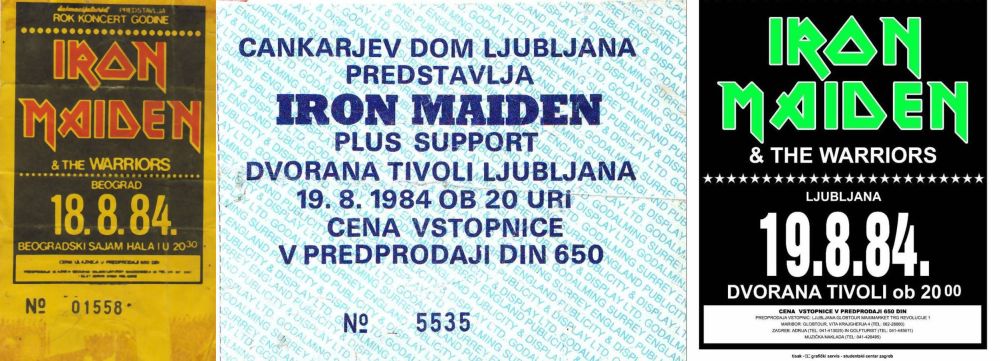
Yep. Iron Maiden also “invaded” the territory of the late Yugoslavia from the Eastern Bloc. On April 18, 1984, they played Belgrade for the second time (the first was in September 1981), and the day after, they hit the Tivoli hall in Ljubljana. By all accounts, Tivoli was packed to the rafters. Serbian heavy metallers The Warriors were supposed to open both of these nights for Iron Maiden. In Belgrade they pulled it off, but in Ljubljana they didn’t, because one of Iron Maiden’s trucks carrying part of the backline gear got stuck near Slavonski Brod. That delayed the stage setup, and Iron Maiden ended up walking onstage without even a proper soundcheck. Next up should have been a show in Pordenone, Italy, announced for August 21, 1984. But that one turned out to be among the five cancelled shows of the whole tour. On the rest of the first European leg, Germany’s Accept opened for Iron Maiden on the old continent, and Waysted did the honors in the British Isles. After three months of knocking around Europe, the band managed to catch a few days of rest, and then it was off to North America, where an even bigger run of shows was waiting. For the American leg, Iron Maiden tweaked the setlist a bit, and out went the instrumental »Losfer Words (Big ‘Orra)«, plus »22 Acacia Avenue« and the guitar solo that had been wedged in before »The Number of the Beast«.
That jam-packed, relentless schedule soon started to take its toll. “It was merciless,” Bruce Dickinson recalls of the grind: “One after another, after another, after another…” As word of the incredible live shows spread exponentially, it piled even more pressure on the band, who now had to live up to their proverbially dazzling performances even harder. Adrian Smith says: “The band suddenly got really, really big, and that was scary,” and he admits: “The responsibility of walking out in front of a crowd every night and playing for them for months and months, giving it your absolute best, became an extra burden on all of us.”
After the first part of the American tour, the band treated themselves to a few days off, and then played their one and only South American show, right in the middle of the Rock In Rio festival, though they weren’t the headliners there. That honor went to Queen, with Whitesnake taking the stage after Iron Maiden. Iron Maiden played to around 350,000 people, and the footage is unforgettable also because it catches a bloodied Dickinson up close, after the singer split his forehead during his onstage “acrobatics” but heroically powered on regardless. Adrenaline rush really does work wonders.
Bruce Dickinson, of course, felt the fallout from all that tour stress most intensely. When the band set off on the second leg of the North American tour in January 1985, they had a whopping seven shows lined up at New York’s Radio City Music Hall (Queensryche opened those nights). Bruce Dickinson remembers: “Radio City Music Hall… we were supposed to play seven shows there, and after the third or fourth I said to Rod: ‘I feel really bad, I’m sick.’ And he goes: ‘How sick are you?’ I tell him: ‘Very.’ And he goes on: ‘Well, you’ll make it through tonight. We’ve got a day off tomorrow anyway.'”
The singer tried to gather all his strength to push past the exhaustion, but it didn’t work: “I went onstage, everything was spinning and I couldn’t move. I sat down and sat out most of the show. On the drum riser.” That was Iron Maiden’s fifth show in a row at Radio City Music Hall (no day off in between), and the next four (two in New York, then the ones in Glenn Falls and Bethlehem) were cancelled by Iron Maiden. That gave Dickinson six days to recharge his batteries and recover. To regenerate.
McBrain adds: “I know it hit Bruce hard. Harder than anyone else in the band.” Because of the extreme strain the tour demanded, Dickinson even started seriously thinking about “jumping ship” in the middle of it.
The shows didn’t stop. Days melted into months. Dickinson talks about life on the road: “All sense of reality starts to slip away. You read the stories and think: ‘This guy sent his private plane to fetch him a curry. What a wanker.’ But when you find yourself in that warped reality, totally wrapped up in the rock and roll scene, this bizarre logic takes over your mind, where it goes: ‘I want a curry. If I don’t get it, I’ll lose it. Doesn’t matter how much it costs. Get me a curry.’ And there were still six months of the tour left. Then you get home and realize: ‘Could I really have blown that much money on curry? For that kind of money I could’ve bought a new car.'”
After visiting Japan and Australia, the band headed back to the US, where the tour ramped up even further. Dave Murray says: “I don’t know if we even realized what we’d got ourselves into and how far we’d pushed ourselves. The tour started leaving scratches and scuffs on our shields. We were slowly starting to lose it.” Iron Maiden played the last show of the “World Slavery” tour on July 5, 1985, in Irvine, California. By that point everyone had had enough. They were completely drained and wrecked, and Harris adds: “After that show came the moment when, for the first time on the tour, we got the chance to say: ‘Right. Let’s take a bit of a break, or we’ll all end up in the loony bin.'” Bruce Dickinson later admitted in his autobiography “What This Button Do?” that after the “Powerslave” tour he was very close to leaving Iron Maiden.
A year without any live shows followed. The next concert epic, the “Somewhere on Tour” run, kicked off in September 1986. It started right in Yugoslavia, and with the third show on September 12, 1986, Iron Maiden visited Ljubljana’s Hala Tivoli once more.
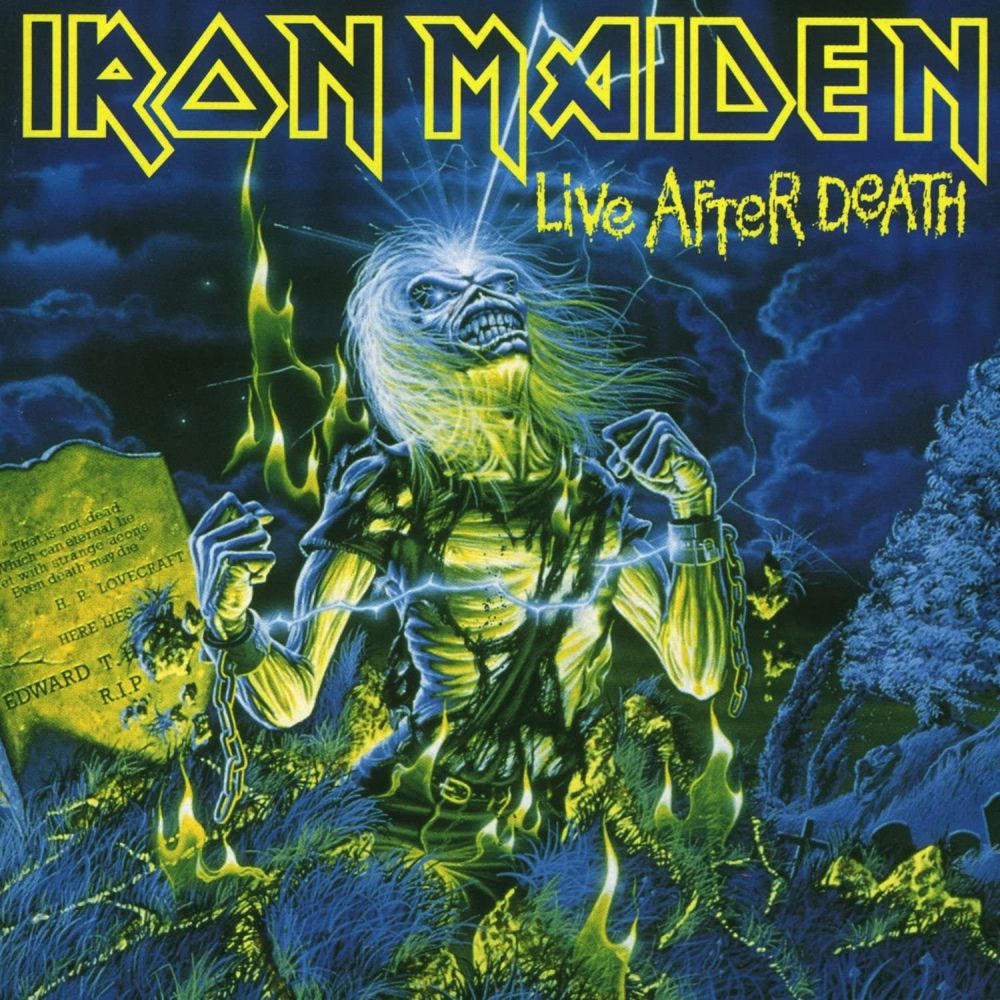
On October 14, 1985, the double vinyl album »Live After Death« came out. It captures four consecutive shows the band played at Long Beach Arena in Los Angeles. The recording comes from two nights in Los Angeles, and the rest of the album is filled out with tracks the band recorded over several consecutive shows at London’s Hammersmith Odeon. Not only is it the live album other heavy metal bands looked to when deciding to put out similar records, it also shows Iron Maiden at the peak of their live powers, with no needless questions and no doubts whatsoever. What counted was action, with no idle thoughts of skepticism and with the order: “Do it, and do the best you can right this second.” Only the best of the best can pull that off, and in the mid-eighties, that’s exactly what Iron Maiden were in metal.
They played a modern version of metal for the time, one that combined the best mix of punch, musicality and creative flourishes, with perfectly dynamic song arrangements and atmosphere, and along the way they indirectly popularized spandex and high-tops, which Metallica and the other followers soon caught on to, though they were after even more uncompromising expression.
At one of the shows in the middle of the American leg, Nicko McBrain decided to use that long instrumental passage in the epic Rime of the Ancient Mariner for a special bit of fun. After leaving the stage, as he did every night, he broke from the usual ritual and decided to cool off in a nearby pool instead. He climbed in fully clothed. Not long after settling in, he heard shouting that he had to get back onstage right away. He ran off as fast as his legs could carry him, straight out of the pool. The drummer was dripping. He sat down at the kit like that. Suddenly there were puddles everywhere. Wherever he looked. He could barely keep hold of the slippery cymbals, keep the rhythm and stay on his stool, while his tech handed him towels from behind.
In Quebec, during a show, an 18-year-old fan of the band fell nearly 30 meters from a platform set up in the press area and died. Iron Maiden only found out after the concert.
On the American leg of the tour, Twisted Sister mostly opened the shows. That included all four nights at Long Beach Arena, where the live album comes from. To a lesser extent, the support slots on the American leg were also filled by W.A.S.P., Mötley Crüe and the already mentioned Accept and Queensryche.
As for the standard tracklist on the first release of this live document, i.e. the double vinyl, the first record and the first side of the second record are entirely recordings from Long Beach Arena, though the band left out »Sanctuary«, which closed the shows on the entire “World Slavery” tour. The second side of the second record, meanwhile, holds songs Iron Maiden also played on this tour, but only on the first European leg, between August and November 1984.
The versions of »Wrathchild«, »22 Acacia Avenue«, »Children of the Damned«, »Phantom of the Opera« and »Die With You Boots On« come from the band’s four straight nights at London’s Hammersmith Odeon, played in October 1984. That’s also where they tore through »Murders in a Rue Morgue« and »Losfer Words (Big ‘Orra)«. The version of »Sanctuary« recorded at the Long Beach Arena came out as the B-side of the seven-inch vinyl for the live single “Running Free” (released in August 1985), while the twelve-inch version of that same live vinyl single carried the same live take of “Sanctuary” on the B-side, plus »Murders in a Rue Morgue« from London’s Hammersmith. The second single off »Live After Death«, for the track »Run to the Hills« (released in December 1985), had a version of »Phantom of the Opera« from London’s Hammersmith Odeon on the B-side of its seven-inch. The twelve-inch vinyl version of this single, on top of Phantom of the Opera, also had the live take of the instrumental »Losfer Words (Big ‘Orra)« – again from London’s Hammersmith Odeon.
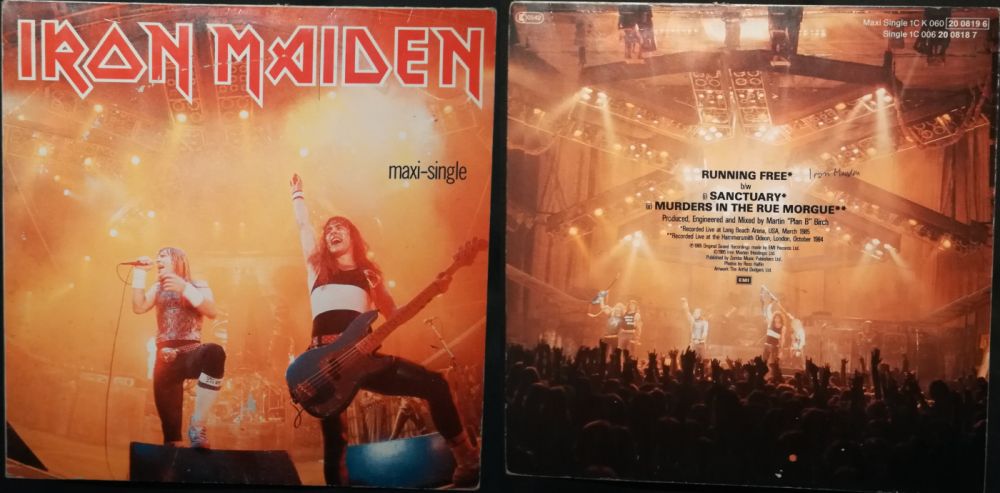
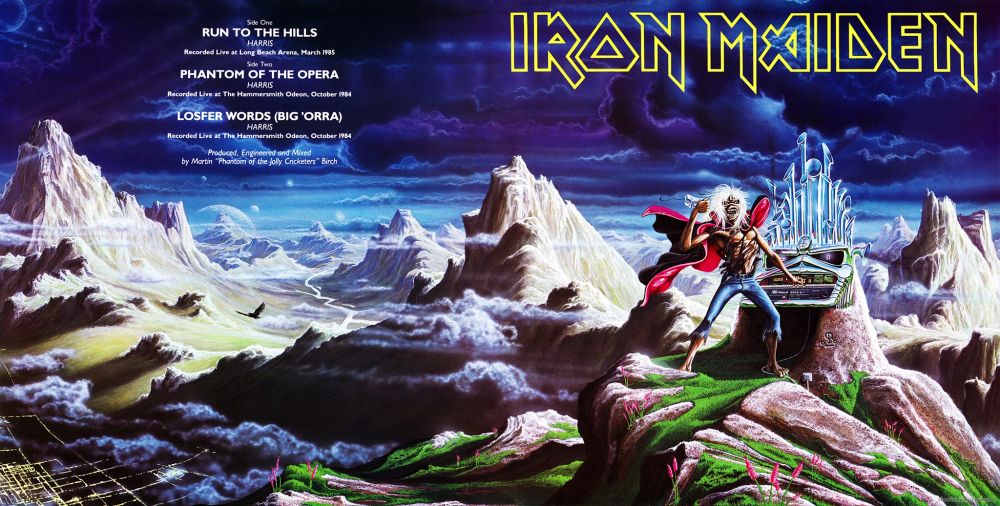
»Live After Death« later came out in a bunch of different flavors. The original VHS tape captures the whole Long Beach Arena show, including the closing »Sanctuary« (in 2008 it was reissued in a double DVD set). The first CD pressing of »Live After Death« was a single disc (with no London recordings). Instead of the original – that is, the extended – version of »Running Free«, the first CD version of the “Live After Death” album has the edited two-and-a-half-minute version that was released as a single. In 1995 the album was reissued in a limited run, where the first CD stayed the same, while the extra second CD held all the tracks that had come out as B-sides of the album’s two live singles, namely »Sanctuary«, »Losfer Words (Big ‘Orra)« and »Murders in a Rue Morgue« (the ones, that is, that the original double vinyl pressing doesn’t have). Well, the 1998 CD reissue of the album puts an end to the annoyance of all that time-juggling and delivers the album on two discs that finally, and correctly, mirror the original double vinyl.
A week after its release, »Live After Death« hit number five on the band’s home UK chart and number nineteen in the US. The release of this roaring live album, considered one of the best in heavy metal history, or at the very least one of the most important, bought the band a huge amount of time to recharge their batteries in peace, regroup and get going on a new studio album, which in 1986 became »Somewhere in Time« (RockLine review).
Author: Aleš Podbrežnik
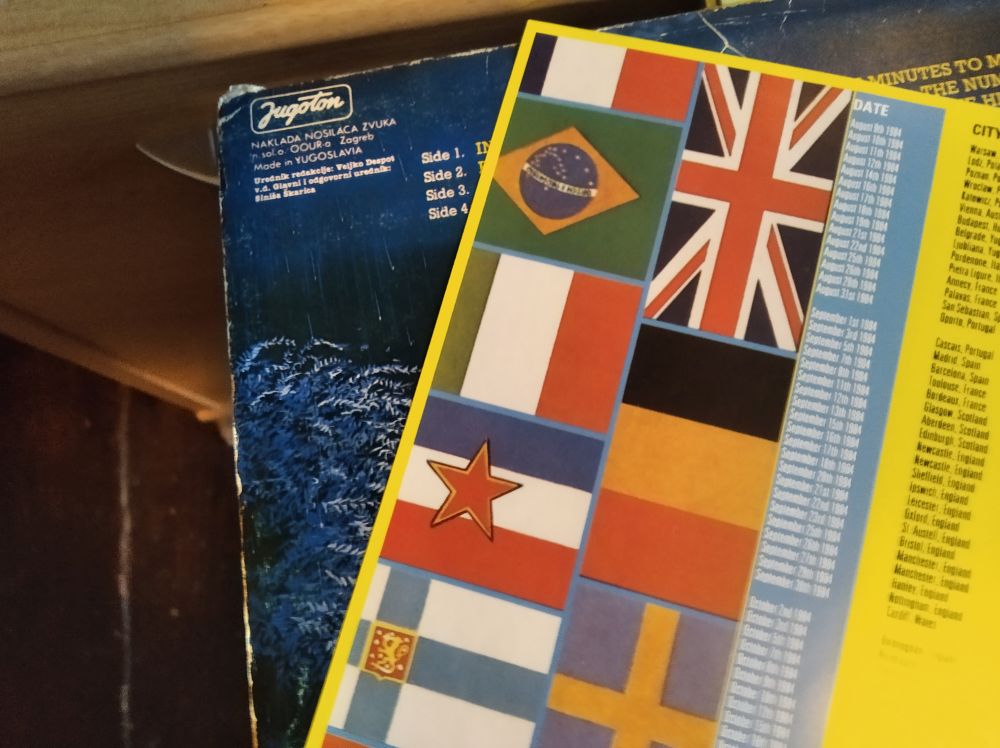

Posebna plošča vsekakor. Če me spomin ne vara, gre za enega redkih, morda celo edini rock album, ki je v Jugoslaviji izšel na isti dan, kot v svetu. Običajno so albumi v Jugoslaviji izšli z vsaj nekaj mesečno zamudo, včasih celo večletno, če sploh.
No, Jugoton je bil vsekakor korak pred drugimi in je poleg kakovostnejše same plošče solidno poskrbel tudi za ovitke, in nas običajno ni prikrajšal za notranje ovitke in barvne fotografije, kot so to imeli navado početi drugi založniki. Live After Death je bil precej na nivoju, manjkala je samo knjižica s podatki o turneji, ki je bila sicer priložena v originalnih izdajah.
Hej Matija. Mam original Jugotonov. Dela kot šus. Še vedno. En prvih vinilov, ki sem si jih kupil, potem ko se prišparal dovolj denarja za gramofon, zvočnike in ojačevačlnik, sicer sem ga kupil šele poleti 1987. Hitachi-jevi zvočniki so še kar isti, stari preko 40 let. To je krasen podatek – da je plata izšla na dan uradnega izida tudi pri Jugotonu. 😀
Spominjam se moje navdušenosti nad Iron Maiden. Vse komade sem skinu potem kasneje, v devetdesetih tako da sem dal ta album za ozadje, vse prehode, rife, celo kako lažjo solažo (taping pri Children of the Damned npr.) – s tem albumom sem postal obseden z Maiden.
Upam, da ne širim fake news, tole sem takrat prebral v naših medijih, srbskih seveda, v slovenskih revijah o težkem rocku tako ali tako že takrat ni nihče pisal. Tako, da je zgodba lahko tudi wannabe novica, ampak verjamem, da je res – prvič zato, ker sem tudi sam bil presenečen, da sem zagledal plato na policah (Pyromanio, 1984 ali Love At First Sting so dejansko izdali skoraj eno leto po uradnem izidu), pa tudi zato, ker je najbrž šlo za globalno voden marketniški pristop – kar bi kar sovpadalo s celotno podobo turneje, o kateri pišeš zgoraj).