Label: Bloodfish Music
Release date: June 21, 2007
Production: Gabriel Moffat
Album length: 66.59 min
Genre: Progressive Rock
Rating: 9.5/10
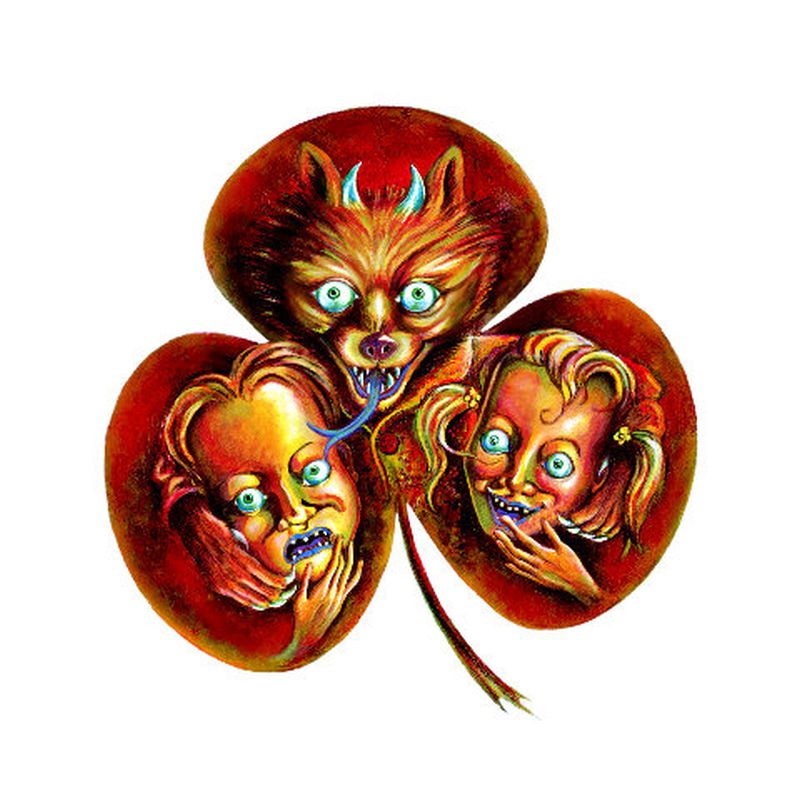
Whenever Rudi the foxy little devil has naughty brats like Hansel and Gretel firmly under his thumb, all of hell trembles in fear of the untamable kids’ arrival. That’s the first thought that pops into your head when you look at the cheeky cover of this superb album. “Doomsday Afternoon” was the sixth studio outing from the brilliant American multi-instrumentalist, singer and composer Phideaux Xavier, and also the second part of his ambitious concept saga about a dystopian, apathetic and ecologically destructive society under the watchful eye of ‘Big Brother’, where profit and security are the two top values. Sounds familiar? Phideaux is one of the few contemporary American musicians and lyricists who writes smart, socially barbed lyrics, which has led more than a few people to mistake him for some European prog rocker (his French roots surely had something to do with that, too).
On top of that, Phideaux successfully blends some of the best elements of symphonic prog with influences from early Genesis, King Crimson, Camel, Pink Floyd and Van Der Graaf Generator, adding choral female harmonies, psychedelic rock and folk, with a few other genre streams thrown in for good measure. At the same time, he even manages to avoid a single arrangement on his albums sounding like something you’ve heard from various prog classics, which tends to happen to the so-called third-wave prog revivalists. On “Doomsday Afternoon,” Xavier took an almost completely different stylistic, vocal and arrangement approach than on its more compact predecessor “The Great Leap” (2006), which was the first part of the aforementioned concept saga about a dystopian society.
Compared to its more psychedelic, folk-leaning predecessor, “Doomsday Afternoon” is a real treat for all fans of ‘old-school’ prog rock, the kind you hadn’t heard in the American prog scene for quite a while, apart from a few lone wolves. No wonder, then, that this was the breakthrough Phideaux album that finally earned Xavier the respect of even the pickiest prog gourmets, whom his earlier projects hadn’t quite managed to satisfy. With its complex compositional and atmospheric nature, this masterpiece was thus closer to the album “Chupachabras” (2005), while “The Great Leap” was closer to “Ghost Story” (2004).
There are more female vocal contributions than ever before, courtesy of the regular members of Phideaux’s band, Ariel Farber, Molly Ruttan and Linda Ruttan Moldawsky, who take over the lead vocal harmonies quite a few times. That was a good thing, as they nicely balance out Xavier’s charismatic singing. He sings most of the songs on “Doomsday Afternoon” in a completely different way than on “The Great Leap,” where he sounded far more psychedelic, obscure and less sophisticated, whereas this time his vocals come across as much more pleasant for all symphonic prog fans.
Complex multi-part harmonies, mighty orchestral arrangements, interesting improvisations and unexpected time changes never run dry across the whole album, and there’s an abundance of epic, melancholic and dark atmospheric moments that wonderfully complement the dystopian concept. Besides two longtime collaborators, guitarist/producer Gabriel Moffat and drummer Rich Hutchins, who shine like never before, the new keyboardist Mark Sherkus really stands out this time on traditional symphonic prog keyboards. Xavier, who besides his usual vocal duties played quite a few keyboards, led by the minimoog, as well as twelve-string guitar, has never put much stock in naked virtuoso ‘showboating’ between instrumental sections when creating his music. The album does have quite a few virtuosic, technically enviable moments, but they never cross the line of good taste, and besides, the melodic component is always essential with Phideaux.
In the style of Pink Floyd’s masterpiece “Wish You Were Here” (1975), “Doomsday Afternoon” is bookended by two interconnected epic tracks that open and close the album and together run to almost half an hour. Xavier shows no mercy to the social order, so already on the opening epic, meaningfully titled “Micro Softdeathstar,” he unfolds a picture of modern dystopian society serving the authoritarian levers of ‘Big Brother’ and gleefully destroying everything it gets its hands on.
The tranquil opening section, where Xavier’s vocals ooze undisguised sarcasm, soon shifts into energetic territory with mighty layers of Hammond organ, razor-sharp electric guitar passages and gorgeous vocal harmonies. Every section of this wonderful epic is a completely different chapter. In the opening part you can revel in rustic string arrangements, ethereal keyboard curtains and moving vocalizations, slowly building a tense, melancholic atmosphere. Dramatic turns through rhythmically choppy meanders, ruled by splendid orchestral arrangements and brilliant female vocal harmonies, further spice up the unpredictable nature of this excellent socially critical epic.
The marvelous instrumental “The Doctrine Of Eternal Ice (Part One)” opens with pompous minimoog passages while a sprawling orchestral backdrop builds the mighty atmosphere. The brilliant wind arrangements are a feast for the ears, and the keyboard improvisations are a chapter all their own this time. Moffat, too, really lets loose with electric guitar solos. With its mysterious, gloomy mood in the style of some gothic film production from Tim Burton’s directorial domain, “Candybrain” is yet another vivid proof that Xavier is never short on arrangement and improvisational wit. Phideaux shines with emotionally rich singing and subtle twelve-string guitar playing, while the moving female vocal harmonies deepen the nostalgic atmosphere even more.
“Crumble” is a short but atmospherically rich instrumental with delicate piano arrangements and choral vocal harmonies. “The Doctrine Of Eternal Ice (Part Two)” is an even more ambitious piece than the first part of the ‘doctrine of eternal ice,’ where Xavier mercilessly settles scores with social conformism and apathy and some of the other ailments of modern dystopian society. In the opening section the male and female lead vocals trade off harmoniously, then mighty orchestral curtains take over, stamping this ambitious composition with an epic seal. Xavier once again impresses with his biting vocals, so unusual for an American rock singer, while the lyrics never stop mocking the human ‘sheep’ who wouldn’t stop handing the whip to their masters at any price, all in exchange for ‘security.’ In the closing section Xavier and his crew manage to create a very interesting and innovative instrumental motif, after which mighty instrumental variations take over and heighten the epic atmosphere.
ABBA once sang “Thank You For The Music,” while Mr. Phideaux sings “Thank You For The Evil.” The latter opens with an ethereal intro, with wonderful keyboard-and-guitar harmonies flowing around, and you can’t miss how important an influence Pink Floyd were on Xavier’s musical path. Everything on this epic masterpiece is devoted to building an ethereal atmosphere, while Phideaux, once again in ‘cynical mode,’ transforms his vocal approach like a chameleon. The melodic nature of the individual arrangements isn’t disturbed even by the interludes of keyboard and guitar improvisation, played at an enviable technical level. “A Wasteland Of Memories” features dramatic, pastoral-rustic string arrangements and moving female vocals, which in part recall some of the best moments in the career of the legendary Mike Oldfield. “Crumble,” a piano-driven ballad with fragile arrangements and female lead vocals, is another lovely proof that maestro Phideaux has always known how to write compact songs with solid commercial potential, too.
“Formaldehyde” is a brilliantly arranged prog-folk-rock treat, where flute-driven pastoralism and gentle acoustic guitar chords run riot, while the minimoog nicely spices up the all-around Celtic atmosphere, in which the female lead vocal fits like a glove. The same goes for Xavier’s singing, which provides an effective atmospheric contrast. The nostalgic mood will please all prog-folk enthusiasts and fans of some modern bands of that kind, led by Mostly Autumn and Karnataka. The crafty closing instrumental section, meanwhile, is totally specific to Mr. Phideaux, who has always counted Jethro Tull among his main influences, which you can plainly hear here.
The nearly fifteen-minute closing epic, “Microdeath Softstar,” is the atmospheric climax of “Doomsday Afternoon.” A sacral intro with thick layers of organ and ethereal choral harmonies is followed by a shift into a complex instrumental section in which the melodramatic mood keeps rising. The epic symphonic arrangements are built up with contrasting vocal harmonies between Xavier and the female singers, with plenty of razor-sharp variations between keyboards, guitar and strings that will delight all fans of ‘old-school’ progressive rock. Brilliant instrumental moments aside, it’s Xavier’s vocal that, while tearing into the self-destructive reality of society, charismatically ties the individual arrangements together and convincingly leads the album to its epic conclusion.
“Doomsday Afternoon” is a masterpiece of modern progressive rock and the album that finally catapulted Phideaux Xavier among the most exciting prog rock artists of the 21st century. Everything on this album by an incorrigible musical perfectionist is a dream come true for all those who were convinced that the modern prog rock scene couldn’t offer anything particularly innovative and witty. “Doomsday Afternoon” should become the textbook example of how to create a modern, original-sounding symphonic prog rock album. Back in 2013, Xavier announced the release of the third part of the concept trilogy, but we’ll have to wait a while longer for “Infernal.” That’s good in its own way, since the hyperactive fellow is, in his typical perfectionist fashion, busy with every last sonic detail and wants to squeeze the absolute maximum out of the recording process.
Author: Peter “Dr. ProgRock” Podbrežnik
Track list:
– Act One:
1. Micro Softdeathstar (11:17)
2. The Doctrine of Eternal Ice (Part One) (3:01)
3. Candybrain (4:06)
4. Crumble (2:55)
5. The Doctrine of Eternal Ice (Part Two) (8:08)
– Act Two:
6. Thank You for the Evil (9:18)
7. A Wasteland of Memories (2:22)
8. Crumble (2:55)
9. Formaldehyde (8:17)
10. Microdeath Softstar (14:40)
Lineup:
Gabriel Moffat – lap steel guitar, Fx
Phideaux Xavier – piano, Fender Rhodes, Moog Voyager, six- and twelve-string guitars, vocals on tracks 3 and 10
Mark Sherkus – Hammond B3, MiniMoog, ARP String Ensemble, Korg Karma, sampler
Linda Ruttan – vocals
Molly Ruttan – vocals
Ariel Farber – vocals, violin
Valerie Gracious – piano, vocals
Mathew Kennedy – bass guitar
Rich Hutchins – drums
Guest musicians:
Matthew Parmenter – vocals on tracks 1, 6, 9 and 10, violin
Joel Weinstein – lead guitar on tracks 5 and 10
Johnny Unicorn – Hammond B3, Moog Voyager, hand claps, vocals on tracks 3 and 10
Martin Orford – synthesizer solo on track 9
Patti Amelotte – dulcimer on tracks 1 and 6
Steve Dundon – flute on track 9
Rob Martino – flute on track 3
Orchestral sections:
Paul Rudolph – orchestration, conductor
Mark Baranov – violin
Bing Wang – violin
Richard Elegino – viola
Jerry Epstein – viola
Dale Silverman – viola
Elizabeth Wilson – viola
Stefanie Fife – cello
Barry Gold – cello
Jason Lippman – cello
Dennis Trembly – bass guitar
Brian Drake – French horn
Bruce Hudson – French horn
Boyde Hood – trumpet
James Wilt – trumpet
Chris Bleth – flute, oboe, clarinet