Author: Sandi Sadar Šoba
Location: Križanke, Ljubljana, Slovenia
Concert date: 27.08.2013
Attendance: 3,500
Ticket price: €26 (presale) / €35 (day of the show)
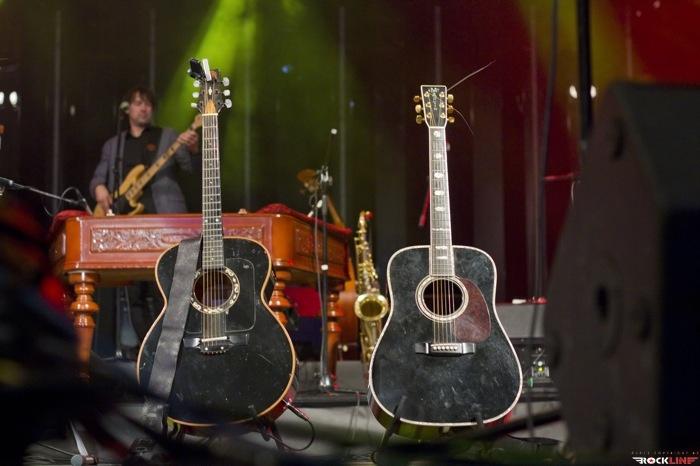
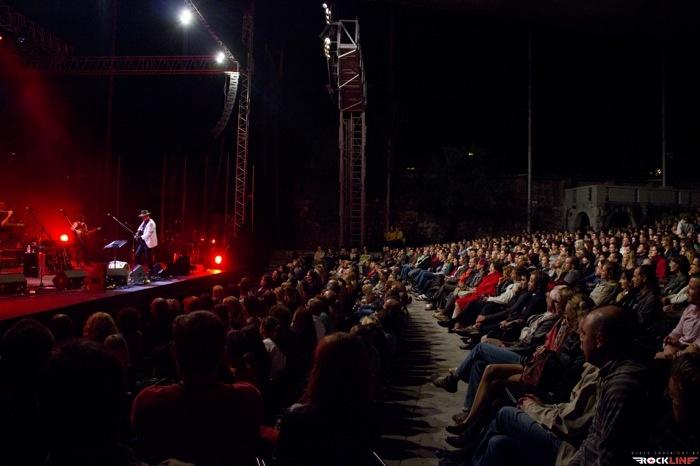
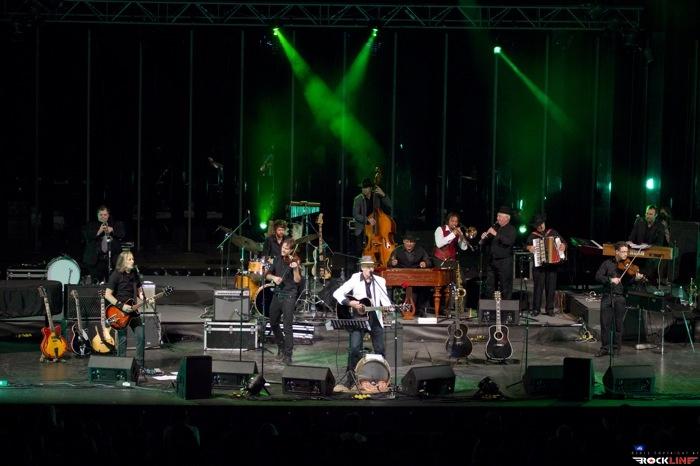
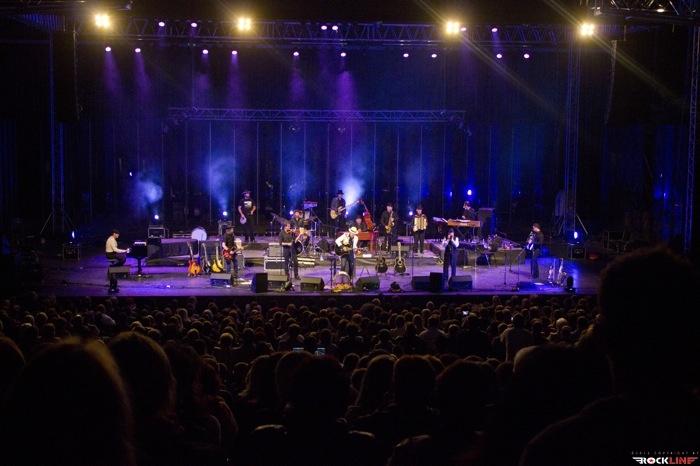
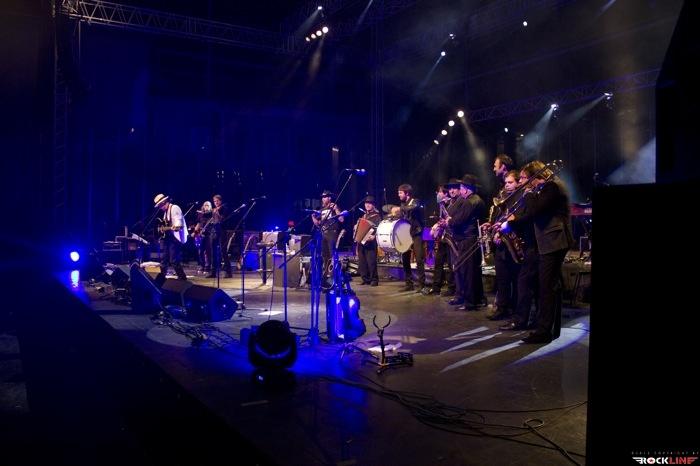
Great people, after piling up countless laurels, keep setting their sights higher, and great musicians at least try to add to what they’ve done before, build on it, or take one more step beyond everything they’ve pulled off up to that point. For the mystic man from the plains along the Mura, the poet of the much-sung Beltinci melos, Mr. Vlado Kreslin, precious little remains unachieved, so you have to wonder whether any kind of upgrade is even possible or doable. At the same time, there’s no fear that even a top-quality repeat of something already seen would dull sentiments that are anything but bored, washed out or faded by predictable repetition. The black guitar and the lonely stirring of memories of old archive vignettes from a time that can no longer be summoned back with total confidence are only part of the long road that defines Vlado’s creative life. This time, for his 22nd traditional appearance at the Festival Ljubljana, the man with that black guitar lured onto the stage old companions, old friends and acquaintances, but that outweighed nothing – family came first. On the boards of Križanke he put no fewer than 20 members of a musical orchestra of superb musicians, and in front of the audience itself he brought out three generations of his own family. So a spectacle like none we remember was on the cards, and the venue really was sold out down to practically the last seat. In front of the Križanke amphitheater an endless crowd of familiar and less familiar faces was jostling, and besides the cream of Slovenia’s cultural elite, the seats in the auditorium were shared by old, young, poor, rich, lovers, lonely hearts, and above all everyone in love with the stirring, moving lyrics and mighty words of a man who, with a raspy voice and an upright stance, has never once let anyone down or left the audience with a bitter aftertaste of being fooled. Some came out of curiosity, others out of need, because the poetic language of Kreslin’s songs has thoroughly soaked into their everyday lives, and some came just to succumb to the magical combination of the caressing voice of the exceptional Kreso with the cimbalom, rarely heard in Slovenia but enchanting. Every last one of them knew that this packed-to-the-brim venue was in for something out of the ordinary, and certainly worth every cent you counted out for a seat among the congregation. Kreslin is no shallow crowd-pleaser pandering to the general taste of the masses. He’s a storyteller, a magician and a self-assured visionary who dares to follow his dreams, share them with the crowds, and say out loud, with resonance, everything that weighs on his heart and mind.
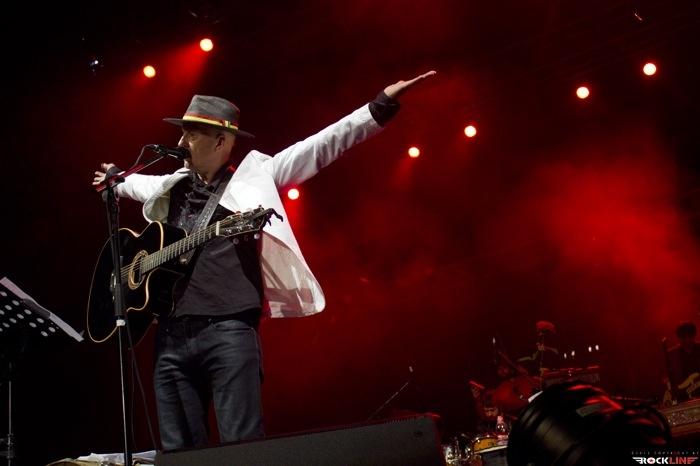
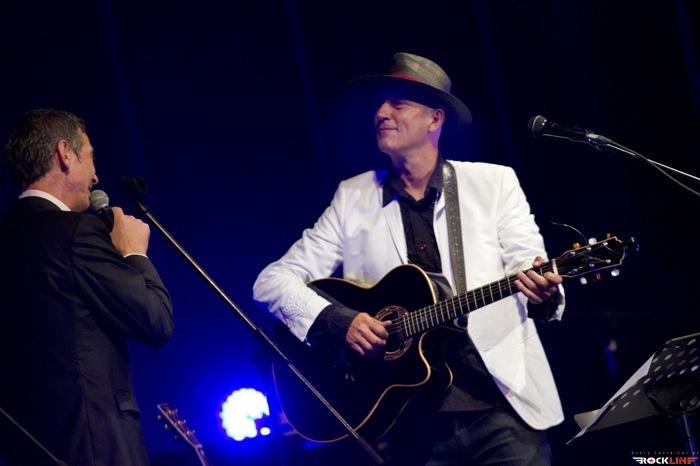
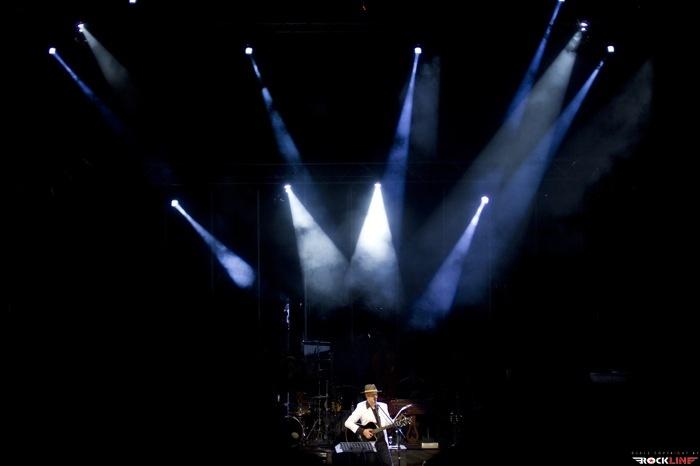
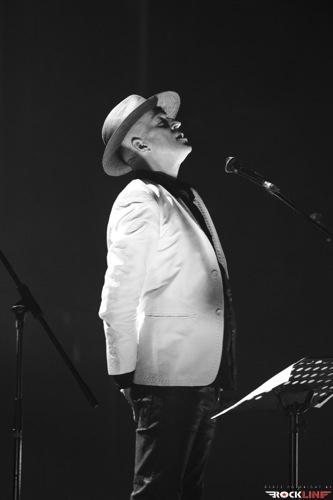
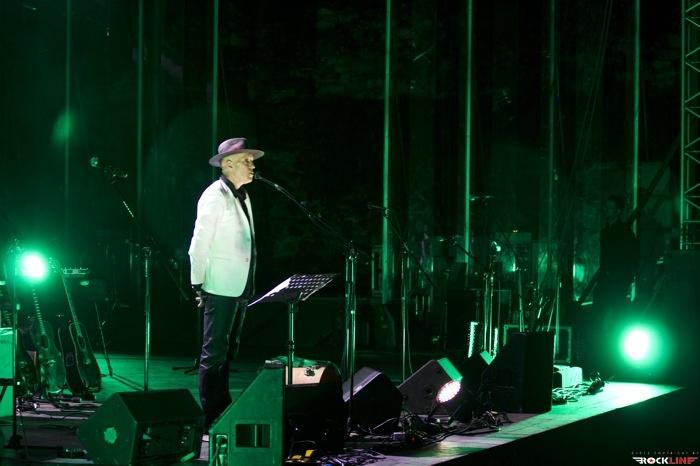
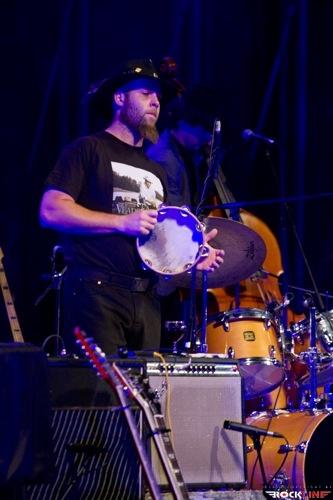
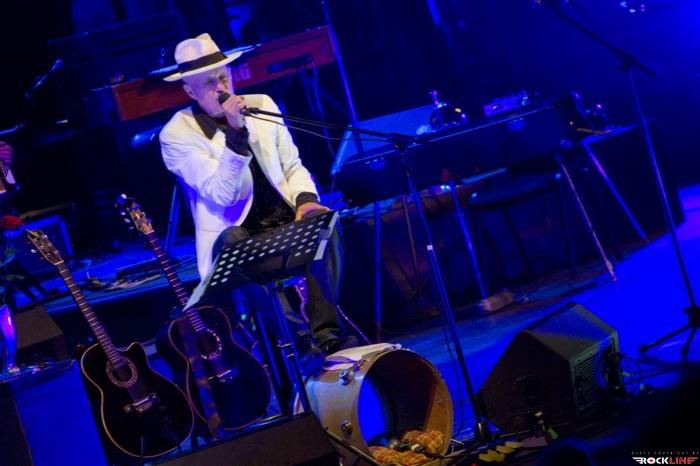
He stuck to that principle after the lights dimmed and the murmur of the vast crowd died away. Out of the shelter of the dusk stepped Kreslin, dressed up in a white jacket and his almost indispensable hat, slung on the black guitar and broke the ice of the evening with a song from the fairy-tale fantasy film Čisto pravi gusar, Pustite nam ta svet. Whoever doesn’t believe in fairy tales is old, and their life is rather bleak and empty. A wonderful send-off for an intense evening, and then the main man of the night was surrounded by a wreath of superb musicians who go by the name Mali bogovi. Miro Tomassini, Kreslin’s longtime friend and musical companion, slings on his guitar and sensually strokes it with his fingers. Luka Jerončič grabs the bass, while behind the drums, accompanied by multi-instrumentalist Iztok Cergol and percussionist Luka Ovsec and the sound of Tonč Feinig’s gorgeous organ, Gašper Peršl lays down the beat. Zvezdice bele from Kreslin’s beloved fireflies rings out full and sensual, maybe a touch melancholy and restrained, but certainly in harmony with the original version, and Kreslin and Mali bogovi drift off into the sentimental spheres of a theater of events, eyes raised to the sky, arms spread wide, with vivid images from the world of imagination and from reality. Variations on the theme were a given, and the first proof of Mali bogovi’s brilliance came already with the song Cesta, with the keyboards tinkling and a sweet trumpet weaving delicately and softly into the texture of the superb sound. The singer-songwriter’s freedom and the artist’s air of excellence drowned out any taste of the already-heard and already-seen, and with the exceptionally polished performance of Nekega jutra ko se zdani, the enchanted crowd could half-close its eyes and slip in its mind into the golden age of the great Martin Krpan. »The first ray already rises from sleep / look, light has risen over the water / as the last in the dark lose their strength / a hundredfold new suns rejoice. / One morning when day breaks / and heads cool down / everyone goes their own way. / One morning when day breaks / and tears dry up / one morning when day breaks,« rings the muffled murmur of thousands of lips. That kind of restraint may be right at home in drama and opera, but at a full-blooded rock concert it’s not the best recipe for experiencing the event, so despite the full sound, the whole thing stayed incompletely felt.
Still, the chorus of the song is right that there are indeed a few such people left to be glad about, and the blues-soaked cherubs around the supreme god Kreslin are without doubt part of that. It’s they who together sing out the ominous forecast of a harsh autumn, after which heavy snowflakes fall to the ground and rock the whole world into a dream of passing and peace. Thick fog and suggestive lights, and from the speakers the verses drift: »This year the autumn will be harsh / the wind will be merciless and icy / When the sun goes down, the beasts come out / the birds fly off each in their own direction.« Kreslin is an artist who gives voice to life draining away, to passing, to death, but also to the longing the world needs. A beautiful poem of love and courage, of fate, of being spellbound by coexistence, with veiled eroticism and passion, comes with the song Odpiram okno from the album Ptič. Then, to the sound of a piano whose keys are this time played by the talented leader of Gal in Galeristi, Gal Gjurin, who in the previous song showed he can tame the brass body of a trombone too, the young talented singer Severa Gjurin steps onto the stage. The first duet, Abel in Kajn, isn’t the most convincing, as the young lady from the band Olivija, with her soft and indistinct voice, can’t quite match Vlado’s baritone, at least not as on the Drevored record. Vlado blows out his lips, and the sensual moment of heightened emotion that, in my humble opinion, brings an exceptionally heartfelt performance of Ptič into the set begins with Tomassini’s superb touch on the guitar strings, warmly embraced by the sounds of the organ, while Kreslin’s colorful voice sensually sings out his hymn to life, to being. »Over there above the water every morning the day gets up / and counts the winners and the victims of nighttime dreams. / Over there above the water the world still spins, / and carries off the dreams that you woke up,« Vlado sings with a bittersweet voice, and the softened, saddened heart rightly brings a tear to many an eye.
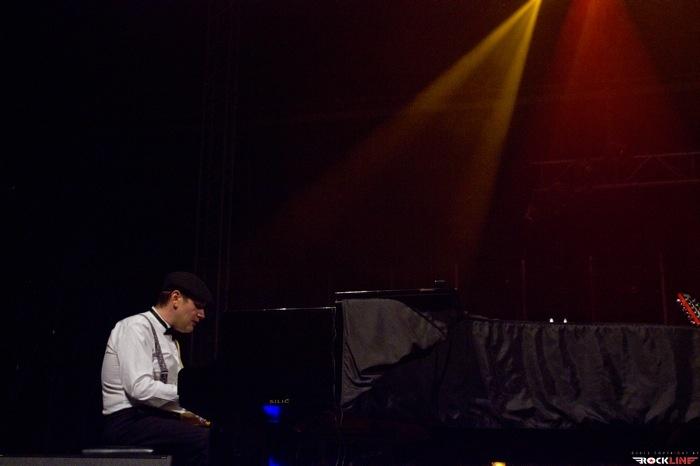
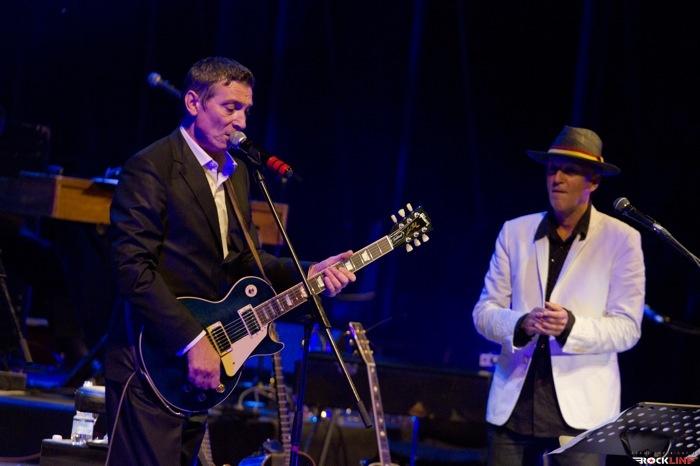
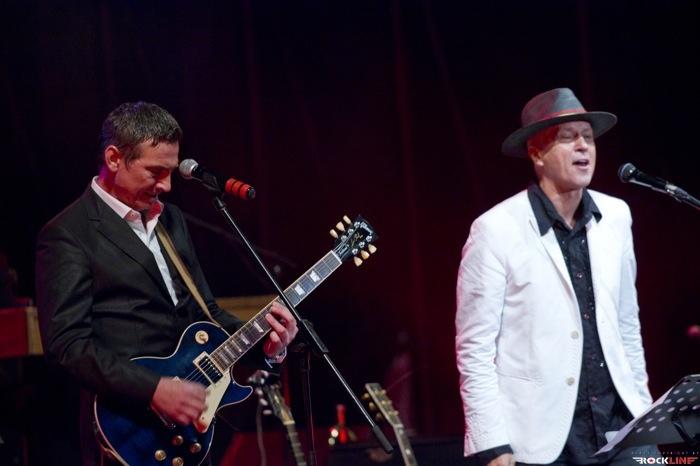
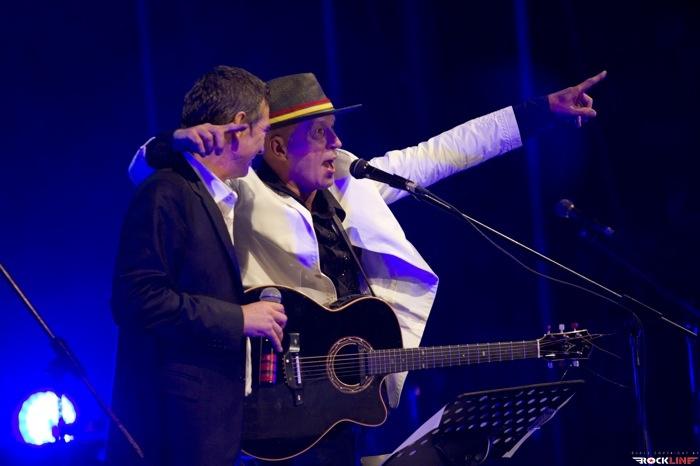
Then comes the return, with the clock hands turning back more than thirty years. October 4, 1980. Dressed in a soldier’s uniform, young Vlado swallows the sharp shouting of an army officer, Captain Raljić, yelling at the »young rascal«. The day before: the red carpet, champagne and a winning performance backed by Jože Privšek’s orchestra with a song dedicated to junkies, dreamers, and those lost on the road to self-discovery, love, passion again, and glowing in the light of the fragility of existence. Dan neskončnih sanj is definitely one of the pearls of Slovenian musical poetics, and no less so is S tabo je izi, which with nothing but the sound of a piano gives the world a Slovenian equivalent of the resonant ballads from films about the hero of Ian Fleming’s novels, if I may borrow the comparison from those who sense a whiff of James Bond in Kreslin’s poetics. The breath of two violins, joined by a trumpet, and the muted lights only heighten the fullness of the feeling. After the Dylan-esque, rich Vsak si želi, though, the peak of the night comes, in my opinion. Kreso recalls 1984 and the great Novi rock festival, where he stood among the stunned audience listening to the superb feel of the band Dorian Gray, which was then steered, with a magical voice and a superb sense of melody, by an above-average musical talent – Mr. Massimo Savić. Massimo appears on stage to thunderous applause in a shiny suit no lawyer would be ashamed of, slings on a black Les Paul next to Tomassini, and from under the master’s fingers the riffs of Sjaj u tami ring out resonantly. Massimo wins over the crowd in one fell swoop, after five lived-through minutes of daydreaming with melodic Satriani-style solos and the beautiful velvet voice of an exceptional vocalist. After the heartfelt rendition of that hit from the superb Dorian Gray comes a big bow to the greatness of Krpan. »And now comes a song that I’d love to say I’d written myself. Vlado – I truly envy you its greatness and beauty …«, followed by an exceptional duet on Od višine se zvrti, on which Massimo, with remarkable Slovenian pronunciation, tops all previous attempts at a duet version of this classic from Kreslin’s treasury of beautiful pearls.
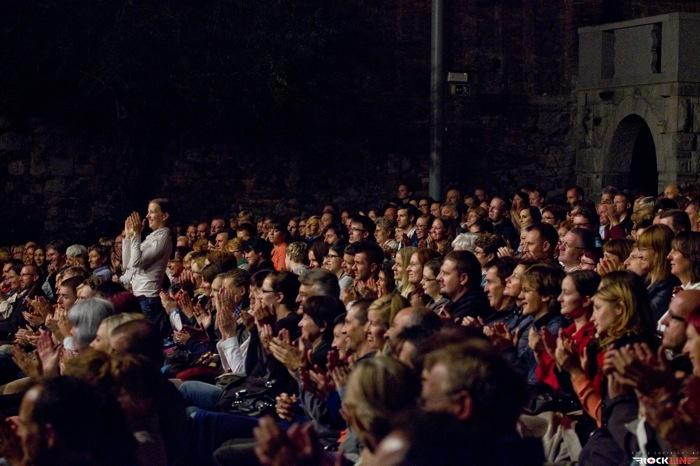
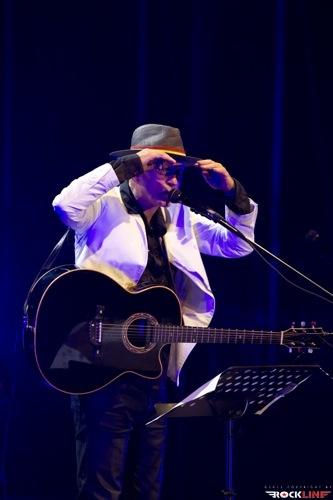
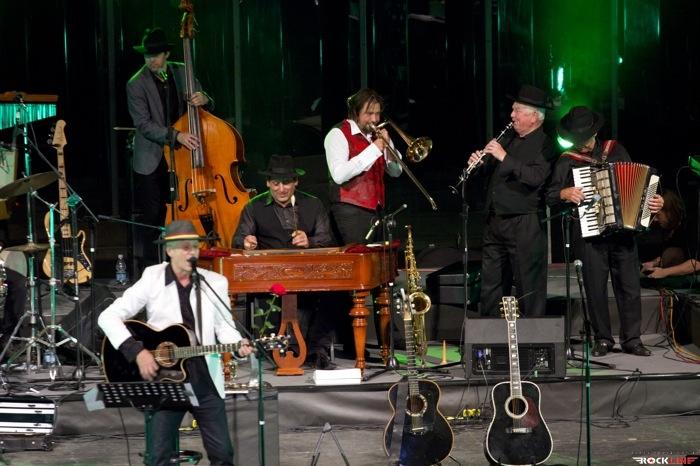
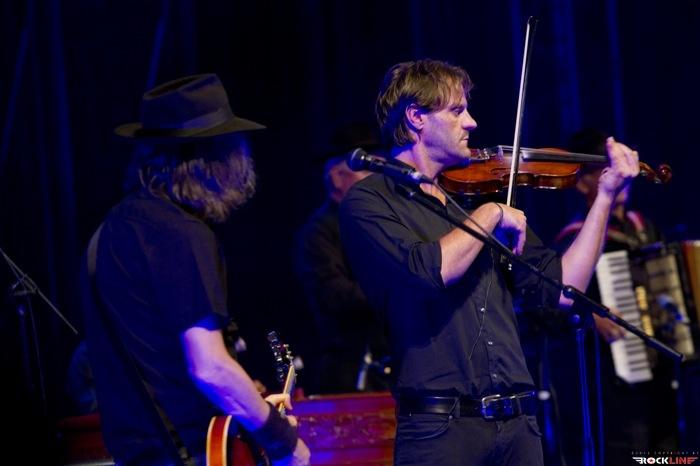
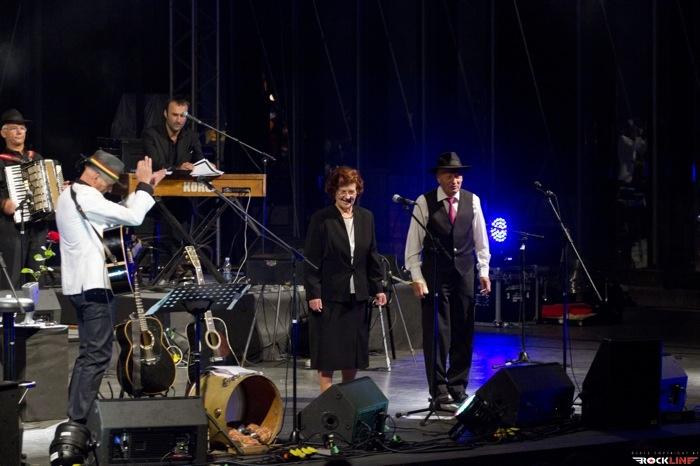
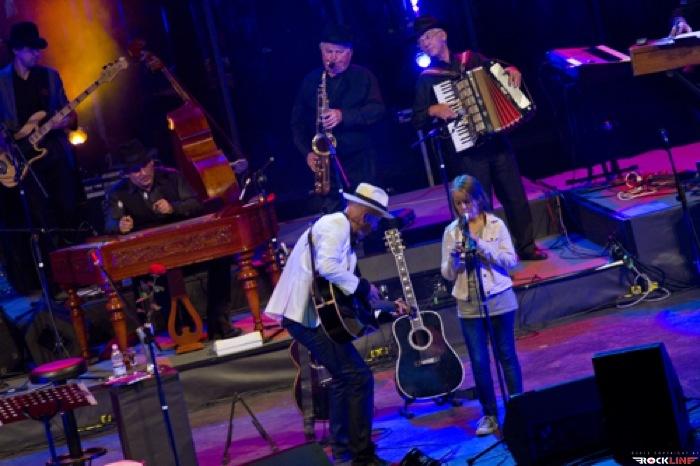
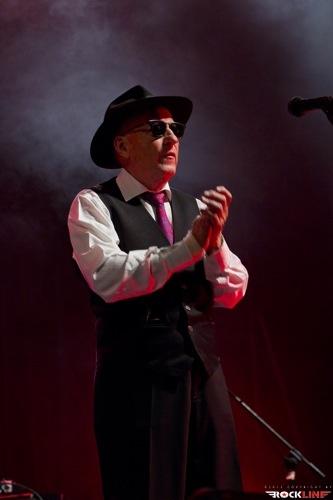
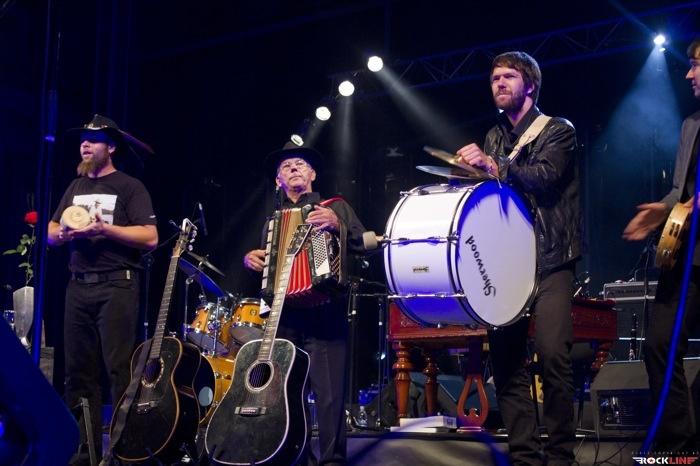
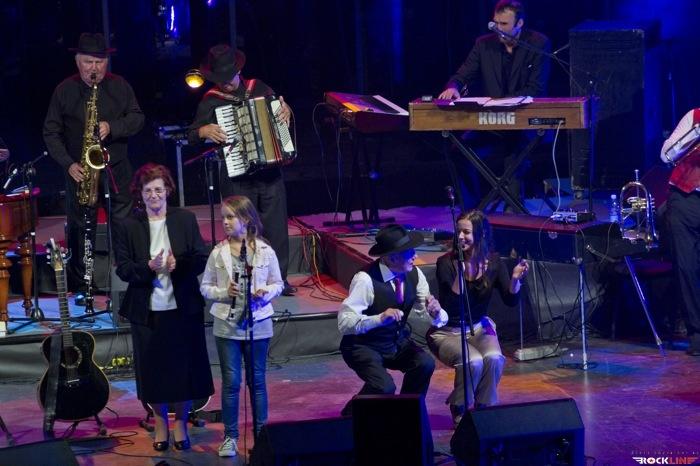
Iz Goričkega v Piran is seen off by the voices of a still too-restrained audience, as is Tisto črno kitaro. After Tista črna kitara, the members of the renewed, rejuvenated lineup of Beltinška banda come on stage. Andi Sobočan sits down at the magical cimbalom, and Samo Budna moves the crowd even more to the sounds of a warm violin. Namesto koga roži cveti calls Halgato to mind, and after the sentimental melancholy, right when the audience is eating out of his hand, Kreslin opens the book Poezije, puts on his glasses and begins reading a story about Gostilna Central, the place where he grew up: »That night in Central in nineteen thirty-four – the musician with the bass Jože Kociper, the violinist Janez Kociper, my grandfather, the master of the house Jožef Kreslin, the lady of the house my grandmother, and a little boy with a harmonica – my father,« whereupon Vlado’s father Milan steps confidently onto the stage, vital despite his advanced years. The audience rewards the father-and-son duet on Tisti bejli grm with a roaring ovation, and the next string of more folk-flavored tunes steals attention away from the son for a few moments too, swinging the spotlights onto the oldest member of the Kreslin family. Vsi so venci vejli is becoming a standard that the audience, after a couple of visits, has to join in on completely on its own and with confidence, and after the song Nocoj je edna luštna noč (for this one, a cheeky story about lovemaking, Vlado’s mother Katarina also steps on stage and sings), there follows a moment that brought joy to father Milan’s heart. After long years of persuading, following an exceptional violin solo by Samo Budna, the sounds of Goričkega čardaša sweep across Križanke, and after the csárdás comes the stirring poetics of pain, dying, farewell once more, and Prekmurje sentimentality with the song Bela nedelja. Soaked to the last fiber of our bodies, we then get the more cheerful tones of Nocoj igramo za vas, which drops into the set in Orlek style as a confession about seduction, partying and music for every mood, which Kreslin indeed manages to conjure up at every moment of his concerts. After the critical Vranah, during which the representatives of the authorities in the front rows of the VIP box right under the stage shift a bit uncomfortably in their seats, the regular part closes with Poj mi pesem, which sounds almost jazzy, joined by everyone at the concert and also by his daughter Ajda on flute, ending the first part with the audience standing, applauding and begging for an encore. It gets one, and during the first part a representative of the third generation of the Kreslin family also stepped on stage, the talented young flutist Ajda Marija, whom you may have already heard at SiTi Teater a few months ago, and now the young lady, even more confidently and without fear, performs the song Še je čas, where the father accompanies his daughter, who this time reaches for a concert flute, on harmonica. In true family-spectacle style, the concert continues with an »unplugged« version of Okna na stežaj and the heartfelt Zibaj me, and before the final stretch of the first overtime, the orchestra pulls black sunglasses out of a pizza box, and then they all perform a spectacular version of Daj mi Micka pejneze nazaj. To the two-verse folk standard Vlado’s crew of course adds the indispensable third verse as well, which for this Prekmurje hit, an evergreen if you like, was written by none other than Vlado’s father.
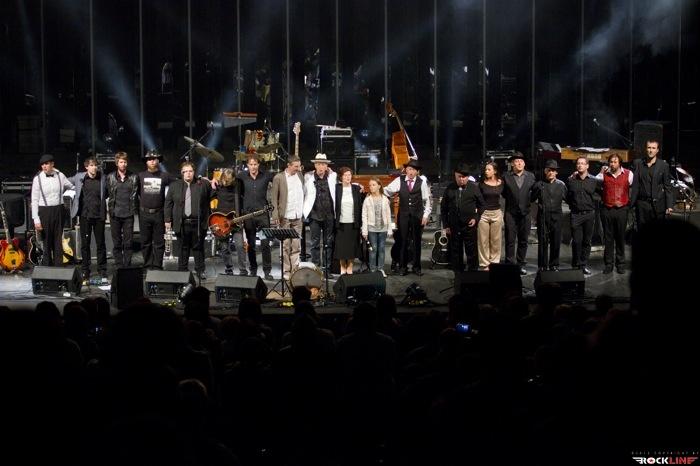
Stari je Jack, and he knows it well! Nothing more would have needed adding, or would it? Of course it would – the song Je v Šiški še kaj odprtega, with a walk out to the audience, off the stage and back on, and then the whole crew of Mali bogovi, Beltinška banda, the marvelous and precious guests of the evening and the entire Kreslin family take a dignified leave of an audience they had spoiled for more than three hours. Križanke then began to empty out, and all of us, full of impressions, began to trickle out of this shared center of delight into the streets and side lanes of a dreamy Ljubljana wrapped in dusk. Everyone got their dose of sentimentality and nostalgia, and above all an earful of good music, which is what makes every Kreslin concert such an addictive moment, one you hooked yourself on to excellence with and simply couldn’t land for anything less. That’s also why you come back to Kreslinovanje year after year – for a celebration of full-bodied music and the victory of light and heart over the darkness of alienation, and the words and verses from the Beltinci plains are the provisions for the road that make the world a nicer, warmer and more bearable place to live.
Setlist
1. Pustite nam ta svet
2. Zvezdice bele
3. Cesta
4. Nekega jutra, ko se zdani
5. Ena pesem
6. Letos bo huda jesen
7. Odpiram okno
8. Abel in Kajn (S. Gjurin and V. Kreslin)
9. Ptič
10. Dan neskončnih sanj
11. S tabo je izi
12. Vsak si želi
13. Sjaj u tami (Massimo)
14. Od višine se zvrti (Massimo and V. Kreslin)
15. Iz Goričkega v Piran
16. Tista črna kitara
17. Namesto koga roža cveti
18. Gostilna Central
19. Tisti bejli grm (V. and M. Kreslin)
20. Vsi so venci vejli (V. and M. Kreslin)
21. Nocoj je edna luštna noč (V., K. and M. Kreslin)
22. Gorički čardaš (Samo Budna and M. Kreslin)
23. Bela nedelja
24. Nocoj igramo za vas
25. Vrane (V. and M. Kreslin)
26. Poj mi pesem
27. Zdaj pa zbogon vi Odranci …
—————————-
28. Še je čas
29. Okna na stežaj
30. Zibaj me
—————————-
31. Daj mi Micka pejneze nazaj (the whole Kreslin family)
32. Je v Šiški še kaj odprtega
Photo Gallery