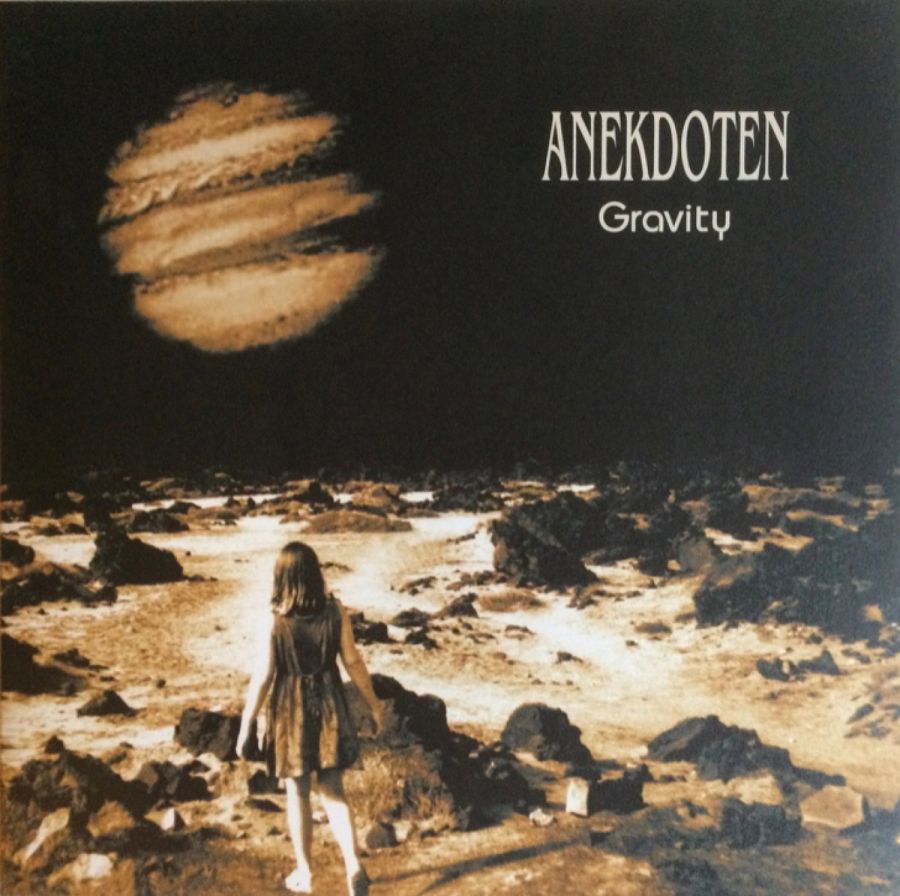
Label: Virta
Release date: June 2003
Production: Anekdoten
Album length: 46.19 min
Genre: Progressive Rock
Rating: 9.0/10
»Gravity« was the fourth studio album from Anekdoten, the Swedish prog-rock purveyors of gloom. Led by the gifted vocalist and multi-instrumentalist Nicklas Berg (who had renamed himself Nicklas Barker by this point), the band had set off the so-called third wave of progressive rock in the early nineties, together with their countrymen Änglagård. Anekdoten have always leaned toward the darker side of prog, which is typical of most Scandinavian prog rock and prog metal bands anyway.
Besides their own recognizable sound, mostly a blend of art rock, psychedelic rock, prog metal and symphonic prog rock, they never hid the fact that King Crimson were their main influence. You can hear it especially in the frequent Mellotron waves, the often chaotic, fractured rhythms, the dark atmosphere and the devotion to writing post-apocalyptic lyrics. Compared to its predecessor »From Within« (1999), »Gravity« was a somewhat more accessible effort and less King Crimson-ish than usual. That means Anekdoten took another step toward maturity in developing a sound all their own, without giving up the eclecticism you’d expect from them.
Berg, who became Barker thanks to his fascination with the English writer, director and painter Clive Barker and with the horror films he wrote music for in his side project Morte Macabre, doesn’t exactly offer cheerful visions of the near future on »Gravity«. You can hear it right away in the post-apocalyptic lyrics of the opening track »Manolith«, driven by thick bass lines, sudden tempo shifts, vast Mellotron curtains, shattered guitar passages and Barker’s trademark, deeply melancholic singing.
»Ricochet« is a wonderfully successful weave of dreamy, melancholic and nostalgic ambient shades, built on a beautifully harmonized union of Barker’s melancholic vocals, Mellotron waves, eclectic guitar passages and dynamic drum transitions. »The War Is Over«, which sounds like it was made in the early seventies, is a melancholic, acoustic-leaning ballad with a hefty dose of psychedelic elements and a constant emphasis on Mellotron waves.
»What Should But Did Not Die«, with its mysterious and tense mood, could easily be the backbone of a horror movie soundtrack. The highlight of this superb track is its closing section, where it seems like chaotic rhythms and bristling guitar passages are about to take over, but after the triumph of the Mellotron waves, courtesy of Anna Sofi Dalhberg, the song settles down again toward the end. »SW4«, with its indescribable melancholy and sorrowful vocal delivery, has quite a bit in common with Porcupine Tree, and it also feels like a close encounter with ghosts.
The ambitious title track, which has a bit more prog metal in it than is usual for Anekdoten, is one of the album’s peaks. Beautifully harmonized Mellotron textures and eclectic guitar passages weave brilliantly with the mournful vocals and complex drum transitions until it all builds to a dramatic, shattering finale. »The Games We Play« is a tender, psychedelic ballad ruled by boundless sorrow and an almost hypnotic dreaminess.
»Gravity« closes with the dark instrumental masterpiece »Seljak«, a word for “peasant” in the language of our former southern brothers. How the members of Anekdoten learned it is anyone’s guess, but while listening to this gloomy adventure it’s easy to picture an aging, embittered farmer, alone in the middle of an unwelcoming landscape, trying to survive while he’s haunted by the ghosts of his nearest and dearest. Here Anekdoten demonstrate, one last time on the album and in an enviable way, their remarkable knack for eclectic rhythmic nuances, building complex ambiences and crafting dramatic, multi-part harmonies.
»Gravity« cemented Anekdoten’s cult status and, at the start of the new century, launched them to the top of the Scandinavian ‘gloom merchants’ of the third wave of progressive rock. After the breakup of their distant ‘cousins’ Landberk and the perpetually unclear status of Änglagård, it seemed after »Gravity« that these big Mellotron lovers would stay on top of dark-leaning Scandinavian prog for at least a while, but they were soon ‘chased off’ that perch by Opeth, who were just then starting their climb to the top of that scene.
Author: Peter “Dr. ProgRock” Podbrežnik
Track list:
1. Monolith (6:07)
2. Ricochet (5:44)
3. The War Is Over (4:42)
4. What Should but Did Not Die (6:43)
5. SW4 (6:04)
6. Gravity (8:19)
7. The Games We Play (3:24)
8. Seljak (5:16)
Lineup:
Nicklas Barker – vocals, guitar, Mellotron, Rhodes, Farfisa, vibraphone
Anna Sofi Dahlberg – vocals, Mellotron, piano, Farfisa, organ
Jan Erik Liljeström – vocals, bass guitar
Peter Nordins – drums, cymbals, vibraphone, Mellotron