Venue: AKC Metelkova, Menza pri koritu, Ljubljana
Concert date: July 10, 2013
Attendance: 100 – 150
Ticket price: €0 (advance reservation)
This time I can’t tell the story any other way than as a story of big, happy coincidences. The event was called Luči bolj na glas!, a project in which the state, at the initiative of KUD Mreža, finally found a way to use pumped-in European funds to help the very people it had so benevolently erased not long ago, pushed to the margins, marginalized with names like čefur, čufta, čapac, čifut, southerner, and then washed its hands of them, back when worn-out construction workers, bricklayers and carpenters, cheated out of their hard-earned money, boarded buses under police escort and, once their work visas ran out, left the land of hope, honesty and prosperity, as we like to flatter ourselves, and headed off with empty pockets to hungry families in Bosnia. A country is its people, and after some folks perhaps followed the letter of the law with arbitrary bureaucratic relish, I, as a believer in the principle that the world can be made better, but only if you start with yourself, held on to a bit more historical memory, and so waited all the more gladly for a change for the better, and lived to see it. Xenophobes, homophobes, rabble-rousers and embittered narrow-minded types don’t represent the whole country, while alternative folks and progressive intellectuals were repeatedly hushed by politics and shoved away from the trough. But persistence and hard work pay off anyway! The promotional event for the launch of the project Zvok in luč – usposabljanje v prireditveni tehniki, along with a public call to members of the target groups to join the training, was proof that even in the toughest recession times something can still get better. The project is financed from the Operational Programme for Human Resources Development 2007–2013, development priority »Equal opportunities and promoting social inclusion«, priority orientation »Increasing the employability of vulnerable social groups in the field of culture and their social inclusion«. Money was found to train technical staff for stage work, so besides sound techs and lighting techs, a trained stage technician will also find work more easily. The training within the project Zvok in luč – usposabljanje v prireditveni tehniki will run from September 2013 to June 2014. It will be held at Menza pri koritu and other cultural venues. The project’s target groups are people with disabilities and members of the national communities defined in the Declaration of the Republic of Slovenia on the Status of National Communities of Members of the Nations of the Former SFRY in the Republic of Slovenia: Albanians, Bosniaks, Montenegrins, Croats, Macedonians and Serbs. Southerners, in other words, if you will. I’m a descendant of the latter myself, and I believe that without them Slovenia wouldn’t have as much backbone, soul, heart and beauty as it has picked up over its history. At least I hope it has.
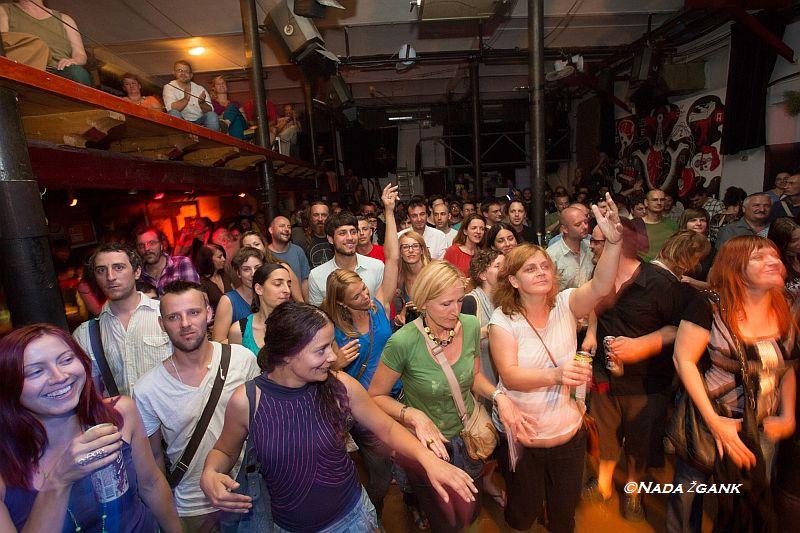
The second coincidence was that, under the baton of comedian and exceptionally mouthy host Aleksandar Rajaković, the evening also served as the overture to the superb concert that followed from Mostar Sevdah Reunion, and on top of that the event was free – provided, of course, that you’d registered beforehand and reserved a ticket for the jam-packed Menza. How I came into contact with the pioneers of 21st-century sevdah was a coincidence too, even though Mostar Sevdah Reunion have been carrying the world-music fusion movement in Bosnia since the late nineties, from the time when war-scarred, shaken Bosnia began to calm down and make peace not through politics or religion but through music. Mostar was the city whose famous bridge over the Neretva connected ethnically divided worlds, and after the grotesque wartime destruction of the bridge and the shelling of Mostar’s old town, which we watched on our little screens, few people imagined that behind the walls of the shelters, people could console themselves with songs of traditional Bosnian tunes, keep a piece of themselves and their souls alive, and, despite their differences, weave and build an even stronger bridge – from person to person. With a tradition more than 300 years old, sevdah found its center right on the banks of the Neretva. The word means love, passion and ecstasy, and it carries within its bosom a mix of musical influences that were kneaded in the Bosnian pot, ripened and bloomed into something entirely its own, yet so heartfelt and nobly soulful that it was only a matter of time before I’d succumb myself.
I got tangled up with Mostar Sevdah Reunion through a BBC documentary about sevdah, after which I fell for the dreamy, melancholic stories of love, feeling and being, and the Bosnian soul came into perfect harmony here with the ecstasy of Gypsy music. Mostar Sevdah Reunion recorded several duets with well-known Gypsy musicians, and besides Šaban Bajramović, the legendary singer Ljiljana Buttler also found her way to the band; as I learn afterwards, she performed with them right up until her death in 2010. The lineup kept changing over the years, people came and went, and eventually the band around mastermind Dragi Šestić settled on names like Mišo Petrović (guitar), Sandi Duraković (guitar), Nermin Alukić Čerkez (vocals and guitar), Vanja Radonja (violin), Marko Jakovljević (bass), Gabrijel Prusina (piano) and Senad Trnovac (drums). The album Tales From The Forgotten City was just the thing for rescuing a piece of their Bosnian soul from oblivion and carrying it around the world on the wings of music’s universal language.
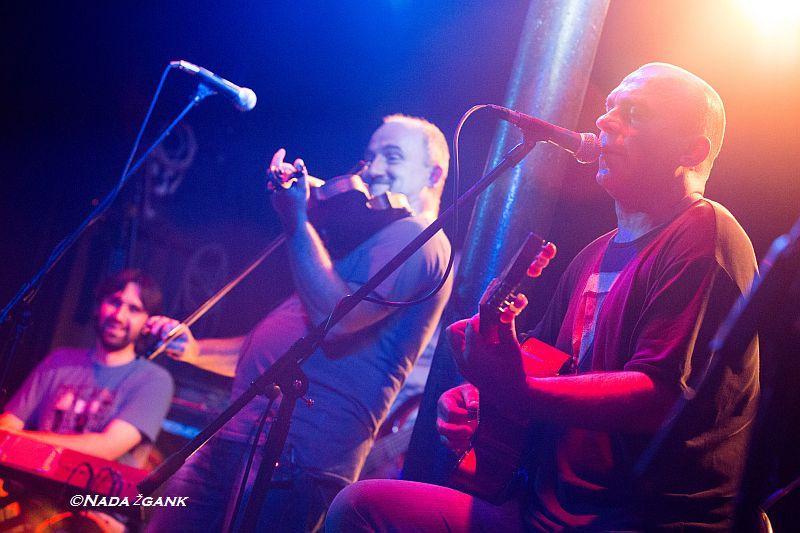
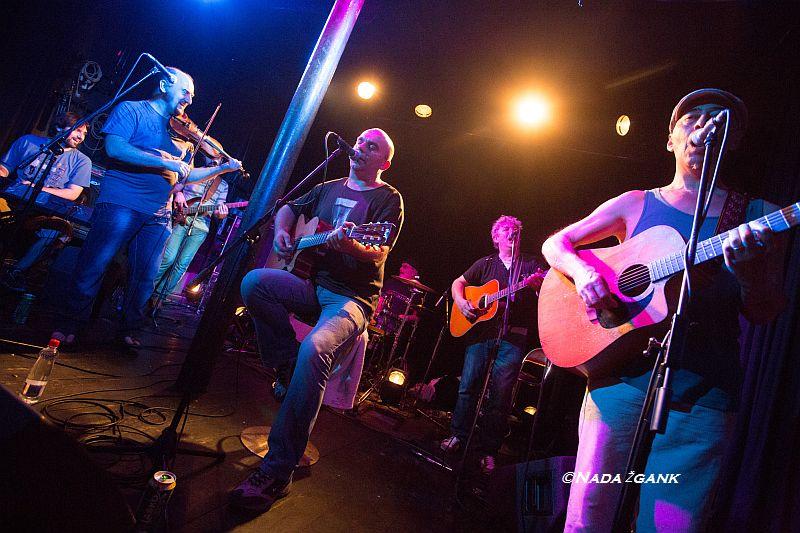
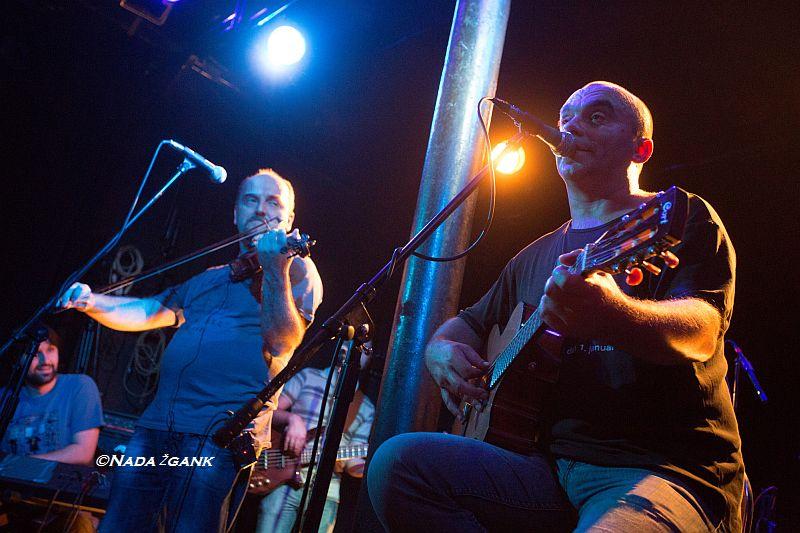
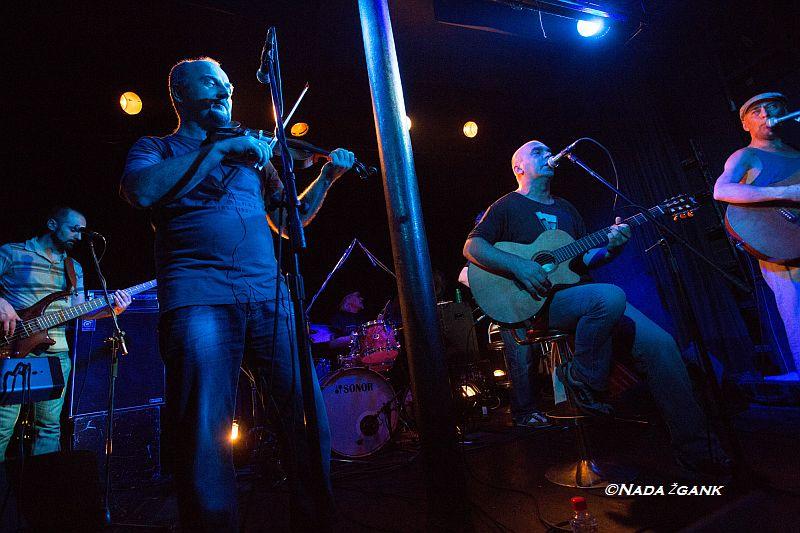
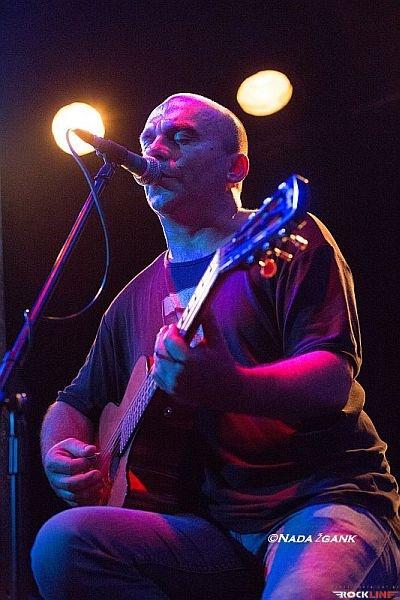
The ambassadors of Mostar blues take the stage without much pomp or prep. The electro-acoustic guitars are tuned, the violin is ready to weave into the juicy sound, and off to the side, strategically placed behind the keys, sits a young keyboardist. A drummer, headscarf and all, settles in behind the kit, and the trip into the dreamy world of sun-scorched stone along the Neretva can begin. Opening drum rolls are joined by the delicate arabesques of oriental scales from Mišo’s, Sandi’s and Čerkez’s guitars. It’s like listening to Pink Floyd on a dreamy Doors blues trip. A lovely, dreamy sentiment about unhappy love and longing, sorrow, prohibition and the magnetic pull of the eternal I love you, brimming over from the heart. Čerkez’s voice rounds out the palette so beautifully and with such manly melancholy that your eyes close on their own and your body starts swaying gently. As if flames of beauty’s bonfires were rising to the sky from the very first moment. No warnings, no big words. The music says it all. And this time the image of the Balkan islet of the Orient also sneaks in through the tango number Grana od bora. The Argentine-Arab dance kicks off with a psychedelic intro after a long buildup of passion. Mišo Petrović’s guitar is the tool that, instead of a conductor’s baton, steers the Sevdah Reunion train in the right direction. And there are no purist commandments here. Besides blues, tango, jazz and samba, there’s plenty of room for the meeting of different worlds, universes and mentalities that can coexist in the same few-minute gems of brilliance! Mostar Sevdah Reunion aren’t just experts and veterans of sevdah, and they’re not merely superb musicians. They’re also exceptional aesthetes, people who listen to each other constantly on stage, feel each other almost telepathically through sound waves, and keep up perfection not just in the odd bar but the whole time. Otkako je Banja Luka postala starts with guitars that remind me of Bijelo dugme. Which song again? Damn! But then, both come out of the same cramped pot of brilliant inspiration and melody! The Mostar experts of updated sevdah beautifully modernize the traditional folk tune and back it up rhythmically in all the right places, conjuring images of old, Turkish-tinged life in the region several centuries ago. »Otkako je Banjaluka postala, / aman,aman,postala / nije ljepsa udovica ostala / aman,aman,ostala,« sings the trio of the brilliant Čerkez, Mišo and Sandi with feeling. And the road continues through the narrow streets of sun-baked Mostar. Lijepi li su mostarski dućani conjures up before your eyes the charm, the little cafés, the people who, with pride and uprightness, fell under the spell of beautiful Mostar women. The song, which the men in tonight’s lineup used to sing with Halid Bešlić, serves up among other things a dose of Django Reinhardt, and Mostar gypsy jazz speeds up the pulse even in proverbially calm and reserved Ljubljana. The song Snijeg pade na behar na voće doesn’t recall the original version by Himzo Polovina or the Indexi version; Mostar Sevdah Reunion, without accordions, drive their train of compositions on toward a scorching jazz-fusion experiment, with something Floydian and progressive lurking beneath the surface the whole time … Then a half-hour break, during which Menza can cool off a bit, air out, and people can get some oxygen. What an intense first half!
After the break, during which we all kept glancing at our watches so as not to miss the second half, the arabesque picks up again, a little calmer. Kraj fendžera Jusuf stari opens the second part of the set. A calmer, contemplative, extended jam session shows that Mostar Sevdah Reunion are in their element. Long solos from drums, guitars, violin and keys prove that the men on stage know each other so well that they could play every part of the song flawlessly with their eyes shut, half-closed, even backwards. And this wringing out of hearts and souls lasts, I’d bet, at least a quarter of an hour this time! The incredible buildup doesn’t please everyone present, and some of them clearly came to provoke on purpose. A couple of heated throats demand their musical wishes. A couple of them shout for Oči moje kletvom bih vas kleo, and Mišo gallantly cuts off and rejects the calls to play covers of the same-named band from the other side of the Neretva, a band that tonight’s bearers of true-believer, modern-day sevdah have nothing to do with. Not all grudges are buried, not all reproaches forgotten, but despite slight disturbances to the sine wave of pleasure, the troop of standard-bearers of real musical chemistry carries on with its sevdalinka tale through Mene majka jednu ima. Traditional sevdah in a new, jazzy outfit, foaming with passion and commanding you to dance. A Gypsy dance to the beat of the lyrics of a song sung by Roma singers, with Zorica Bunclik as well as the band Romalen with Gordana Jovanović among them, but this time the song works even better with Mostar Sevdah Reunion’s more resolute rhythmic spell. Borrowed words become their own, and the music becomes all-embracing and boundless. No ethnic borders, no political borders, we climb over language barriers and uncomprehended Turkisms too, and the swaying of hips proves that even the borders between the sexes have finally fallen. At least for those few moments of musical deliverance. There’s no Mostar Sevdah Reunion concert without Čudna jada od Mostara grada, which once again conjures up a vision of Pink Floyd. The superb song glorifies the beauty of the city to which the men gave their souls and their inspiration, and because of which they can, besides selflessly shedding tears, squeeze out pearls of perfect musical beauty. A bit of an old-timey feel also comes from U Stambolu na Bosforu, an old-school sevdah song taken from the Bosnian treasury of the past. Put putuje Latif-aga then shifts the evening back into a higher gear with a little funky rhythm. Mišo takes a rag in hand and mutes the strings, and the sweaty faces of all the troubadours of Bosnian blues on stage show that the intensity of the evening doesn’t let up, in the name of the band’s proverbial quality, toughness and refinement. Not even with the superb Vranjanka, which sends full-blooded blues booming from the speakers, washed clean and stripped of all masks and mixtures. Even when a string snaps on Mišo, the jam session carries on undisturbed, and Mišo, at just the right moment after changing the string, steps out from backstage and adds his finishing touch during the last accent of the first part of the extended intro, with which Mostar Sevdah Reunion set the backdrop for another tale of forbidden love, but also of unsurpassed beauty, to which every single bar of the superb song raises a monument sky-high. The song runs past ten minutes, and half-closed eyes show that there’s nobody in the hall who isn’t enjoying the musical offering. Except a couple of provocateurs who, drunk on their arrogance and misery, like a broken record demanded the previously rejected song of some other same-named band … Moj dilbere puts the cherry on top with a transition into a more danceable finale, during which, in transformed form and during the demanded encore, the thousand-times-heard and previously mentioned Pink Floyd sneak into the whole thing. Another Brick In The Wall lands on fertile ground, and the previously quiet Slovenes sing the verses at the top of their lungs: »We don’t need no education / We don’t need no thought control / No dark sarcasm in the classroom / Teachers leave us kids alone!« And the extended set closes with another round of Čudna jada Mostara grada. And then an irrevocable, final and thoroughly orgasmic ending.
After the last bow from these approachable virtuosos of sevdah, the lights went out on the sweltering stage. Drops of sweat or streams of tears of happiness – something thick and chemically potent had soaked the inside of Menza, where this Wednesday one of the bigger concerts took place, the kind we should be talking about more loudly. Still, it’s better to keep some goodies to ourselves, I think, so the crowd doesn’t rip off absolutely everything with a seed of the good, the excellent and the first-rate in it. So that sevdah concentrate on a blues base doesn’t get watered down and fizzle out. Like sound after the last chords fade from the great ambassadors of Neretva blues, Bosnian soul and temperament. Also so that they come back again, we need to crank up Luči bolj na glas! All the way and beyond. With a glow of heartfulness and boundlessness, and without narrow-mindedness, let’s accept the fact that the Balkans are part of our soul, without which we’d otherwise be a nation without an identity, staring at the wrong side of the border and at the wrong ideals. That was also the message of an evening of strange, wonderful and lasting coincidences, the kind that, if your heart is in the right place, mark you, reshape you into something better and more tolerant, and above all steep and anoint you with drops of the realization of Happiness, Goodness and Love. For the transition from survival to life, those are crucial.
Concert photos kindly provided by Nada Žgank
Setlist
- Sinoč sam ti Safo dvoru dolazio
- Grana od bora
- Otkako je Banja Luka postala
- Mostarski dućani
- Snijeg pade na behar na voće
- Kraj pendžera Jusuf stari
- Mene majka jednu ima
- Čudna jada od Mostara grada
- Laku noć
- U Stambolu na Bosforu
- Put putuje Latif-aga
- Vranjanka
- Moj dilbere
Photo Gallery