Author: Sandi Sadar Šoba
Photos: Jerneja Jerak
Venue: Orto bar, Ljubljana, Slovenia
Concert date: 13.03.2013
Attendance: 40 – 50
Ticket price: €15 with reservation (€18 without)
Damn it! After a few days of sulking over a sore stomach, one thing is getting bloody clear: either it’s something in my wiring that I can’t scrape up enough juice for hymns of praise at any damn procession of a gig, or Ljubljana has just lived through yet another one of those inconsequential metalcore tremors. Are the culprits unimaginative dimwits who, in their hunt for five minutes of fame, grab unhygienic shortcuts and generic tricks that are anything but exceptional and worth either the time or the energy? I won’t pass judgment on that just yet. I wouldn’t aim the accusation at the promoters either, who work with real drive to keep the menu of genres, names and tastes in our micro-sized capital varied, even if a ton of events inevitably include moments of lesser sparkle that you’ll struggle to remember. I wouldn’t scold the youth for bad taste either, since we’ve all been through that phase, I’m sure, but the apathy flooding the older part of the crowd does worry me. This time a fresh dose of pessimistic fervor came from entirely different factors, on top of the fact that another stretch of mostly pointless came on the day the Catholic world got a new pope, and the energetically drained congregation hung limp in the depressive gloom of a Wednesday, which is neither fish nor fowl in the epoch we call the week.
As you can see, I haven’t written about the names at all this time, so let me ask: how much do the names Climates, Napoleon and Being As An Ocean tell you? A status of slightly higher recognition could be assigned to the last of them, which made the trek to Orto worth the effort, since the other two names were (at least for me) bloody unknown and obscurely unattractive going in. At least for me, I’d filed this evening under low-expectations event … I don’t judge a book by its cover, and I don’t judge a gig by the names on the bill, but by the music and the mood they conjure during their moment of stage inspiration. Shortly after nine the doors of Ljubljana’s Orto swung open, and judging by the solid crowd of young, eager fans of core hybrids (we mustn’t forget the teenage girls either, decked out up to the throat in rugby socks, who, just like their male counterparts, put more emphasis on the aesthetics of clothing than on the content of the space between the left and right ear …), a thoroughly decent gig was on the cards.
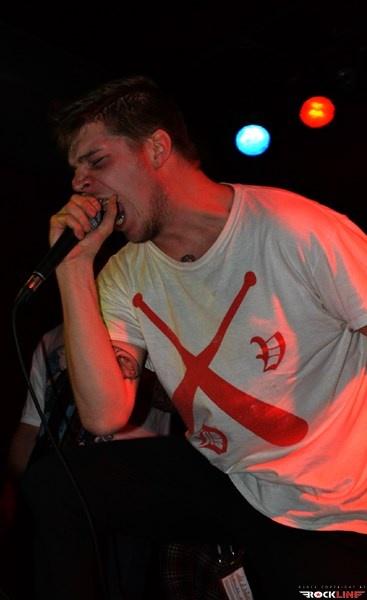
First to chip away at the iceberg of expectations were the British lads from the town of Lincoln, melodic metalcorers Climates. Despite what was, for me at least, considerable anonymity, even the opening, with its by-now-obligatory intro, was on point. Two short-haired guitarists, Sam Bowden and Josh Geeson, occupy the left and right sides of the stage, lanky Matt Powles gets ready for the assault behind the drums, and next to muscular vocalist Wes Thompson, bassist Chris Pritchard, decked out in plugs and tattoos, also strikes a combat stance. The first track is the latest single What Means The Most, and the guys lay all their aces on the table. The melodic guitars have enough edge and control to keep the sound just varied and tempting enough. The drums are massive and punchy, a massive bass dominates as the glue holding it all together, and the vocals – those are punchy, just-right raspy, and besides being an exceptional orator in a sea of melody, Wes also proves an exceptional frontman who knows how to fire up a crowd. Orto, meanwhile, stagnated in a state of reserved bashfulness, while down front, right from the start, the standard faces you’ll meet at every metalcore gig showed off their savvy (or lack thereof). Seeking contact, Wes handed the mic to milk-toothed, bare-chested kids, who squeezed nothing out of their lungs and vocal cords but inarticulate, pathetic cries of weltschmerz that had nothing to do with the band’s lyrics. Climates keep the train of quality music rolling with undiminished edge and quality. The track Chance & Courage is a thoroughly solid representative of new-age HC sounds. The melodic bricks of the wall of sound are full of predictable stops and melancholic social criticism, but Climates know their trade and radiate it beautifully on stage. Pleasantly surprised by the high level of a performance that lacked nothing, I dropped my a priori defensive posture, and Climates stole all my attention, undisturbed by either pathetic attempts at pussy diving or the benign circle-pit shuffling of a few individuals. Their set could be compared to legions of bigger, better-known musical cousins from the West. There’s far less suspense and fewer stops in the hyperenergetic The Self Discovery, the centerpiece of the latest EP Reconcile, and the stampede of Waiting To Exhale, for which the guys shot a video a while back, confirms that these days music gets swallowed more with the eyes than the ears. The youngsters from our sub-Alpine chicken coop had properly breathed in the material, so there was far less out-of-sync action below the stage than before. Climates are guys of many musical faces and sentiments. Besides edge, the textures have plenty of melodic, sentimental slides into restrained balladry, and the guys don’t come off as fake, softened or pointless for it. After Heavy Minds and the harmonic scream of Three Years, the time came for the grand finale. Visibly satisfied and sweaty, the Climates lads confidently squeezed out the sentimental finale of Letting Go from their lungs. I can’t deny they’d grown on me after just this first set, since despite predictable metrics and melodic moves, the Lincoln hopefuls offer a truly complete package of carefree gig fun that’s also full of heart, accessibility and the unspoiled quality of musicians who haven’t yet tasted stardom, though they’re flirting with it with all their might.
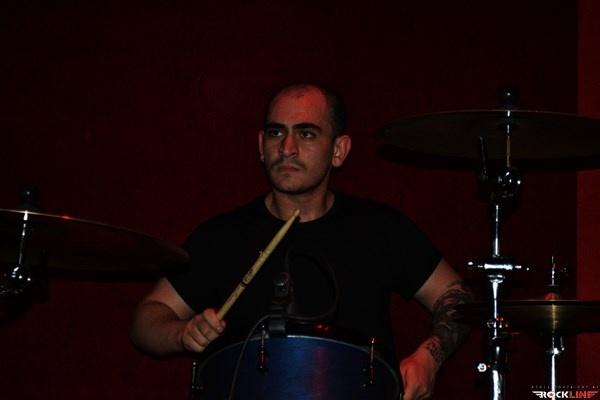
The start was good, but I was curious about what came next. I admit I had no idea what to expect from a band that named itself after the French general who was a painful implant in the backside of the British Empire two centuries ago. Will Napoleon dominate Ljubljana too, or will the Orto stage prove a Waterloo, and the Slovenian congregation the equivalent of the Duke of Wellington’s army? The Exeter four-piece took the stage in the manner of their German colleagues. Behind the drums sits the chubby, bearded James Mendoza, and when the silver face of an Apple computer lights up next to the kit, everything becomes clear – another pointless attempt at impressing with trigger sounds rather than organic, unspoiled sincerity. Guitar melodies are entrusted to Samuel Osborn, who has hoisted his Ibanez almost up to his chin. The mic is entrusted to the Germanophile-dangerous nitwit Joshua Baker, who’s already fidgeting awkwardly on stage from the start, while on the left side of the stage, visibly in a good mood, Ryan McEntee plants himself in an entirely different, more confident, don’t-give-a-damn way. The name tells you nothing, and given that the British quartet is armed with just two self-produced records (the EPs What We See and Cinderella), they really couldn’t promise much that’s new. Unlike the same-named band from across the Atlantic, which scared people in the eighties of the previous century with teased hair, the British Napoleons are disciples of harmonic metalcore and HC, but in this stew there’s bloody little meat of their own. The rather monotonous, dreamy guitar melodics hang off the bass and drums like a drunk on the nearest fence, and the vocals, despite the expected HC guttural, are indistinct and even annoying. Communication between Josh and the audience was inauthentic, yet Slovenian lads and lasses were ready to consume everything from the British generic HC meat grinder – from uninspired genericness and the arrogant, nonchalant act of stars who are above it all, right down to the crappy sound, which was overblown for Orto’s wooden construction. The tracks Rituals, Wasted Life, Day After Day and Regret blended into the newer »masterpieces« from the record made last year. Frankly, there’s no big difference between the newer aces like Liars And Sellers, Bearing Loss and the title track What We See and the older songs (it’s pissingly funny when a band that’s existed for a good two years talks about its songs being »from way back« as if they were prehistoric, Precambrian finds everyone should know). Josh with a foot on the monitor, then running from photographers with his back to the crowd, then screaming red-faced into the mic again, and then those damn digitized masses of pointless drums that the fat little drummer pummels with energy, and utterly monotone guitars … There are bright moments in this ton of crap, but the quartet smothers it all with needless brake-pulling, and a solid groove soon goes to hell! The generic sound of It Prevails, Heart In Hand and similar lukewarm specimens is bloody contagious, and even a sharper, angrier performance didn’t convince me of the supremacy of the almighty Napoleon, so I went to give my ears and soul a little rest in the Ljubljana freeze …
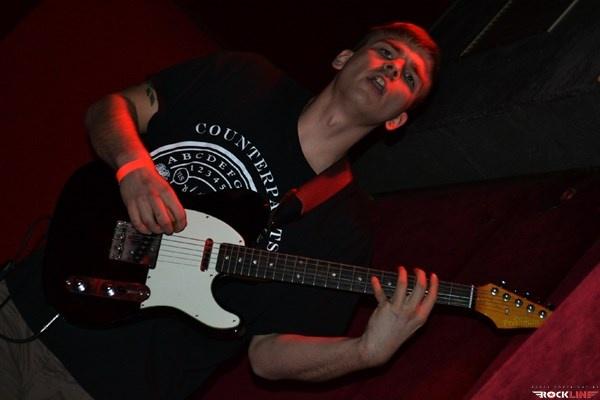
I’d bet the grand finale would be grander, since Being As An Ocean, as American elder statesmen of the post-HC genre, promised the most in the middle of the bill. Then again, I wonder whether something’s wrong with me, since the guys have recorded only one record so far, which bears, wow, the meaningful title Dear G-D, and have only existed since 2011! Short-distance runners without real mileage, then? I don’t judge in one go, but already after the opening stretching and yogi-style meditation by singer Joel Quartuccio right there on stage, ignoring the audience behind his back, and the dismantling of a side barrier by one of the guitarists in the name of greater mobility for his Telecaster, it was clear the guys take themselves bloody seriously. Too seriously, if I may say so, as after the opening intro of a weepy little voice addressing God, it became clear the guys were betting on the wrong aces. Joel took up a position right among the crowd, who hung off his muscular neck in a deeply woe-is-me way and tried to croon their out-of-tune karaoke melodies. The much-touted guitar duo in the form of the preening Jacob Prest and the gymnastics-inclined Tyler Ross and, let’s not forget, the rhythmic heart in the form of bassist Ralph Sica and drummer Shad Hamawe, offer quasi-HC schlock and a heap of phony melodics. Dear G-D was presented as a benign construct of screamed vocals that you couldn’t make out or properly hear. The guitars were unbalanced, and the too-delicate drums and the bass stole the last atoms of inner desire to dig deeper. The direct contact thus became a factor that eroded the level the lads should have built and held from the first moment on, so unlike the exceptional experience Rosetta brought to Orto some time ago, this time the stale taste of unfulfilled expectations dominated my mouth. Salute e Vita tries to sell itself far more melodically, but even in its studio version it sounds slightly rattly, and live it’s missing a few more grams of balls. Far more cohesion for mind and heart comes from fragments of This Loneliness Won’t Be The Death Of Me, a real anthem to weltschmerz, and I’d have gotten over even that fact if hoarse karaoke singers hadn’t stolen my will to dig any deeper by yanking the mic out of hands, and the gig, instead of showing off the band’s own qualities, edged ever closer to a painful farce on which it was pointless to spend any more time and energy. And so came the moment when frustration beat the desire to be in that very moment in that very corner of the universe, and the Rockline crew admitted defeat and slipped off into the deaf night.
Even a lack of inner lust can be the factor that makes me want to wash most of this Wednesday out of my mind. Don’t get me wrong – Climates are still a band I’ll gladly and happily listen to going forward, but I can’t crown any other winners on the day of the new pope’s enthronement. The overrated sheen of core derivatives has driven the genre into a total dead end, where all you can do is repeat what’s been said and sung already, while the ever more washed-out shades of lyrical content simply repel the critical listener who can’t just stare at aesthetic frills and pointless blather. Here I’d tie in a thought from theorist and wise thinker Jože Vogrinc – music is certainly a reflection of the time we live in. And the vacuum of the time we live in could easily frighten a person. Video killed the radio star, internet downloads killed the analog soul of music, and with that a good chunk of the organic, which at least I found easier and more enjoyable to identify with, died in the whole mess. This time the empirical evidence was further proof that you can’t escape aging, and with the years there’s significantly less ear and understanding for the youth and their grasp of pathos. And that’s as it should be! So the question of blame I raised in the intro can be written off entirely, or can it?
Photo Gallery