Label: Celinka
Release date: November 2013
Album length: 70.54 min
Production: Janez Dovč & Baraka
Genre: Folk / Jazz / Art Rock
Rating: 10 / 10
Every now and then you pick up an album and know right away that no review, however painstakingly detailed, is going to measure up to it. Its form is just way too rich in substance, and so the written word, with the “ratio” switched on, can’t keep pace with it in any decent way.
“Baraka” is another top-shelf release, bursting at the seams with musical quirks and a superb mix of jazz experimentation and the infectiously dynamic kinetics of tight rhythmic structures and lead melodies. This is a story of a masterful fusion of ethno music and jazz! The experimental and the melodically accessible are brilliantly balanced across the whole record. The trio is made up of Janez Dovč, Nino Mureškič and Goran Krmac. Three first-rate instrumentalists and composers who are hardly short on seasoning or experience. Mureškič, among other things a former member of the jazz project Quatebriga?, is a man with an incredible arsenal of percussive ideas, and the brilliance of those ideas is boosted by his ingenious use of “sub-rhythmic” patterns, which get added, whenever the sonic picture needs thickening, as special rhythmic effects of programmed sampling. For the average layperson, Goran Krmac is living proof that an instrument confined to a template of a few basic notes in brass bands can be given an entirely different role and function, a special musical experience that, in its explorative character, doesn’t lag an inch behind either Janez Dovč’s accordion or Nino Mureškič’s rhythmic structures. The tuba plays the part of the bass guitar and/or double bass. It rarely gets challenged and pushed into a role where an experiment is demanded of it. The album “Baraka” (in Hebrew, the word means “blessing”) is just the right title for such an experiment. Krmac and Mureškič literally explode in the rhythms of the Mediterranean-Balkan-flavored treat Follow Us Again. Goran Krmac is definitely the hottest Slovenian tuba player right now.
And then there’s the visionary musical guru Janez Dovč! His contribution to the album comes in just the right doses: jazz-salted adventurism in the accordion improvisations, followed by melodically refined moments of “calming down” with a genuine ethno character. These melodic passages are the calibration factor of the whole album and release the “voltage” of the more demanding parts. In all the exuberant, free-spirited experimenting the trio allows itself, there’s no fear of them ever accidentally losing the plot and drifting off to the edge of musical chaos.
Eleven tracks stuffed full of creative, musically restless ideas that know no limits when it comes to trying out the “untried”. The album never stops testing how far the trio’s artistic reach extends. That makes it thrilling for more demanding listeners, while its track-by-track balance, with the clearly stated melodies of Dovč’s accordion, opens the door to a wider audience. And yes. This trio format belongs straight on stage, right now!
The added string arrangements by the Symbolic String Trio make for an extremely complementary color palette in the sonic landscape, and the way the shades of the accordion and violin melody lines blend together keeps impressing, starting right with the opener “Ne pozabi, od kod si”. That first track instantly reveals the point of the trio’s musical vision.
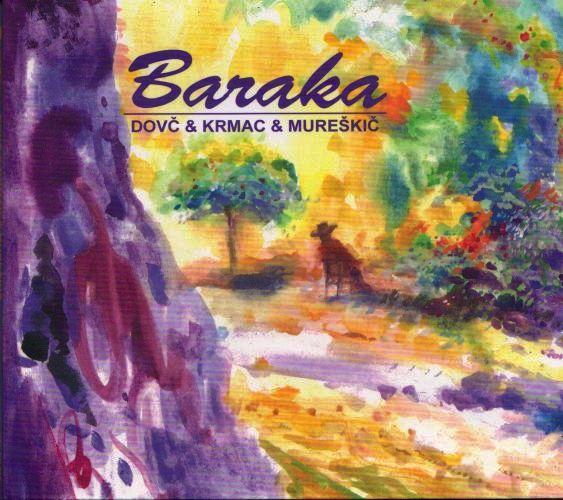
The sound is organic, warm, alive. The natural tones of the sound work full-bloodedly across the whole record, and the cover, the work of academic painter Milan Erič, couldn’t match the warm pastels of the harmonious sonic landscape any better.
There are plenty of rhythm-driven stretches on the album, where percussion and added (also programmed) rhythmic effects take the lead alongside the tuba. We get a “rain-calling” ritual like that with the track Vrga vrga vrga. Vrga Vrga!
The point of fusing accordion, tuba and percussion into one unconventional, out-of-the-ordinary musical body hits its mark with sheer audacity. It serves up a completely autonomous musical experience that is hard to pin down with any real musical kin. The trio sails for the most part through world rhythms spanning the Mediterranean, Africa, and Latin and South America, and often deftly mingles with the aforementioned integration of programmed rhythmic textures too, like in the closer Na noge, which somewhere around the fifth minute jumps from a “tango” sway into a dance-spin groove while the track takes on the character of a trip hop adventure, one that should interest fans of the likes of Gotan Project as well.
“Tvoja dolžnost je, da si srečen” is the track that marks the peak of the album. It’s the longest track on the record, which isn’t the point, but it’s where the fusion of jazz elements with the characteristics of world ethno sound, in which the string trio fits in superbly, reaches its greatest richness of content and, within the given experiment, an expressive wit too. The core of the track is surely the opening build-up of atmosphere, based on an extraordinary interweaving of percussion. Through many layers, it forms a remarkable platform for the track’s further development, and Mureškič even adds the sound of the African instrument kalimba to it all! King Crimson did that too. Always have. In the closing section of Moonchild from their debut album, and again back in 2003 in the track Shoganai. On this track Dovč’s accordion works like a vocoder, which deepens the album’s moment of artistic daring! This is the composition where the element of spontaneous, unpredictable development is most intensely on display. It even contains traces of genuine avant-garde jazz figures, and we can tag it as the album’s real progressive treat! The track reaches a true crescendo in a big closing finale, where harmonic contrasts get amplified by the string arrangements together with the three basic building blocks! Brilliant!
“Snebersko dupliška samba” is likely to intrigue fans of Remember Shakti, much like the opening “Ne pozabi od kod si”, especially for its use of vocals as an additional instrument, communicating with the percussion lines in a fascinatingly seamless way. This dialogue of vocal improvisation and the extraordinary dynamics of the percussion, with a collision of Latin rhythms boldly riddled with plenty of unbridled jazz figures, just keeps growing throughout the track. Dovč’s accordion, with its interspersed melodic ethno passages, is pushed into the role of softening the album’s otherwise demanding composition. The mood of the track rides the crests of giant waves, where the intensity of passion churns up to the max and then returns all the way back to points of total, melodious calm.
The tracks “Tvoja dolžnost je, da si srečen” and, right after it, “Snebersko-dupliška samba” were taken from the album presentation on October 14, 2013, at Ljubljana Castle. So they’re live recordings, which is further proof of the extraordinary self-confidence of these seasoned instrumentalists! And what outweighs even that is the fact that the tracks for the album “Baraka” were played in “one piece”, or “first go”. On the first try (“in one take”, as the Brits say). So they’re one-of-a-kind creations that, in every reinterpretation to come, will be reflected in space and time in new guises. Again and again, for as long as the trio performs the music of “Baraka” in this lineup. It’s precisely this principle of first-take recording, a live performance in the studio, that is the greatest expressive strength of the album “Baraka”.
The album “Baraka” carries such a strong and unusual musical calling card, with such a dominant, distinct character, that it can suck the listener into the parallel world of its homegrown atmosphere. One almost “cerebral” moment on the album is, for instance, “Mimohod odločnih”. The album is stuffed with a spirit of celebration and optimism. It keeps the party going and delivers huge enjoyment in the playing. It unfolds in the glow of the playful twists of a cheeky jazz-ethno carousel, while being exceptionally easy to listen to. The elementary symbiosis of jazz passages and melodious tunes guarantees that this record is accessible to any music listener. In their chemical interplay and sensible connection, the symbiosis of these two approaches is literally astonishing. We can say just one thing. An album that, in the honesty of its musical expression, knows no limits in space and time. An album that seduces and charms you instantly into a unique musical world, just as it was written to. An album by great musical masters that you’ll enjoy for a long, long time and that will keep rewarding you with new and fresh feelings through an autonomously shaped musical landscape that you’ll uncover bit by bit. Veil by veil! This is an album of exceptional multifaceted depth, and you simply have to let yourself go to merge with its heritage.
Let’s hope the story doesn’t end here for the trio and that another record will follow. Even though you don’t miss the guitar on “Baraka”, it would be really interesting to see some “alien” like Miha Petric (Moonlight Sky) integrated into the kind of musical environment created by the unique trio of Dovč, Krmac and Mureškič. The platform for further evolution, in the glow of dropping a “shock element” of a full-blooded original surprise, is outstanding!
author: Aleš Podbrežnik
Track list:
1. Ne pozabi, od kod si (07:20)
2. Spomin v nastajanju (04:48)
3. Follow Us Again (08:05)
4. Umrl je klovn (05:03)
5. VrgaVrgaVrga. VrgaVrga!
6. Zmano (06:20)
7. Mimohod odločnih (02:20)
8. Obzorja (05:36)
9. Tvoja dolžnost je, da si srečen! (11:52)
10. Snebersko-dupleška samba (09:11)
11. Na noge (07:37)
Lineup:
Janez Dovč – accordion, effects, electronics, vocals
Goran Krmac – tuba, programming on tracks 5, 7 and 11, vocals on tracks 8 and 10, keyboards on tracks 5 and 7
Nino Mureškič – percussion, kalimba, vocals
GUEST MUSICIANS:
Symbolic String Trio
Vasilij Centrih – violin
Barja Drnovšek – violin
Klemen Bračko – violin, viola