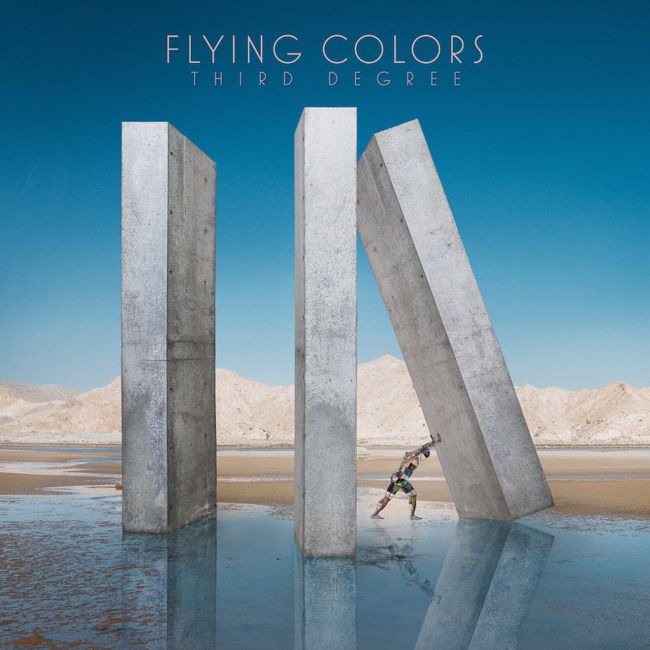
Label: Mascot Label Group
Release date: 04.10.2019
Production: Flying Colors
Album length: 66.08 min
Genre: Progressive Rock
Rating: 9.5 / 10
Flying Colors is a quintet of five exceptional musicians who don’t need much of an introduction. Let’s run through them quickly, since that’ll make the rest of this article easier to get through. Neal Morse (keyboards), Steve Morse (guitar), Dave LaRue (bass), Mike Portnoy (drums) and Casey McPherson (vocals). “Third Degree” is, as the title tells you, this lineup’s third studio outing. The self-titled debut came out in 2012, followed two years later by “Second Nature” (2014), and then another five years went by before we finally got the third chapter of the band’s story.
These guys know each other inside out. Neal Morse and Portnoy have been joined at the hip musically for years, since Portnoy is pretty much always behind the kit on Morse’s studio releases, and there are quite a few of those. They also recently reunited in the newly revived Transatlantic. Steve Morse and Dave LaRue are old buddies from The Dixie Dreggs. On top of that, these are technically bulletproof players who, as individuals, each cultivate their own sound and playing style. Because they’re constantly playing and recording, they keep their creative form at a high level, and the same goes for the sharp ideas that run through their compositions.
Genre-wise, Flying Colors come across as a kind of extended American answer to the neo-progressive rock bands that, inspired by Genesis, popped up in the British Isles in the nineties and the late eighties, though the music of Flying Colors will quickly feel very familiar to fans of classic Kansas. Flying Colors are developing their own original voice, and what’s really interesting is that the contribution of each of the five members within the band’s musical body comes through on equal terms, in a beautiful balance with the other building blocks of the sound (and style).
To this day, the band has never put out anything more ambitious. The five-year break did them good. The result is an album of excellent fusion, drawing on the classic pioneering works of the symphonic-prog bands (Kansas, Gentle Giant, Yes), neo-classical approaches to arrangement, and a remarkable musicality inherited from obsessive teenage listening to The Beatles, and early Queen too. The band’s distinctive character gets its special touch from guitarist Steve Morse, with his instantly recognizable guitar harmonies that accompany his trademark soloing and his habit of dressing up transitions with ornamental motifs, and on the other side from vocalist Casey McPherson, who has opened up even more vocally since the debut and shows real maturity as a singer. He has a recognizable timbre, he adorns and contrasts the vocal lines with a special “vibrato”, and it’s thanks to his contribution that the songs also gain a theatrical darkness.
The album opens with the wound-up The Loss Inside, built on pronounced guitar phrasing, followed by the theatrical More with its gloomy chorus. The third track, Cadence, is a real revelation, sailing back to the roots of classic seventies symphonic progressive rock, with an epic chorus and excellent backing from choral vocal harmonies. Its hugely distinctive chorus comes with a dose of bubbling positivity. For Love Letter, one of the most infectious songs on the album, Flying Colors owe their inspiration directly to The Beatles. The Guardian takes first place for captured epic bombast and an extremely striking verse-and-chorus combo, with a melody that worms its way into your ears in an instant. A tune the fans will quickly claim as their own. Last Train Home is considered the album’s central piece and, along with the closing Crowl, one of the most ambitious pieces on “Third”. A classic prog-rock treat, exactly what you expect from such aces and from the band itself. Surely the album’s first peak (the second awaits you at the tail end, with the superb “drama of all dramas” Crowl). In the cheeky pop-jazzy-blues “rascal” Geronimo, members of the likes of Steely Dan or Toto would feel right at home. An absolutely unexpected but very welcome detour, which still serves up another pompous chorus. The ballad You Are Not Alone touches in its verses on the devastation of Hurricane Harvey, which ravaged McPherson’s hometown of Austin a few years ago.
“Third Degree” is an excellent album in every respect. For its variety of ideas, and for its extremely polished, well-crafted arrangements. Given how deeply the members of the quintet are involved in other bands and projects, you might have doubted it would get there, but any doubt is completely unnecessary. Great studio camaraderie, a top-notch harmony between all the building blocks of the sound, outstanding give-and-take in a constant theater of creative challenge, as well as in the interplay of performing character, backed by superb chemistry. On “Third Degree”, everything in the studio fell into place like a perfect picture! Flying Colors keep impressing with an incredibly balanced stance between sheer musical catchiness and the very thing prog-rock enthusiasts come back for again and again. A tremendous variety in combining vivid passages, crossing sudden breaks in rhythmic textures, while constantly holding onto the red thread in the weave of switching between lead motifs. Adventurous experiments in weirdness and avant-garde are absolutely off the table. Over 66 minutes, the new album has Flying Colors serving up top-notch musical rhetoric, without a single solitary moment that steals the listener’s time, quite the opposite in fact. It grabs you with such a hold that it keeps the listener in constant tension, firmly glued to it all the way through, and when the album ends, it’s really not hard to hit “repeat” again on the turntable (or the CD player).
author: Aleš Podbrežnik
Track list:
1. The Loss Inside (5:51)
2. More (7:10)
3. Cadence (7:40)
4. Guardian (7:11)
5. Last Train Home (10:32)
6. Geronimo (5:20)
7. You Are Not Alone (6:22)
8. Love Letter (5:10)
9. Crawl (11:14)
Lineup:
Casey McPherson – vocals, guitar
Neal Morse – keyboards, backing vocals
Steve Morse – guitar
Dave LaRue – bass
Mike Portnoy – drums, percussion, backing vocals